
Specs are compiled from manufacturer listings and verified buyer reviews and can change over time — please confirm the key details on the product page before buying.
Twenty pounds on your back changes every walk, squat and ruck — but only if the vest stops shifting. The real question is not how much weight you can load, it is whether the straps hold that load against your body. This list covers nine adjustable vests that all reach 20 lb, sorted by what actually keeps them in place.
This guide is built by comparing the manufacturers’ published specifications and the patterns across verified customer reviews, so you get each pick’s real strengths and trade-offs instead of marketing spin.
Before you scroll: not every pick below is stamped “20 lb” on the box — some are adjustable rigs that reach 20 lb with the included weights, and one or two land just under. Here is how the best 20 lb weight vest options actually differ once you strap one on.
Top Picks

How To Choose The Best 20 Lb Weight Vest
A 20 lb vest is heavy enough that the wrong one turns a 30-minute walk into a shoulder ache. The right one sits flush against your torso and just makes the hill steeper. Three things decide which camp you land in: how the weight is loaded, how the straps hold it, and how the vest fits your chest.
Fixed plates versus removable bags
Some vests lock the weight in place as one solid load. Others let you pull weight out in small increments. If you are buying a 20 lb vest as a permanent training partner, a fixed load keeps everything tight and simple. If you want to start lighter and build up, removable iron sand bags or blocks let you add weight gradually — one vest instead of three.
Where the weight sits on your torso
A vest that carries its load in a narrow strip down the front feels heavier than one that spreads it across your full chest and back. Even distribution is what keeps your posture straight and your shoulders from rolling forward on a long walk. Look at how the manufacturer describes the padding and the placement of the weight pockets before you commit.
Straps, buckles and bounce
Hook-and-loop (the Velcro-style fastener) and side-release buckles are the two closure types you will see here. Buckles let you cinch the vest hard against your ribs in one motion. Hook-and-loop lets you fine-tune the exact overlap on the shoulder. Either works — what matters is whether the adjustment points sit where your body can reach and tighten them mid-workout.
Side-by-Side Comparison
| Model | Best For | Stated Weight | Adjustment Style | Fabric / Fill | Amazon |
|---|---|---|---|---|---|
| CROSS101 20LBS Adjustable Weighted Vest★ Best Overall | Running and cross training | 20 pounds | 8 x 2.5 lb weights, 2.5 lb increments | Nylon | Amazon |
| VEVOR Weighted Vest with Reflective StripeBest Value | Walking and everyday cardio | 20.3 pounds | Double adjustable buckles, 35″–45″ | Neoprene, iron pellets | Amazon |
| Top tasta Weighted Vest with Reflective StripesLightest Load | Light rucking and bodyweight work | 16 pounds | Adjustable buckle straps, multiple points | Mesh, nylon | Amazon |
| Liveet Weighted Vest 20lb | Walking and HIIT | 20 pounds | Adjustable buckle straps, 31″–45″ chest | Iron sand, rubber, spandex | Amazon |
| Liveet Adjustable Weighted Vest 11–20lb | Progressive loading | 11–20 lbs | 6 removable 1.5 lb iron sand bags, 31″–45″ chest | Iron sand, rubber, spandex | Amazon |
| SPRI 20 lb Weighted Vest | Cross training and cardio | 20.3 pounds | Hook-and-loop, 0 to 20 pounds | Polyester blend, machine-washable cover | Amazon |
| Feyachi Adjustable Weighted Vest | Training with room to grow | 12–20 lbs | 6 removable 1.5 lb iron sandbags, buckle strap | Nylon, iron sand | Amazon |
| BAGAIL Weighted Vest | Rucking and heavy training | 40 pounds | Removable 2.5 lb iron blocks, adjustable waist belt | 1200D Oxford nylon | Amazon |
| EVERLIT Adjustable Weighted Vest | Tactical and functional fitness | 18 pounds | Padded shoulder straps and cummerbund | 1000D nylon, steel plates | Amazon |
Detailed Reviews
1. CROSS101 20LBS Adjustable Weighted Vest
Our pick — 4.5+★ from 900+ verified ratings; the strongest balance of quality and price.
Eight separate weights you can pull out one at a time, and a fit that most owners never have to fight
This is the one to buy if you want a vest that does double duty: heavy enough for a loaded run, light enough to strip down for a pushup set. The CROSS101 carries eight 2.5 lb weights, which means you can dial it from 20 lb all the way down in clean 2.5 lb steps. The nylon shell and the one-piece design — weights plus belt as a single unit — mean there is nothing extra to line up in the morning.
What wins people over is the fit. Across 900+ ratings the vest holds a 4.5+, and the closure is hook-and-loop, so you set the overlap once and it stays where you put it. The 12″ width keeps the load gathered toward your centerline rather than splayed across your arms, which is why it works as running gear and as a strength-training add-on. Owners put it to work on pushups, dips and jumping, and the general read is that it earns its place as a great buy they would pick again.
Exceptional load handling on the adjustable side, though — the two areas that split opinion are comfort and mobility, both of which run about even. The shoulder and neck area is where the gripes land, and it does bounce around for some wearers during movement. If your training is mostly flat walking, neither will bother you. If you plan to sprint in it, cinch it down hard before you do.
Where this vest earns its keep
- Eight 2.5 lb weights let you dial the load in precise steps instead of one fixed block
- Nylon shell and one-piece design mean the belt stays attached and nothing shifts out of place mid-session
- At 20 pounds loaded it is the heaviest-capable pick at the top of the value tier
What to know before you commit
- Comfort around the neck and shoulders is the recurring split — several wearers find it rubs
- It can bounce during fast movement, so it is better suited to slower, loaded work
Worth grabbing: you want one nylon vest that goes from loaded running to bodyweight sets without swapping gear.
Hold off: if your plan is sprint intervals — the bounce and neck rub will show up fast.
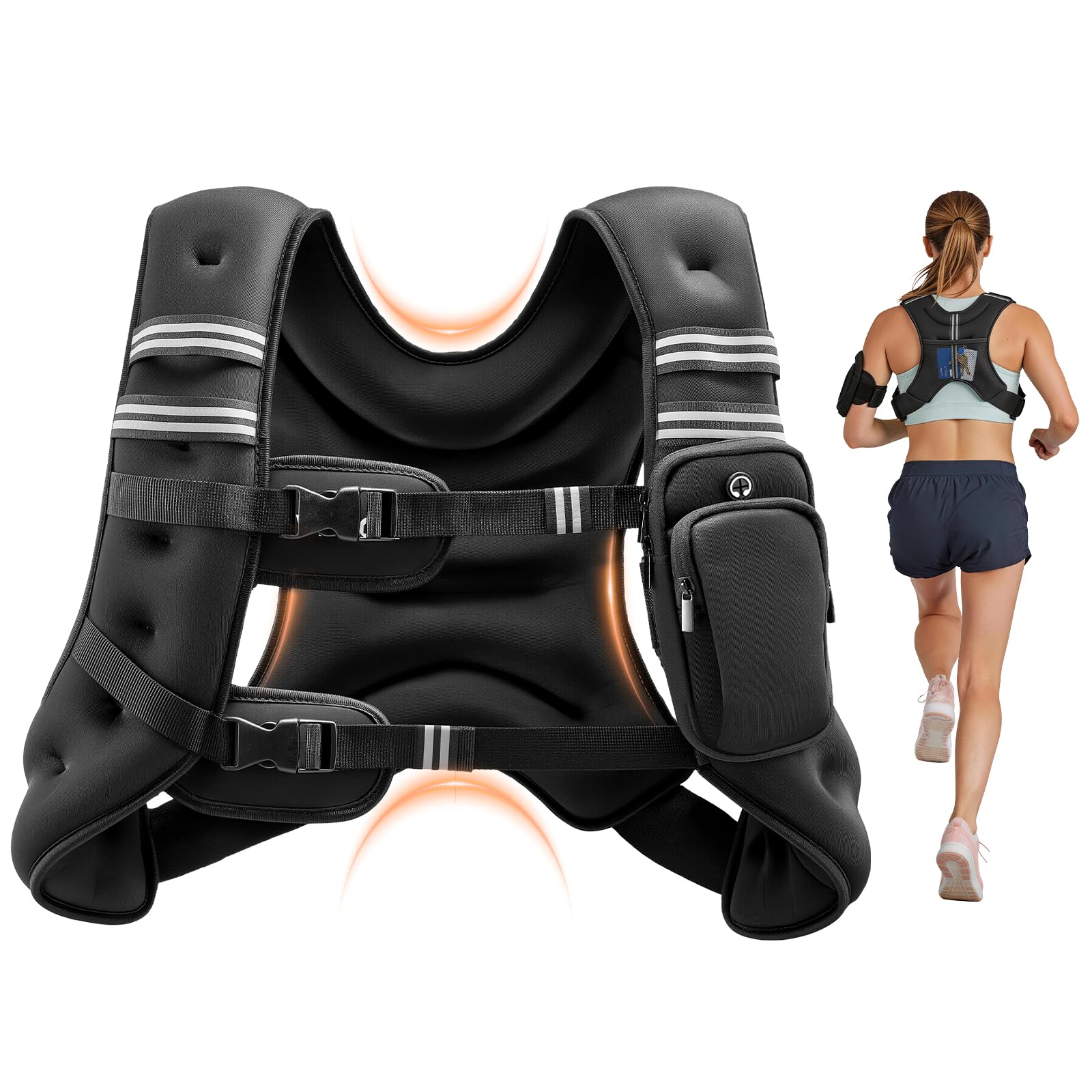
2. VEVOR Weighted Vest with Reflective Stripe
Sweat-proof neoprene and a detached pocket for your phone — the early-morning walker’s vest
The VEVOR comes in at 20.3 pounds and wraps your torso in neoprene, the same rubbery, stretchy material you know from a wetsuit. That is what makes it sweat-proof and gentler against bare skin than a nylon shell, which matters if you train in a t-shirt in summer. The filler is stable, odorless iron pellets rather than sandbags, so the load does not clump to one side.
The double adjustable buckles pull the vest in to fit bust sizes from 35″ to 45″ (89–114 cm), which is a wide range for a single model. Where it stands apart from the nylon vests here is the storage: a front pocket that detaches and can be tied to your arm, plus a rear mesh pocket, so your phone and keys stay put. Multiple reflective stripes give you visibility in low light, and the padded shoulders carry the weight without digging in.
The trade-off to size up honestly: odor is the one mixed area, and a few people catch a chemical smell on the first few wears. Air it out before your first session and it settles. Otherwise it is the easiest pick for walking and general exercise, and buyers report it works well for exactly that.
Why it suits walking: 20.3 pounds of evenly spread iron pellets under padded shoulders, plus reflective stripes for dawn and dusk, makes this a quiet, comfortable cardio vest rather than a strength rig.
Fit note worth knowing: the double buckles need a proper cinch to stay still — this one is designed to hold across a 35″ to 45″ range, so try it on snug rather than loose.
Reach for this if: you walk or jog and want the phone pocket and the bright stripes.
Look elsewhere if: you need to strip weight out between sets — this one is a fixed load.
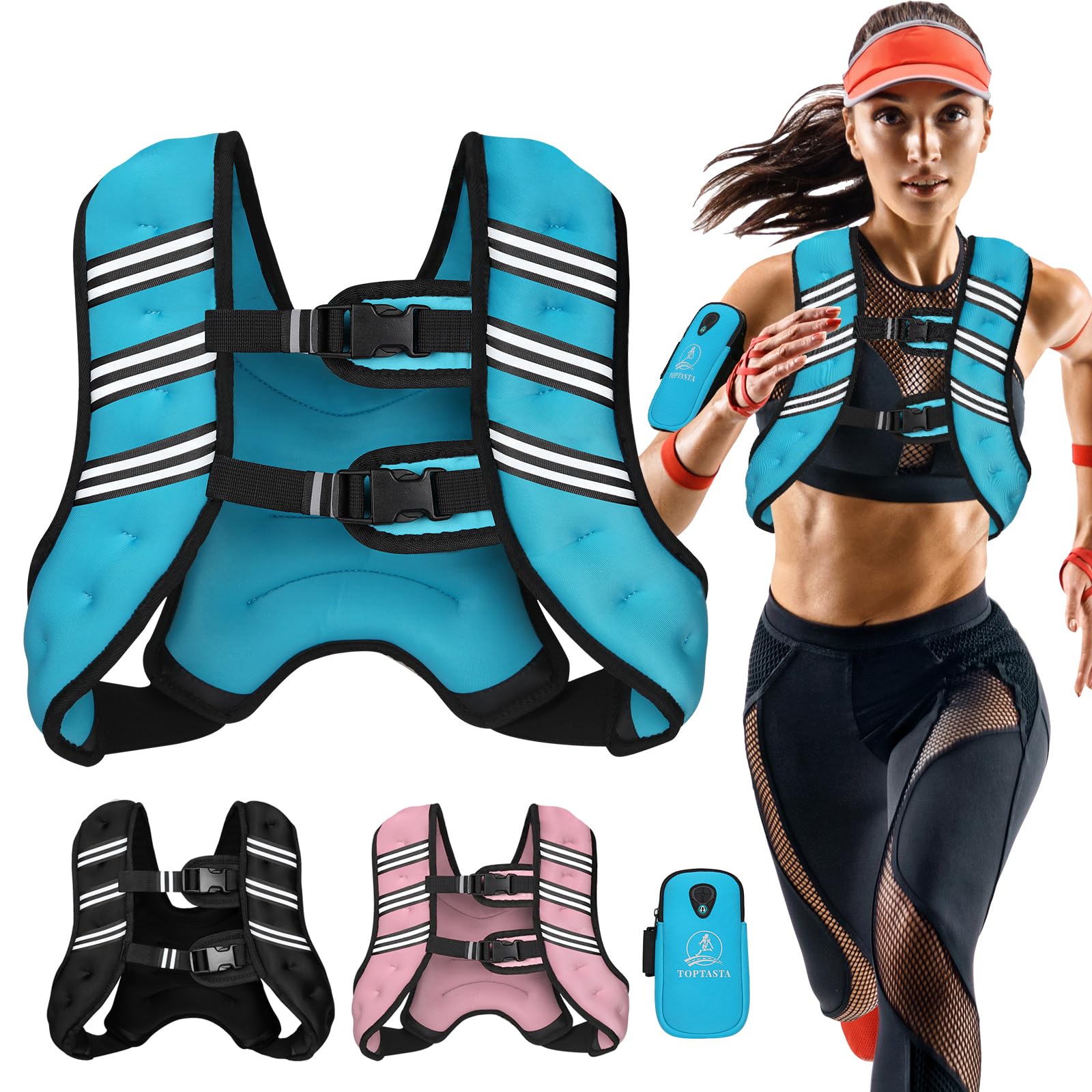
3. Top tasta Weighted Vest for Women Men
The 16 lb version of a family that goes all the way to 30 — a starter vest for bodyweight work
Here is the honest caveat first: the model in this list is the 16 lb build, not a true 20 lb vest. Top tasta sells the same design in 6, 8, 12, 16, 20, 25 and 30 lb versions, so if 20 lb is your target you would step up a size. The 16 lb unit is included because it is the same cut and strap system, and it is proof that this shape works for lighter rucking days.
Mesh and nylon make up the shell, with padded shoulder straps and reflective strips set at the front and back. The straps adjust at multiple points with buckles and hook-and-loop, so you can pull the vest in tight against your ribs. It is a comfortable vest for jogging, walking and bodyweight exercises, and the weight itself is the thing people are happiest with.
Two things to weigh honestly. Sizing splits opinion — some find it true to size and others find it too small, so measure your chest before you order. And the strap hardware is the weakest link, with buckling and closure complaints coming up more than anything else. At 16 lb it is a fine light-load vest; if you want a genuine 20 lb carry, size up the range.
The mesh advantage: a breathable mesh and nylon build keeps this one of the more airy options here, and the reflective strips make it useful for evening jogging.
The sizing reality: buckle and closure complaints are the most repeated issue, and the fit runs small for some — order by your measured chest, not your usual size.
Good match for: a lighter-load ruck or a first weighted vest where breathability matters more than max load.
Think twice if: you specifically need 20 lb now — this is the 16 lb build, and the range tops out higher.
4. Liveet Weighted Vest 20lb

SGS-certified iron sand in a spandex shell — the vest built to feel like clothing, not equipment
The single number that shapes this pick is its chest range: adjustable buckle straps fit 31″ to 45″. That is the widest fit window in this group, and it matters because a 20 lb vest that does not sit flush against your ribs will bounce. The fill is iron sand inside a spandex and SBR (a rubbery synthetic lining) shell, which spreads the load instead of concentrating it into a lump.
Liveet states the vest is SGS certified and meets REACH and CPSIA standards — SGS is an independent testing firm, and those two standards cover chemical safety in consumer products. Sweat-wicking spandex keeps the fabric from turning clammy, and reflective strips run front and back for 360° visibility. For hands-free training there is an arm pouch for your phone and keys plus a rear mesh pocket.
The adjustment system is where the reviews split: some praise the chest and shoulder straps, others find the straps do not hold well. Sizing is the other mixed area, with some wearers reporting it runs narrow across the chest. If you are broad-shouldered, measure before ordering. For anyone inside that 31″ to 45″ chest range, it is one of the strongest walking and HIIT vests here.
Why it edges ahead
- 31″ to 45″ chest range is the widest adjustable fit in this lineup
- Iron sand fill plus a rubbery SBR lining spreads the load instead of pooling it
- Reflective strips front and back for 360° visibility, plus an arm pouch and rear mesh pocket for your phone
The details to weigh
- Some wearers report the adjustment straps loosen during use
- A narrow cut for broad chests — sizing is the most inconsistent part
Go for it: you are within the 31″ to 45″ chest range and want a breathable walking or HIIT vest with a proper phone pocket.
skip it if: you sit right at the top of the chest range — the narrow cut is the recurring fit complaint.
5. Liveet Adjustable Weighted Vest 11–20lb

Six iron sand bags you pull out one by one, so 11 lb today is 20 lb next month
Start at 11 lb and work up. That is the whole pitch here, and it is a good one: six removable 1.5 lb iron sand bags let you climb to 20 lb without buying a second vest. The spandex and SBR lining matches the 20 lb Liveet above, but this version of the design is the one for anyone who wants to progress gradually rather than jump straight to a full load.
Fit is the standout. The buckle straps adjust on both sides to cover chest sizes from 31″ to 45″, and the review pages note that it sits well on bigger bodies and can even be worn under a jacket. Weight distribution earns the most consistent praise, with the load described as evenly spread rather than front-heavy. Quality, comfort and value all land on the positive side, and there is no odor issue to manage.
There is one figure to be clear about: the listed item weight is 10 pounds, which is the empty vest — the 20 lb total comes when all six bags are loaded. Understand that going in and nothing here surprises you. With six removable bags spanning 11 to 20 lb, it is the most flexible walking and cardio vest here.
Built to progress: six 1.5 lb bags take you from 11 lb to 20 lb, and both sides adjust to fit a 31″ to 45″ chest, so one vest covers a whole training block.
The number to read carefully: the vest itself is listed at 10 pounds empty — the full 20 lb appears only with all six sand bags loaded in.
Pick this one: you want to build up to 20 lb over weeks and wear it under a light jacket on walks.
Not for you: if you want a single locked 20 lb block from day one — the removable bags invite fiddling.
6. SPRI 20 lb Weighted Vest
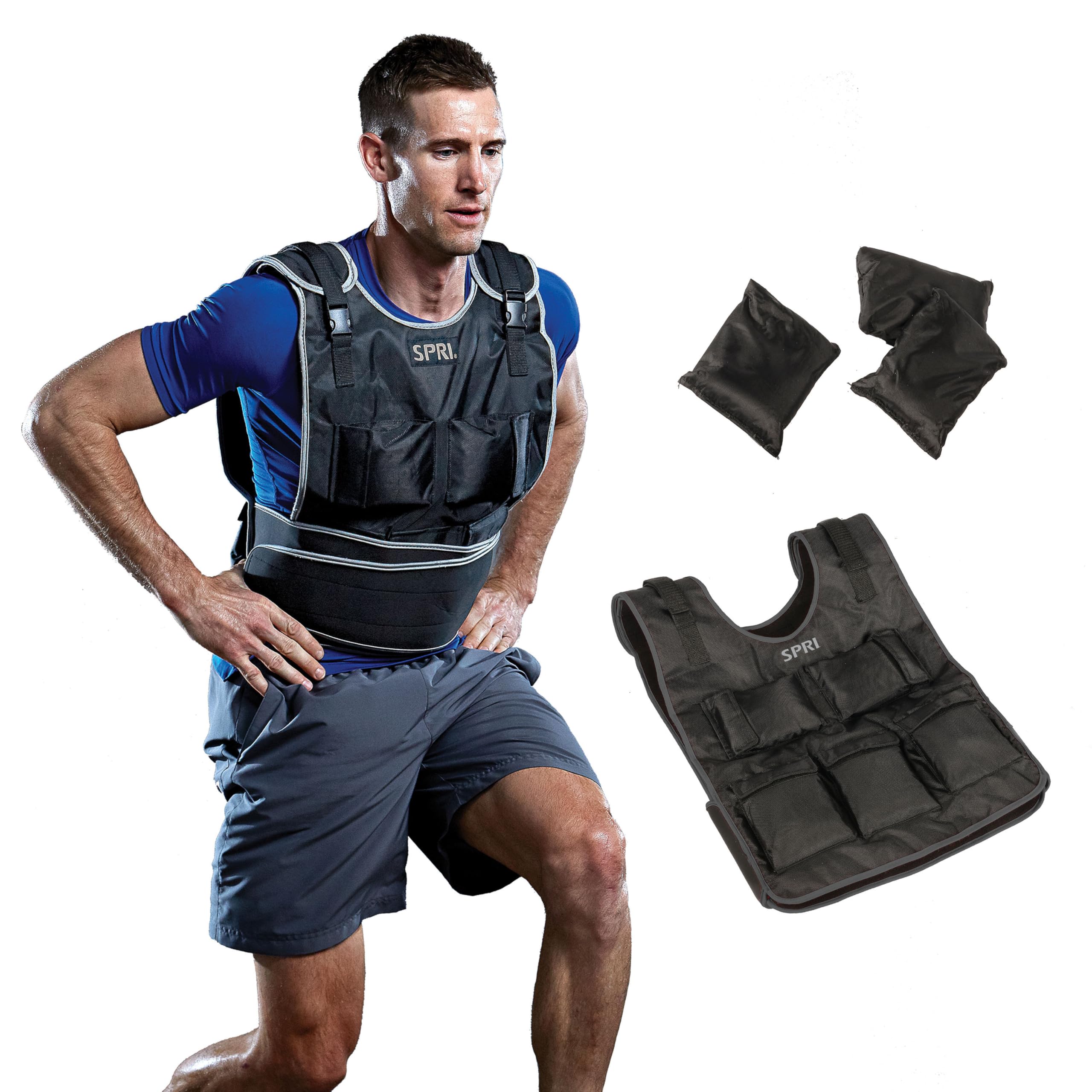
A machine-washable cover is the rare feature here — and it changes how often you actually wear it
SPRI’s vest sits at 20.3 pounds with a hook-and-loop closure and a polyester blend shell, and the one feature that separates it from almost everything else on this list is a removable, machine-washable cover. A removable cover you can machine-wash after a sweaty session gets worn more often than a shell you have to sponge down. Full-body resistance is the design goal here, adding weight to walking and bodyweight work without changing your routine.
Owners praise the 0 to 20 lb load adjustment, and even distribution is the second thing they call out. Hook-and-loop lets you fine-tune the wrap rather than pick a buckle notch, and one size is meant to fit most. It is a cross-training vest first — strength, cardio and running all appear in the stated uses.
Be honest about the two mixed areas: comfort draws a split, with the hard plastic construction feeling awkward to some, and durability is the other question mark, with seam failures reported over time. Neither is universal — plenty of owners describe it as comfortable and durable — but if you want a vest that feels soft against the chest, a neoprene build suits better.
The washable edge: a removable machine-washable cover keeps a 20.3 lb vest fresh, which is more than most competitors here offer.
The honest caveat: the plastic weight elements feel rigid against the body, and long-term seam durability is the split — treat it as a training vest, not a daily-wear one.
Best for: cross-training and cardio sessions where you want to dial from 0 to 20 pounds and wash the cover after.
Consider another: if soft, skin-friendly padding is your priority — the rigid build reads hard to some.
7. Feyachi Adjustable Weighted Vest
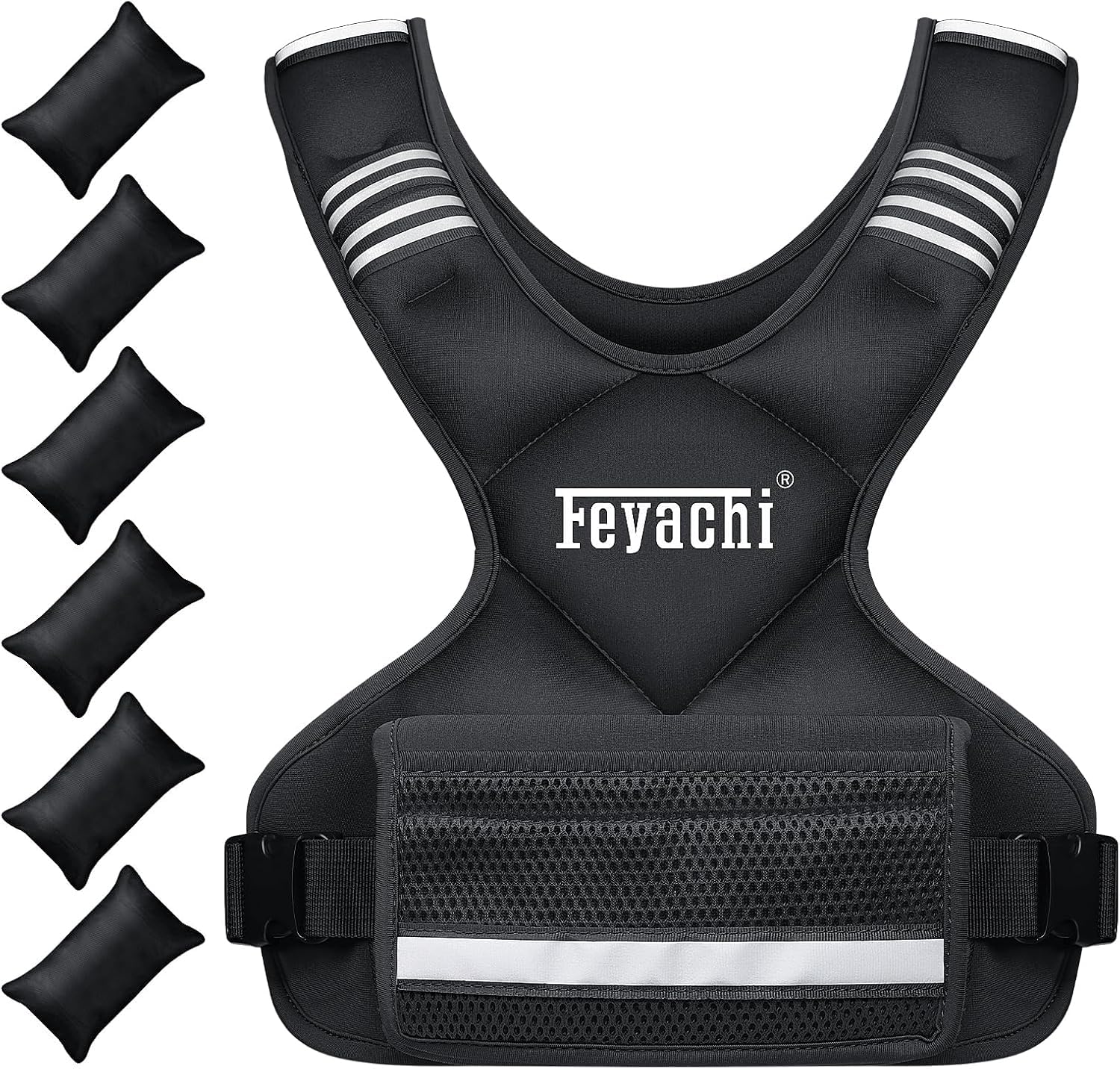
The X-shaped cut pulls weight into your center — a posture-first vest with room to load up
Feyachi starts its X-type design at 12 pounds and climbs to 20 with six 1.5 lb removable iron sandbags, and the X layout is the reason it distributes weight differently from a flat front panel. The shell is soft neoprene over premium iron sand, with hook-and-loop fasteners that adapt to a range of body types. Front, shoulder and back reflective strips keep you visible outdoors. The maker notes that handcrafted assembly means the weight of the vest and bags can vary by roughly 0.5 lbs — worth knowing if you are tracking loads precisely.
Adjustability is what carries this pick, with the ability to add or remove bags the single most-praised trait and the weights described as easy to pull in and out. Alongside that, owners credit the vest with supporting posture and back alignment during daily walks. It is well made, priced sensibly for what it does, and sized for teens and adults both.
The honest limit is putting it on. Ease of use is the one split area, with some wearers finding it simple to wear and others reporting difficulty getting it on. It is not a quick-slip vest — plan for a minute at the start of each session. If posture support during walks is your goal, the slower on-and-off is worth it.
What stands out
- The X-type layout pulls the load toward your center for straighter posture on walks
- Six 1.5 lb sandbags take you from 12 lb to 20 lb without buying a new vest
- Roomy front pocket plus reflective strips on front, shoulders and back
What to plan around
- Getting the vest on and cinched is the recurring friction point
- Weight can vary by roughly 0.5 lbs between units due to handcrafted assembly
A natural fit for: walkers chasing posture and back support who want to add weight in small steps.
Less ideal if: you need to get it on in seconds — the strapping takes a moment to dial in.
8. BAGAIL Weighted Vest
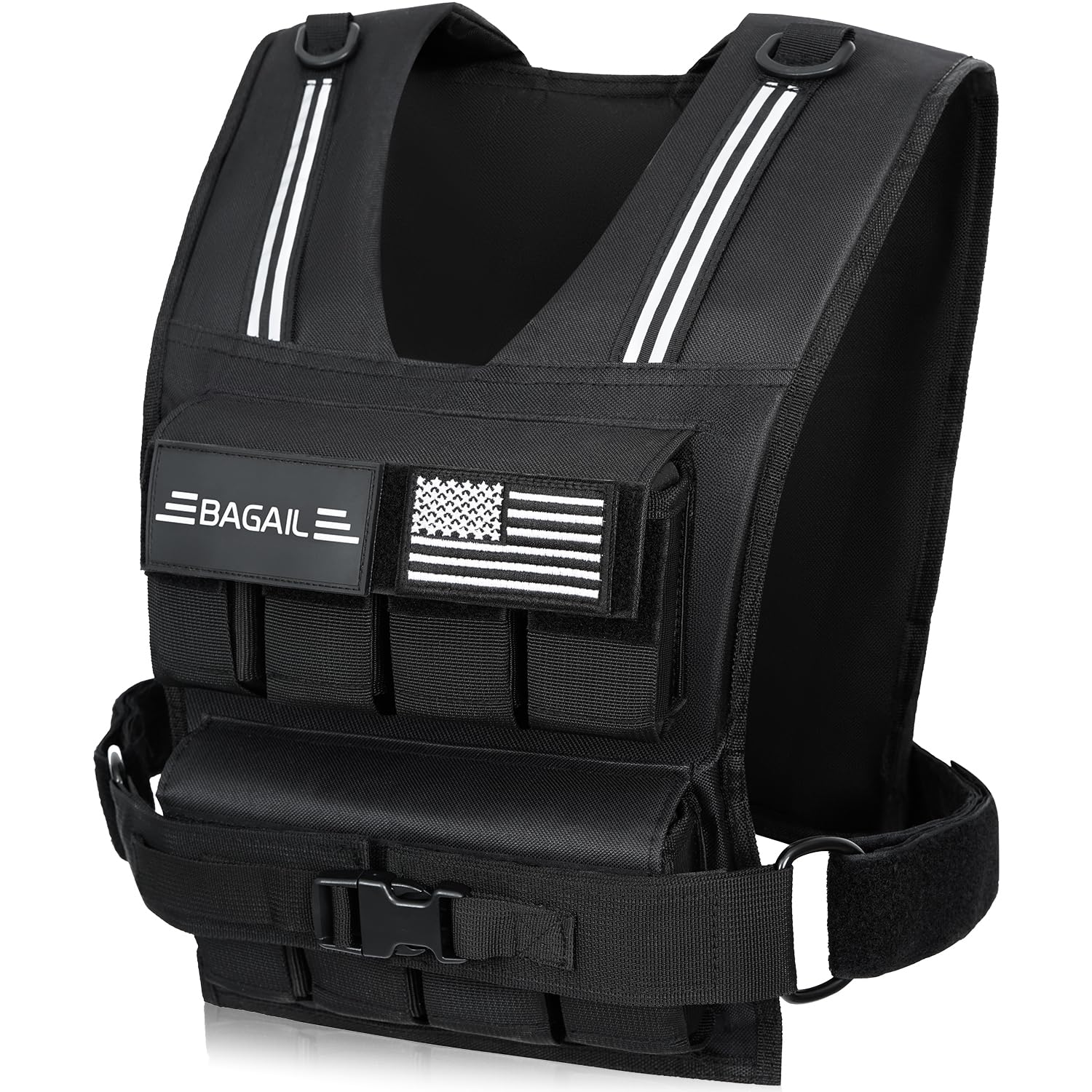
1200D Oxford nylon and solid iron blocks — the build a rucker reaches for when loads get serious
This is the heaviest-capable build in the group: the 40 lb model here, part of a line that also comes in 20 lb and 30 lb versions built on the same 1200D Oxford nylon shell. Denier count measures fabric density, so 1200D means a thick, abrasion-resistant weave that shrugs off scuffs and sweat. Reinforced stitching and a detachable logo round out a vest meant for hard use.
The weights are 2.5 lb rust-resistant iron blocks rather than sandbags — a firmer, more consistent load. Count them up and the ranges run 2 to 20 lbs with eight blocks, 2 to 30 lbs with twelve, and 2 to 40 lbs with sixteen. Extra-thick shoulder pads, an adjustable waist belt, wide hook-and-loop straps and safety buckles hold it all in place, with reflective strips front and back for low-light training.
The reason it lands so high is the build quality: the construction, the metal blocks and the strapping system all come in for consistent praise, and wearers describe the vest as well made with a heart-rate benefit that shows up in their sessions. It is the premium end of this list, and the 1200D Oxford nylon earns that price rather than extra features. If you are strictly after a 20 lb vest, the 20 lb version of this build is the one to add to your cart.
The material reason: 1200D Oxford nylon with reinforced stitching is the toughest fabric here, built for abrasion, sweat and repeated loading.
The honest read: this model is the 40 lb version, so confirm you are adding the 20 lb variant of the same build if 20 lb is your target.
Choose this: you ruck, train hard and want rust-resistant iron blocks in a heavy-duty nylon shell.
Keep looking if: you want the lightest carry — the 40 lb build is substantial even with blocks removed.
9. EVERLIT Adjustable Weighted Vest
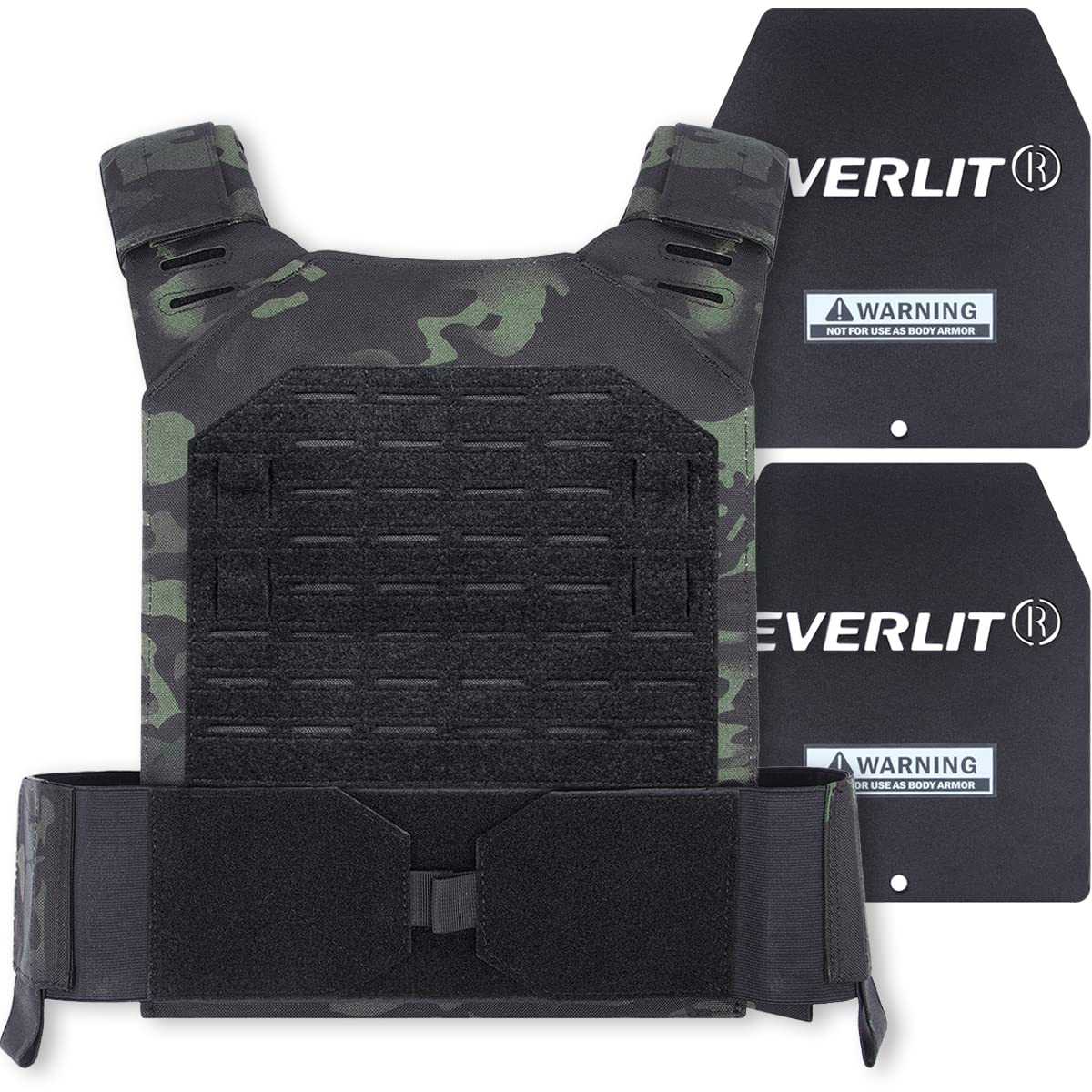
Steel plates instead of sandbags, and MOLLE panels that let you clip on whatever you need
EVERLIT builds this one like tactical gear. The pair of 8.75 lb powder-coated steel plates adds up to 20 lb of total weight, which is a firmer, denser load than iron sand — plates sit flat and do not shift the way loose fill can. The shell is reinforced high-density 1000D nylon, and the maker lists a lifetime warranty against the build. MOLLE panels (the webbing grid standard on tactical gear) run front and back so you can attach patches, lights or a pouch.
Fit is the strongest card: fully adjustable padded shoulder straps and a cummerbund let you contour the vest tight to your body, and the mesh padding spreads the load while reducing imbalance. The quality of the build and the adjustable shoulder and waist straps are what owners return to again and again. Elastic side pockets take your phone and small items.
Two notes to carry in. The weight is the mixed area — some owners mention not receiving the advertised plate weight, so check your plates on arrival. And durability splits, with some reporting the plates work loose. The load does bounce for some wearers during running. It is a superb tactical-style vest for functional training; just verify the steel plates on arrival and cinch the cummerbund before you go hard.
The build quality: 1000D nylon with powder-coated 8.75 lb steel plates and a lifetime warranty give this the most rugged spec sheet here.
The weight check: weight is the mixed area in reviews — some report lighter-than-advertised plates, and the load can bounce during running, so cinch the cummerbund tight.
Made for: tactical and functional training where you want steel plates, MOLLE panels and a contoured cummerbund fit.
Second-guess it: if you want zero bounce on a run — the plate load moves on some wearers.
Know the Specs
Total loaded weight versus vest weight
The number on the box can mean two different things. On a fixed-load vest, 20 lb is what you strap on. On an adjustable vest, the figure often describes the max with every weight loaded, while the empty shell weighs far less. Always check whether the listed weight is the full load or the shell alone — a vest listed at 10 pounds empty reaches 20 lb only with all six sand bags in place. That gap is the single most common source of disappointment when a vest arrives lighter than expected.
Fill type and how it carries
Three fills show up in this category: iron pellets, iron sand bags and steel plates. Pellets and sand flex with your body and sit quietly against the torso, which suits walking and cardio. Steel plates are firmer, flatter and denser, and they suit strength and tactical work. The trade is movement — loose fill and removable bags can shift or bounce during fast runs, while a plate stays put but feels rigid against the chest. Match the fill to how you train, not to how the vest looks on the shelf.
Chest range and buckle adjustment
Adjustable buckle straps let one vest fit many bodies, and the stated range tells you whether you are inside it. Ranges of 31″ to 45″ and 35″ to 45″ appear here, and a vest sitting at the top of its range will feel tighter than one in the middle. If your chest measurement lands near the edge, size up or expect a snug fit. Buckles cinch quickly; hook-and-loop (the Velcro-style fastener) lets you fine-tune the overlap but needs more care to keep tight.
Visibility and pocket features
Reflective strips are the difference between a vest you can wear on a dawn walk and one you cannot. Strips across the front and back give all-round visibility in low light, which matters for joggers, dog walkers and anyone training before sunrise. Pockets are the other practical extra: a front or arm pouch for your phone keeps it from bouncing, and a rear mesh pocket holds keys and cards. Neither is essential, but both make a vest easier to actually wear every day.
Common Questions
Is a 20 lb weight vest too heavy to run in?
Does an adjustable vest really reach 20 lb?
Will a 20 lb weight vest fit under a jacket?
How do I keep a weight vest from bouncing while I run?
Are 20 lb weight vests washable?
What is the difference between iron sand and steel plate weight vests?
Can beginners start with a 20 lb weight vest?
How tight should a weight vest be?
What do reflective strips on a weight vest actually do?
Can I wear a 20 lb weight vest for pushups and dips?
The Bottom Line
For most people the answer is the CROSS101 20LBS. It puts 20 lb on your body in eight 2.5 lb steps, holds it in a nylon shell that does not rattle, and the fit is what keeps owners coming back — the crowd favorite at 4.5+ stars across 900+ ratings. If you want to work up slowly, the Liveet 11–20lb is the one to add to your cart, because six removable bags let you climb from 11 lb to a full 20 lb in one vest. And for rucking and hard training, the BAGAIL in its 1200D Oxford nylon build is the vest to reach for when the load stops being a novelty.
How we choose
We do not accept paid placement. Every pick is matched to a real buyer and a real use-case; we do not hands-on test units.
Sources
Specifications: manufacturer listings and product documentation. Review insights: verified customer reviews, as of November 2026. Pricing: not shown on this page (it changes often); check the current price via the retailer link.
As an Amazon Associate, Gamepad Test earns from qualifying purchases. This does not affect which products we feature.