
Specs are compiled from manufacturer listings and verified buyer reviews and can change over time — please confirm the key details on the product page before buying.
You want a game night that runs itself: rules reminders without rulebook page-flipping, a timer that actually counts down, quizzes that adjust to the youngest player at the table. Below are nine games where the app is a real, working part of the box, not a marketing afterthought.
This guide is built by comparing the manufacturers’ published specifications and the patterns across verified customer reviews, so you get each pick’s real strengths and trade-offs instead of marketing spin.
The trick is separating a game where the app carries the play from a game where the app is a liability, so every pick here lists its actual player count and playtime. It’s the practical way to shop for the board games with apps without getting stuck with a download that ruins family night.
Top Picks

How To Choose The Best Board Games with Apps
Start by answering one question: does the app run the game, or just help it? An escape-room card game needs the app for its timer and code checker, so a dead phone ends the evening. A deduction game uses the app to hide the answer and shuffle the board setup — lose power and the game stops too. Know which one you’re buying before you sit down, because the app’s role decides how many chargers you need at the table.
App-Required vs App-Assisted Play
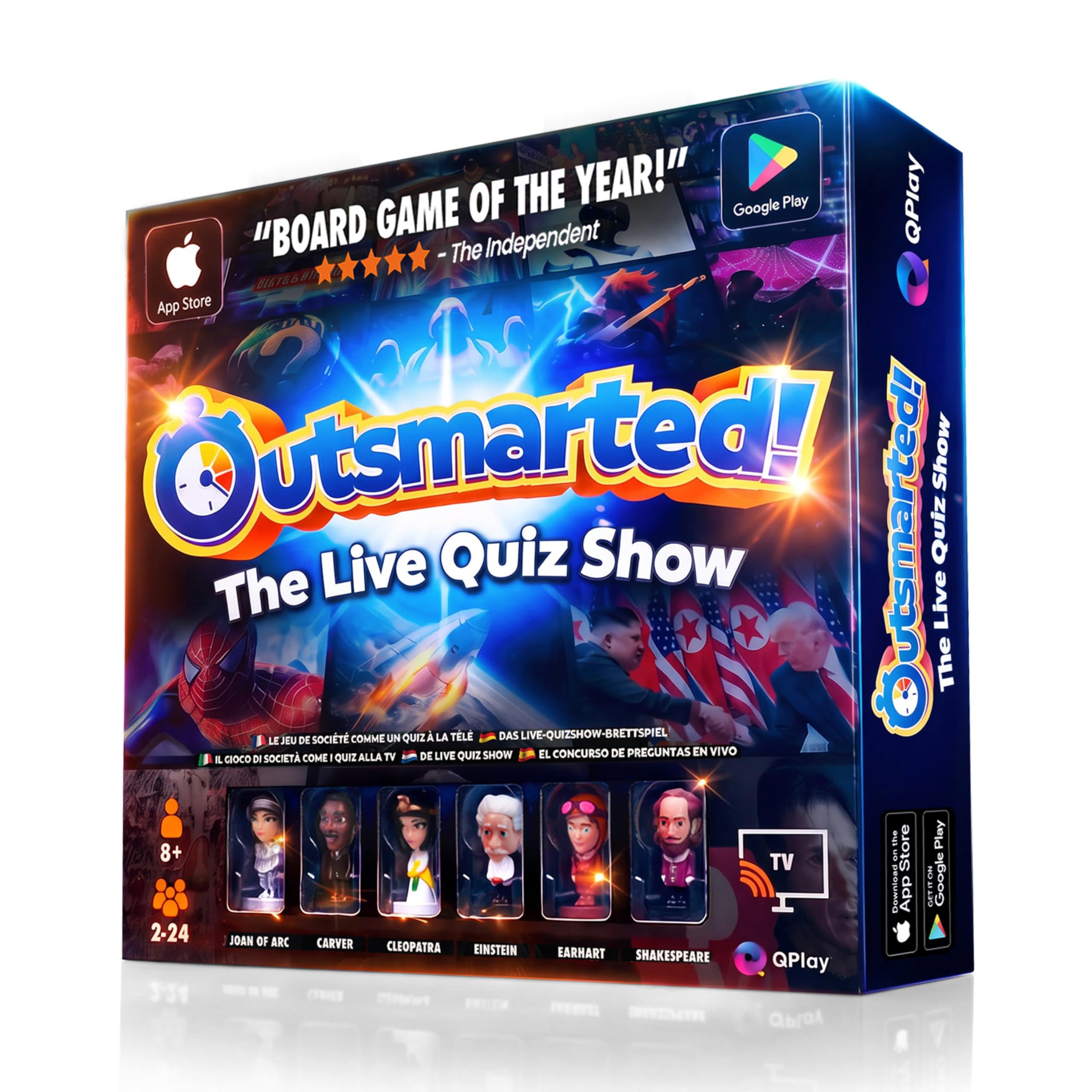
Many open up! titles in this list check codes, run the countdown, and hand out hints — all while working offline, with no internet connection required. That matters on a cottage weekend with weak signal. Trivia-style games like Outsmarted! connect the board to a phone, tablet, or Windows computer and mirror the action to your TV. Those expect a working connection and a charged device for every round.
Player Count and Real Playtime
Board game boxes are honest about headcount and loose about time, but both numbers decide whether a game fits your crowd. A one-to-six-player cooperative card game in a one-hour window suits a couple or a family of four. A two-to-24-player trivia board is built for a holiday full house. A two-to-four-hour pirate campaign needs a dedicated evening with snacks and no early leavers.
How Much Screen Time You Actually Want
A light-up chess board gives you feedback in colored squares without turning your attention to a phone. An escape-room card game asks you to lay cards on the table and only touch the app to enter a code. A trivia night runs on the screen almost the whole time. Pick the amount of glow you want, and check the age rating on the box — most app-driven games in this list start at 8 to 14 years old, which shifts how you plan the night.
Side-by-Side Comparison
| Model | Best For | Players | Playtime | Age Range | Amazon |
|---|---|---|---|---|---|
| Search for Planet X★ Best Overall | Logic lovers who want a real puzzle | 1-4 | 60 min | 13+ | Amazon |
| Outsmarted!Best Family Pick | Big family trivia nights | 2-24 | 60 min | 8+ | Amazon |
| Star Wars open up!Top Story Pick | Star Wars fans and escape rooms | 1-6 | 60 min | 10+ | Amazon |
| open up! Heroic Adventures | Families new to escape-room games | 1-6 | 60 min | 10+ | Amazon |
| open up! Timeless Adventures | Three-night escape campaign | 1-6 | 60 min | 10+ | Amazon |
| Forgotten Waters | Long cooperative pirate campaigns | 3-7 | 120 min | 14+ | Amazon |
| GoChess Air | Chess beginners learning at home | 2 | — | — | Amazon |
| ChessUp 2 | Serious chess students who want lessons | 2 | 6 hours | — | Amazon |
Detailed Reviews
1. Renegade Game Studios Search for Planet X
Our pick — 4.5+★ from 650+ verified ratings; the strongest balance of quality and price.
A deduction game where the app hides the planet from you, not the other way round.
The companion app here is not decoration — it shuffles the board and hides Planet X’s true location every single round. Nothing is pre-printed, so the same box gives you a genuinely new puzzle each time you pull it out. That procedural generation is why this one sits at the top of the list for app-driven games.
You play astronomer: survey sectors, note the logical rules, then publish a theory the moment the evidence points one way. The estimated playing time is 60 minutes, which suits a focused mid-week session. It works solo or with up to four players aged 13 and up, so a couple or a small group can both claim it. And unlike the card-game picks below, you spend your time on a logic grid rather than a layering of paper props.
What wins people over is the deduction loop itself — the setup is simple, the reasoning is real, and the app quietly does the bookkeeping that would otherwise spoil the puzzle. The app is only lightly touched all night, so a single charged phone at the table is enough. If your group likes being told a story while you solve, this may feel dry — it is a brainy search, not a theatrical escape.
2. Outsmarted! Interactive Game Show
A game-show night with a talking app, colorful remotes, and a living-room TV mirror.
This is the big-crowd pick: 2 to 24 players, ages 8 and up, and a free app that can broadcast the show to your TV with up to six additional devices as remotes. Questions adapt to each player’s age, so kids, teens, and adults all get a fair shot inside the same hour. The 10,000+ questions come with pictures, music clips, and video, and the app pushes fresh questions weekly.
The category library is broad — music, movies, science, sports, and the world around us — and the format lets you pick game length for a quick round after dinner or a full holiday blowout. There is a folding phone-and-tablet stand in the box, which saves you the usual “where do we put the screen” shuffle.
Here is the honest catch: the app is not optional, so the whole game lives or dies with the download. That dual nature is the biggest complaint, and the review pages sum it up: the app would not load. A few people also find the questions too easy or too hard from round to round. If your signal is reliable and you have a tablet ready, it’s a crowd-pleaser — just plan for one screen to be the show’s master device.
3. Asmodee Star Wars open up!
Break out of an Imperial cell with a droid, a tauntaun, and a ticking app timer.
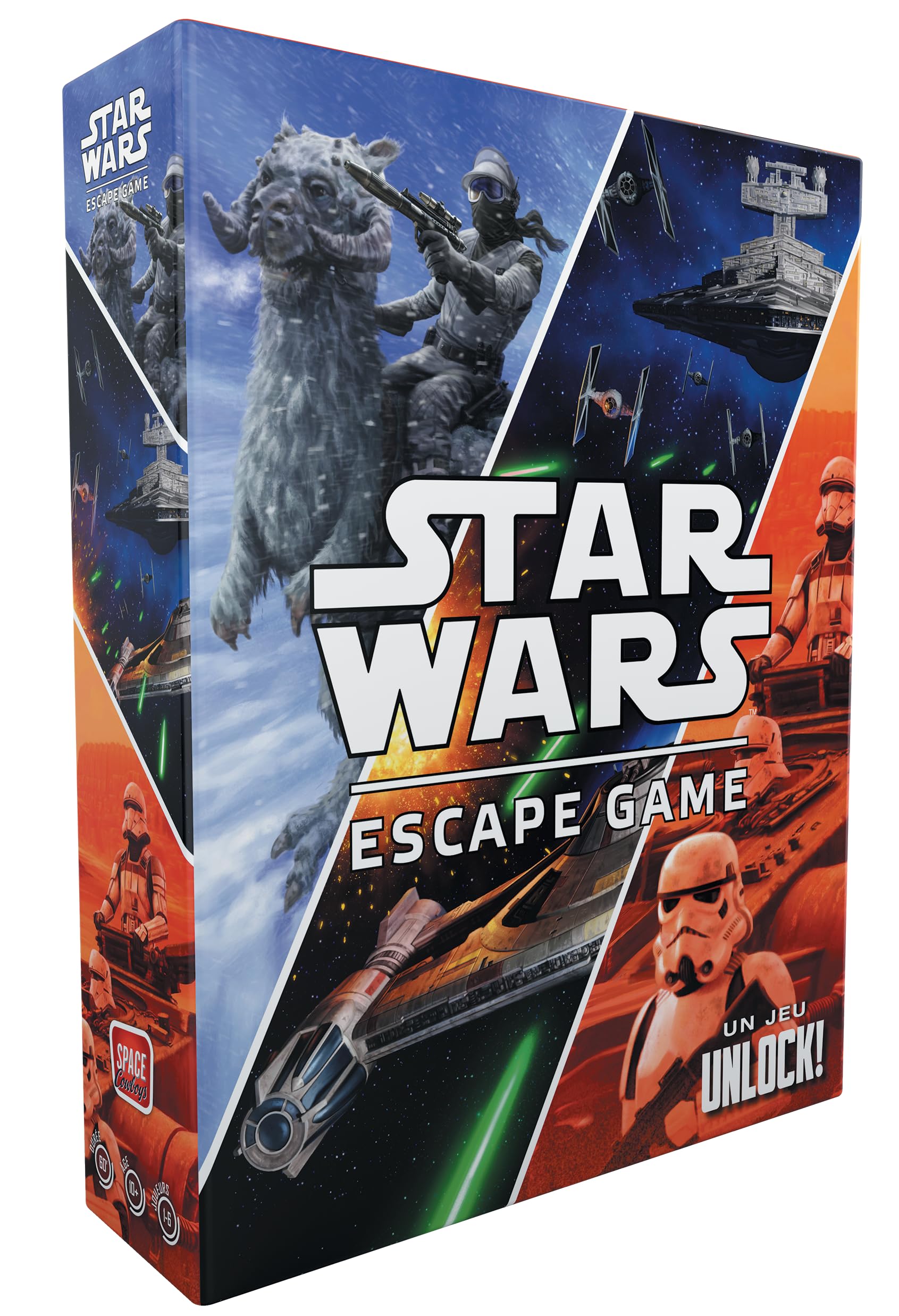
The whole draw is the trio of adventures — Smuggler’s Rescue, Ice Planet Patrol, and Jedha Infiltration — built on the open up! system of 180 cards, one rulebook, and a solution booklet. The companion app runs the clock and verifies the codes, so the tension is real and nobody has to police the stopwatch. Best at one hour for up to six players aged 10 and up.
The box itself is a chunky 8.5 x 10.88 x 2.63 inches and 730 g, which makes it a sturdier hardcover-style package than the Outsmarted! board at 10 x 10 x 0.1 inches and 800 g. Different shapes for different jobs: the Star Wars box stacks and travels like a proper game collection piece, and it looks the part on a shelf.
The story pulls you in: the escape-room format fits Star Wars naturally, and the three scenarios let a family run one adventure per night. The awkward part is the tutorial. This one has a learning curve at the start, and the first few minutes with a new group can run warmer than you’d like. Give it a calm minute to teach itself and the rest flows.
star wars escape: Three full adventures in one box, app-checked codes, and a co-op rhythm that pulls a Star Wars table together without arguing over cards.
fiddly app: The opening tutorial is the weak link, so read the first page out loud before handing cards out.
franchise lovers: your crew knows the films and wants a cooperative night with a ticking clock.
app haters: your table is brand new to escape-room games and wants the gentlest possible first hour.
4. Asmodee open up! Heroic Adventures

Sherlock, a white rabbit, and an arcade cabinet in one hour-long cooperative box.
This edition fits families that want three clean, self-contained adventures — Sherlock Holmes, In Pursuit of the White Rabbit, and Insert Coin — each around the 60-minute mark. The companion app handles timekeeping, hints, and code verification without an internet connection, which makes it a reliable pick for a holiday letting with no Wi-Fi. You get up to six players aged 10 and up.
The box holds 180 adventure cards, a 10-card tutorial deck, a rulebook, and a single sheet of paper — a tidy package that stacks next to the Star Wars set. The app-assisted layer is the heart of the experience: you tuck the app away, lay the cards out, and only touch the screen to check a solution or ask for a nudge.
Owners describe it as among the best in the line, and the value holds up because three scenarios keep the box busy past the first sitting. The genuine gripe is the tutorial: some find the mechanics unclear at the outset, and a few sessions feel frustrating before the rules click. Read the tutorial deck aloud before starting and most of that vanishes.
escape veterans: you want three easy nights of co-op puzzling with a phone that can work on airplane mode.
casual players: your table hates reading instructions and expects the first round to be pure fun.
5. open up! Timeless Adventures

A chrono-warped card set that sends you to a decadent stage show, a diamond heist, and a time machine.
Three scenarios, one shared rule — the Noside Show, Arsène Lupin and the Great White Diamond, and Lost in the ChronoWarp — each carried by the open up! companion app for timing, hints, and code checks, with no internet needed. Up to six players from age 10, and an hour per adventure, so the box realistically covers three game nights.
What sets this apart from the sibling sets is pacing: the difficulty levels are described by owners as well balanced, with individual challenges pitched fairly, and setup is quick — cards down, app on, go. The tutorial deck of 10 cards gets a new table up to speed without a long lecture.
The catch is the hint system. Some players find the app’s hints genuinely useful, others report the hints don’t help much in the middle of a puzzle and they’d rather work it out blind. One scenario in three may land flat for your group. Offer the phone to someone who likes to delegate, and keep a second player as the puzzle-caller, and the pacing stays fun.
6. Forgotten Waters

A pirate saga that reads itself aloud, with a free web app doing the voices.
You get a full evening out of one box: five scenarios, a massive location book, and a free web app that narrates the story instead of making you page-flip. That is why this is the pick for a group that wants a full evening rather than a warm-up. It seats 3 to 7 players aged 14 and up, and the estimated playtime runs 2 to 4 hours, so plan a whole night around it.
The app adds rich scenarios, but the box carries plenty on its own: 7 twelve-sided dice (dice with 12 faces), 204 mini cards, 6 player boards, 8 standees (cardboard figures that stand up), 143 tokens, and a ship’s log pad. That is a heavier table than any open up! set, and a heavier table has more to teach. The streamlined rules system lets seven people play without a referee — no small feat for a cooperative game.
What everyone raves about is the storytelling. Hilarious, light-hearted, and easy to learn, with nice art; even serious gamers in the reviews come away fans. The cost of that richness is length — if you have a player who leaves at 9 pm, this is not the night for it. For a dedicated crew of four to seven, it’s the best epic scale on the list.
The pirate party that keeps everyone corralled
- Up to 7 players on one cooperative ship, with a streamlined rule set.
- Free web app narrates scenario chapters, cutting the page-flipping.
- 204 mini cards, 7 twelve-sided dice, and 5 scenarios for real shelf life.
pirate campaign
- Runs 2 to 4 hours — this is a whole-evening commitment, not a quick round.
- Age 14 and up, so a mixed-age family needs a second game for the younger kids.
7. GoChess Air Smart Chess Board
A chess board that lights up the squares to point out your blunder before you commit.
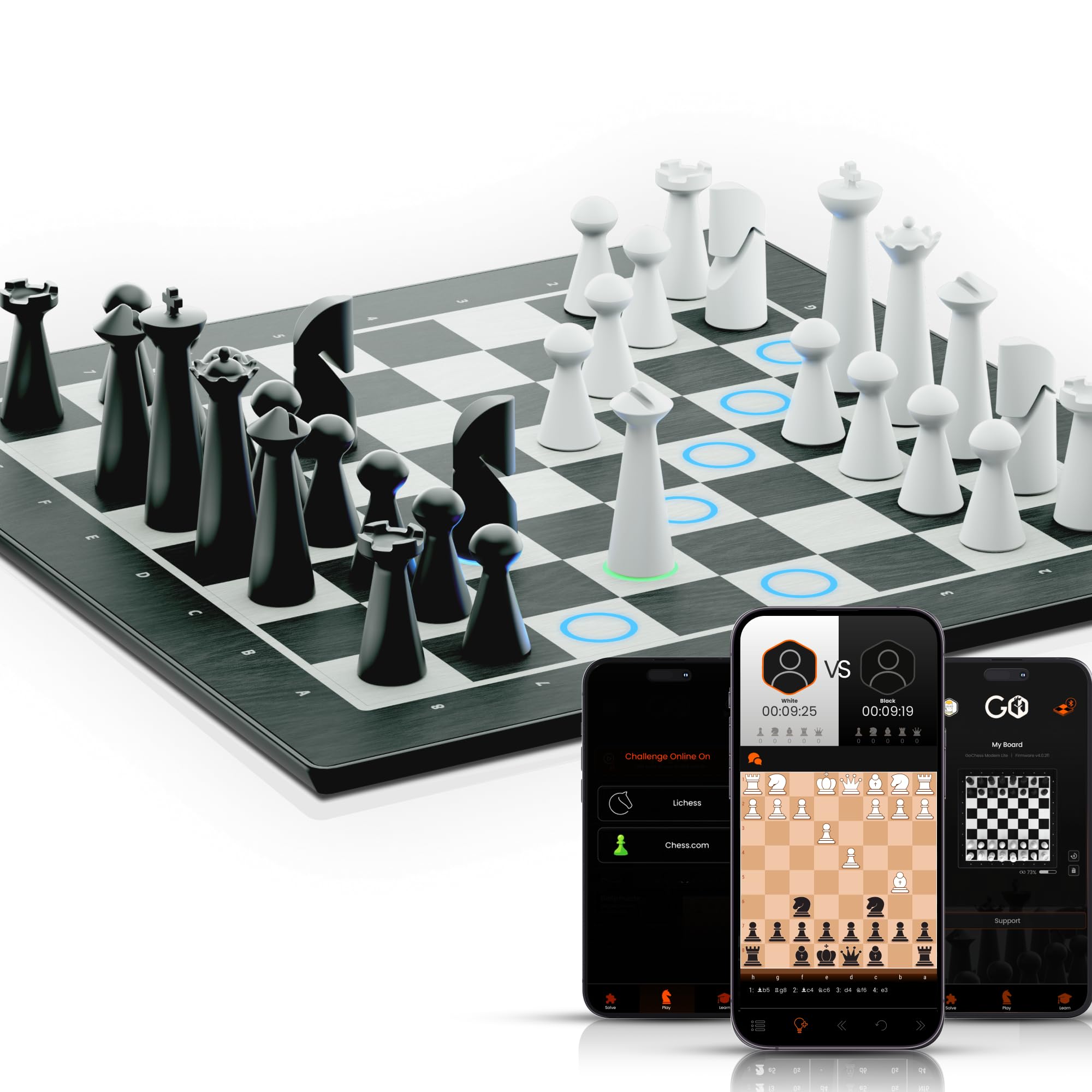
Skip the app-store chess apps and play on a real board that coaches you mid-move — colored lights mark out options and mistakes in real time. That makes it a natural starter board for a kid and an adult playing together, since each player can set their own assistance level and the stronger side simply gets less help.
For practice on your own, the built-in AI offers 32 difficulty levels, so the same board takes you from absolute beginner to a respectable game. The online side connects to Lichess and Chess.com, which means a match is always waiting, and the board is a standard-size set that fits a table without crowding the pieces. Carry it to the office or a friend’s house without fuss.
Chess is the one category here where a wrong impression costs you money — this is a premium-priced board — so the honest parts matter. Owners love the board itself and the teaching lights, but some report the companion app dropping out mid-game, and the whole experience is app-dependent. Keep a charger nearby, be patient with the first connection, and the board earns its keep.
tech chess: you’re learning chess and want visible coaching on a real tabletop rather than another phone app.
budget buyers: app dropouts and an app-dependent design mean a charged phone and a little patience are part of play.
8. ChessUp 2
The board that plays online without a phone, and lights up the lesson while you learn it.
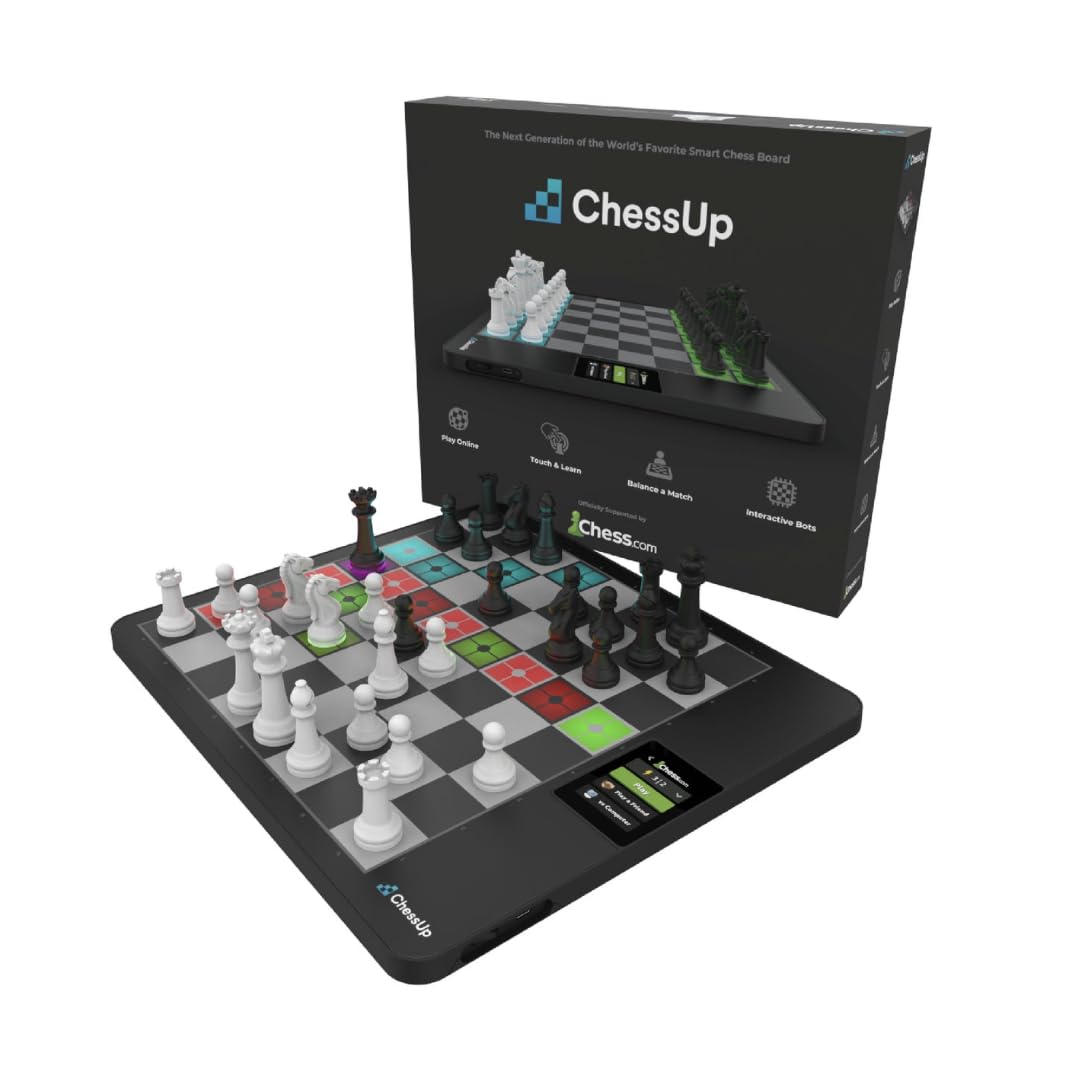
Built-in WiFi is the headline: this board connects to Chess.com and Lichess by itself, so you can sit down, get matched, and play a ranked game with no phone or laptop in sight. The light-up surface shows legal moves, mistakes, and blunders, and the touch-sensitive pieces trigger the feedback as you touch them. There’s a companion app for reviewing games and tracking progress, plus lessons that show on the app and the board at once.
The kit is complete from the start: board, pieces, spare queens, charger, and a foam-inserted box. Playtime is estimated at 6 hours, which reflects its day-to-day, lesson-heavy design rather than a single match. For a family teaching two generations the same game, the adjustable AI coaching means the child gets hints while the adult plays clean.
What earns the higher tier is the quality of the board and the lessons — when everything connects, the experience is smooth and the board feels like a serious piece of equipment. The rough edge is money: the price is a serious outlay, and some buyers compare it to spending half as much on a simpler board. If lessons and phone-free online play are what you want, it’s the top chess option here.
interactive coaching: No phone needed for ranked online play, and touch-sensitive pieces light up your mistakes right on the board.
app reliance: It’s the priciest item on this list, and a few players report freezes — which makes it a buy for the committed learner.
improving players: if you want lessons, game review, and phone-free online play in one place, this is the deepest teaching set here.
traditionalists: if you’re still deciding whether chess is your game, start with a simpler coaching board before committing to this one.
Know the Specs
App-Required vs App-Assisted
An app-required game can’t be played without the download — the Outsmarted! board is the clearest example, because the questions, the show, and the remotes all live in the app. An app-assisted game uses the app for one job, like timing or code checks, while the board and cards carry the play — the open up! sets are app-assisted, and their apps work without internet. Before you buy, ask which one you’re getting, because app-required means a dead tablet stops the night.
Players and Playtime
Player count on the box tells you the honest headcount, and the playtime figure tells you whether the night fits. A 1-6 player escape card game at 60 minutes is a quick, repeatable evening; a 3-7 player pirate campaign that runs 2 to 4 hours is an event. When the box says ages 14 and up, younger kids need a separate game. Match both numbers to your usual table before you commit.
Cooperative vs Competitive
Cooperative games put everyone on the same side, so the app can run the clock and the bad guys without a scorekeeper. Competitive games like the trivia board still use the app, but the tension is between players — which is why smart age-aware question settings and voice chat matter for a mixed crowd. Look for the word cooperative on the box if games night ends in arguments, or competitive if your table wants a scoreboard.
Difficulty and Teaching Load
Difficulty is the spec that matters most for a new group, and it cuts both ways. A tutorial deck of 10 cards means the game teaches itself in minutes; a 20-page rulebook does not. open up! sets ship with a short tutorial deck, while the deduction and chess boards teach through their apps. Check how long the learn is before you buy, and whether the game says easy to learn on the box or leaves it to you.
Common Questions
Do these board games with apps need an internet connection?
How many people can play an open up! escape game?
Is a smart chess board better than a chess app on my phone?
What happens if the companion app doesn’t work during a game?
Can kids play these app-driven board games?
How long does a game with an app actually take?
Do open up! games differ from each other?
Can I play a smartphone board game solo?
Which board games with apps are best for a big family group?
Are the app screens distracting during game night?
The Bottom Line
For most tables, the winner in board games with apps is the Search for Planet X. The app hides a genuinely new logic puzzle every time, so a small group or solo player can deduce it like an astronomer. If your family wants a big game-show night, grab the Outsmarted! — 2 to 24 players with age-adjusted questions, even if the app occasionally wobbles. And for a group willing to give up a whole evening to a shared pirate story, the Forgotten Waters is the one to reach for.
One thing worth naming: the open up! boxes all share the same app-assisted rhythm, so choose yours by theme rather than promise, and if you only want a single box, Heroic Adventures gives you the cleanest three-scenario start. For chess parents, ChessUp 2 is the deepest study tool and GoChess Air the better beginner board — both are solid buys that reward patience with the app. There’s no app on this list that needs a subscription, so your dollars go toward the game itself.
How we choose
We do not accept paid placement. Every pick is matched to a real buyer and a real use-case; we do not hands-on test units.
Sources
Specifications: manufacturer listings and product documentation. Review insights: verified customer reviews, as of November 2026. Pricing: not shown on this page (it changes often); check the current price via the retailer link.
As an Amazon Associate, Gamepad Test earns from qualifying purchases. This does not affect which products we feature.