
Specs are compiled from manufacturer listings and verified buyer reviews and can change over time — please confirm the key details on the product page before buying.
You want one box that gets two people off their phones and into the same conversation for half an hour — and you do not want to spend the first night teaching rules. That is the whole test. The games below all clear it: each one plays well with exactly two people, and each one is finished inside an evening rather than an afternoon. The standouts split into three jobs — quick tile duels you can learn in five minutes, deeper head-to-head strategy for a couple that likes to think, and card prompts that do the talking for you. The crowd favorite is Azul, the tile game that won the 2018 Spiel des Jahres, sitting at 4.5+ stars across 16,000+ owners.
This guide is built by comparing the manufacturers’ published specifications and the patterns across verified customer reviews, so you get each pick’s real strengths and trade-offs instead of marketing spin.
Below you will find the tile drafters, the train builders, and the conversation decks ranked by what actually works at a table for two. Every entry states its player count, age floor, and real playtime, so you can pick the one that fits your Great Games for Couples night without a single dud purchase.
Top Picks

How To Choose The Best Great Games for Couples
The trap most couples fall into is buying a big family box and discovering it only sings with four people at the table. A game labelled 2-4 players can still feel thin when it is just the two of you, because some designs rely on crowded boards to create tension. The fix is to check the player count first and the mechanic second.
Check whether two players is the design, not an afterthought
Duel-style games are built for exactly two people, so every rule is tuned for a head-to-head table. Games that scale from two up to five often add a “neutral” dummy player or a stripped-down board to make two work. Both can be good — just know which one you are buying. If your default night is the two of you, a game designed for two removes a whole layer of fiddling.
Match the playtime to your actual evening
A 30-minute playtime label is the game’s own estimate for people who already know the rules. Your first run will usually stretch longer while you read the rulebook and look things up. If you want something you can finish before dinner, look at the games tagged under 30 minutes. If you want a proper sit-down session, the 30-45 minute boxes give you more to chew on.
Decide how much thinking you want
Some couples want a light puzzle they can chat over; others want a game that rewards planning three moves ahead. Tile drafters and set collectors sit in the middle — easy to learn, with enough depth to keep a strategic player interested. Pure conversation decks sit at the other end: no winner, no strategy, just prompts that get you talking. Neither is better; pick the mood you actually have on a weeknight.
Look at the pieces, because you will handle them a lot
Two-player games get played repeatedly, so component quality matters more than it does in a party box that comes out twice a year. Resin tiles, wooden kittens, and thick boards survive frequent shuffling and handling far better than thin cardstock. Read what owners say about the pieces before you commit.
Side-by-Side Comparison
| Model | Best For | Players | Playtime | Age Floor | Amazon |
|---|---|---|---|---|---|
| Azul★ Best Overall | Best overall for two | 2-4 | 30-45 min | 8+ | Amazon |
| Talking Hearts Conversation CardsDate Night Deck | Date-night talk starter | 2 | — | Adult | Amazon |
| Ticket to Ride (Refresh)Family Route Builder | Family-friendly route building | 2-5 | 30-60 min | 8+ | Amazon |
| Planted | Fast plant-growing filler | 2-5 | 20-30 min | 10+ | Amazon |
| 7 Wonders Duel | Competitive strategy duel | 2 | 30 min | 10+ | Amazon |
| Everdell Duo | Co-op or competitive city building | 1-2 | 30 min | — | Amazon |
| BOOP | Light cat-themed two-player | 2 | 20 min | 10+ | Amazon |
| Splendor Duel | Compact gem-set duel | 2 | 30 min | 10+ | Amazon |
Detailed Reviews
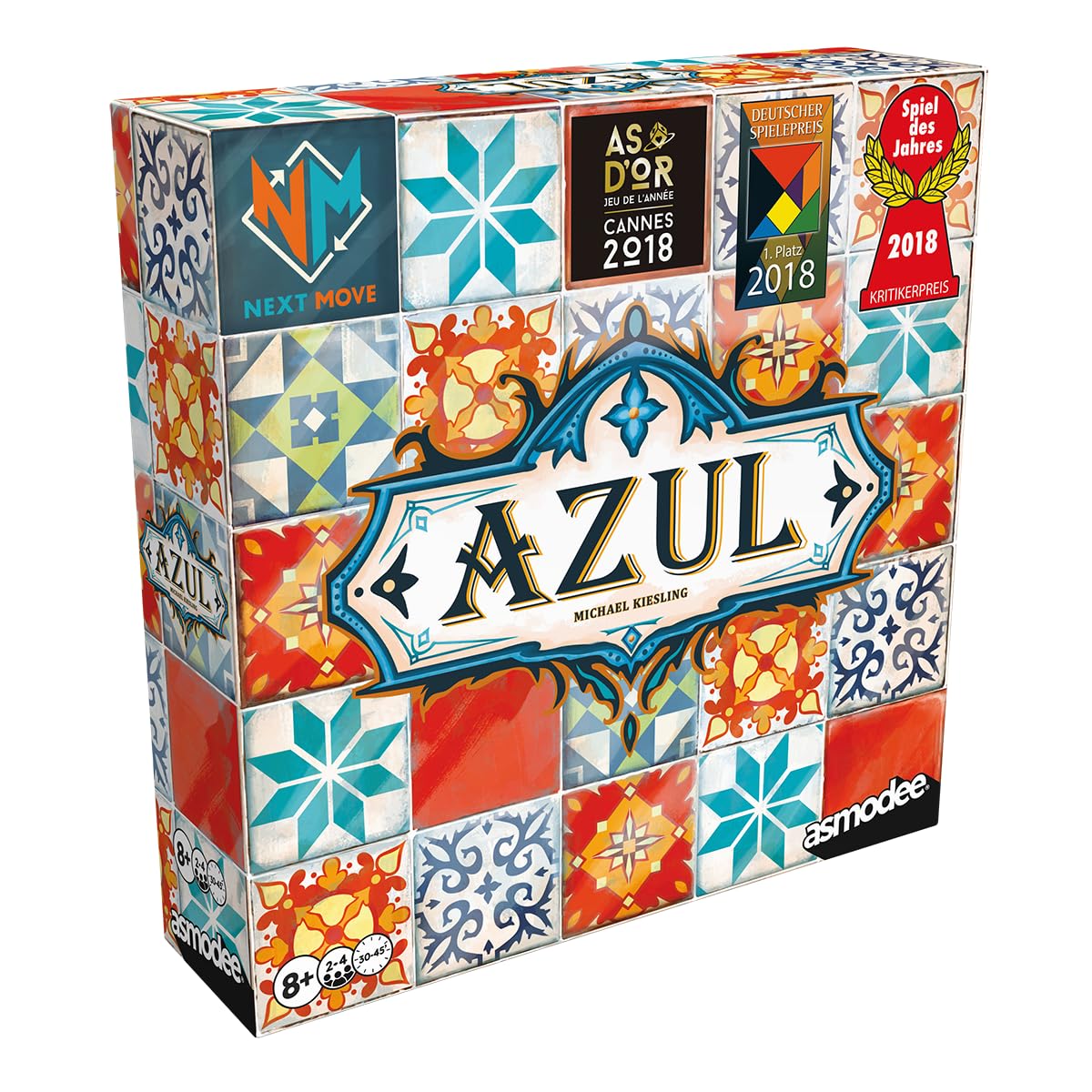
1. Azul Mosaic Tile-Placement Strategy Board Game
Our pick — 4.5+★ from 16,500+ verified ratings; the strongest balance of quality and price.
One hundred resin tiles, five minutes of rules, and a duel that turns nasty in the nicest way.
The board game that won the 2018 Spiel des Jahres — the annual prize the industry treats as its biggest trophy — is still the one most couples reach for first. You compete to build a mosaic wall out of tiles picked from shared factory displays, and every pick you take is one your partner cannot have. That single rule is what makes it a true two-player game rather than a family box that happens to allow a second person.
The numbers back the feel. Playtime is listed at 30-45 minutes, and the box holds 100 resin tiles, 4 player boards, 9 factory displays, 4 scoring markers, a starting player marker and a linen bag. The tile-drafting loop is why the gameplay is what wins people over most — by a wide margin. Ease of learning is the second thing couples talk about, since the rules sit on a couple of pages and a young first-timer can follow them. The board itself is a 10.25 x 10.25 inch square, so it fits comfortably on a small table for two.
The one thing to know before you commit: with three or four people the tile supply tightens and the denying gets noisier, so the two of you are actually getting the game at its most elegant. Luck and planning are balanced enough that a first-timer can beat a veteran on a good night. Azul leads the pack here, and that combination of a real award, a quick teach, and tiles you want to touch is the reason.
What wins you over
- Won the 2018 Spiel des Jahres — a genuine industry award, not a marketing badge
- 100 resin tiles that feel good to hold and survive repeated play
- Draft-and-deny rules make two players the sharpest way to play
- 30-45 minutes fits neatly into a weeknight
Before you buy
- The board takes up a 10.25 x 10.25 inch footprint, so measure your table first
- With three or four players the tile choices get tighter — two is the cleaner game
Best for: couples who want a beautiful, tactile duel they can teach a guest in five minutes and still play a hundred times.
Think twice if: you want a purely cooperative night — this one is a quiet, friendly fight to the last tile.
2. Talking Hearts Conversation Cards
Two hundred prompts in a box the size of a paperback, for the nights nobody wants to set up a board.
Not every couple night needs a winner and a loser. Talking Hearts is built around 200 questions including 2 wild cards, split into 100 playful and 100 thoughtful prompts, so you can steer the mood instead of the score. The box holds 101 cards and measures 2.9 x 1.6 inches — small enough to drop into a bag for a road trip or a camping weekend, which is exactly how most people end up using it.
The 200 prompts are the draw here, and buyers rate gameplay as this deck’s strongest feature. Gameplay is the thing buyers rate highest, followed by build quality, and the card set gets compared directly against other prompt decks as the stronger option. The mix of silly and serious is deliberate: you get a light opener, then something with a bit more weight, which is how a short date-night session turns into a long one. The 100 playful and 100 thoughtful prompts let the same deck work for a first date or a twentieth anniversary.
Where it fits: it is a prompt tool, not a game with a winner — there is no scoring, no board, and no strategy to learn. That is precisely the point on a night when you want to talk rather than compete.
One honest limit: a deck of prompts only goes as far as the two of you take it. Some pairs will burn through the best cards in one long evening and want more later, so treat it as something to pull out over months rather than daily.
Reach for this if: you want something to open on a train, a road trip, or a quiet evening where a board game feels like too much effort.
Look elsewhere if: either of you wants a proper competitive game with rules and a winner — this has neither, by design.
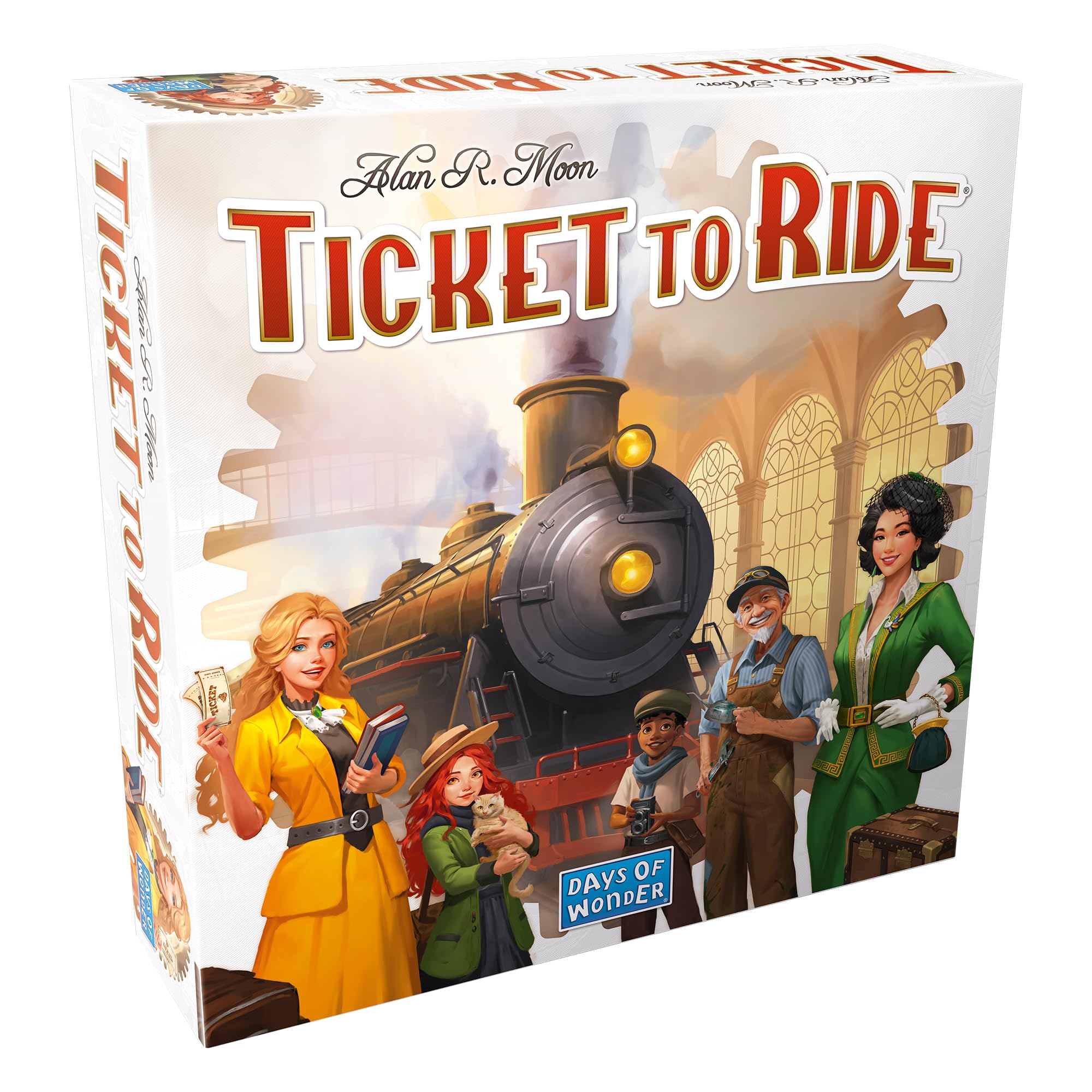
3. Asmodee Ticket to Ride Board Game (Refresh)
The train game that taught a generation of couples to say “sorry, I needed that route.”
Collect colour sets of train cards, claim routes across a giant map of North America, and connect your tickets before your partner blocks the line. The box is generous: 1 game board, 225 plastic trains in 5 colours, 110 train cards, 33 tickets, a longest path bonus card, 5 wooden scoring markers, and the rulebook. The board measures 11.7 x 3 x 11.7 inches — bigger than the Azul board, and worth knowing if your table is small.
Easy rules are why this one keeps coming out for couples who are not hobby gamers. Buyers consistently rate it easy to learn and play, with good component quality and engaging gameplay. The pull is a set-collection loop (you gather matching cards to score) that stays interesting with just the two of you. Strategy and luck trade punches, so a bad draw does not sink the whole night. Listed playtime is 30-60 minutes, which puts it on the longer side of this list.
Two things tilt it toward family game night rather than a tight duel. With only two players the map is wide open and there is less blocking tension, so it feels more relaxed and less competitive than Ticket to Ride’s smaller-box rivals. And the 33 tickets plus 110 train cards mean a fair amount of shuffling and sorting before you can start. Neither is a problem — just expect a calmer evening than a pure duel gives you.
Pick it for: couples who sometimes host, since it scales cleanly from two up to five without changing the rules.
Pass if: you want a short, sharp head-to-head fight — this is the gentler, longer option on the list.
4. Buffalo Games Planted Strategy Boardgame

Grow a houseplant collection in twenty minutes and argue about whose windowsill looks better.
You play plant cards, spend resource cards to feed them, and race to end the game with the best-decorated home. There are 42 plants to discover across the box, so you keep finding new ones to grow. The plant artwork and tokens look better than the price tier suggests, which is a big part of why it lands with non-strategy couples. Playtime is listed at 20-30 minutes, and the box plays 2-5 players aged 10 and up.
What people respond to in this one is how fast it moves. A full game finishes in the time it takes to make dinner, and the rules are light enough that you are playing within a few minutes. Gameplay is the aspect buyers praise most, followed by ease of play, and the player-capacity mattering to families is a real draw if you sometimes add a teenager to the table. It plays comfortably at two — the resource cards give you enough to do without a crowded board.
The honest limit is depth. Planted is a filler game — a bright, quick, pleasant puzzle rather than something you will strategize over for months. That is exactly what a lot of couples want on a weeknight when neither of you wants to think hard. Just do not buy it expecting the tactical bite of a 7 Wonders Duel. The 10+ age floor also means it is not the one to grab if you want young kids at the table.
The real-world read: it is the lightest game on this list that still has a winner and a bit of planning, which makes it the safest pick for a couple who disagree about how much strategy they want.
What you are trading away: a quick 20-minute sprint each game, which is great until you want a longer, meatier session — for that, look at the duel games here.
Best for: a couple that wants a short, pretty game that finishes before the food arrives.
skip it if: you want deep strategy every night — this one is built to be light and fast on purpose.
5. Asmodee 7 Wonders Duel Board Game

Three ways to crush a rival in thirty minutes — military, science, or sheer prestige.
If one of you likes to win by a plan and the other likes to win by surprise, this is the duel that satisfies both. You take alternating cards from a laid-out structure to build a civilization, and victory arrives one of three ways: invading your opponent’s capital, monopolizing scientific advancement, or finishing with the most victory points. Only seven of the eight Wonders can ever be built, so every game forces a real choice. Playtime is listed at 30 minutes, and cards are drafted one at a time, so there is no moment where nobody is doing anything.
Compared with the Azul above, this one asks more of two players — the tile game you can teach in five minutes, while 7 Wonders Duel wants a run-through first. Expect the setup to look busy the first time you open it; a lot of players find it a little intimidating until the first card comes out. The strategy and speed are why it stays in rotation, and the ability to win three different ways means no single dominant tactic runs the table forever. The replayability comes from those different paths rather than a big card pool.
The one genuine gripe is card feel — some owners find them on the thin side compared to the solid boards elsewhere on this list. They hold up fine in a card game you play occasionally over a table, but if you handle your games roughly, consider sleeves. What you are buying is a head-to-head duel with real tactical decisions and a 30-minute finish, and that is where it shines.
The strategic pull
- Three separate win conditions keep the table unpredictable
- Card drafting means both of you are thinking on every turn
- 30-minute playtime fits a normal weeknight
The trade-offs
- Setup looks busy on a first run and needs a patient teach
- Cards feel thinner than the boards in this list
For the couple that: wants a real strategy fight where every card choice matters.
Try something else if: either of you wants to play within five minutes of opening the box — this needs a patient first game.
6. Everdell Duo Standalone Board Game
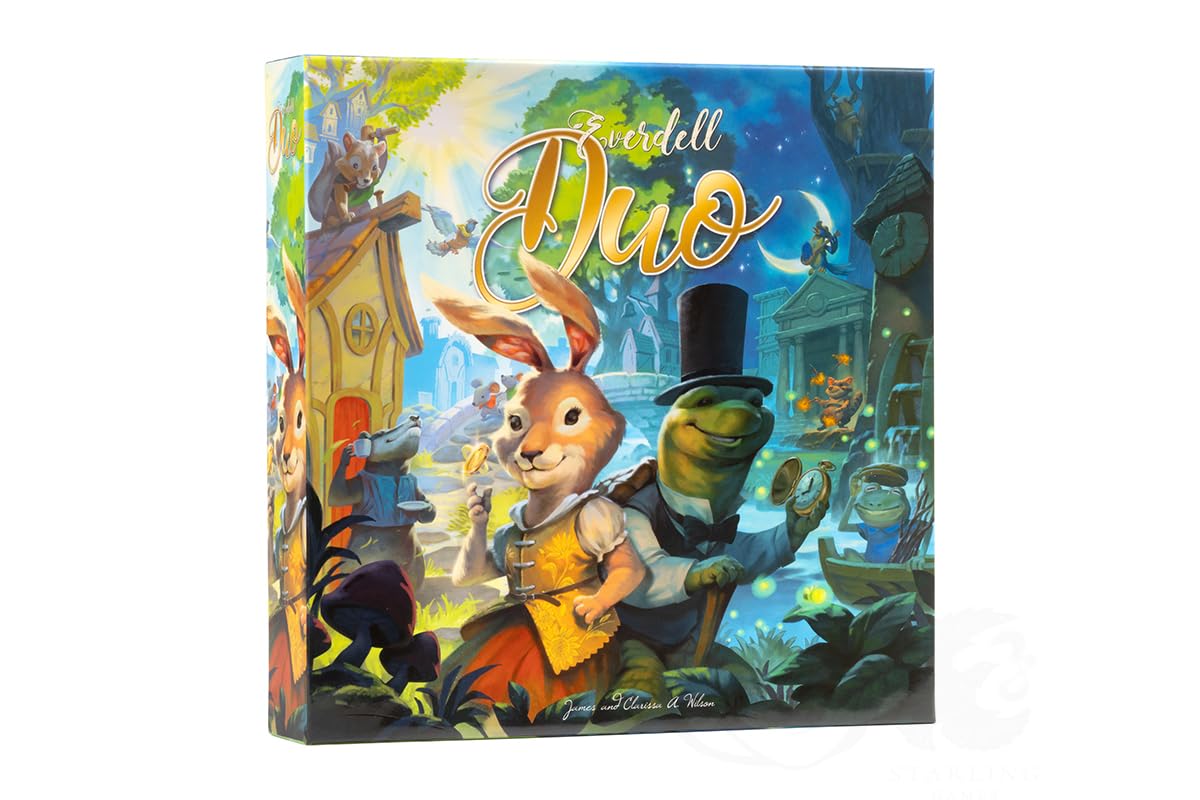
Build a woodland city together or against each other — your call, and that is the whole idea.
Most games on this list force one mode. Everdell Duo lets you choose: compete to build rival critter cities, or collaborate on a shared one in full co-op mode across a 15-chapter campaign. It is a complete, self-contained game made specifically for 1-2 players, so there is no base box to buy first. Playtime is listed at 30 minutes, and the setup is short enough that it really can come off the shelf on a whim.
The choose-your-mode design is what makes it a smart pick for couples whose mood shifts. On a tired night the co-op campaign means you are solving a puzzle side by side rather than competing. On a lively night you turn the same components into a head-to-head city-building race. The thick, tactile pieces and woodland-critter art suit anyone who likes a cozy look on the table. The game plays 1-2, so it is also the rare box here that works solo when one partner is away.
Fair warning on the teach: difficulty is the mixed part of the picture. Some pairs pick it up in one sitting, while others find the first game takes a while before the strategy clicks. That is normal for a light engine-builder, but it does mean this is not the box to open on a night when you are already worn out. Give it a first game where learning is the goal, not winning, and the second run gets smooth.
Consider this: if your ideal night can be a team puzzle one week and a friendly competition the next.
Hold off if: you want zero learning curve — the first playthrough asks for some patience.
7. Smirk and Dagger BOOP 2-Player Cat Strategy Board Game

Thirty-two wooden cats bouncing each other off a quilted bed — cute, and sneakily tactical.
The premise is absurd and that is the point. You place kittens on a grid, and each placement “boops” (pushes) adjacent cats one space away, so every move ripples across the board. Line up three in a row to win. The box comes with 32 wooden cat pieces and a soft quilted bed board, and the rules take a few minutes to explain to anyone, which makes it the easiest pick here to get on the table with a non-gamer partner.
The look of it does the heavy lifting for couples who find big strategy boxes off-putting. Cuteness is rated near-unanimously by buyers — a genuinely rare thing — and ease of use follows right behind. Under it all the boop mechanic creates real disruption: pieces you placed get shoved out of position, so you cannot just plan three moves ahead and switch off. Games run under 30 minutes, with the box listing 20 minutes, ideal for a between-dinners slot.
The surprise is the difficulty. Some pairs assume it is a kids’ game and then lose the first three games to a partner who planned properly. Adults can find it genuinely challenging. That cuts both ways: it makes a better game for grown-ups than the art suggests, but it is also not the mindless cute filler someone might grab for kids. The 10+ age floor reflects that.
Why it earns a spot: 32 wooden pieces you want to touch, a rule set you can explain to a first-timer in minutes, and strategic depth that catches people off guard — a rare combination at this price tier.
What to expect: a soft quilted bed board that is not going to survive a spilled drink, and a game where luck on a placement can swing a round — the boop is the fun and the frustration in one.
the balance is: a couple that wants something cute and quick and quickly finds themselves caring about winning.
Not for you if: you want zero luck in your board games — boop randomness can flip a round.
8. Splendor Duel Board Game
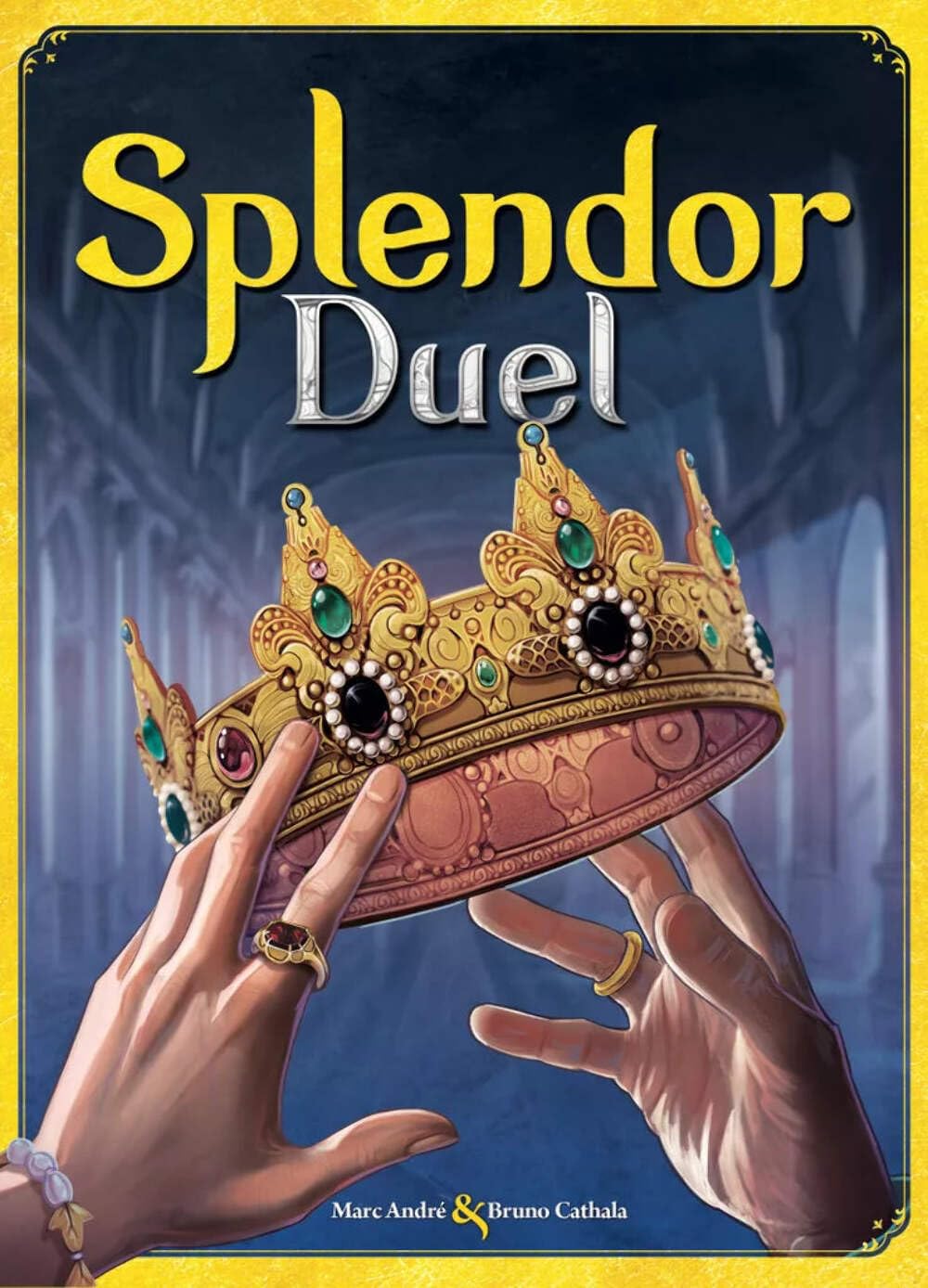
A gem-trading race in a box small enough to live in a suitcase.
Collect gem tokens, buy development cards, build combinations, and race for prestige points against one opponent. Splendor Duel takes the classic Splendor set-collection loop and strips it to exactly two players, with three different win conditions to chase. The box has 1 victory tile, 67 jewel cards, 1 bag, 3 privilege scrolls, 25 plastic gem tokens, 1 common board, 4 royal cards, and a rules booklet. It measures 5.11 x 7 x 1.88 inches — by a clean margin the smallest footprint here, and the one genuinely easy to pack for a trip.
Two-player gaming is the reason it exists and the reason it works: the rivalry is baked in rather than added on. Games run about 30 minutes, easy enough to reach for on a weeknight. The compact size is not just about travel — a small board means you can play on a coffee table, a train tray, or a hotel desk without a dedicated table.
The one gripe to size honestly: the cards are small, and several players find them on the tiny side. That is a direct consequence of the compact box that makes it travel-friendly, so you are trading card size for portability on purpose. Functionally it plays fine, but if either of you struggles with small print, this is worth knowing before you buy.
Compact and competitive: the smallest box on this list still packs 67 jewel cards and three win conditions, so the travel size does not come at the cost of a real game.
Trade-off to accept: small cards and a small board are the price of that portable footprint — comfortable at a coffee table, tight if you like large, chunky components.
Take it if: you travel together and want a proper two-player duel that slides into a carry-on.
Don’t choose it if: small cards and a tiny board frustrate you — the portability is the whole point here.
Know the Specs
Player Count (why “2-4” is not the same as “for 2”)
Player count tells you how many people can sit at the table, not whether the game is any good with that few. A game designed for exactly two players tunes every rule for a one-on-one fight. A game that scales from two to five often adapts with extra cards or dummy players to fill the gaps. Both can be excellent — just read whether two is the intended balance or a squeezed-in option before you buy for a couple night.
Playtime and the first-play trap
The playtime on the box is the designer’s estimate for players who already know what they are doing. That number includes setup and rules-teaching only loosely, if at all. Expect the first game to run noticeably longer while you learn. If a 30-minute game sounds like your ideal evening, plan for the first night to be an hour and treat it as part of the fun.
Replayability and what actually drives it
Replayability is how many times a game stays interesting. It usually comes from one of three places: different starting setups, a large pool of cards so the same combinations do not keep coming up, or multiple win conditions that change your strategy. A game with a big box and few cards gets stale faster than a small box with many combinations. Look for the combination space, not the box size.
Age floor and mixed experience levels
The age floor is an estimate of the youngest player who can handle the rules and reading, not a hard rule. Under it means a simpler teach and fewer moving parts, which can be exactly what you need when one partner is a first-timer. If one of you is a seasoned gamer and the other is not, an 8+ or 10+ game with a short rulebook usually lands better than something heavy with a big rulebook.
Common Questions
Can these games really be played well with just two people?
How long does a first game take if neither of us has played before?
Which game is easiest to teach a partner who does not usually play board games?
Are these good for travel or a weekend away?
What is the difference between cooperative and competitive play?
How many players do each of these support?
Do these games include everything needed to play, or do I need to buy expansions?
Are the pieces durable for repeated play?
Which game suits a couple who disagree on how much strategy they want?
Is a themed game like the Lord of the Rings box any good for someone who has not seen the movies?
The Bottom Line
For most couples the answer is Azul. A 2018 Spiel des Jahres winner (a major German game-of-the-year award), 30-45 minute games, 100 resin tiles, and enough tactical bite to keep a veteran interested — it is the box that gets played most often because it is simultaneously the easiest to teach and satisfying enough to replay. If you want a head-to-head strategy fight with three different ways to win, 7 Wonders Duel is the sharper pick, just accept the more patient first game. And if your ideal night is talking rather than competing, the Talking Hearts conversation cards pack 200 prompts into a pocket-size box that works anywhere.
One tasteful nudge before you decide: Azul is the only game on this list sitting at 4.5+ stars across 16,000+ owners. Start there, then add a themed duel like Middle-earth or Splendor for the nights you want a real fight.
How we choose
We do not accept paid placement. Every pick is matched to a real buyer and a real use-case; we do not hands-on test units.
Sources
Specifications: manufacturer listings and product documentation. Review insights: verified customer reviews, as of November 2026. Pricing: not shown on this page (it changes often); check the current price via the retailer link.
As an Amazon Associate, Gamepad Test earns from qualifying purchases. This does not affect which products we feature.