
Specs are compiled from manufacturer listings and verified buyer reviews and can change over time — please confirm the key details on the product page before buying.
You want a headset with a sharp picture and no setup surprises once the box is open. That usually means shopping by resolution and refresh rate, not by whichever model gets the loudest launch. The short answer: the Quest 3 512GB with the Elite Strap is the safest all-round buy here, and the Quest 3S is the smarter value if you mainly want games and casual mixed reality.
This guide is built by comparing the manufacturers’ published specifications and the patterns across verified customer reviews, so you get each pick’s real strengths and trade-offs instead of marketing spin.
Eight headsets are grouped here by what each one does well, from pancake-lens clarity (thin flat lenses that keep the picture sharp) to PC VR with no base stations (no external tracking boxes to mount). Each pick is checked against its own spec sheet and owner feedback, so you can match a headset to your room, your PC, and how much setup you will tolerate. That is what shopping the most popular virtual reality headset market really takes today.
Top Picks

How To Choose The Best Most Popular Virtual Reality Headset
A “4K” label on the box does not mean a sharp picture in VR. Sharpness comes from how many pixels land in each degree of your vision, so a headset can carry a big headline number and still look soft at the edges. Start with per-eye resolution (the pixels each eye gets) and field of view (how wide the picture spreads), then decide between a cord-free standalone unit and a PC-tethered one.
Standalone or PC-tethered
A standalone headset like the Quest models runs games from inside the visor, so you can play anywhere in the room. A PC-tethered headset such as the Valve Index or Pimax Crystal Super pulls its power from a desktop graphics card, which means more visual detail but a cable and a capable PC you already own.
Resolution, refresh rate, and lens type
Refresh rate is how many times per second the screen redraws, measured in Hertz (Hz). A 120Hz panel redraws twice as often as a 60Hz one, which smooths out fast head turns in racing and action titles. Lens type matters too: pancake lenses are flatter and thinner, while aspherical lenses are shaped to push pixels toward the edges of your view.
Battery and comfort over long sessions
A hot-swappable battery lets you swap in a charged pack without shutting the headset down. Strap design and weight balance decide whether you can wear the thing for an hour or three. If you plan on marathons, check the battery rating and the strap design before you commit.
Side-by-Side Comparison
| Model | Best For | Display Resolution | Refresh Rate | Field of View | Amazon |
|---|---|---|---|---|---|
| Quest 3 512GB + Elite Strap★ Best Overall | All-round standalone VR | 1920×1080 per eye | 90 Hz | 110 degrees | Amazon |
| Meta Quest 3S 256GBBest Value | Budget mixed reality | 1832 x 1920 per Eye | 60 Hz | — | Amazon |
| Meta Quest 3 512GBTop Performer | Sharp standalone gaming | 4128×2208 pixels | 120 Hz | — | Amazon |
| HTC Vive XR Elite with Deluxe Pack | Base-station-free PC VR | 3840 x 1920 | 90 Hz | 110° | Amazon |
| Valve Index VR Headset | High-refresh SteamVR | 1440 x 1600 | 120 Hz | 120 degrees | Amazon |
| Meta Quest Pro | Face tracking and multitasking | See description | 90 Hz | — | Amazon |
| HTC Vive Focus Vision | Hot-swap battery PC VR | 2448 x 2448 per eye | 90 Hz | 120 degrees | Amazon |
| Pimax Crystal Super | Simulators and ultra-sharp PC VR | 3840×3840 per eye | 90 Hz | 140 degrees | Amazon |
Detailed Reviews
1. Quest 3 512GB + Elite Strap
Our pick — 4.5+★ from 100+ verified ratings; the strongest balance of quality and price.
The version that ships with the comfort strap already in the box.
The first thing to know is what the Elite Strap does for you. Meta’s base Quest 3 comes with a simple soft strap; this bundle replaces it with a rigid adjustable headband, so the visor’s weight sits balanced instead of pulling on your face. For long sessions in active games, that rigid headband matters more than most spec bumps.
Storage is the second reason this one earns the top slot. 512GB of internal memory means you can keep a large library of VR apps installed without deleting one game to make room for the next. The display runs at 1920×1080 per eye on an LCD panel, with a 110-degree field of view and a 90Hz refresh rate, so text and menus stay readable and head turns stay smooth.
The trade-off here is the panel, not the strap. This is the 90Hz LCD version (90 screen refreshes per second), and the newer Meta Quest 3 512GB listing advertises a 120Hz refresh rate alongside its higher 4128×2208 combined resolution. So if raw smoothness and pixel density matter most to you, that sibling model leads on both numbers. This one wins on value and setup simplicity, because the strap upgrade is already done for you.
Where it earns its keep
- 512GB of storage holds a deep VR library without constant housekeeping.
- Elite Strap’s rigid adjustable headband spreads weight for longer wear.
- 110-degree field of view keeps the world feeling wide.
- USB Type-C charging and a motion-sensing controller pair keep setup quick.
What to weigh first
- Runs at 90Hz — the Quest 3 512GB sibling lists 120Hz.
- Per-eye 1920×1080 resolution trails the higher pixel counts in this list.
Best fit for: buyers who want one headset that plays games, handles mixed reality, and already comes with the comfort upgrade.
Think twice if: you specifically want the 120Hz panel and higher resolution — that lives on the other Quest 3 512GB listing.
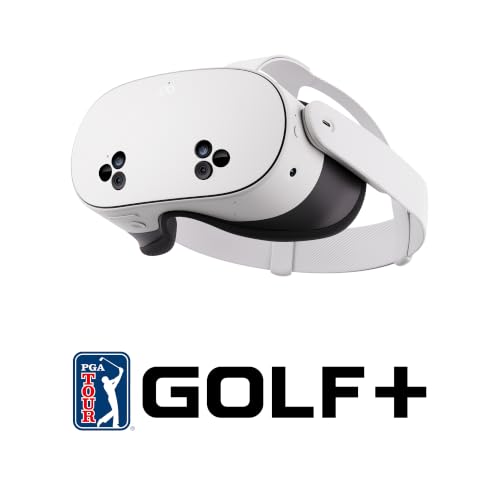
2. Meta Quest 3S 256GB | VR Headset — GOLF+ Included
A full mixed-reality headset that undercuts the premium models, then throws in a golf game.
New to VR and want to test the water without a big outlay? This is the entry point that makes sense. The spec sheet reads like a serious machine: a Snapdragon XR2 Gen 2 processor (the headset’s main chip) with 2x the graphical processing power of the earlier chip, 8GB of RAM for sharper graphics, and dual RGB color cameras driving full-color passthrough (your real room shows in color behind virtual objects).
Battery life is rated at 2 hours, which is fine for a single play session but not an all-evening marathon. The display runs at 1832 x 1920 per eye, and refresh rate is 60 Hz — the Quest 3 512GB lists 120 Hz, so this one clearly stays at the lower end of the smoothness scale. For casual gaming and checking out mixed reality, that is a reasonable exchange.
What gets noticed most on this headset is pure performance, with fun right behind it — the XR2 Gen 2 chip really does keep menus snappy and games loading quickly. The lens fogging that turns up in owner feedback is the recurring gripe; a wipe with the cloth that ships in the box sorts it, and it is more common in humid rooms or after a hard session. There is also a GOLF+ game bundled in, with a code you claim through the Meta Horizon app during setup.
Where the value lands: a current-generation processor, 8GB of RAM, and full-color passthrough at the budget-friendly end of the range — that combination is what makes this one easy to recommend for a first headset.
Worth knowing: it runs at 60 Hz and carries a 2-hour rated battery, so it is the pick for casual sessions, not long high-frame-rate marathons.
Reach for this if: you are buying a first VR headset and want mixed reality and a modern processor without premium-tier money.
Look elsewhere if: you need 120Hz smoothness and a bigger single-charge play window — the Quest 3 siblings deliver more on both counts.
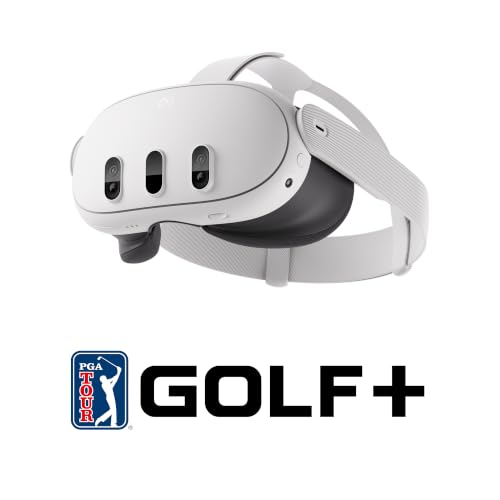
3. Meta Quest 3 512GB | VR Headset — GOLF+ Included
The crowd favorite for a reason — the panel here does the heavy lifting.
Picture quality is the headline, and it holds up. The display tops out at 4128×2208 pixels with a refresh rate of 120 Hz, so fast head turns stay smooth and detail in games reads clearly. That 120Hz panel is the same figure the Valve Index lists, but this headset gets there without a PC cable — a meaningful difference if you want high-refresh play in any room. Graphics and entertainment are what occupy the review pages here; games with family and friends connect especially well, and the 512GB of storage gives you room to install a real library.
The honest caveat is battery and reliability, both of which come up as the recurring frustrations. Rated at 2.2 hours, the battery is not built for marathon sessions, and some units have had early failures — enough that it is worth buying from a seller with a clear return window. Comfort is another mixed point: the strap that comes in the box suits some wearers and not others, which is why the Elite Strap bundle exists.
On value, most owners would say yes at this level. The 4.0+ star average across thousands of ratings reflects a headset that most buyers are happy with, and the ones who are not usually point back at battery life or a unit that failed. If you want the sharpest standalone picture here and can live with a 2.2-hour rated battery, this is the one.
The case for the panel: 4128×2208 pixels and 120Hz is the strongest combination of resolution and smoothness on a cord-free headset in this list — that is the spec that sells it.
What to plan for: a 2.2-hour rated battery means a charging routine, and a strap upgrade is worth budgeting for if comfort matters to you.
Top of the list for: anyone who wants the best standalone picture and refresh rate without a PC.
Not the one for: marathon players who need all-day battery — the 2.2-hour rating will have you reaching for the charger.
4. HTC Vive XR Elite with Deluxe Pack

Escape the base stations: a compact PC VR headset with a swappable battery cradle.
Setup is where the XR Elite earns its place. There are no base stations to mount on your walls — four wide field-of-view tracking cameras handle tracking from inside the headset, so you can unbox it and be in a game within minutes. Add the Deluxe Pack and you get a VIVE Face Gasket 2.0, a Deluxe Strap, Temple Clips, and an MR Gasket, which together make longer sessions more tolerable than the stock setup.
The display is a dual-LCD setup at 3840 x 1920 combined, with 19 pixels per degree (sharpness per slice of your view), a 110-degree field of view, and a 90Hz refresh rate. Compared with the Valve Index, which lists 1440 x 1600, you get a much higher raw pixel count in a headset that needs no PC base station or lighthouses (external tracking boxes) on day one. The Index still edges it on refresh rate at 120 Hz and field of view at 120 degrees. For PC VR over a link cable, this is the more travel-friendly package.
Comfort and functionality stay honest: the diopter dials and stepless IPD adjust for individual vision, which is rare at this level, and the swappable battery gives you up to 2 hours of continuous power with a hot-swap option. Picture quality and value are the split vote — some buyers love the graphics, others find the edges softer than expected. For PC VR enthusiasts who want a compact, base-station-free headset with built-in audio and a battery you can swap, it does the job.
Reasons it stands out
- No base stations — four tracking cameras do the work inside the visor.
- Swappable battery rated at up to 2 hours keeps sessions going with a spare.
- Stepless IPD and diopter dials let you tune the focus yourself.
- Deluxe Pack adds a second face gasket, strap, and MR gasket.
Honest limits
- 90Hz refresh rate vs the Valve Index’s 120 Hz.
- Picture quality at the periphery is a split vote among buyers.
Built for: PC VR players who want a compact headset without a base-station setup.
Pass it by if: you prioritize maximum refresh rate and field of view over the compact, base-station-free design.
5. Valve Index VR Headset, Black, for PC/SteamVR

The refresh-rate specialist — but read the listing carefully before you buy.
Two numbers define this headset: 120Hz refresh rate and 120-degree field of view. The 120Hz panel redraws twice as often as a 60Hz unit, which is where the smoother feel in fast SteamVR titles comes from. The OLED display brings deep blacks and rich color in a way LCD panels struggle to match, and the wider 120-degree field of view gives you more side-to-side awareness.
What it does not include is the full kit. This listing is the headset only, and controllers and base stations are purchased separately — so budget for a complete setup if you are starting from nothing. It is also PC-only: no standalone play, no untethered movement, and no built-in passthrough. You need a PC or SteamVR-compatible rig, and you need the wall space for base stations.
Reliability is the honest split vote. Some buyers report a unit that works perfectly, others a headset that failed within days — that is the recurring pattern in the review pages, and it is worth factoring into your decision. For anyone already inside the SteamVR ecosystem with base stations and controllers on hand, this headset brings the highest refresh rate in this list along with OLED color, and it earns its place for that alone.
The spec that matters: 120Hz OLED at 120 degrees — the smoothest, most responsive panel in this group for fast PC VR.
The catch: it is headset-only, so controllers and base stations add up, and reliability is a split vote.
Suits: SteamVR veterans who already have base stations and controllers and want the highest refresh rate on a PC-tethered headset.
Wrong pick if: you are starting fresh — the complete-kit cost and base-station setup may not fit.
6. Meta Quest Pro Headset with Virtual Reality Field Trips

The multitasker: pancake lenses, eye tracking, and field trips aimed at the classroom.
This one is built for sitting at a desk as much as standing in a game. The Quest Pro carries 256GB of storage, 12GB of RAM, and 10 advanced VR/MR sensors, which together let it run multiple resizable virtual screens for work, messaging, or reading. Pancake lenses with local dimming and quantum dot technology push clarity across the whole view, and the battery is rated at 8 hours of average life — the longest figure in this entire list.
The standout feature is sound. Audio quality is what wins people over most in owner feedback, followed by the face tracking that turns your real expressions into avatar expressions during meetings. That face tracking is the split vote — some love it, others find it frustrating when controllers do not respond to hand movements. Controller quality is the one aspect that lands in negative territory, so plan on treating the controllers gently or budgeting for replacements eventually.
This bundle pairs the headset with a Meta Quest Pro 256GB unit and a subscription to Optima Academy Online field trips: one month of access to themed learning environments. That bundle suits classrooms and families who want ready-made VR lessons. If you want a headset for work and learning rather than pure gaming, this is the one built for that job.
What wins people over: sound quality is the most-praised thing here, followed closely by the face tracking that powers avatar expressions.
The honest trade-off: controllers are the weak point — expect to handle them carefully — and the face tracking is a love-it-or-not feature.
Choose it for: work, learning, and productivity — multiple virtual screens, long 8-hour rated battery, and classroom field trips bundled in.
skip it if: you want a pure gaming headset — the controller and tracking quirks are more noticeable when you are mid-game.
7. HTC Vive Focus Vision — Consumer Edition
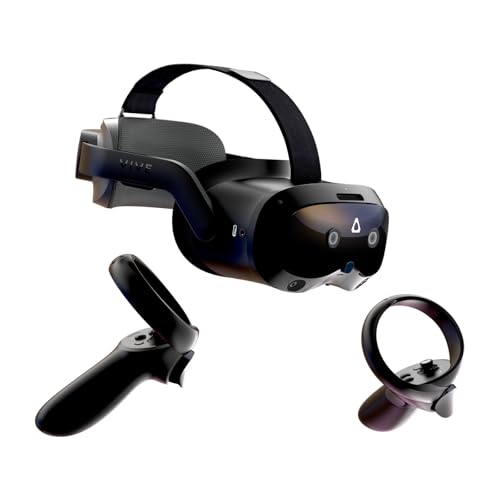
A 5K-resolution headset with a hot-swap battery and built-in eye tracking.
The display is the reason to look: 2448 x 2448 pixels per eye, a 120-degree field of view, and a 90Hz refresh rate. That per-eye resolution is higher than the Quest 3 512GB and the HTC XR Elite both, which is what gives the Focus Vision its sharp look in simulators and VRChat. Add DisplayPort mode for lossless PC streaming, plus built-in eye tracking and low-light hand tracking, and it hits a niche that few headsets in this list do.
Comfort is the strongest positive. Open-back dual-driver speakers with 3D spatial audio (sound that seems to come from around you) and auto-IPD adjustment (the lenses shift to line up with your pupils) make long sessions more tolerable. The hot-swappable battery with a reserve front pack means you can keep going while you swap the main pack. The Deluxe audio design and built-in 3.5mm jack add flexibility for headphones.
Connectivity and value are the honest sticking points. Owners mention unstable PC streaming over Wi-Fi in some setups, and the usual advice is to wire the PC straight to the router with an Ethernet cable for a smoother stream; HTC’s own instructions call for exactly that. Setup is a mixed experience too: some find it easy, others a chore. At the premium end of the market, this is a headset for the buyer who wants maximum per-eye resolution and eye tracking for simulators, and will put in a little network work to get it.
Where it impresses
- 2448 x 2448 per eye — the sharpest per-eye picture on a standalone headset here.
- Hot-swap battery with reserve front pack for near-continuous play.
- Built-in eye tracking and low-light hand tracking.
- Auto-IPD adjustment plus 3D spatial audio built in.
Where it asks more
- PC streaming over Wi-Fi can be unstable; wired Ethernet to the router is advised.
- Setup is reported as a chore by some buyers.
Worth it for: simulator and VRChat users who want the sharpest per-eye resolution and eye tracking in the group.
Maybe not for: anyone who wants plug-and-play Wi-Fi PC streaming with no network fiddling.
8. Pimax Crystal Super VR Headset, 3840×3840 per Eye
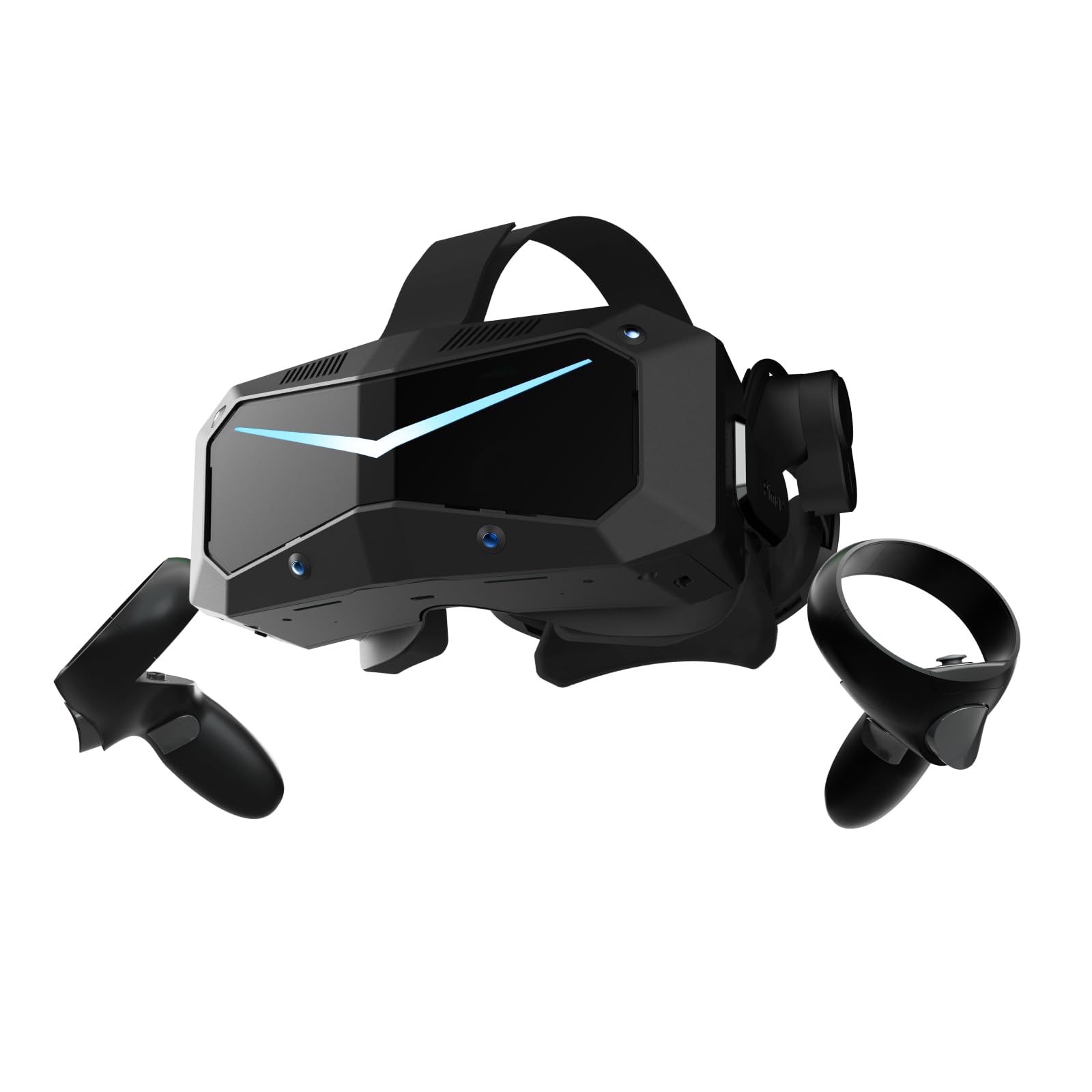
The resolution monster: 3840×3840 per eye, an ultrawide 140-degree view, and a lens built for simulators.
If flight and racing sims are your reason for buying VR, this headset is aimed at you. The QLED panel with Mini-LED local dimming delivers 3840×3840 pixels per eye and 50 pixels per degree, which is the sharpest per-eye resolution in this entire list and the highest field of view at 140 degrees. That ultrawide view is what matters in sim rigs — you get more of your surroundings in peripheral vision, which translates to better awareness on the track or in the air.
The rest of the package is equally serious. Aspherical lenses push pixels edge to edge, eye tracking is built in, and the refresh rate supports up to 90Hz. Precision inside-out tracking handles motion capture without external base stations, and the dynamic FOV adjustment can balance resolution and frame rate based on your GPU. The balanced weight distribution and replaceable facial interfaces help during the marathon sessions sim racers tend to put in.
The obvious limit is that this is PC-only and wired, connecting via DisplayPort and USB, so it is not a headset for untethered play in the front room. It is also the most premium pick in this group by a wide margin, which puts it firmly in the “I already have a capable PC and I know what I want” territory. It also carries the smallest rating base here, so buyer consensus is less established than the Meta options — a reason to read the listing carefully rather than treat it as a safe default.
The spec sheet in one line: 3840×3840 per eye at 50 PPD through a QLED Mini-LED panel with a 140-degree field of view — no other headset here reaches that pixel count.
What to know: wired DisplayPort-only setup and a premium-tier figure, so it suits sim racers with a serious PC rather than casual users.
The pick for: flight and racing sim users who prioritize raw resolution, ultrawide field of view, and eye tracking over portability.
Not the safest first buy: smaller owner feedback and a premium, PC-only setup make it a specialist choice over a crowd favorite.
Know the Specs
Resolution (per eye, not combined)
VR specs often list combined pixel counts, which sound bigger than what each eye actually sees. Compare per-eye numbers when you want a fair read: a headset at 3840×3840 per eye puts far more pixels in each eye’s view than one at 1920×1080 per eye. Higher per-eye resolution means text in menus stays readable and distant objects in simulators look sharp instead of a blur of blocks.
Pixels per degree (PPD)
PPD is how many pixels land in each degree of your field of view. The more pixels per degree, the tighter the image and the less visible the screen-door effect — the faint fence-like lines between pixels in older sets. A headset rated at 50 PPD is pushing a dense image into a wide view, which is why sim racing headsets chase this number harder than casual standalone units.
Refresh rate in Hertz
Hertz counts how many times the display redraws each second. A 120 Hz headset redraws twice as often as a 60 Hz one, which makes head turns feel smoother and can reduce the swimming sensation some people get in fast games. A 90 Hz panel sits between the two and is enough for most games; fast racing titles favor the higher number.
Field of view in degrees
Field of view is how wide the world looks to each eye. A 140-degree FOV wraps further into your peripheral vision than a 110-degree one, which matters in driving and flight sims where side awareness keeps you on the line. A narrower view can feel like peering through binoculars.
Battery type and capacity
A fixed battery rated at 2 hours means you charge between play sessions. A hot-swappable battery lets you pull the depleted pack and click in a charged one without shutting the headset down. If long sessions are your thing, the swap matters more than whether the rating says 2, 2.2, or 8 hours.
Standalone versus PC-tethered
A standalone headset runs games on its own internal chip; a tethered headset relies on a desktop GPU over a cable. Standalone gives you freedom to play anywhere, tethered gives you more visual horsepower for the money. Pick standalone if you play in different rooms; pick tethered if you play at a desk with a gaming PC.
Common Questions
Do I need a PC to use the Meta Quest 3S or Quest 3 standalone headsets?
Is 120 Hz actually better than 60 Hz for VR games?
Can I wear glasses inside these VR headsets?
What is the difference between pancake lenses and aspherical lenses?
How long can I play on a single charge?
Do these headsets need base stations mounted on my walls?
Can I play SteamVR games on a Meta Quest headset?
What is mixed reality and do I need it?
Is the Valve Index worth buying if it comes without controllers?
Which headset has the highest resolution in this group?
The Bottom Line
For most buyers, the most popular virtual reality headset winner is the Quest 3 512GB + Elite Strap, because it ships with the comfort upgrade already installed and 512GB of storage for a real library. If you want the sharpest standalone picture with a 120 Hz panel, grab the Meta Quest 3 512GB. And for flight and racing sims where raw resolution and a 140-degree field of view matter most, the Pimax Crystal Super is the specialist pick to reach for.
How we choose
We do not accept paid placement. Every pick is matched to a real buyer and a real use-case; we do not hands-on test units.
Sources
Specifications: manufacturer listings and product documentation. Review insights: verified customer reviews, as of November 2026. Pricing: not shown on this page (it changes often); check the current price via the retailer link.
As an Amazon Associate, Gamepad Test earns from qualifying purchases. This does not affect which products we feature.