
Specs are compiled from manufacturer listings and verified buyer reviews and can change over time — please confirm the key details on the product page before buying.
Which VR headset actually gives you the clearest picture? Short answer: the one with the most pixels packed into each eye and the widest field of view your graphics hardware can feed. Resolution per eye decides whether text is readable in a flight sim, and the panel type decides whether dark scenes look black or washed-out grey. This guide ranks nine headsets on exactly those picture-quality points, then tells you who each one really suits.
This guide is built by comparing the manufacturers’ published specifications and the patterns across verified customer reviews, so you get each pick’s real strengths and trade-offs instead of marketing spin.
You will see how per-eye resolution, refresh rate and field of view change what you actually see, and where each headset asks you to compromise. These are the headsets worth judging on the sharpness of the picture they put in front of your eyes.
Top Picks

How To Choose The Best Pictures of VR Headsets
The picture you see is set by three things, and they trade off against each other. Get them in the right order for your own use and you will not overpay for a panel your PC cannot drive. Get them wrong and you end up with a sharp headset running blurry, or a smooth one that reads like a pixel grid.
Resolution per eye is the number that decides sharpness
Resolution per eye means how many pixels each lens gets to show. A 3840×3840 per eye panel puts far more dots in front of you than a 1832 x 1920 per eye one, which is why sim racers chase the bigger figure. More pixels per eye means smaller screens in the cockpit stay legible instead of smearing into blocks.
Field of view decides how much world you see at once
Field of view (FOV) is the angle of the world visible through the lenses, measured in degrees. A 140-degree FOV wraps more of the scene around your eyes than a 110-degree one, which matters for checking your mirrors in a racing sim. A narrow FOV tends to feel like looking through a tunnel.
Refresh rate keeps fast motion clean
Refresh rate is how many times per second the screen redraws, written in Hz. A 120 Hz headset updates the image twice as often as a 60 Hz one, so fast corners and quick head turns stay crisp. Lower refresh rates can read as a slight smear during sharp movement.
Panel type changes how dark scenes look
LCD panels are common and bright. OLED and QLED panels can hold deeper blacks, and local dimming (which darkens parts of the screen independently) pushes contrast further. If you play dark horror or night-race sims, panel type matters as much as raw resolution.
Side-by-Side Comparison
| Model | Best For | Resolution Per Eye | Refresh Rate | Field of View | Amazon |
|---|---|---|---|---|---|
| Quest 3 512GB + Elite Strap★ Best Overall | All-round standalone play with room to store games | 1920×1080 per eye | 90 Hz | 110 degrees | Amazon |
| Meta Quest 3S 256GB with GOLF+Best for Golf | Golf and casual VR on a cord-free headset | 1832 x 1920 per eye | 60 Hz | — | Amazon |
| Meta Quest 3 512GB Renewed PremiumSharpest Standalone | Sharp standalone visuals on a tighter budget | 4K+ (per listing) | 120 Hz | — | Amazon |
| Valve Index (Headset Only) | PC/SteamVR players wanting a wide, fast panel | 1440 x 1600 | 120 Hz | 120 degrees | Amazon |
| HTC Vive XR Elite + Controllers | Portable mixed reality and PC-VR in one headset | 1920 x 1920 per eye | — | 110 degrees | Amazon |
| HTC Vive Pro Eye | Eye-tracking work and user analytics | 1440×800 | — | 110 degrees | Amazon |
| Pimax Crystal Light | Flight sims and iRacing on a PC | 2880 x 2880 per eye | 120 Hz | — | Amazon |
| Valve Index VR Full Kit (Renewed) | A complete SteamVR setup in one box | 1440×1600 per eye | 60 Hz | — | Amazon |
| Pimax Crystal Super | Sim racing and flight with the widest view | 3840×3840 per eye | 90 Hz | 140 degrees | Amazon |
Detailed Reviews
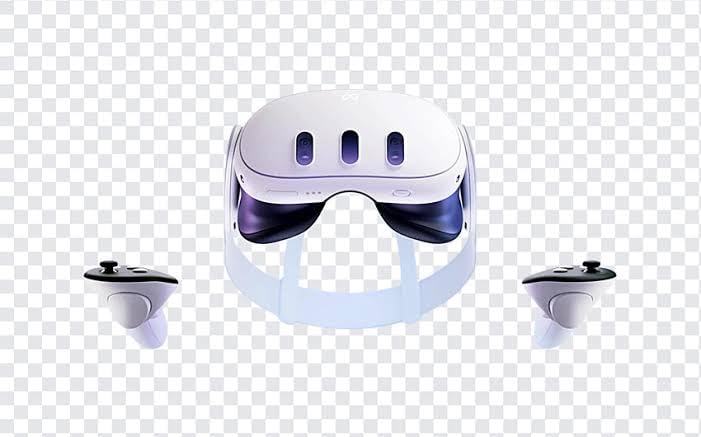
1. Quest 3 512GB + Elite Strap
Our pick — 4.5+★ from 100+ verified ratings; the strongest balance of quality and price.
A cord-free headset with a big library shelf and a strap built for long sessions.
Storage is the first thing that separates this one from its cheaper sibling. You get 512GB of space, and the Meta Quest 3S 256GB offers 256GB — a 2.0x gap that means roughly double the room for games, apps and recorded footage before you start deleting things. If you plan to buy a handful of big titles and keep them installed, that headroom stops the constant housekeeping.
The picture runs at 1920×1080 per eye on an LCD panel, refreshing at 90 Hz, with a 110-degree field of view. In plain terms, that is a sharp, smooth image for room-scale games and media, and the 110-degree field keeps the world around you without the wider wrap of the Valve Index at 120 degrees. The included Elite Strap is the quiet win here: it spreads weight across the back of your head, so a two-hour session feels less like a balancing act.
The catch is that this headset lists a lower per-eye resolution figure than the Pimax Crystal Light, which publishes 2880 x 2880 per eye. For most standalone play that difference will not nag at you, but sim racers reading tiny cockpit dials will notice it. It also has no eye tracking, so foveated tricks that sharpen what you look at are not part of the package.
Why it earns the top slot
- 512GB storage gives you real room for a growing library
- 90 Hz refresh keeps motion clean during fast games
- Elite Strap adds stability for longer sessions
- IPD adjustment dial lets you match the lenses to your eyes
Where it gives ground
- 1920×1080 per eye trails the high-resolution sim headsets
- 110-degree field of view is narrower than a 120-degree panel
- LCD panel can’t match OLED blacks in dark scenes
Reach for this if: you want one headset that handles games, media and casual fitness without a PC tether, and you value library space over maximum pixel count.
Look elsewhere if: you are building a dedicated sim rig and need the sharpest per-eye resolution the market sells.
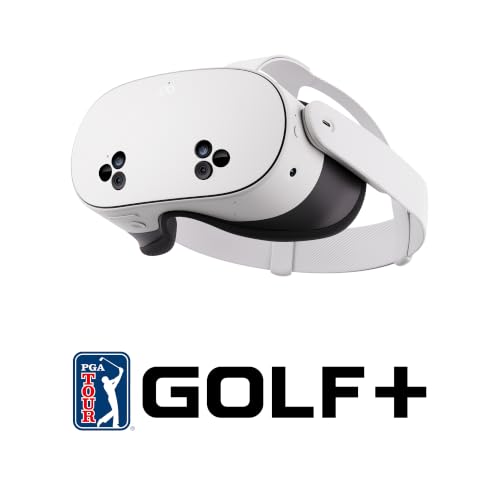
2. Meta Quest 3S 256GB | VR Headset — GOLF+ Included
The bundle that turns your living room into a tee box, with a round at TPC Sawgrass waiting.
Performance is what wins people over on this one, and the bundle seals it: you get GOLF+ with 1,800 in-game credits, so the first thing you can do is play a full round instead of browsing a store. The headset runs on the Snapdragon XR2 Gen 2 processor (a chip built for VR) with 8GB of RAM, which the listing describes as 33% more memory. In practice, load times stay short and the passthrough view of your room looks full-color thanks to two RGB cameras.
Its 1832 x 1920 per eye resolution is a step behind the Quest 3 512GB + Elite Strap’s 1920×1080 per eye, and the listing rates refresh at 60 Hz against the Quest 3’s 90 Hz. That gap shows up in fast head turns more than in a slow golf swing. Battery life is rated at 2 hours, which pairs honestly with the Quest 3 512GB Renewed Premium’s 2.2 hours — close enough that neither wins a marathon.
The honest trade-off is the lenses: fogging comes up, and a few find reliability uneven with crashes and durability notes. Nothing here makes it a bad buy for casual play, but if you sweat through long sessions, plan on wiping the lenses. Treat it as a friendly, budget-minded headset rather than a precision sim tool.
What you get: a cord-free headset with a real game bundled in, plus 256GB of storage for your own library.
Size the limits: 60 Hz refresh is the slowest on this list, so very fast titles will look less fluid than on a 120 Hz panel.
Suits you when: you want to try VR through golf and casual games without spending premium money on a headset.
Think twice if: fast-paced action and crisp peripheral vision top your wish list.
3. Meta Quest 3 512GB
A renewed Quest 3 that brings sharper visuals and a faster panel to a friendlier tier.
Start with the panel: this one refreshes at 120 Hz, double the 60 Hz of the Meta Quest 3S 256GB, and the listing describes a nearly 30% leap in resolution with a 4K Infinite Display rated at 4K+. Like its sibling, it runs the Snapdragon XR2 Gen 2 processor with 8GB of RAM and pairs full-color passthrough from two RGB cameras. What that means for you is a smoother, more detailed image in standalone games, without a PC in the room.
It shares the same 512GB storage as the Quest 3 512GB + Elite Strap above, so both give you the same library headroom — the difference is what comes in the box. This version ships with an AC adapter only, while the other includes the Elite Strap. If you already plan to buy a comfort strap, that evens out; if not, budget for one.
The recurring gripe here is battery life, and it is real: the listing rates 2.2 hours, and long sessions will send you hunting for a cable. Some also report headaches from the fit, and a few units arrived unable to power on. Those are the reasons to buy renewed with care, not reasons to write the headset off.
What stands out
- 120 Hz refresh for smoother motion than 60 Hz headsets
- 512GB storage matches the top pick’s library room
- 4K+ rated display and clear visuals praised in feedback
What to plan around
- 2.2-hour battery means frequent charging on long days
- Renewed unit, so inspect it on arrival
- No Elite Strap in the box
Best matched to: standalone players who want a fast 120 Hz panel and big storage, and are comfortable buying renewed.
Not the one for: buyers who want a brand-new sealed box and a comfort strap included.
4. Valve Index VR Headset, Black, for PC/SteamVR

A PC headset that trades accessory clutter for a wide, fast view of SteamVR.
Its 120-degree field of view is the widest on this list short of the Pimax Crystal Super’s 140 degrees, and it beats the Quest 3 512GB + Elite Strap’s 110 degrees. Combined with a 120 Hz refresh rate, that gives you a big, fluid picture — the kind that makes cockpit edges and peripheral road markers easier to catch. A 1440 x 1600 per eye OLED panel keeps blacks deep in dark sim scenes.
Read the listing carefully before you buy: this is the headset only, and controllers plus base stations are purchased separately. A head strap adjustment pad may not be included either. That means the real setup cost and effort land above the sticker, which is why it sits where it does. If you already own Index controllers and lighthouses, this is the cleanest way to add a spare headset to your rig.
Quality and reliability land as mixed in owner feedback. Some units run perfectly for a long stretch; a few fail within days. With 4.0+ stars behind it, this is a specialist buy for SteamVR players who know the ecosystem, not a first headset for the curious.
What you see: a 120-degree field of view (how wide the picture spreads around you) at 120 Hz (the screen refreshes 120 times a second) makes PC play feel genuinely rich.
Mind the box contents: headset only — budget for controllers and base stations before you can play.
Worth it for: SteamVR veterans who already own the controllers and base stations and want a wide, high-refresh headset.
Pass on it if: you need a complete, plug-and-play kit in one purchase.
5. HTC Vive XR Elite Virtual Reality Headset + Controllers

A slim mixed-reality headset that swaps batteries and moves between phone-style standalone and PC VR.
What makes this one unusual is the fit control: adjustable IPD and diopter dials let you tune lens spacing and focus without glasses, and hot-swappable batteries mean a spare keeps you playing. The panel is listed at 1920 x 1920 per eye with a 110-degree field of view, and the Snapdragon XR2 processor drives high-resolution XR passthrough. You can also connect it to a VR-ready PC for low-latency PC-VR gaming.
Against the Quest 3 512GB + Elite Strap, it holds the same 110-degree field but a squarer per-eye resolution, and it adds PC-VR compatibility the standalone Meta headsets lack. The compact design is the point: it travels, and it can do standalone and tethered work in one kit.
Comfort and image quality split buyers. The visuals read clear to some and lacking peripheral sharpness to others, and fit for a long session varies from person to person. Performance is called flawless by some and buggy by others, and connectivity to PC and phone is the recurring friction point. At 3.0+ stars, this is a headset to try before you commit, or buy where returns are simple.
What works in its favour
- Diopter dials let you adjust focus without glasses
- Hot-swappable batteries extend a long session
- Standalone XR plus PC-VR connection in one headset
The honest frictions
- PC and phone connections come up as a pain point
- Peripheral sharpness and fit don’t suit every head shape
Pick this one if: portability, focus adjustment without glasses and a PC-VR option in one device are your priorities.
Better to skip it if: you want a settled, crash-free experience from the start.
6. HTC Vive Pro Eye Virtual Reality System

Built for gaze data and user analytics, not just play.
The headline is precision eye tracking for creative and commercial work, plus user analytics like heatmapping and gaze tracking. Foveated rendering, which pushes detail into wherever you are looking, then trims the load on your graphics card. That makes this the odd pick in a picture-quality list: it is aimed at studios and researchers gathering data, not at gamers chasing the sharpest panel.
And the panel is modest by the standard set higher up. Its 1440×800 resolution runs on an OLED display with a 110-degree field of view, which is well below the Pimax Crystal Light’s 2880 x 2880 per eye. You also get 2 months of Viveport Infinity with 700+ games and apps in the box, so there is a ready library on day one.
The visual feedback is mixed: gaze tracking works well for some, while periphery blur shows up as a complaint. Weigh the listed weight too — this is a heavy, stationary system, not a headset you toss in a bag. The 3.5+ star picture reflects a tool with a job to do rather than an all-rounder.
Its real job: eye-movement analysis and foveated rendering for commercial and research projects.
What you accept: 1440×800 resolution is on the low side for pure visual fidelity.
The right tool for: creators and researchers who need gaze data and eye-tracked rendering.
Wrong pick when: sharpness per eye is the whole reason you are shopping.
7. Pimax Crystal Light VR Headset for PC
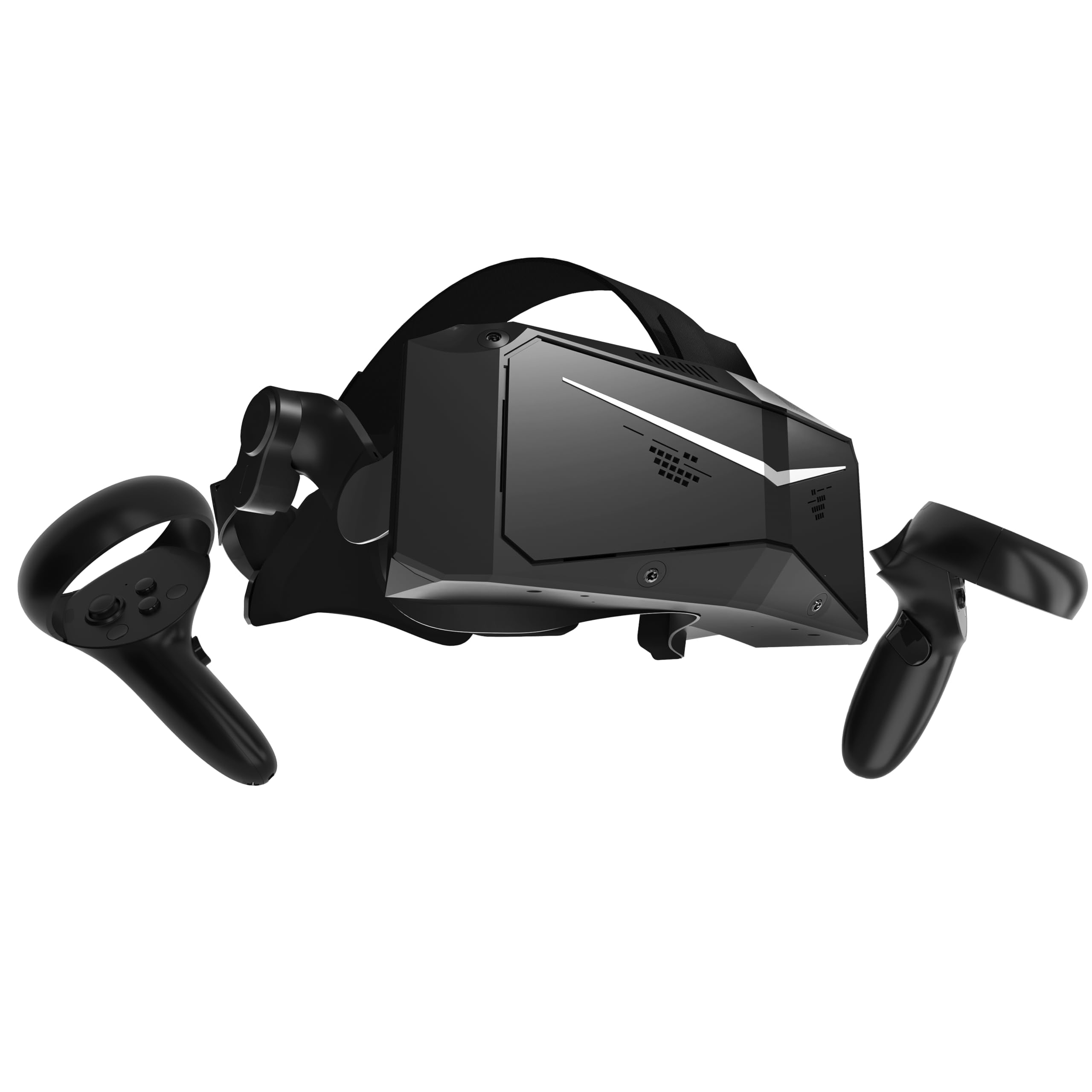
Built around a per-eye figure that leaves every other PC headset here behind.
Read the number: 2880 x 2880 per eye, which the listing totals at 16.6 million pixels, on a QLED display with local dimming and HDR. That dwarfs the Valve Index’s 1440 x 1600, and it is the kind of edge-to-edge clarity that makes a glass aspheric lens worth its name. For iRacing and flight sims, that translates to readable gauges and cleaner distant terrain.
Refresh tops out at 120 Hz for low-latency motion, and inside-out camera tracking means no external base stations to mount. It works with SteamVR setups including Valve Index Knuckles or HTC VIVE controllers, and fixed 2.0 foveated rendering keeps the load in check. The weight is the trade-off you feel: about 815 grams (28 ounces), so plan on a balanced fit for long sessions.
What is missing from the picture is owner feedback — this one carries 3.0+ stars with only 10+ ratings behind it, so treat the score as early signal rather than settled consensus. If you want a proven track record, look at the Quest 3 512GB Renewed Premium and its larger feedback pool instead.
Strengths worth the weight
- 2880 x 2880 per eye is the sharpest PC picture under the Crystal Super
- QLED with local dimming and HDR for contrast
- Works with SteamVR controllers you may already own
What to weigh up
- About 815 grams makes long sessions a neck workout
- Very few ratings so far, so the score is not settled
Choose it for: a PC sim rig where per-eye resolution and edge-to-edge clarity outrank everything.
Look elsewhere for: a headset with a deep, proven review history.
8. Valve Index VR Full Kit (Renewed)

The everything-included route to SteamVR, refurbished and ready to set up.
Where the headset-only Valve Index asks you to buy controllers and base stations separately, this box ships with all of it: headset, Knuckles controllers and base stations. That is the whole reason this pick exists — you unbox one kit and climb straight into SteamVR. The resolution is listed at 1440×1600 pixels per eye, matching the headset-only version, with hand tracking and Knuckles controllers for finger-level input.
The trade-off is the refresh figure. This listing states 60 Hz, against the headset-only Valve Index’s 120 Hz, so fast motion will look less fluid than on that wider, faster panel. Since it is a renewed unit, it has been professionally inspected to work and look like new, and it is eligible for replacement or refund under the Amazon Renewed Guarantee.
Owner feedback is thin but positive on function: the kit works as it should, while quality notes are mixed. With 4.0+ stars on a small base, treat it as a sensible way to enter SteamVR without chasing down parts.
Why it makes sense: one purchase covers headset, controllers and base stations — no missing pieces.
The snag to know: 60 Hz refresh sits well below the 120 Hz of the headset-only Index.
Makes sense when: you want a full SteamVR kit in one order and are happy with renewed hardware.
Give it a miss when: a 120 Hz panel is non-negotiable for you.
9. Pimax Crystal Super VR Headset
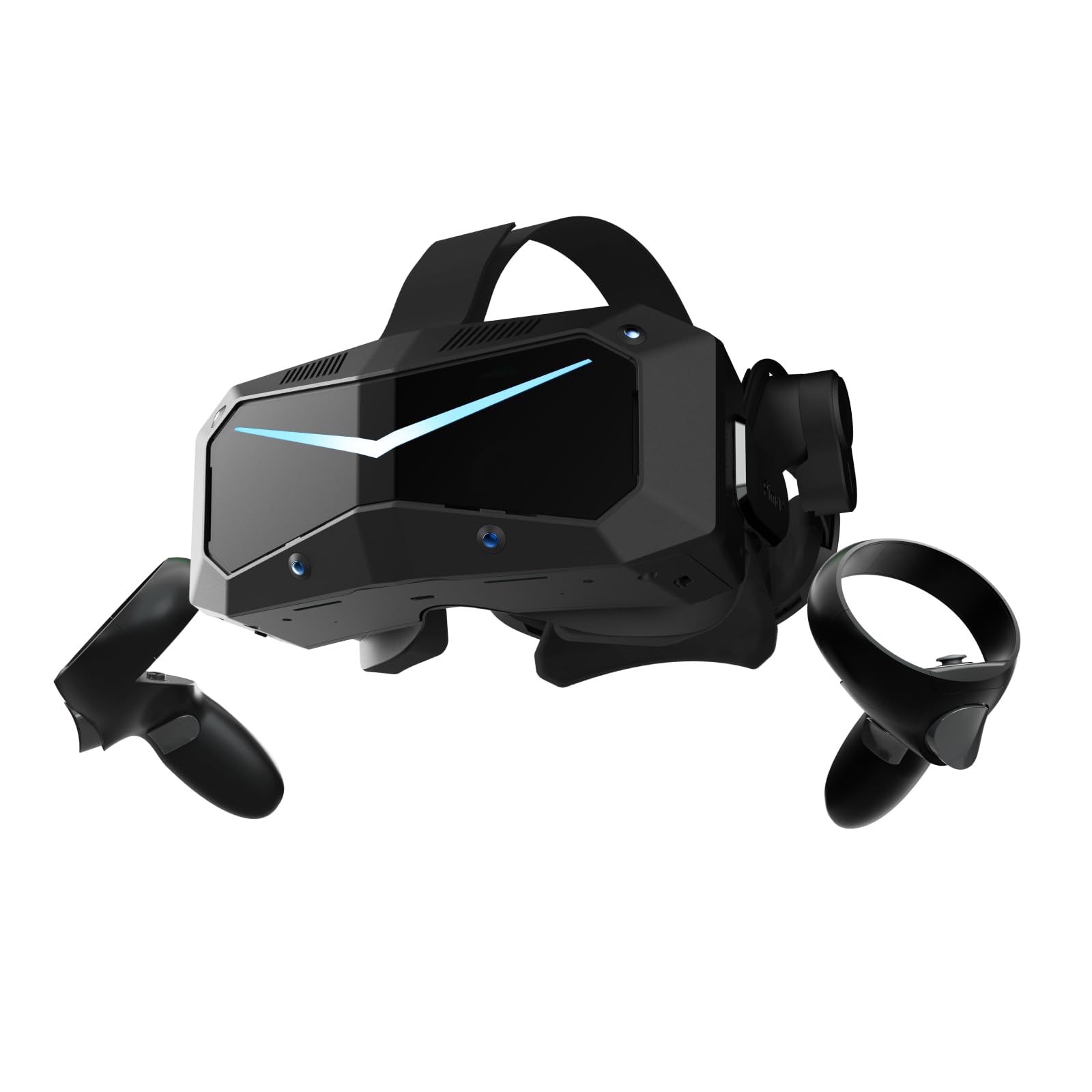
The highest per-eye pixel count here, paired with the widest window into the world.
Two numbers set this headset apart. First, 3840×3840 per eye on a QLED and Mini-LED display with local dimming, which the listing pairs with aspherical lenses rated at 50 PPD (pixels per degree) to cut the screen-door effect. Second, a 140-degree field of view, well beyond the Quest 3 512GB + Elite Strap’s 110 degrees and past the Valve Index’s 120 degrees. For sim racers, that wider window means more of the track and mirrors stay in view.
It also brings eye tracking, a 90 Hz refresh with dynamic FOV adjustment that balances resolution and frame rate against your graphics card, and inside-out tracking. Integrated 3D spatial audio and a noise-canceling mic round out the cockpit experience, and replaceable facial interfaces help over marathon sessions. Connection is wired over DisplayPort to a PC.
This is a specialized, PC-only headset, and it shows in the feedback base: 3.5+ stars across a small pool, so the record is early. If you are a casual player, the resolution and refresh demands will outrun most graphics cards. Come for the pixels and the field of view only if your PC can feed them.
What the spec sheet promises
- 3840×3840 per eye is the highest resolution on this list
- 140-degree field of view for maximum peripheral awareness
- QLED and Mini-LED with local dimming for deep contrast
- Eye tracking plus dynamic FOV to protect frame rates
What it asks of you
- Wired PC-only, so no standalone play
- Small feedback pool means its track record is still forming
The pick for: dedicated sim racers and pilots with a powerful PC who want the widest, sharpest view available here.
Not your headset if: you play untethered or your graphics card can’t drive the pixels.
Know the Specs
Per-eye resolution
This is the pixel count each eye sees, and it is the clearest marker of sharpness. A headset showing 3840×3840 per eye puts far more detail in front of you than one at 1440×800, so small text in a cockpit stays readable. Higher per-eye numbers also ask more of your graphics card, which is why standalone and PC headsets publish very different figures.
Field of view in degrees
Field of view is the angle of world your lenses reveal. At 140 degrees you see much more of the scene around you than at 110 degrees, which helps track opponents in your peripheral vision. A narrower field can feel like wearing blinkers, especially in fast racing sims where side awareness matters.
Refresh rate in Hz
Refresh rate is how many times per second the display redraws. A 120 Hz panel updates the image twice as often as a 60 Hz one, so head turns and quick corners look cleaner. The higher figure is worth having for action and racing, while slower, story-driven experiences are more forgiving.
Panel type and dimming
LCD, OLED and QLED describe the screen technology behind the lenses. OLED brings deep blacks, and QLED with local dimming darkens parts of the panel independently to lift contrast. If night races and dark scenes are your thing, that contrast matters as much as the raw pixel count.
Common Questions
Does higher per-eye resolution actually make VR look sharper?
Why does refresh rate matter for VR pictures?
What field of view should I look for in a VR headset?
Can I use a PC headset like the Valve Index without base stations?
Do I need a powerful PC to run the Pimax Crystal Super?
Is a renewed Quest 3 worth it compared with a new one?
How long does VR headset battery life last on a single charge?
What does eye tracking add to a VR headset?
Will glasses fit inside a VR headset?
Does a QLED panel beat LCD for VR pictures?
The Bottom Line
For most people, the best overall pick for pictures of vr headsets is the Quest 3 512GB + Elite Strap. It gives you 512GB of storage (room for a big game and media library), a 90 Hz panel (the screen refreshes 90 times a second) and a strap in the box, so you can play games, watch media and do casual fitness without a PC. If sharpness per eye for your sim rig is the whole goal, the Pimax Crystal Light puts 2880 x 2880 pixels per eye in front of you. And for the widest view, the Pimax Crystal Super opens up to 140 degrees.
For most first-time buyers, the bundle with GOLF+ built in makes the most sense. It gets you playing right away, and its 4.5+ stars across 100+ ratings make it the crowd favorite here. It is also the cheapest way to start a VR library.
How we choose
We do not accept paid placement. Every pick is matched to a real buyer and a real use-case; we do not hands-on test units.
Sources
Specifications: manufacturer listings and product documentation. Review insights: verified customer reviews, as of November 2026. Pricing: not shown on this page (it changes often); check the current price via the retailer link.
As an Amazon Associate, Gamepad Test earns from qualifying purchases. This does not affect which products we feature.