
Heads up: This post contains affiliate links. As an Amazon Associate I earn from qualifying purchases, at no extra cost to you. Learn more
Specs are compiled from manufacturer listings and verified buyer reviews and can change over time — please confirm the key details on the product page before buying.
Most tabletop board games fail for one boring reason: the rules take longer to explain than the game takes to play. This guide sorts that out. Below you will find nine games that get to the fun fast, fit the people you actually play with, and hold up after the twentieth session.
This guide is built by comparing the manufacturers’ published specifications and the patterns across verified customer reviews, so you get each pick’s real strengths and trade-offs instead of marketing spin.
You will see player counts, playtimes and what each box actually contains, so you can match a game to your table. These are the strongest tabletop board games for a mixed group that wants to start playing fast.
Top Picks

How To Choose The Best Tabletop Board Games
Start with the people at your table, not the box. A game built for two plays badly with five, and a party game with fifteen-minute rounds feels thin to a group that wants a two-hour campaign. Lock in your usual headcount before you read another word.
Player count is the first filter
Every box lists a range, and that range matters more than the theme. A one-to-four game lets you play solo on a quiet weeknight and with friends on a Saturday. A two-to-six game is the flexible pick for a rotating group. Check the number printed on the box against your most common gathering size, then check it against your smallest one.
Match playtime to the evening you actually have
A game that runs a full hour needs a group that stays awake for it. A fifteen-minute push-your-luck game suits a weeknight before bed. You also need to count setup — some boxes are on the table in moments, while others take a while to sort before the first turn.
Decide how much luck your group tolerates
Some groups want the dice to decide, so everyone stays in the game. Others want planning to pay off over an hour. Most of these games land somewhere in between, using cards and dice to seed a decision rather than replace one. If your group argues about fairness, lean toward the tile-laying and set-collection picks, where a bad draw can be worked around.
Side-by-Side Comparison
| Model | Best For | Players | Playtime | Age Rating | Amazon |
|---|---|---|---|---|---|
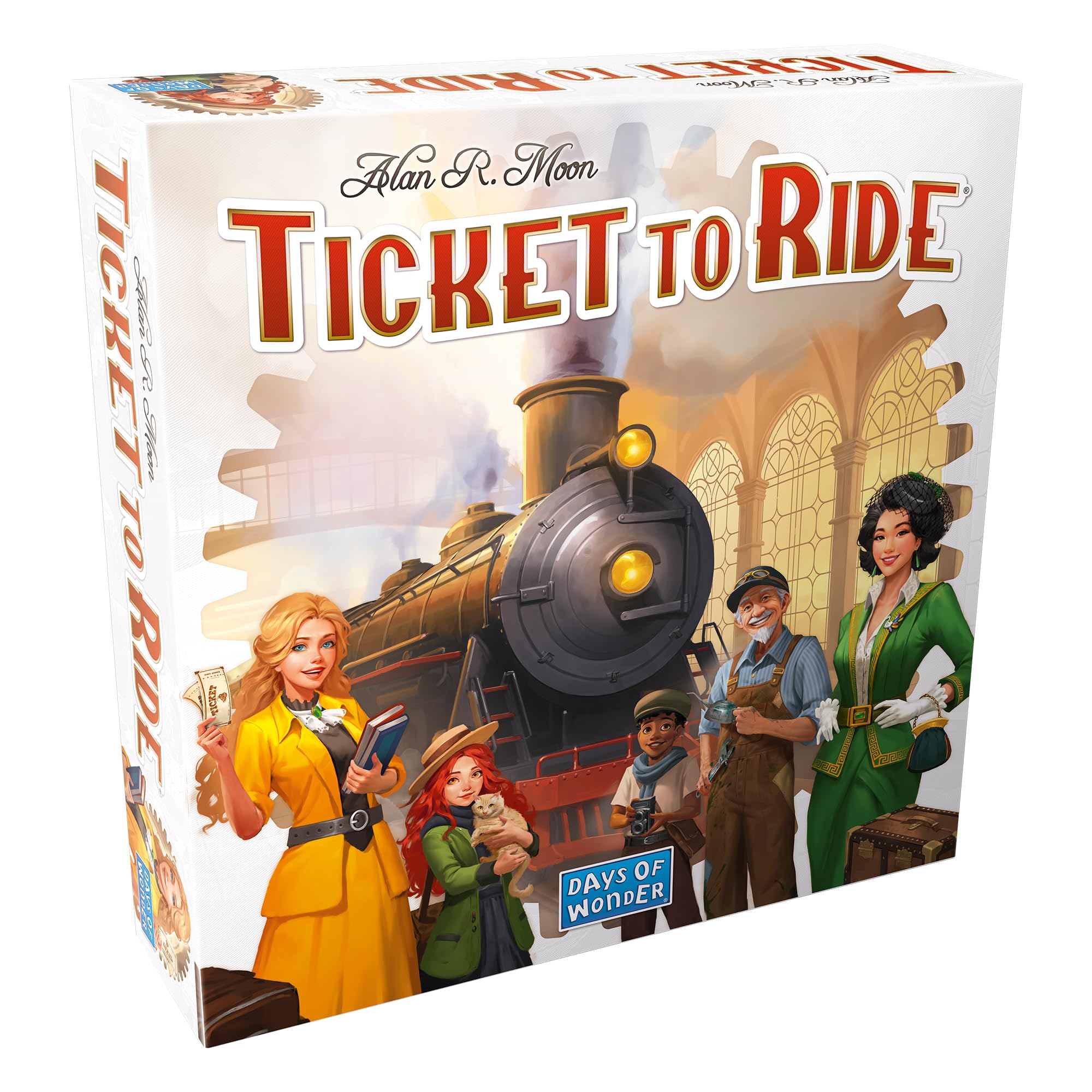
| Asmodee Ticket to Ride★ Best Overall | Family game night | 2-5 | 30-60 min | Ages 8+ | Amazon |
| Unstable Games Casting ShadowsBest for Teens | Teens and adults | 2-4 | 30-60 min | Ages 12+ | Amazon |
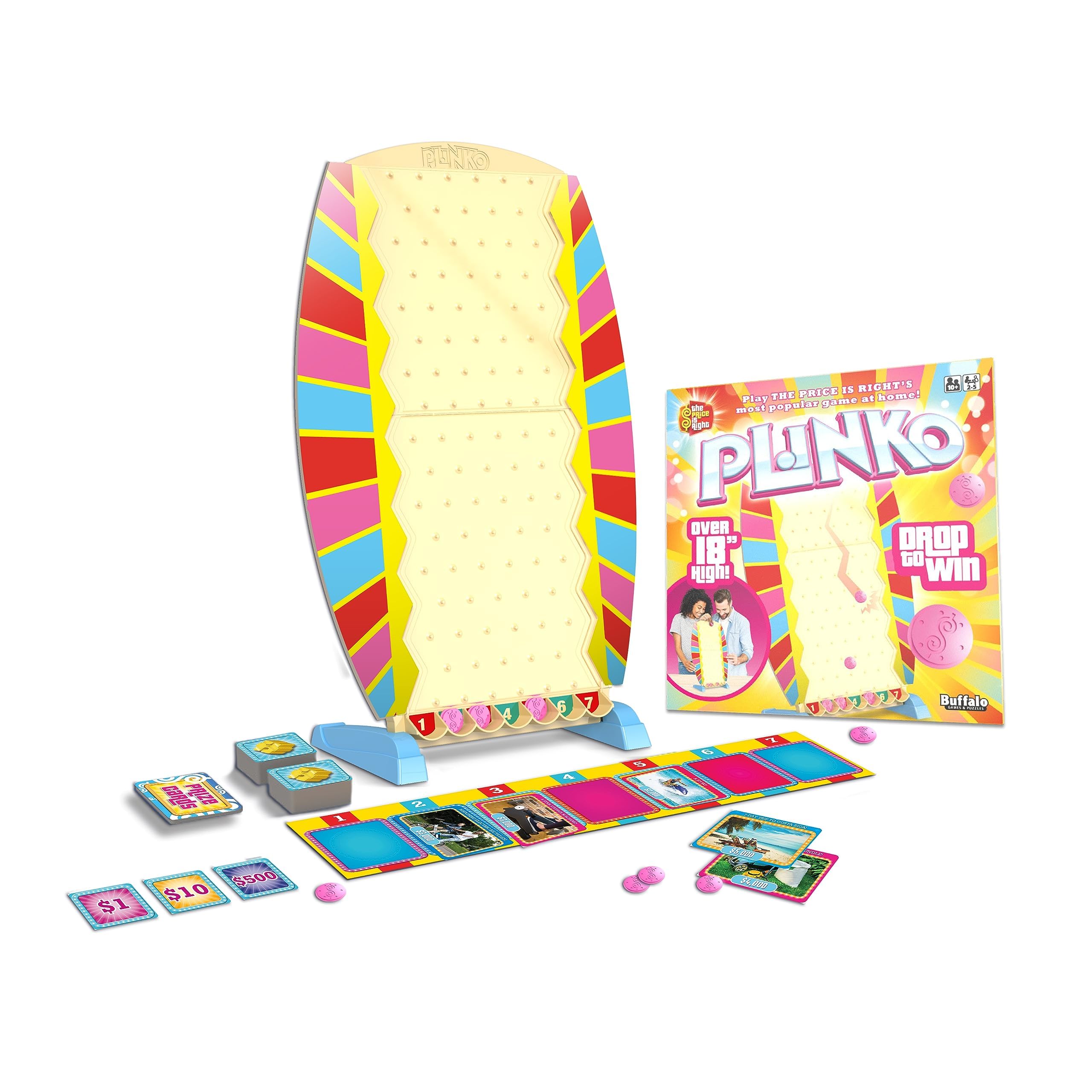
| Buffalo Games PlinkoParty Pick | Party nights | 2 or more | 15 min | Ages 8-12 | Amazon |
| Avalon Hill Talisman 5th Edition | Fantasy adventure groups | 2-6 | About 2 hours | Ages 12+ | Amazon |
| Asmodee Harmonies | Solo and family play | 1-4 | 30 min | Ages 10+ | Amazon |
| Smirk and Dagger The Night Cage | Co-op horror nights | 1-5 | 40 min | Ages 14+ | Amazon |
| Inside Up Games Earth | Strategy fans | 1-5 | 45-90 min | — | Amazon |
| Stonemaier Games Wingspan | Couples and small groups | 1-5 | 60-90 min | — | Amazon |
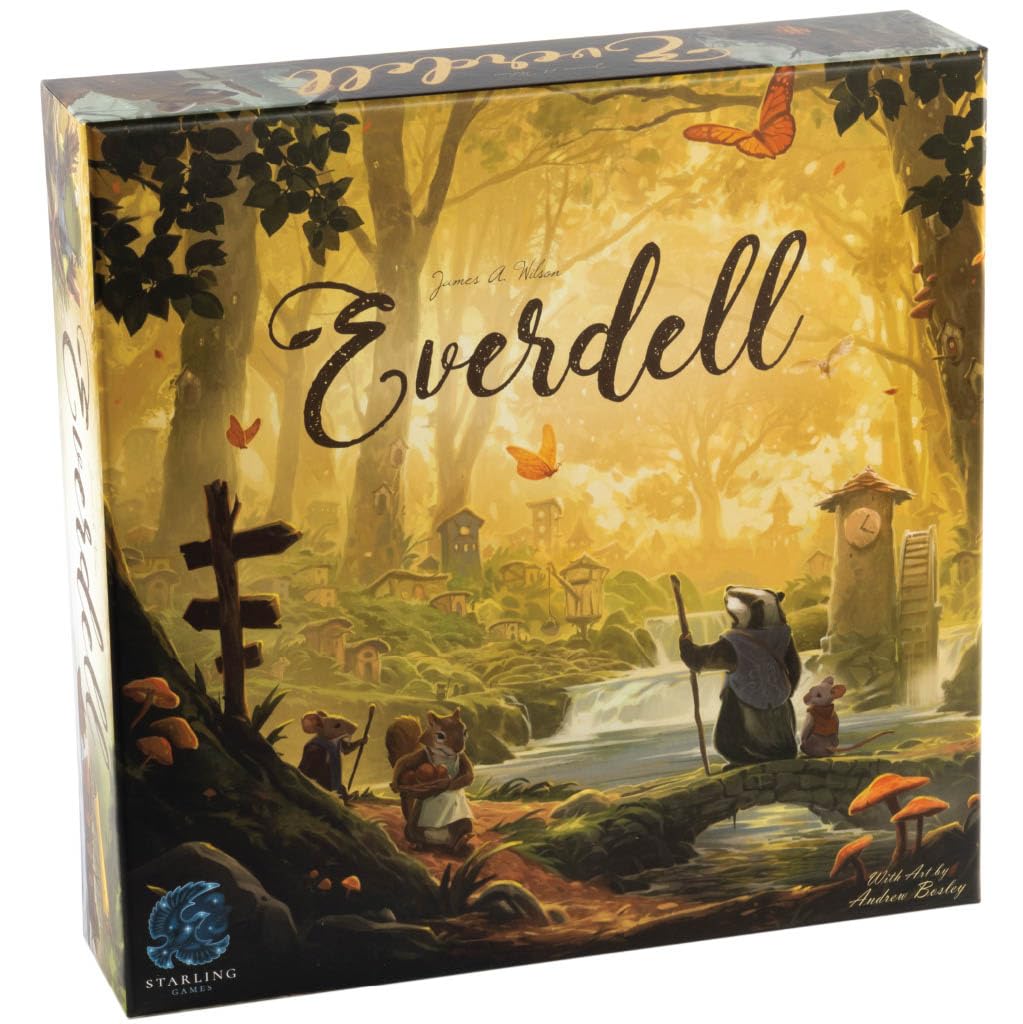
| Everdell Standard Edition | Worker-placement newcomers | 1-4 | 60 min | — | Amazon |
Detailed Reviews
1. Asmodee Ticket to Ride Board Game (2025 Refresh)
Our pick — 4.5+★ from 800+ verified ratings; the strongest balance of quality and price.
The one route-building box you can put in front of eight-year-olds and grandparents and watch both keep playing.
You claim train routes across a map of North America by collecting colored cards and laying down miniature trains. Rules take one read, and then you are playing. The stated playtime runs 30 to 60 minutes, and rounds tend to land on the shorter side. It handles 2 to 5 players, and the name Everyone already owns is the reason this takes the top slot.
What wins people over is the double pull of luck and planning: you draw from a shuffled deck, so no one can hoard the good cards, but the routes you pick decide whether you can finish your tickets. The set is generous — 225 plastic trains in 5 colors, 110 train cards, and 33 tickets — which means the board fills up visually and stays readable. It also measures 11.7 x 3 x 11.7 inches, so plan a shelf that is wider than a paperback stack.
The honest catch is the rulebook. The rules earn plenty of praise, yet a slice of players find the booklet fiddly on a first read — the classic advice is to watch a five-minute teach video instead. Player count is the other soft spot: with two, the board is quiet and the blocking feels thin. With five, the queue for colors gets tight, and a bad draw stings more.
Why it earns the crown
- Easiest teach of the group — most people are playing within a few minutes of opening the box.
- Works for ages 8 and up, so a mixed family table can all sit down together.
- 225 trains and 33 tickets make the board feel full and the game re-playable.
- 45 minutes of play fits a weeknight without dragging past bedtime.
What to know before you buy
- Two-player games feel thin; it shines at three to four.
- The rulebook is the weakest part — budget one teach video before you play.
Reach for this if: you host a rotating group of kids and adults and want one box that covers most nights.
Look further if: your group is strictly two and wants head-to-head tension rather than a shared map.
2. Unstable Games Casting Shadows Board Game
A hex-tile magic duel where you flip into a shadow monster mid-game, and teens grasp the transform fast.
You build up spells and companions, then flip into a shadow form for a burst of power. That transform mechanic is the hook, and it cuts through the usual “who attacked whom” fog because each player has a clear reason to change state. It seats 2 to 4 players and runs 30 to 60 minutes, which is a realistic chunk for a school-night game. It also plays faster than The Night Cage’s 40-minute estimate when the table is small.
The components do a lot of work here: 7 hex tiles, 76 cards, 5 resource dice, and 4 player boards. The hex tiles mean the board is different each session, and the resource dice keep a little randomness in the economy. Setup is quick because everything is cards and tiles — no sprawling map to lay out. It is 10 x 8 x 2 inches, so it tucks onto a bookshelf without taking a whole shelf.
The honest catch is replay depth. Some groups find the core loop thins out after several sessions and want the Ice Storm or Molten Rock expansions, which are sold separately. It is also not a family game for the youngest players — the box bills it for ages 12 and up, and the strategic combat wants a player who can plan two moves ahead.
The mechanics that click: the shadow-form transformation gives every turn a real choice, and the custom resource dice keep the economy loose without feeling random.
Shelf reality: 10 x 8 x 2 inches and a box that opens flat — this is the easiest small-group game in the list to bring to a friend’s place.
Best for: a pair of teens or an adult couple who want a competitive, thematic duel that lasts about an hour.
Skip if: you want a game you can teach a nine-year-old — the box asks for 12 and up.
3. Buffalo Games Plinko Game, Plink Hi-Lo, 18″
An 18-inch Plinko board where a single chip drop decides a prize card and sets the room cheering.
Nobody has to learn a rule. You drop a chip down the pegboard, it bounces, and it lands somewhere that decides a prize card. That push-your-luck structure is the whole game, and it is why the playtime is a quick 15 minutes — a stark contrast to Earth’s 90-minute ceiling. It seats 2 or more players, so it works with a couple on a date night or a crowd on a holiday.
The box carries real weight: 37 Luxury Prize Cards, 7 Plinko Chips, and 98 Money Cards, so the scoring has substance behind the bounce. The 18-inch board is built for a tabletop and reads fine from across a living room. It is also the game in this list most likely to be pulled out at a Christmas gathering.
The honest catch is the build. Some owners love how sturdy it feels, while others describe cheap materials and a board that can tip over if you are careless with the chips. Assembly can also be stubborn to undo, so pick a spot for it and leave it there. None of that hurts the actual drop-and-bounce fun, but treat the board like furniture rather than a throw-in-a-bag game.
Where it shines: the shortest playtime in the whole list at 15 minutes, and the easiest teach of the bunch — zero rulebook required.
Right for you if: you host parties and want something that entertains kids and adults without a rules lesson.
Think twice if: you want a game that packs into a bag for travel — the 18-inch board wants a permanent home.
4. Avalon Hill Talisman 5th Edition

The biggest table in the list: six players, twelve heroes, and a two-hour race for the Crown of Command.
This is the only pick here that seats six players — the broadest range in the group, against Casting Shadows’ 2 to 4. That load matters if your game night is the whole extended family. You pick a character, wander a map that grows as players layer on Adventure cards, and race for the Crown of Command. Rounds settle around two hours, so this is a sit-down-and-stay evening, not a filler round.
The 5th edition redesign is the story here. The rules were tightened to make the game more accessible to new players and non-gamers, and the artwork and redesigned figures are noticeably sharper than earlier printings. There are 12 detailed character figures with matching ability cards, and 100 illustrated Adventure cards, so the board changes every session. It sits between the quick family games and the deep strategy boxes in playtime.
The honest caveat is that the character pieces get a split reaction — some owners find them nice, others want more heft from the miniatures. The two-hour length is also a real logistics cost: a family with young kids is unlikely to finish a full game. For a group of older teens and adults who can commit to an evening, though, this is the pick with the most narrative.
What earns its place
- Seats 2 to 6 — the widest player range here, and the only one that handles six comfortably.
- 12 character figures and 100 Adventure cards change the map every session.
- The 5th edition rules are streamlined for newcomers compared to older printings.
What to weigh
- A full game runs around two hours, so it needs a committed evening.
- The character figures split opinion — some want heavier miniatures.
Pick this when: you have a big table of older players who want a story-driven adventure to fill the night.
Leave it for later if: your sessions are short or the group includes kids under 12 — the box asks for ages 12 and up.
5. Asmodee Harmonies Board Game

You stack 120 wooden tokens into landscapes, then place animal cubes in the habitats you build.
This one starts at a single player. The box supports 1 to 4, which is the widest low end here — wider than Talisman’s 2-player floor. You place wooden tokens to build landscapes, then add animal cubes that fit those habitats, and the pattern you build earns the points. A round takes 30 minutes, and turns move quickly enough that nobody is waiting on their phone.
The component count is where the time went: 120 wooden tokens, 79 animal cubes, 32 Animal cards, and 10 Nature’s Spirit cards. That is a tactile game — the wooden pieces are satisfying to handle, and the cards drive the goals. Setup is quick for a strategy box, and 2.52 x 8.43 inches of footprint means it fits a coffee table, not just a dining table.
What pulls people in is how the rules open up. A family with younger kids can read the base rules in one sitting — the game is approachable enough for school-age children to follow. But the tactical layer is deeper than it looks, and a group that plays regularly will find new patterns each time. The catch is that the theme is gentle: if your table wants confrontation or combat, this is a quiet puzzle rather than a fight.
Why the box feels premium: 120 wooden tokens and 79 animal cubes — the count is the selling point, and it makes the game feel expensive in the hand.
Best moment: a solo game on a weeknight, where you build the whole landscape alone and nobody has to wait.
You will love this if: you want a calm, quick strategy game you can play alone or with one friend on a tabletop.
Look elsewhere if: your group measures fun by conflict and take-that cards.
6. Smirk and Dagger The Night Cage

A candle-lit co-op maze where the tiles you leave behind vanish into darkness, and the whole table wins or loses together.
This is the cooperative pick. Nobody plays against the table — you all try to collect keys, find the gate, and escape before the maze collapses. The board shifts as you move, and tiles you leave behind are swallowed by darkness, so the tension is constant rather than turn-based. A round runs 40 minutes, and it seats 1 to 5 players, which makes it a rare five-player co-op for the group that hates splitting up.
The atmosphere is the product. Wax Eaters stalk the shadows, and the limited vision means every reveal is a small decision. It also comes with adjustable difficulty settings and an Advanced Game mode with new monsters and obstacles, so the box keeps giving after the first escape. The physical package is hefty — 1100 g of box — so it feels substantial on the shelf.
The honest catch is the audience. This is a horror-themed cooperative game billed for ages 14 and up, so it is not the family-night box. The darkness mechanic can also frustrate a group that wants to see the whole board — you are playing with partial information by design. Bring a table that enjoys losing together before you bring this one out.
The thing that sells it: the shifting tile maze and the darkness swallowing your path make every turn feel urgent, which is a different feeling from the relaxed puzzle of Harmonies.
Best for: a group of teens or adults who want a co-op challenge with a horror atmosphere and a real chance of losing.
Not for: families with younger kids — the box asks for ages 14 and up and the theme is deliberately tense.
7. Inside Up Games: Earth Board Game

Every player gets a minor benefit on each opponent’s turn, so nobody sits waiting while the slow player counts cubes.
The defining feature here is simultaneous play. When the active player chooses a major benefit, every other player gets a minor benefit, so the whole table stays engaged. That is a real fix for the classic downtime problem in longer strategy games. A round runs 45 to 90 minutes, and it seats 1 to 5 players with Solo, Team, and Competitive variants in the box.
The card pool is the replay engine: 350 plus unique cards, some double-sided, with over 25,000 starting setups. You build an island ecosystem out of plants and habitats, and the card variety means the board looks different every time. The components run to 283 Earth Cards, 145 Sprout Cubes, 105 Soil Tokens, and 88 Trunk Pieces, which is a lot of cardboard for the price. It also bills itself as environmentally made, using FSC-qualified materials.
The honest caveat is the learning curve. Half of the players who talk about it find it manageable, and half find it appears complicated at first — with a setup that can run about 45 minutes before the first turn. That setup is the real cost. If you want a game on the table in minutes, this is not it. If you want a deep ecosystem builder for a long evening, the payoff is there.
The simultaneous-play advantage: the minor-benefit rule keeps every player involved on every turn, which is the rare solution to the “waiting for my turn” problem in deep strategy games.
Shelf math: 11.8 x 11.8 x 3 inches and 350+ cards — this is a big-box game that wants dedicated storage space.
Choose it if: you play with a group of adults who want a deep card-drafting game and don’t mind a long setup.
Pass if: your game nights are short, or you need something teachable in five minutes — the setup alone can take longer than Plinko’s whole round.
8. Stonemaier Games: Wingspan by Elizabeth Hargrave

You build a wildlife preserve out of 170 bird cards, and the dice tower is the star of the table.
Wingspan is the crowd favorite — 4.5+ stars across 12,000+ owners — and the 170 illustrated bird cards are why. Every bird card pairs a real species with illustrated detail, and the cards chain together into combos that keep a table talking. It seats 1 to 5 players, runs 60 to 90 minutes, and includes a 6-minute setup time, which is a rare claim in a box this size.
The physical kit is the deepest in the list. You get 170 unique bird cards, 26 bonus cards, 75 egg miniatures, 103 food tokens, 5 custom wooden dice, and a birdfeeder dice tower, plus 3 rulebooks and a 2-piece organizing tray. The dice tower is not a gimmick — because the food comes from a shuffle of dice, the feeding step is tactile and quick. It also ships with a swift-start pack and 10 extra bird cards that guide first-time players.
The honest catch is complexity. The praise for the artwork is near-unanimous, but the learning curve is genuinely mixed — some find it easy to grasp, others need hours of research to feel fluent. That is a real cost for a party group. For a couple or a small group that plays the same game repeatedly, that depth is exactly the reason it stays on the table.
The case in its favor
- 170 unique bird cards plus 26 bonus cards — the replay variety is the point.
- 6-minute setup by the publisher’s count, which is fast for a box this size.
- 1 to 5 players, so it works as a solo game, a two-player date night, or a small group.
The cost of entry
- The learning curve divides players — expect a real teach before the first game.
- 60-90 minutes per round is the longest session in the list.
Built for: a pair or a small group that plays a game more than once and wants combos to discover over repeat sessions.
Not the fit if: you need to teach a table of new gamers in one sitting — the teach is longer than the box suggests.
9. Everdell Standard Edition by Tycoon Games
Critters under a giant tree, and the first worker-placement game most families actually finish.
You build a city of squirrels, mice, and hedgehogs under the Ever Tree, placing workers and adding buildings that chain together. It seats 1 to 4 players and runs 60 minutes, which puts it in the same evening slot as Wingspan but with a gentler entry. The components are the draw for physical players: tactile pieces that are fun to handle and satisfying to arrange between turns.
This is the pick for a group that wants strategy without a wall of rules. It offers a good balance between complexity and ease of play, and each player can develop their own approach to the city. The artwork is the other win — the cozy woodland theme carries the table for a family audience, and it works as a two-player game with a partner as well as a four-player family session.
The honest catch is the learning curve for a first-time group. Some find it easy to pick up, and others say it is slightly more complex than anticipated and takes time to master. The value question also splits — many find it worth the cost, others call it really pricey. If you want a worker-placement box for the family shelf that has some depth, this is the right place to start.
Start here if: you want a worker-placement game a family can learn together without a long rules night.
Hold off if: your table already owns Wingspan — the two share an evening slot and a woodland theme.
Know the Specs
Player Count
Every box prints a range, and that range decides which nights the game actually gets played. A 1-4 count lets you play solo during a quiet week. A 2-6 count is the pick for a big family table. Read the range against your usual headcount and buy for the smaller number, not the bigger one — the table you can fill is the table that plays.
Playtime and Setup
Playtime is an estimate of the round, not the whole evening. Setup time is separate and often missed, and some deep strategy boxes take a long while to sort before the first turn. The box usually lists the round length only, so plan for setup on top. A 15-minute party game and a 90-minute strategy game ask for different nights.
Set Collection vs Tableau Building
Set collection means you gather matching cards to score — collect enough of a color and the route or the habitat pays out. Tableau building means you lay out a personal board of cards that combine into a bigger engine. Set collection is quicker to teach. Tableau building rewards repeat play. Most of the strategy picks here use a mix of both.
Age Rating and Complexity
The printed age is a rough guide to reading level and theme, not a ceiling. An 8-and-up game still entertains adults, and a 14-and-up horror game is not a family box. Complexity is the separate question: a box can be easy to teach but deep to master, which is the goal for a group that plays the same game through the year.
Common Questions
How many players do I need for a good tabletop board game night?
Is a 30 minute playtime realistic for a family game?
Which of these tabletop board games is easiest to learn?
Can I play any of these games solo?
What is the difference between cooperative and competitive board games?
How long does it take to set up a strategy board game?
Are these tabletop board games suitable for kids?
Do I need expansions to keep these games fresh?
How much table space does a board game need?
Which tabletop board game is best for a group that hates waiting for turns?
The Bottom Line
For most households, the tabletop board games winner is the Ticket to Ride, because it seats 2 to 5 players of mixed ages and gets the table playing in minutes. If your group wants a thematic duel for teens and adults, reach for the Casting Shadows. And if you want a deep ecosystem builder with long replay, the Wingspan is the one to reach for.
How we choose
We do not accept paid placement. Every pick is matched to a real buyer and a real use-case; we do not hands-on test units.
Sources
Specifications: manufacturer listings and product documentation. Review insights: verified customer reviews, as of November 2026. Pricing: not shown on this page (it changes often); check the current price via the retailer link.
As an Amazon Associate, Gamepad Test earns from qualifying purchases. This does not affect which products we feature.