Table of Contents
Stuck with a Nintendo Switch Pro Controller that won’t stop blinking on your PC? Are frustrating driver issues keeping you from your Steam library?
You’ve come to the right place! We’ll tackle those Bluetooth gremlins and driver conflicts head-on.
Whether you’re a casual player or a competitive pro, follow these simple steps to stabilize your connection.
Level up your controller knowledge and let’s get you back in the game faster than a speedrun!
TL;DR
- The ‘blinking lights’ loop indicates a handshake failure; fix it by removing the device from Windows settings and performing a hardware reset.
- Press the physical Sync button near the USB-C port to clear the controller’s temporary memory before attempting a fresh pair.
- If the controller pairs but fails to work in non-Steam games, use BetterJoy to translate DirectInput signals into XInput (Xbox) commands.
- Persistent connection refusals may require manually uninstalling the ‘Bluetooth HID Device’ driver via the Windows Device Manager.
Solving the ‘Blinking Lights’ Loop: Proper Pairing and Driver Reset
There is nothing more frustrating than readying up for a game, only to see the green LEDs on your Pro Controller cycling endlessly like a disco ball.
This “blinking lights” loop usually means Windows recognizes the device history but cannot establish a current handshake with the controller hardware.
To solve this, we must force a “clean handshake.” This involves clearing the old connection cache and re-initiating the pairing protocol from scratch.
Step 1: The Full Removal
You cannot simply click “Connect” again. Windows gets confused by the existing registry entry. You must scrub the old instance first to proceed.
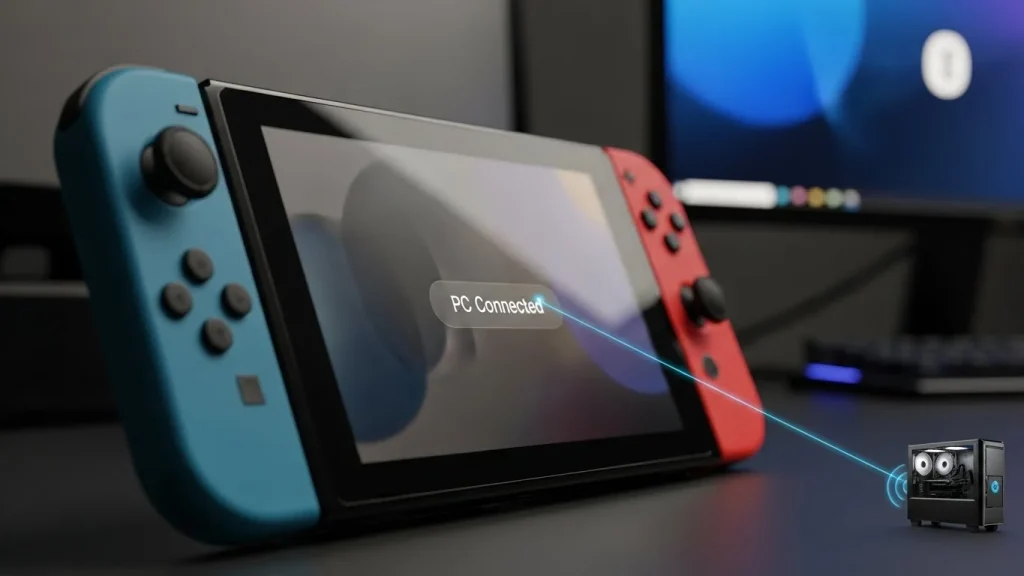
- Open your Windows Settings and navigate to the Bluetooth & devices menu.
- Locate the “Pro Controller” in the list of currently paired devices.
- Click the three dots (or device icon) on the right and select Remove device. Confirm the action.
Step 2: Hardware Reset
Before re-pairing, we need to clear the controller’s temporary memory. This ensures it isn’t trying to search for the Switch console nearby.
Locate the small, circular Sync button on the top of the controller, positioned right next to the USB-C charging port.
“Reset the controller by pressing the SYNC Button once. Then press any other button to wake up the controller.”– Nintendo Support, Troubleshooting Pro Controller
Step 3: The Fresh Pair
Now that both the PC and the controller have “forgotten” the previous failed attempt, we can pair them as if they were brand new out of the box.
| Action | Indicator |
|---|---|
| Hold Sync Button (3 secs) | LEDs blink rapidly back and forth (Pairing Mode) |
| Select “Add Device” on PC | Windows searches for “Input” or “Pro Controller” |
| Click “Pro Controller” | LEDs may turn solid or reduce pattern |
Once connected, don’t panic if the lights keep blinking or turn off entirely. On PC, the light behavior often differs from the Switch console.
To confirm the connection is actually working and stable, head over to our Gamepad Latency Test. This will verify input speed.
Troubleshooting the Driver
If the controller still refuses to pair, the Bluetooth driver specifically for the HID device might be corrupted. We need to dig deeper.
You may need to open Device Manager, find “Bluetooth HID Device” under Human Interface Devices, and manually uninstall it before restarting.
A pie chart showing that while Xbox dominates, the Switch Pro Controller holds a dedicated user base on Steam (~4%).
Even though the Switch Pro Controller makes up a smaller portion of the PC market compared to Xbox, its build quality makes it worth the effort.
If you suspect your joystick is acting up after connecting, check our guide on Hall Effect vs Potentiometer Joysticks to understand the hardware inside.
Fast Facts
- Resolve the ‘blinking lights’ loop by removing the Pro Controller from Windows Bluetooth settings and pressing the hardware Sync button to clear old connection data.
- Initiate a clean pairing process by holding the Sync button for three seconds to enter pairing mode before adding the device again on the PC.
- If standard re-pairing fails, troubleshoot further by manually uninstalling the Bluetooth HID driver in Device Manager or verifying inputs via a latency test.
Using BetterJoy to Fix ‘Paired but Unusable’ on Non-Steam Games
If you are trying to play games on the Epic Games Store, Xbox Game Pass, or GOG, you have likely hit a wall. The controller pairs, but nothing happens.
This occurs because Windows sees the device but does not understand its language. The Pro Controller uses DirectInput, while most PC games need XInput.
We need a translator. BetterJoy is a fantastic open-source tool that converts your Pro Controller’s signals into Xbox-compatible XInput commands.
“The Switch Pro Controller is an excellent gamepad… but Windows doesn’t natively support it effectively via Bluetooth without some help.”– Wes Fenlon, How to use a Nintendo Switch Pro Controller on PC
Step-by-Step Setup Guide
Here is how to set it up quickly. This process creates a virtual “Xbox 360” controller on your PC that games will recognize immediately.
- Install Drivers: Download and install the ViGEmBus driver first. This software framework allows BetterJoy to create the virtual controller.
- Download BetterJoy: Visit the official GitHub releases page. Download the latest ZIP file labeled for your specific system architecture.
- Extract Files: Do not run the program from inside the ZIP. Create a new folder on your desktop and extract all files into it.
- Run the Application: Launch “BetterJoyForCemu.exe”. If prompted by Windows firewall or security, allow the access to proceed.
- Connect Controller: Connect your Pro Controller via Bluetooth. BetterJoy should locate it and display a controller icon in the window.
Once the software is running, your computer will technically see two controllers: the physical Pro Controller and a virtual Xbox 360 controller.
Verifying Your Connection
To ensure everything is working correctly, you should verify the input. The original signal might cause “double input” issues in some rare cases.
BetterJoy has a “HIDGuardian” feature to hide the original DirectInput signal. This ensures games only see the virtual XInput device you just created.
You can check if the virtual controller is responsive by using our tools. Run a Gamepad Latency Test to ensure the translation isn’t causing lag.
Understanding why this software is necessary helps you troubleshoot. The gaming market is heavily dominated by XInput devices like the Xbox controller.
A pie chart showing PC controller usage: Xbox/XInput (60%), PlayStation (25%), Switch Pro (5%), and Other (10%).
If you notice your analog sticks drifting while using this software, it might not be the software’s fault. It could be a hardware issue.
You can verify the hardware integrity using the Gamepad Drift Test to distinguish between software glitches and physical wear.
BetterJoy also allows you to check battery life and customize rumble. If the vibration feels too strong, you can adjust the frequency in the config file.
Keep the application open in the background while you game. If you close BetterJoy, the virtual XInput controller disappears instantly.
Installing ViGEmBus and HidGuardian to Prevent Double Inputs
If your character jumps twice with a single button press, you are likely experiencing the dreaded “double input” glitch. This is a common headache for gamers.
This issue occurs because your PC detects two devices simultaneously.
It sees the physical Switch Pro Controller and the virtual Xbox controller created by your software.
To solve this, we must install two critical drivers: ViGEmBus and HidGuardian (or its modern successor, HidHide).
Understanding the Driver Roles
Before we install them, it helps to understand how joystick controllers work in this emulation environment.
- ViGEmBus: This driver acts as the bridge. It creates the virtual Xbox 360 controller that Windows games prefer to communicate with.
- HidGuardian/HidHide: This driver acts as a shield. It hides your physical Pro Controller from the game, preventing the original signal from interfering.
Step-by-Step Installation Guide
Most mapping tools like BetterJoy include these drivers in their download folders. Follow these steps to ensure a clean installation.
- Locate the Drivers: Open the “Drivers” subfolder within your BetterJoy or mapping software directory.
- Install ViGEmBus: Run the
ViGEmBusSetup_x64.msiinstaller first. Follow the prompts and complete the wizard. - Install HidGuardian: Run the bat file labeled
Install_HidGuardian.batas an administrator. If you are using HidHide, run its specific installer instead. - Reboot Your PC: This step is non-negotiable. Windows needs a fresh restart to initialize these virtual bus drivers correctly.
“XInput is the API for ‘next generation’ controllers… DirectInput is for older models and requires a different programming model.”– Microsoft Documentation, Getting Started with XInput
Troubleshooting the Installation
After rebooting, your double input issues should vanish. However, if the controller is not detected at all, the “hiding” mechanism might be too aggressive.
You can verify if the virtual controller is working correctly by running a quick diagnostic. Head over to our Gamepad Drift Test to visualize the inputs.
| Scenario | What Windows Sees | Resulting Gameplay |
|---|---|---|
| No Drivers | One DirectInput Device | Buttons mapped incorrectly, no vibration. |
| ViGEmBus Only | Two Devices (Physical + Virtual) | Double inputs, menu skipping, erratic movement. |
| ViGEmBus + HidGuardian | One XInput Device (Virtual) | Perfect compatibility, rumble support, correct mapping. |
If you choose to use HidHide instead of HidGuardian, you will need to manually select which device to hide in the HidHide configuration utility.
This manual selection offers more control and is generally safer for system stability than the older HidGuardian driver.
Fast Facts
- BetterJoy resolves compatibility issues for Switch Pro Controllers on non-Steam platforms by translating DirectInput signals into Xbox-compatible XInput commands.
- The setup requires installing the ViGEmBus driver to create a virtual controller and keeping the BetterJoy application open in the background while gaming.
- Users should employ HidGuardian or HidHide drivers to mask the physical controller’s original signal, preventing ‘double input’ glitches where the PC detects two devices simultaneously.
Configuring Native Switch Pro Support in Steam Big Picture Mode
Steam is the ultimate savior for Nintendo Switch Pro Controller users on PC. While Windows struggles with native support, Steam steps in to bridge the gap.
Valve’s platform includes a built-in translation layer known as Steam Input. This feature converts your controller’s DirectInput signals into XInput.
This means your Pro Controller tricks games into thinking it is an Xbox controller. This ensures near-perfect compatibility with thousands of titles.
A bar chart showing controller usage on Steam: Xbox (64%), PlayStation (20%), Switch Pro (4%), and Others (12%).
Step-by-Step Configuration Guide
Follow these specific steps to unlock full functionality, including the gyroscope and haptic feedback, within the Steam ecosystem.
- Launch Big Picture Mode: Open Steam and click the monitor icon in the top-right corner to enter the controller-friendly interface.
- Access Settings: Click the generic “Menu” button, then navigate to “Settings” and select the “Controller” tab.
- Enable Switch Support: Locate the section for “External Gamepad Settings” and toggle on “Enable Steam Input for Switch Pro Controllers”.
- Adjust Layout: Toggle “Use Nintendo Button Layout” if you want the A/B and X/Y prompts to match the physical labels on your controller.
Once enabled, you should feel a brief rumble confirmation. Your controller is now ready to handle modern PC games that usually demand an Xbox gamepad.
“We think it is a great device with a feature set that pairs nicely with your Steam catalog. The d-pad is ideal for fighting games and platformers and the gyro enhances aim in your FPS/Action titles.”– Jeff Bellinghausen,
Steam Community Announcement
Verifying Your Inputs
After setup, it is vital to ensure all buttons register correctly. You do not want to find out your triggers are dead in the middle of a boss fight.
You can quickly run a check using our Gamepad Controller Test tool. This will visualize exactly what your PC is seeing.
Additionally, because the Switch Pro Controller uses unique linear resonant actuators, you should verify the rumble intensity.
Run a quick Gamepad Controller Vibration Test to confirm the haptics are active.
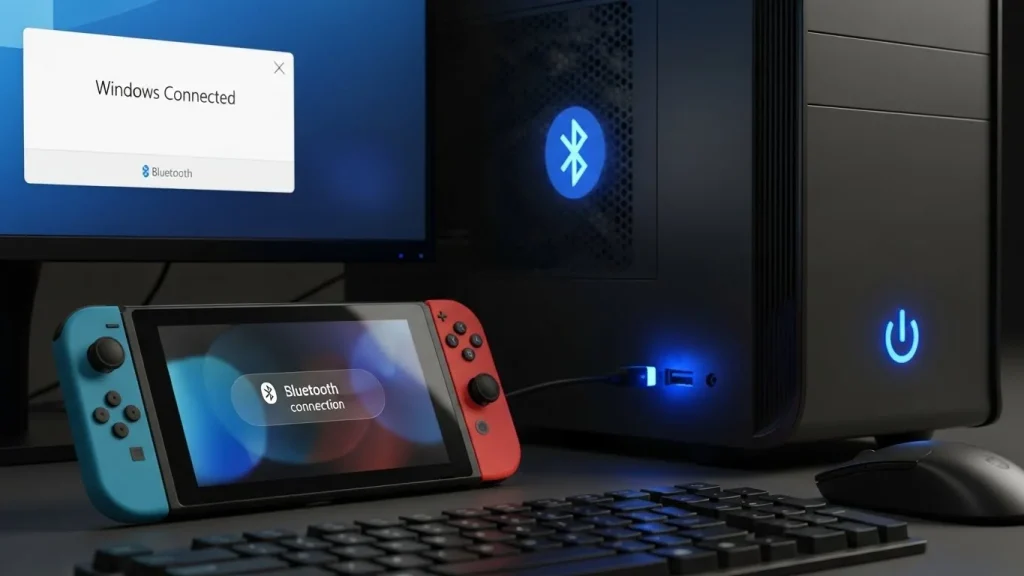
If you notice inputs working in the menu but failing inside specific games, the issue might be related to game-specific overlay settings.
This behavior is similar to issues seen on portable PCs.
You can read our guide on how to fix Steam Deck external controller not working in-game for advanced troubleshooting steps that apply here too.
Fast Facts
- Steam Input bridges the compatibility gap for the Switch Pro Controller on PC by translating DirectInput signals into XInput to mimic an Xbox controller.
- Users must configure the device through Big Picture Mode by navigating to Settings and enabling ‘Steam Input for Switch Pro Controllers’, with an option to match the physical Nintendo button layout.
- After enabling support, it is recommended to verify inputs and vibration using testing tools to ensure the controller registers correctly before playing.
Eliminating Bluetooth Latency with a Direct USB-C Wired Connection
If Bluetooth interference is ruining your killstreaks, a direct cable connection is the ultimate fix. It eliminates signal dropouts instantly.
Switching to a wired connection ensures your input commands reach the PC without wireless congestion. This is crucial in environments with many signals.
How to Connect via USB-C
Connecting your Nintendo Switch Pro Controller to a PC via USB is usually plug-and-play. You just need the right hardware to get started.
- Grab a Quality Cable: Use a USB-C to USB-A cable. You must ensure it supports data transfer, not just power for charging.
- Plug It In: Connect the USB-C end to the controller and the other end to a USB 3.0 port on your PC for best performance.
- Wait for Recognition: Windows typically plays a notification sound. A glowing orange light on the controller indicates it is receiving power.
Once connected, your PC sees the device as a DirectInput controller. Steam handles this well, but other games might need extra software wrappers.
“The Nintendo Switch Pro Controller has excellent latency over a wired connection… [It] feels responsive and shouldn’t cause any issues while gaming.”– RTINGS.com
Why Wired Wins for Troubleshooting
Wireless technology is convenient, but it introduces variables like battery drain and input lag spikes. Cables remove these headaches entirely.
If you are serious about minimizing delay, checking out our guide on best controllers for low latency cloud gaming offers great insights.
A bar chart comparing latency: Wired (11.8 ms) vs. Bluetooth (13.0 ms).
While the raw speed difference seems small, the consistency of a wired connection is superior. You will not face sudden jitter during intense moments.
Verifying Your Wired Connection
After plugging in, you must verify that buttons are registering correctly. Windows might detect it, but inputs could still be scrambled or unresponsive.
Head over to our Gamepad Controller Vibration Test to ensure the device is active and communicating with your browser.
If you see movement or feel rumble, your wired fix is successful. You can now game without worrying about frustrating Bluetooth pairing issues.
Fast Facts
- Switching to a direct USB-C wired connection eliminates Bluetooth interference, signal dropouts, and input lag spikes for a more consistent gaming experience.
- Setting up the connection is generally plug-and-play using a data-capable USB-C cable plugged into a USB 3.0 port, which Windows recognizes as a DirectInput device.
- While the raw latency difference between wired and Bluetooth is small, the wired connection ensures stability by removing variables like wireless congestion and battery drain.
Game On: Mastery Achieved
Fixing Bluetooth glitches is a rite of passage for PC gamers. You now have the skills to handle those blinking lights.
Remember to fully remove the old device connection first. A clean slate is the key to a stable handshake.
Don’t forget that tiny Sync button on top. It resets the hardware logic and clears out any wireless confusion.
If trouble persists, check those HID drivers. Otherwise, you are ready to dominate the leaderboard. Let’s get you back in the game!
Frequently Asked Questions
Why do the lights keep flashing after connecting?
Don’t panic! Windows often doesn’t assign a player number LED. If your inputs register in a tester app, you are good to go.
My PC is asking for a PIN code. What is it?
This is a common glitch. Try entering “0000” or simply leaving the field blank and clicking Next. Usually, no PIN is required.
Does this work for non-Steam games?
Steam handles drivers natively. For other launchers, add the game to Steam as a “Non-Steam Game” to use their controller wrapper.
Why do I feel input lag via Bluetooth?
Wireless interference can cause lag. Try moving your PC antenna closer or switch to a wired USB-C connection for zero latency.
Technical Glossary
- Handshake
- The protocol process where Windows and the controller hardware establish a current connection, which can sometimes fail and require a ‘clean’ re-initiation.
- Registry Entry
- A record within the Windows system database that stores the history of the paired device, which must often be scrubbed to prevent connection errors.
- Sync Button
- A small, circular physical button located near the USB-C port used to clear the controller’s temporary memory and enter pairing mode.
- HID (Human Interface Device)
- A standard device class typically found in the Device Manager under which the Bluetooth driver for the controller is categorized.
- Hall Effect
- A type of joystick hardware technology mentioned as an alternative to potentiometers, noted for its specific build quality and internal mechanism.