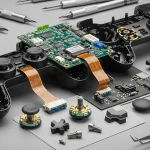
Tired of your controller acting weird on Linux? Whether you’re battling stick drift or need custom binds for your favorite emulator, the right mapping software is a game-changer.
We’ve tested the top tools to help you tweak inputs and calibrate hardware effortlessly.
No more frustration, just smooth gameplay. Let’s level up your controller knowledge and get you back in the game!
TL;DR
- Select Steam Input for seamless Steam integration, AntiMicroX for mapping keyboard inputs to controllers, or Input Remapper for system-wide macros.
- Software settings can mitigate deadzones, but physical stick drift often requires hardware upgrades like Hall Effect joysticks.
- Defining your primary gaming use case before installation helps prevent software conflicts and keeps your Linux system clean.
- Steam Input serves as a universal wrapper, translating XInput and DirectInput commands to support almost any controller type.
Selecting a Modern Mapping Tool: A Use Case Flowchart
Navigating the Linux ecosystem for gamepad tools can feel overwhelming. You have powerful options available, such as Steam Input, AntiMicroX, and Input Remapper.
The best choice depends entirely on your end goal. We have simplified the decision process into a logical flow to save you time and frustration.
If you primarily play games on Steam, stick with Steam Input. It provides per-game profiles and works seamlessly with the Proton compatibility layer.
For emulators or non-Steam games, AntiMicroX is a top contender. It maps keyboard and mouse inputs to your controller, making it perfect for older titles.
“Steam Input is a service that allows Steam users to play any game that supports a controller with the device of their choice.”– Valve Corporation, Steamworks Documentation
Advanced users who need system-wide macros should look at Input Remapper. It offers deep customization but requires a steeper learning curve to master.
We see a massive variety of controllers used on PCs today. Mapping tools bridge the gap for the 27% of users who prefer PlayStation controllers on PC.
A pie chart showing controller market share on Steam: Xbox (60%), PlayStation (27%), and Others (13%).
Let’s compare the most popular tools to help you decide. Choosing the right one ensures you spend more time playing and less time configuring settings.
| Feature | Steam Input | AntiMicroX | Input Remapper |
|---|---|---|---|
| Easy Setup | ✅ | ✅ | ❌ |
| Desktop Mouse Control | ✅ | ✅ | ✅ |
| System-Wide Macros | ❌ | ✅ | ✅ |
| Works Without Steam | ❌ | ✅ | ✅ |
Once you select a tool, ensure your hardware is responsive. High input lag can ruin the experience, so check our Gamepad Latency Test.
Software can fix deadzones, but it cannot fix broken sensors. If your stick drifts physically, consider upgrading to hardware with Hall Effect joysticks.
Take a moment to define your primary use case before installing anything. This simple step prevents software conflicts and keeps your gaming rig clean.
Fast Facts
- Choose a mapping tool based on your specific gaming needs: use Steam Input for Steam games, AntiMicroX for emulators and non-Steam titles, or Input Remapper for advanced system-wide macros.
- Software solutions can optimize settings like deadzones but cannot fix physical hardware faults like stick drift, which may require upgrading to controllers with Hall Effect joysticks.
- Define your primary use case before installing any software to prevent tool conflicts and ensure a cleaner, more efficient gaming setup.
Top Active Linux Gamepad Mappers and Installation
Getting your controller to behave perfectly on Linux is easier than it used to be. You just need the right software bridge between your hardware and the OS.
Whether you are using a generic USB device or a high-end console controller, these tools let you customize every input. Let’s look at the top options.
AntiMicroX: The Universal Mapper
AntiMicroX is the modern successor to AntiMicro. It is essential for playing games that do not have native controller support.
This tool allows you to map gamepad buttons to keyboard keys and mouse movements. It is perfect for playing older strategy games or navigating your desktop.
Before you start mapping, you should verify your analog sticks are centered. Use the Gamepad Drift Test to check for hardware issues first.
“Steam Input is the best thing to happen to PC controllers… It is the most powerful customization tool available to PC gamers.”– Jody Macgregor, PC Gamer
Steam Input: The Gamer’s Choice
If you play primarily through Steam, its built-in input wrapper is unbeatable. It translates XInput and DirectInput commands seamlessly for thousands of games.
Steam Input supports almost every controller type. It handles remapping, deadzones, and even gyro controls without needing extra terminal commands.
A bar chart showing controller usage: Xbox (59%), PlayStation (26%), Switch Pro (10%), and Others (5%).
Understanding how joystick controllers work can help you fine-tune the sensitivity curves available in Steam Input settings.
Input Remapper: The Power User Tool
For system-wide control outside of Steam, Input Remapper (formerly KeyMapper) is fantastic. It allows for complex macros and conditional mappings.
It supports distinct profiles for different devices. This means your racing wheel and your FPS controller can have separate, automatic configurations.
Quick Installation Guide
Here is how to get these tools running on your Linux system quickly. Commands may vary slightly based on your specific distribution.
| Tool Name | Best Use Case | Terminal Command (Debian/Ubuntu/Flatpak) |
|---|---|---|
| AntiMicroX | Keyboard/Mouse Emulation | flatpak install flathub io.github.antimicrox.antimicrox |
| Input Remapper | System-wide Macros | sudo apt install input-remapper |
| SC Controller | Steam Controller Emulation | sudo apt install sc-controller |
Choosing the Right Tool
If you are staying within the Steam ecosystem, stick to Steam Input. It minimizes input lag and requires zero installation effort.
For emulators, desktop control, or non-Steam games, AntiMicroX is the most reliable graphical interface available today.
AntiMicroX: Mapping Keyboard Inputs for Non-Controller Games
AntiMicroX is widely considered the gold standard for mapping gamepads on Linux systems.
It is a graphical program that lets you map keyboard keys and mouse controls to a gamepad.
This tool is essential for playing older PC titles or strategy games that lack native controller support.
It translates your hardware inputs into signals the game can understand.
“It is quite likely the best and most feature-filled open source app for mapping gamepads on Linux.”– Liam Dawe, GamingOnLinux
Core Features and Capabilities
AntiMicroX goes beyond simple button swapping. It allows for complex configurations that can mimic a mouse and keyboard setup almost perfectly.
Here is what makes it stand out:
- Multiple Profiles: Create specific layouts for different games and switch between them automatically when the game window becomes active.
- Mouse Emulation: Map an analog stick to move the mouse cursor and assign triggers to left or right clicks for seamless desktop navigation.
- Macros and Turbo: Set up a single button press to trigger a sequence of keys or rapidly fire a command, which is great for RPGs.
- Set Switching: Toggle between different control layers on the fly. This effectively doubles the number of functions your controller can handle.
Setting Up Your Controller
Before you start mapping inputs, you need to ensure your physical hardware is reading correctly.
If your analog sticks are drifting, your mapped mouse cursor will move on its own.
We highly recommend you check for stick drift using our dedicated tool. This ensures your baseline hardware is accurate before you add software layers.
Once your hardware is verified, launch AntiMicroX.
Press a button on your controller, and the corresponding button on the interface will light up. Click that button in the UI to assign a key.
Performance and Latency
Using a mapping layer can introduce a tiny amount of overhead compared to native support. However, AntiMicroX is designed to be lightweight and efficient.
If you are playing competitive games, you might want to test for input lag to ensure the software isn’t slowing down your reaction times.
Because tools like AntiMicroX support a wide variety of devices, it is helpful to know what controllers are most common among PC gamers.
The data below highlights the dominance of Xbox-style inputs, which most defaults cater to.
A pie chart showing that Xbox controllers make up 68% of usage on Steam, followed by PlayStation at 10%.
Regardless of which brand you own, AntiMicroX provides the flexibility to make it work with almost any Linux application.
Input Remapper: Advanced Macros and Wayland Compatibility
Input Remapper is widely considered the gold standard for Linux gamers who need total control over their hardware. It allows you to map any input device.
Formerly known as KeyMapper, this tool stands out because it allows you to bind gamepad buttons to keyboard keys, mouse clicks, or complex macros.
One huge advantage is its ability to handle Wayland sessions perfectly. Many older tools struggle with modern display protocols, but not this one.
“Input Remapper allows you to map any input from any device to any other input… supports X11, Wayland, combinated buttons, programmable macros, joysticks, wheels, triggers, keys, mouse movements and more.”– Sezanzeb (Developer), GitHub Repository
Why Wayland Compatibility Matters
As Linux gaming grows, more distributions are moving to Wayland. Input Remapper works by injecting events at the kernel level to ensure stability.
This means your custom profiles work regardless of the desktop environment. It bridges the gap between your physical hardware and the game engine.
To really grasp how these signals are processed, it helps to understand how joystick controllers work on a technical level.
A bar chart showing the steady growth of Linux users on Steam from roughly 1% in 2021 to nearly 2% in 2024.
Setting Up Advanced Macros
The real power lies in macros. You can program a single button press to execute a sequence of commands, which is perfect for MMOs or fighting games.
Before creating complex mappings for your triggers, we recommend running a Gamepad Trigger Pressure Test to check your analog sensitivity.
Here is a quick checklist to get you started with Input Remapper:
- Install the Package: Available in most repositories (AUR, DEB, or RPM) as
input-remapper. - Select Your Device: Choose your specific gamepad from the dropdown list in the main interface.
- Create a Preset: Name your new profile so you can easily switch between different game configurations.
- Add Mappings: Click “New Entry,” press the button you want to map, and then define the output key or macro.
- Apply Automatically: Enable the autoload feature so your mappings are active as soon as the controller connects.
This tool also supports timed macros, allowing you to insert delays between keystrokes. This is vital for executing combos that require precise timing.
Steam Input: Seamless Configuration for Library Games
For Linux gamers, Steam Input is the absolute gold standard for button mapping. It is built directly into the Steam client.
It acts as a translation layer between your hardware and the game. This ensures almost any controller works immediately.
You do not need to install complex drivers or mess with the terminal. Steam handles the heavy lifting for you.
If a game does not support your specific gamepad, Steam Input tricks the game into thinking you are using an Xbox controller.
Key Features of Steam Input
- Global Remapping: Change buttons for every game or specific titles.
- Action Layers: Create shift keys to double your available inputs.
- Gyro Support: Map motion controls to mouse aim for precision.
- Deadzone Tuning: Fix drift without opening your controller.
“Steam’s controller settings are the secret weapon for PC gamers who prefer a gamepad. It allows you to remap buttons, adjust sensitivity, and even create complex macros.”– Ben Stegner, MakeUseOf
How to Configure Your Gamepad
Setting up your controller profile is straightforward. Follow these simple steps to get started with customization.
- Connect your controller and launch Steam in Big Picture Mode.
- Navigate to Settings and select the Controller tab.
- Select your active controller and click Begin Test or Calibrate.
- For game-specific mapping, right-click a game in your library and choose Manage > Controller Layout.
One of the most useful features is the ability to adjust stick deadzones. This is critical for older hardware.
If your character moves on their own, increasing the deadzone can stop it. This is a software fix for a hardware issue.
However, for a permanent hardware solution, you might consider upgrading.
Hall Effect vs potentiometer joysticks is a debate worth understanding to prevent stick drift entirely.
Controller Usage Distribution on Steam
Steam’s extensive data shows which controllers are most popular among PC and Linux gamers, highlighting the need for robust support.
A pie chart showing that Xbox controllers dominate Steam usage (68%), followed by PlayStation (21%) and Switch Pro (4%).
Once you have applied your settings, always verify them. Jumping straight into a ranked match is risky.
Run a quick diagnostic to ensure your triggers and buttons register correctly before launching your game.
If you need to check vibration strength after tweaking settings, our gamepad controller vibration test is a handy tool.
Steam Input saves your configs to the cloud, so your layouts follow you to any Linux machine you log into.
Fast Facts
- Linux provides robust gamepad mapping solutions like AntiMicroX for emulating keyboard/mouse inputs in older games and Steam Input for seamless integration within the Steam ecosystem.
- For advanced system-wide control and complex macros outside of specific game launchers, Input Remapper serves as a powerful tool for customizing device profiles.
- Installation of these mapping utilities is streamlined through standard terminal commands or Flatpak, making it easy to configure both generic and high-end controllers.
Ready to Take Control?
You now have the power to make any controller work on your Linux rig. Whether it’s Steam Input or AntiMicroX, the choice is yours.
Don’t let technical hurdles stop you from gaming. These tools bridge the gap between your hardware and your favorite titles.
Remember to test your latency after setting up. A responsive controller is key to victory, so keep your setup sharp.
Go ahead and configure your map. Let’s get you back in the game with a setup that feels just right!
Frequently Asked Questions
Which tool is best for the Steam Deck?
Steam Input is the native king here. It offers deep integration and per-game profiles directly in the Deck’s UI.
Can I use AntiMicroX with Steam games?
Yes, but disable Steam Input first. This prevents double inputs and ensures your custom keyboard mappings take priority.
How do I fix controller drift on Linux?
Software can increase deadzones to hide it. However, if the sensor is physically worn, you might need new hardware.
Is Input Remapper hard to learn?
It has a steeper learning curve. While powerful for macros, beginners might find AntiMicroX much easier to start with.
Technical Glossary
- Proton compatibility layer
- A tool mentioned in the context of Steam Input that facilitates running Windows games on the Linux operating system.
- System-Wide Macros
- Advanced automation features found in tools like Input Remapper that allow mapped inputs to function globally across the operating system, rather than just within specific applications.
- Input lag
- The delay between a physical button press or joystick movement and the visible reaction on the screen, which affects gaming responsiveness.
- Deadzones
- Software-configurable areas around a joystick’s center where movement is ignored to prevent unwanted input, though this setting cannot fix physical sensor breaks.
- Hall Effect joysticks
- Advanced controller hardware that relies on magnetic sensors rather than physical contact points to register movement, often used to eliminate physical stick drift.