
Heads up: This post contains affiliate links. As an Amazon Associate I earn from qualifying purchases, at no extra cost to you. Learn more
Specs are compiled from manufacturer listings and verified buyer reviews and can change over time — please confirm the key details on the product page before buying.
Here is the first thing you need to know: there is no mainstream 70-inch OLED. The panel makers build these screens at 65 and 77 inches, so if you search for a 70-inch 4K OLED you will keep landing on the wrong shelf. The smart move is to pick whichever true OLED size — 65 or 77 inches — fits your wall width and viewing distance. And because OLED means self-lit pixels — each dot makes its own light and its own black, with no backlight behind it — you get the deep contrast an LCD cannot touch. This list covers twelve real OLED sets, and every one of them tells you exactly which size it is. Nothing here is pretending to be 70 inches.
This guide is built by comparing the manufacturers’ published specifications and the patterns across verified customer reviews, so you get each pick’s real strengths and trade-offs instead of marketing spin.
You will see 65-inch and 77-inch models below, grouped by what they do best rather than by what they cost. A note before you scroll: each pick is the closest true OLED size to the number you typed, never a smaller 55-inch stand-in. That is the honest way to shop the best 70 inch 4k oled tv.
Top Picks
How To Choose The Best 70 Inch 4K OLED TV
The size question comes first, because it decides everything else. A 65-inch OLED and a 77-inch OLED use the same panel technology but ask very different things of your wall and your viewing distance. Get the size right and the panel differences between these sets become refinements rather than deal-breakers. Get it wrong and even a flawless OLED panel feels oversized or underwhelming from your seat.
Start with the honest size math
OLED panels are manufactured at 65 and 77 inches, so a true 70-inch set does not really exist in this class. Treat the search as “nearest size” and decide which way you want to lean. A 65-inch set suits a typical living room with the sofa roughly 8 to 10 feet back. A 77-inch set fills a dedicated media wall and rewards you every time you watch a widescreen film.
Refresh rate and gaming features
Refresh rate is how many times per second the screen redraws the image. A 120Hz panel redraws 120 times a second, which keeps a fast ball or a racing game smooth. Some sets here push higher — the Samsung S90H runs Motion Xcelerator 165Hz, and the Panasonic Z95 tops out at 144Hz. If you own a current console or a gaming PC, look for HDMI 2.1 ports (the newer, higher-bandwidth connection) plus VRR, which stands for variable refresh rate and stops the screen tearing when the frame rate dips.
Brightness, glare, and the room you watch in
OLED makes perfect black because each pixel switches off. That same design means the panel has to work harder to look bright in a sunlit room. Some picks here answer that with anti-glare coatings — the Samsung S90H and S95F both lean on glare-reduction tech — while others rely on brightness boosters. Map where the windows and lamps sit relative to the screen before you decide between a glare coating and a brightness booster.
The smart platform you will live with
You will open the smart platform menu every day, so pick the one that matches your voice assistant and streaming habits. Google TV (Sony’s sets here) puts your streaming apps in one row with Google Assistant voice search. LG’s webOS brings its own layout and the Magic Remote. Fire TV, on the Panasonic, builds in hands-free Alexa so you can talk to the set without picking anything up.
Side-by-Side Comparison
| Model | Best For | Screen Size | Refresh Rate | Smart Platform | Amazon |
|---|---|---|---|---|---|
| Samsung 77-Inch S90H Series★ Best Overall | Best overall big-screen OLED | 77 inches | 165Hz | Tizen | Amazon |
| LG 77-Inch OLED evo C6Best for PlayStation | Big screen for next-gen consoles | 77 inches | 120Hz | webOS | Amazon |
| Sony 77 Inch BRAVIA XR8B | Large-screen movie nights | 77 inches | — | Google TV | Amazon |
| Panasonic Z95 Series 65-inch | Hands-free Alexa control | 65 inches | 144Hz | Fire TV | Amazon |
| LG 77-Inch OLED evo G5 | Flush wall-hung installation | 77 inches | 120Hz | webOS | Amazon |
| Samsung 77-Inch S95F | Bright sunny rooms | 77 inches | 165Hz | Tizen | Amazon |
| Sony QD-OLED 77 inch BRAVIA XR A95L | Widest color palette | 77 inches | 120Hz | Google TV | Amazon |
Detailed Reviews
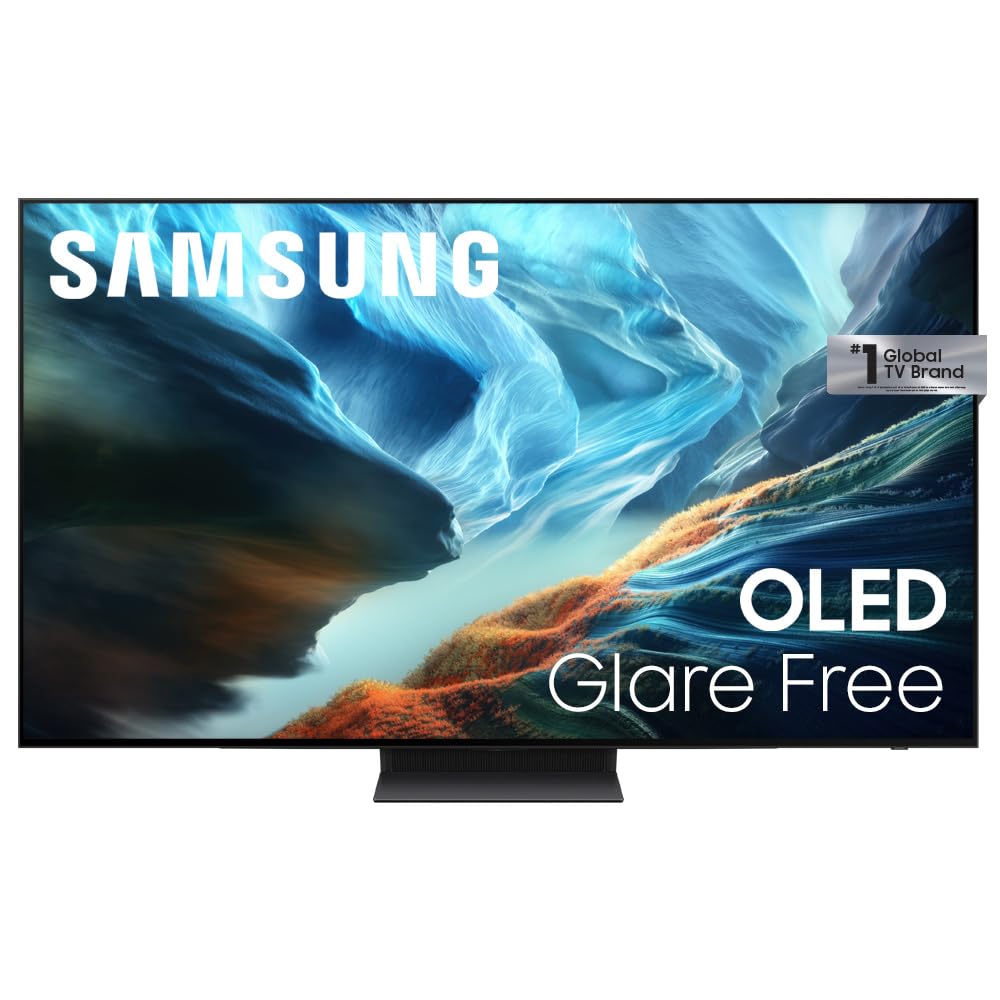
1. Samsung 77-Inch Class S90H Series OLED 4K Smart TV
Our pick — 4.5+★ from 300+ verified ratings; the strongest balance of quality and price.
The 77-inch screen that shrugs off window glare and keeps a 165Hz game smooth.
You get the biggest step up from a 70-inch LCD here without paying the top tier. The panel is 77 inches — the closest true size to the 70 inches you went looking for, so seven inches more screen. It also ships with glare-fighting tech that OLED buyers usually give up in a bright room.
The headline is Motion Xcelerator 165Hz, which means the screen can redraw the action 165 times a second for tear-free, low-latency play. Set that against the 65-inch Samsung S85H below at 120Hz and the S90H clearly leads on raw refresh speed. The rest of the gaming kit is complete too: NVIDIA G-SYNC and AMD FreeSync Premium Pro, the two main systems that keep a PC or console frame synced to the panel. Its NQ4 AI Gen3 processor draws on 128 neural networks to clean up and sharpen what you watch, and 4K AI Upscaling Pro brings older HD content closer to 4K detail.
What wins people over on this set is the picture itself — crisp resolution and vivid color come up again and again in owner feedback, and the Glare Free coating earns real praise for killing reflections. Setup is described as quick and painless. The honest catch is reliability: a noticeable minority report a set that quit within a week, so buy from a seller with a clear return window and register the warranty the day it arrives.
Where it pulls ahead
- 77-inch OLED panel — the closest true size to 70 inches, and a bigger canvas than the 65-inch picks
- 165Hz refresh with G-SYNC and FreeSync Premium Pro for low-latency console and PC play
- Glare Free treatment keeps reflections off the screen in a sunny room
- NQ4 AI Gen3 processor with 128 neural networks sharpens everything toward 4K
The fair warnings
- A minority of units have failed early — protect yourself with the return window
- 185 kwh a year is more draw than the smaller 65-inch Samsung below
- You need a wide wall or media unit to seat a 77-inch screen comfortably
Go for it if: you want the largest true OLED size near 70 inches, plus glare control and a 165Hz panel for gaming.
Think twice if: your wall is tight or you would rather spend less — the 65-inch S85H below covers the same OLED ground at a smaller size.
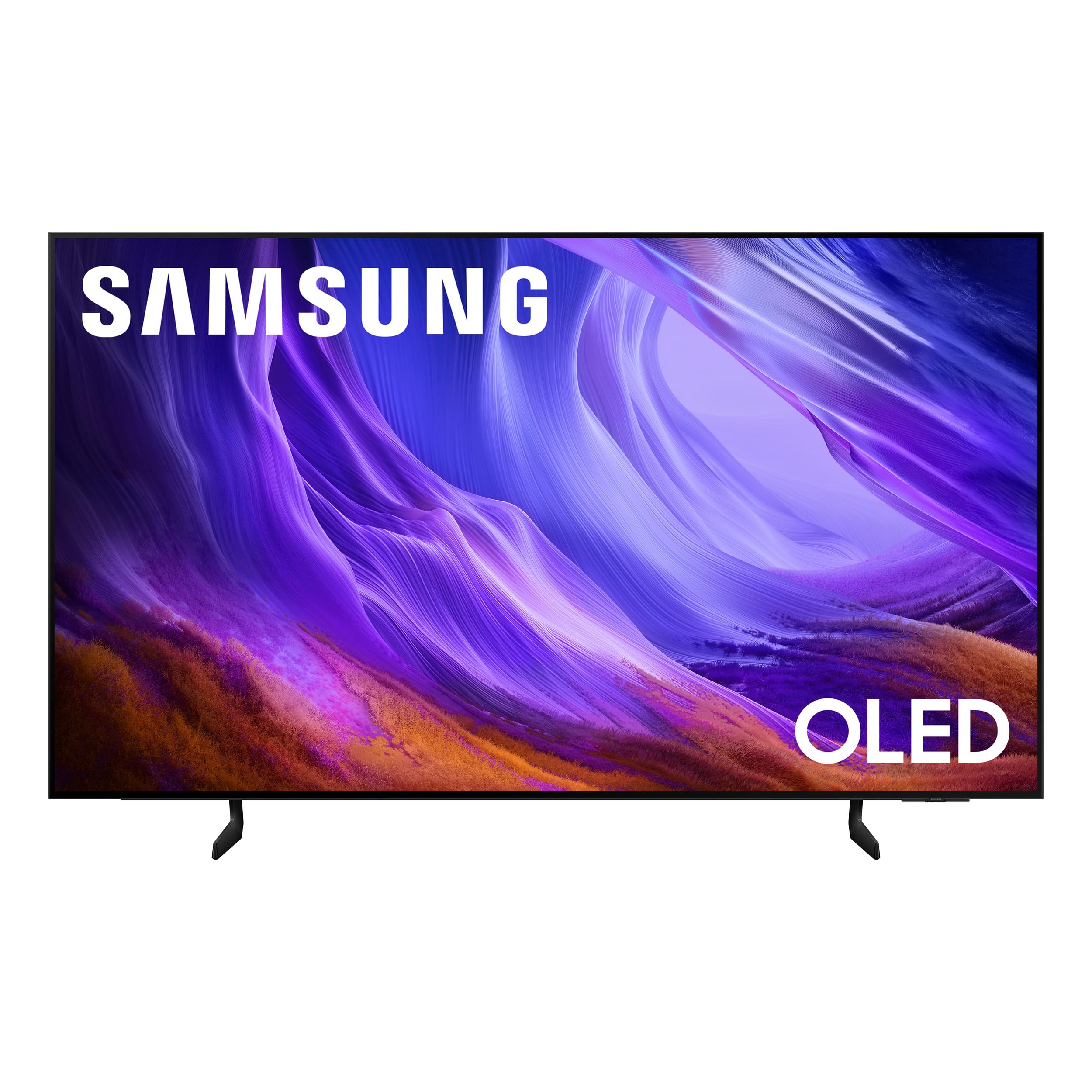
2. Samsung 65-Inch Class S85H Series OLED 4K Smart TV
The least expensive way onto a real OLED panel without giving up the good stuff.
The 65-inch S85H is the sensible entry point for anyone who wants OLED black levels butt actually changing — which is about as close to instant as a TV gets. Add up to 120Hz refresh, VRR up to 120Hz, NVIDIA G-SYNC, and AMD FreeSync Premium, and you have a set that keeps up with fast shooters without smearing the frame.
The picture is built on over 8.3 million self-lit pixels with Perfect Black and Perfect Color, and the a8 AI Processor 4K Gen3 detects what you are watching and tunes the picture and sound to match. Dolby Vision and Dolby Atmos come standard, plus FILMMAKER MODE with Ambient Light Technology so you see films the way they were graded. You also get LG Channels with over 400 free channels and more than 10,000 movies and shows on demand.
One practical note: OLED Care is included to help the panel hold its picture quality over time, which is the kind of housekeeping OLED owners learn to appreciate. Give the room a little thought too — this set draws 225 kilowatt hours a year, so it is not the most frugal here. Owners’ feedback is short and sweet: picture quality is what they praise, with nothing negative surfacing to date.
Bottom line: if response time and console smoothness are your priorities, the B6 is the least compromised gaming OLED on the smaller side of this list.
Pick this if: competitive gaming is the reason you are buying a TV and you want 0.1ms response with G-SYNC.
Consider the bigger LG C6 instead if: you would rather have the 77-inch size and four HDMI 2.1 ports.
3. Sony 65 Inch BRAVIA 8 OLED 4K HDR Smart Google TV (K-65XR80)
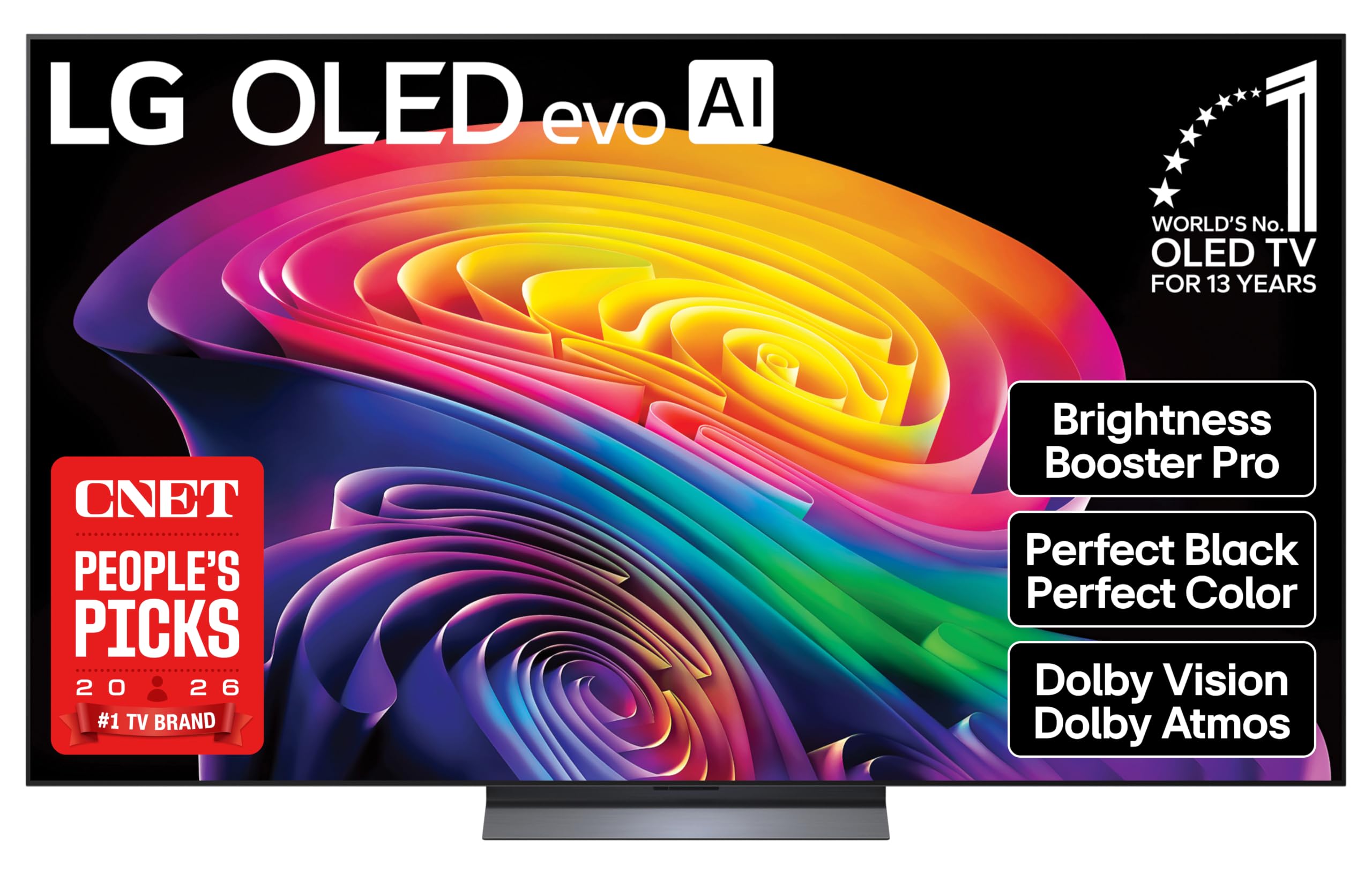
A 77-inch evo panel built for consoles, with four full-bandwidth HDMI ports.
Here is a 77-inch OLED that treats gaming as the point, not an afterthought. Brightness Booster Pro is the headline, and the maker claims it delivers up to 3.2x brighter pixels — a figure from LG’s own spec sheet, and it matters most in a room with lamps on. More than 8.3 million self-lit pixels give you Perfect Black and Perfect Color, while the a11 AI Processor tunes the picture scene by scene.
On the connectivity side, four HDMI ports each carry full-bandwidth 4K 120Hz, so your console, PC, and soundbar can all live here without a switcher. You also get 120Hz native refresh, VRR, ALLM, G-SYNC Compatible, and FreeSync Premium — the full anti-tear toolkit. For film nights it is loaded: Dolby Vision, Dolby Atmos, FILMMAKER MODE with Ambient Light Technology, and a built-in 40W 2.2-channel speaker system with eARC support for a soundbar.
The honest friction is in the software. The remote and the user interface draw the sharpest criticism from owners, described as sluggish and awkward to navigate, and the screen can look reflective in bright setups. Plan to spend your first evening customizing the picture, then mostly leave it alone — most owners end up loving the picture, with rich color and deep blacks leading the praise.
The play here: match this 77-inch screen with your consoles for four full-bandwidth HDMI 2.1 ports and real Brightness Booster Pro, then budget a little patience for the menu system.
Right for you if: you want a big 77-inch OLED that will serve several consoles and a PC without cable-swapping.
Not ideal if: a slick, fast interface is important to you — check the remote hands-on if you can.
4. Sony BRAVIA XR8B OLED 4K HDR Smart Google TV K-77XR8B

A 77-inch wall-filler with calibrated Netflix and Prime modes baked in.
If movie night is the point and the wall is wide, the XR8B delivers the biggest screen in this Sony group. Over 8 million self-lit pixels produce pure black, and the XR Processor enhances color, contrast, and clarity in real time, scene after scene. Studio calibrated modes for Netflix and Prime Video aim to show films the way they were graded, and Dolby Vision, Atmos, IMAX Enhanced, and DTS:X cover the audio-visual side.
Gaming gets proper attention too: Auto HDR Tone Mapping and Auto Genre Picture Mode for the PS5, plus XR OLED Motion to keep fast sports blur-free. Google TV with Google Assistant runs the interface, and Apple AirPlay 2 and Google Cast let you throw content from a phone or tablet onto the big screen. That makes it a natural fit for the living room where everyone watches something different.
The repeated concern owners raise is reliability — some sets switch themselves off or restart intermittently. That is a fair caution, not a deal-breaker, since plenty of owners call it the best TV they have owned. Set it up carefully and make sure the return window is comfortable. Picture and setup both earn heavy praise, so the fundamentals are strong.
The big wins
- 77-inch OLED with XR Processor tuning color, contrast, and clarity live
- Studio calibrated Netflix and Prime Video modes plus IMAX Enhanced and DTS:X
- PS5-ready with Auto HDR Tone Mapping and Auto Genre Picture Mode
- AirPlay 2 and Google Cast built in for phone-to-TV casting
Watch-outs
- Random shutdowns come up in owner feedback — plan your warranty coverage
- You need a generous wall to seat 77 inches without crowding the room
Strongly consider it if: a large, calibrated movie image with deep blacks is your main goal and you want PS5 features on top.
Maybe pass if: you want zero reliability worry — the 65-inch Sony BRAVIA 8 II below is the easier-going Sony.
5. Panasonic Z95 Series 65-inch OLED 4K Ultra HD Smart Fire TV

A 144Hz OLED with a microphone array that means you never pick up the remote.
The Z95 is the set for a household that would rather talk than tap. Built-in microphones let you ask Alexa to start a show, check a score, or control smart-home devices with hands-free voice, no remote needed. Fire TV pulls in live TV and personalized recommendations, and Fire TV Ambient Experience turns the screen into a canvas of over a thousand pieces of free artwork when you are not watching.
Sports and games get a strong panel. Game Mode Extreme brings HDMI 2.1 (the newer, higher-bandwidth HDMI standard), a 144Hz refresh rate (144 screen updates per second, so fast motion stays smooth), VRR (variable refresh rate, which stops screen tearing), and AMD FreeSync Premium, plus a Game Control Board for quick access to settings. Its Primary RGB Tandem panel with an Aaerodynamic ThermaFlow Cooling System is built to increase brightness and color gamut (the range of colors it can show). The HCX Pro AI Processor MK II can detect when you are watching sport and adjust picture and sound automatically. Multiple HDR formats are covered too — HDR10+, HDR10, Dolby Vision, and HLG — with HDR10+ Adaptive and Dolby Vision IQ for room-aware tuning.
Sound is where it quietly impresses: 360° Soundscape Pro, tuned by Technics with integrated upward and side-firing speakers, delivers genuine surround from the panel. The catch: responsiveness and the remote draw mixed-to-negative feedback, with some finding the interface laggy. Picture, sound, and overall quality are where owners focus their praise.
Best reason to buy: hands-free Alexa, 144Hz gaming, and Technics-tuned 360° sound in one 65-inch panel.
This is a fit if: voice control and built-in surround sound matter to you and you want a 144Hz panel for sport and gaming.
Look elsewhere if: you value snappy menu navigation above all else.
6. LG 77-Inch OLED evo AI 4K G5 Series Smart TV (OLED77G5WUA)

The gallery set — Brightness Booster Max and a near-flush wall mount in one 77-inch panel.
If you want the TV to disappear into the wall when you are not watching, this is the one. LG’s One Wall Design leaves virtually no gap against the wall, and when idle it displays paintings, photos, and other content through Gallery+. That is a genuinely different ownership experience from a set that sits on a console.
Brightness Booster Max magnifies each individual pixel, and LG notes UL verification for Discomfort Glare Free with UGR under 22 — a measurable glare threshold that backs the claim this panel handles a lit room gracefully. The Alpha 11 AI Processor Gen2 brings AI Picture Pro and AI Super Upscaling, plus AI Director Processing for movies. Over 8.3 million self-lit pixels deliver Perfect Black and Perfect Color. Gamers still get their due: 0.1ms response time, up to 120Hz, G-SYNC, FreeSync Premium, VRR, and four HDMI 2.1 inputs.
Two catches to weigh before you commit. No stand is included — the wall bracket ships in the box, but you need a wall and probably a friend to help hang it. And value and reliability draw mixed feedback, with some units refusing to turn on reliably. The brightness and the flush wall look are what keep owners happy — those are the qualities you are buying.
Why it stands out
- Sits virtually flush to the wall with no gap — gallery-style installation
- Brightness Booster Max plus UL-verified glare rating under 22
- 0.1ms response, 120Hz, and four HDMI 2.1 ports for gaming
- Alpha 11 AI Processor Gen2 with AI Director Processing for movies
The real caveats
- No stand in the box — you need a wall and a mount plan
- Reliability feedback is mixed; a return window is worth having
The pick for: a design-led room where the TV should look like art on the wall and disappear when off.
Consider something else if: you need a tabletop stand from the start or want the simplest install possible.
7. Samsung 77-Inch Class OLED S95F 4K Glare Free Smart TV

Sun streaming through the window? This 77-inch OLED was built to ignore it.
Samsung engineered this set for the room that gets direct sunlight. The Glare Free coating is the headline, aimed squarely at killing reflections even with a window or lamp in your line of sight. Underneath sits Samsung’s brightest OLED with pixel-level pitch blacks, so the picture still holds deep contrast as highlights pop. The NQ4 AI Gen3 processor, with its 128 neural networks, handles the upscaling and sound tuning.
Gaming is covered as well: VRR gaming at up to 4K 165Hz with Motion Xcelerator, and the processor transforms SDR content into HDR-like quality with brighter highlights and clearer detail. If you watch a lot of older broadcast or streamed material, that remastering is worth having — the S95F is built to make everything on screen look its best.
Price-tier and performance feedback both split on this one — some owners find the picture worth every bit, others question the premium, and a minority report a unit that stopped working. That is honest, not fatal. The anti-glare performance, though, earns genuinely enthusiastic owner response, especially for anyone whose living room is bright during the day.
Why it might be yours: the glare-free treatment is the standout strength here — the one thing that makes a sunny, west-facing living room work with OLED.
Go for this if: your viewing room has strong daylight and reflections have ruined previous TVs for you.
Think twice if: the room is normally dark — a set without the glare coating saves you the premium.
8. Sony QD-OLED 77 inch BRAVIA XR A95L Series 4K Google TV

The largest color range Sony sells, on a 77-inch QD-OLED panel for cinema lovers.
The A95L pairs a QD-OLED panel with XR Triluminos Max, which means Sony’s widest palette of shades and hues sitting next to pure OLED black and high brightness. The Cognitive Processor XR handles wide dynamic contrast, detailed blacks, and natural color, aiming to recreate how we see the real world. For someone who cares about the film image above all else, this is the top of Sony’s ladder.
Extras are generous. BRAVIA CORE includes 10 movie credits and 24 months of subscription on hundreds of classics. Game Menu puts all your gaming settings in one place, HDMI 2.1 features like 4K/120, VRR, and ALLM are on board, and PS5 owners get Auto HDR Tone Mapping and Auto Genre Picture Mode. Multi View splits the screen to watch from two sources at once. Dolby Vision and IMAX Enhanced round out the cinema credentials.
Long-term reliability draws mixed feedback — some report speakers giving out inside a year — so treat the warranty as part of the purchase. What keeps owners loyal is the picture: contrast, black level, and color come back as the strengths repeatedly. If you have ever watched a film where black felt truly deep and color felt truly alive, this is the panelthat does it, and this Sony delivers it at 77 inches.
Who it rewards: anyone who treats a big screen as a home cinema and wants QD-OLED color with the deepest black Sony makes.
Worth stretching for if: movie picture quality is the whole reason you are shopping and 77 inches is the size you want.
Reconsider if: you would rather put the money toward a brighter set for daytime viewing — the Samsung S95F above handles glare better.
Know the Specs
OLED panel vs QD-OLED
A standard OLED panel uses self-lit pixels that switch off completely to make true black. A QD-OLED adds a quantum-dot layer over those pixels — tiny particles that convert light into purer, more saturated color. In plain terms, QD-OLED tends to give you a wider, brighter palette, which is why the two Sony QD-OLED sets here lean on color as their selling point. Standard OLED still wins on price and on the black level that made the technology famous.
Refresh rate in hertz
Refresh rate is how many times per second the screen redraws the image, written as hertz (Hz). A 120Hz panel redraws 120 times a second, which keeps a fast ball or a racing game smooth. Higher numbers like the 165Hz on the Samsung S90H and S95F, or the 144Hz on the Panasonic Z95, can help the smoothest motion stay clean. Match it with VRR, variable refresh rate, so the panel adjusts to the frame rate your console sends.
Peak brightness and anti-glare
OLED brightness is measured by how hard each pixel can shine, which decides whether the picture cuts through a sunlit room. Some makers pair that with coatings that scatter reflections so you see the show instead of your own window. The Samsung S90H and S95F build glare reduction in as a headline feature, and LG’s G5 uses Brightness Booster Max with a UL-verified glare rating. In a sunlit room, anti-glare coatings and brightness boosters matter more than the jump from 120Hz to 165Hz.
Smart platform and voice control
The smart platform is the menu system you use every day. Google TV (Sony’s sets here) puts your apps in one row and leans on Google Assistant, while webOS (LG) brings its own layout and Magic Remote, and Fire TV (the Panasonic) builds in hands-free Alexa. Pick the platform that matches your other devices — an Alexa household settles into Fire TV quickly, a Google household into Google TV. The OLED panel is fixed for the life of the set, but the smart platform is what you navigate every day.
Common Questions
Is there actually a 70-inch 4K OLED TV for sale?
Will a 77-inch OLED fit my living room wall?
What does 0.1ms response time mean for gaming?
Does a glare-free OLED screen really help in a sunny room?
What is the difference between OLED and QD-OLED?
Do I need HDMI 2.1 ports for a modern console?
Is a higher refresh rate worth it for watching sports?
How long does an OLED panel last, and does burn-in still matter?
Do any of these TVs come with a stand or wall bracket?
Which smart platform should I choose, Google TV, webOS, or Fire TV?
The Bottom Line
For most buyers chasing the best 70 inch 4k oled tv, the answer is the Samsung 77-Inch S90H Series. It is the closest true size to 70 inches, and its 165Hz panel (165 screen updates per second) keeps fast action smooth. G-SYNC and FreeSync Premium Pro (two anti-tearing graphics standards) help games run clean, and the Glare Free coating keeps a bright room honest. If you would rather save money and slot a slightly smaller set into a normal wall, the Samsung 65-Inch S85H delivers OLED contrast with real gaming features at the most approachable point here. And if a design-led room is the goal and you want the TV to hang like art, the LG 77-Inch G5 with its near-flush One Wall Design is the pick to reach for.
One last nudge before you add to cart: the S90H earns the top spot not because it is the biggest, but because it pairs the 77-inch panel with the glare control most bright rooms actually need. Buy from a seller with a comfortable return window, measure your wall twice, and you will have the OLED that finally makes the size search make sense.
How we choose
We do not accept paid placement. Every pick is matched to a real buyer and a real use-case; we do not hands-on test units.
Sources
Specifications: manufacturer listings and product documentation. Review insights: verified customer reviews, as of November 2026. Pricing: not shown on this page (it changes often); check the current price via the retailer link.
As an Amazon Associate, Gamepad Test earns from qualifying purchases. This does not affect which products we feature.