
Specs are compiled from manufacturer listings and verified buyer reviews and can change over time — please confirm the key details on the product page before buying.
If your boat cabin turns into an oven by mid-afternoon, the fix isn’t a bigger fan — it’s a proper marine air conditioning unit rated for the job. The short answer: match the unit to your cabin size and whether you sleep aboard. A 10,000 BTU under-dash kit cools a small helm or day-cabin fast, while a rooftop unit suits a bigger cabin you sleep in overnight. Below you’ll find the four units worth comparing, what each one asks of your battery bank, and where each one honestly falls short.
This guide is built by comparing the manufacturers’ published specifications and the patterns across verified customer reviews, so you get each pick’s real strengths and trade-offs instead of marketing spin.
Start with your battery bank’s amp hours, your roof opening size, and how many hours a day you want cold air — those three answers narrow the field faster than any spec sheet. Here is how to read the best air conditioning for boat listings without getting buried in jargon.
Top Picks
How To Choose The Best Air Conditioning for Boat
A boat is a harder place to cool than a car or a camper. You have no engine idle to lean on at anchor, the cabin is small but sun-baked from every side, and any seawater or spray near the unit is a real threat. That’s why amp draw, waterproofing, and low-voltage protection matter more here than raw BTU — and why the wrong pick leaves you hot and frustrated.
Start With Amps, Not BTU
Cooling power is measured in BTU (British thermal units, the standard unit of cooling output), and 10,000 BTU suits a small to mid cabin. The number that decides whether a unit actually runs, though, is current draw in amps (the electrical current it pulls from your battery). An under-dash unit pulling 50-60A will drain a modest battery bank fast, so a rooftop unit that draws less per hour lasts longer at anchor. Check your alternator output and battery capacity before you chase a big BTU figure.
Under-Dash Split vs Rooftop
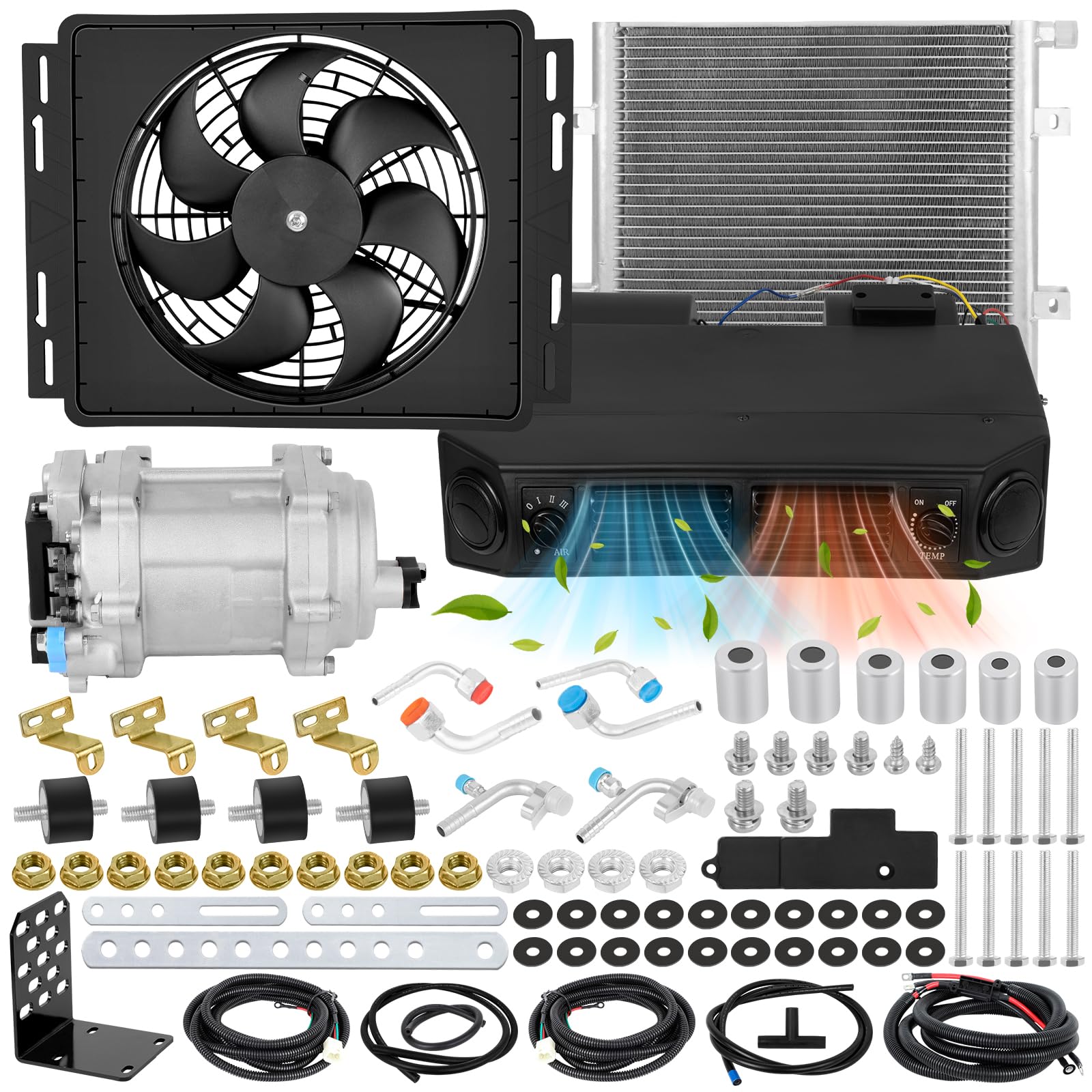
An under-dash kit mounts the evaporator and blower inside the cabin, with a compressor and condenser elsewhere. It hides neatly out of sight and blows cold air directly at the helm. A rooftop unit replaces your existing roof hatch and cools from above, which suits a cabin you stand and sleep in. Rooftop installs need a standard roof opening; under-dash kits need hose routing and wiring.
Water, Vibration, and Salt
Look for IPX6 waterproofing on exterior fans and low-voltage protection on the electronics. On a boat, an IPX6 fan that shrugs off spray and a controller that cuts power before the battery dies are both worth more than an extra feature you’ll never touch. Reinforced housings also handle the constant vibration of a running hull better than thin plastic.
Side-by-Side Comparison
| Model | Best For | Cooling Power | Voltage | Form Factor | Amazon |
|---|---|---|---|---|---|
| Universal Under Dash Electric Air Conditioner Heating and Cooling 12 Volt DC 10000 BTU★ Best Overall | Small cabins and helm cooling with heat too | 10,000 BTU | 12V DC | Under Dash | Amazon |
| Aspligo 12v DC Truck Air Conditioner 10000BTU Split | Parking cooling on a budget battery draw | 10,000 BTU | 12V DC | Split System | Amazon |
| Aspligo Electric Air Conditioner 12v 10000btu Under Dash Kit | Under-dash heat and cool with app control | 10,000 BTU | 12V DC | Under Dash | Amazon |
| ICECOSMOS Low Profile 12V Rooftop Air Conditioner with PTC Heating Pro | Big cabins and overnight off-grid sleeping | 10,000 BTU | 12V DC | Rooftop | Amazon |
Detailed Reviews
1. Universal Under Dash Air Conditioner 10000 BTU
One kit that blows cold on a July afternoon and warm on a cold morning crossing.
This is the pick that does both jobs. The kit bundles an evaporator, condenser, fan, receiver dryer, and a scroll compressor into one under-dash package rated at 10,000 BTU of cooling power on 12V DC. For a boat cabin, that means one unit handles the summer heat and the shoulder-season chill instead of two separate systems eating your limited space.
It runs a 950W rated load at 50-60A, which is heavier than the Aspligo split’s 380-840W and 32-70A band. That extra draw buys you heat as well as cool, so plan your battery bank around it before you commit. The heating side works by warming engine coolant, so it’s a heat-on-the-move feature, not an anchor-only one.
What wins people over is the noise control. The ultra-quiet evaporator and smart temperature control keep it running below 50dB, which is close to a quiet conversation — you can hold a radio call while it hums. The three-speed motor spins at 2000, 3500, and 5000 RPM, and you set the temperature knob anywhere from 16℃ to 28℃.
Set expectations on install: no paper manual ships in the box, so study the description’s install steps first. The 3-in-1 condenser design trims the plumbing, but professional fitting is still the safer call on a boat. Also note cooling fades once outside air climbs past 50 degrees, and the R134a refrigerant (600g) is not included — buy it separately before install day.
What Earns The Top Slot
- Cooling and heating in one 10,000 BTU kit
- Runs below 50dB for quiet running
- Three fan speeds plus a 16℃-28℃ thermostat
- Short circuit, overvoltage, and low-voltage protection built in
Plan Around These
- Heavy 50-60A draw demands a strong battery bank
- No paper manual in the box
- Refrigerant sold separately
- Cooling drops when outside air tops 50 degrees
Reach for this if: you want one under-dash unit that heats and cools a compact boat cabin and you can feed its 950W load.
Think twice if: your electrical setup is modest — the Aspligo split below draws less power for cooling-only duty.
2. 12v DC Truck Air Conditioner 10000BTU
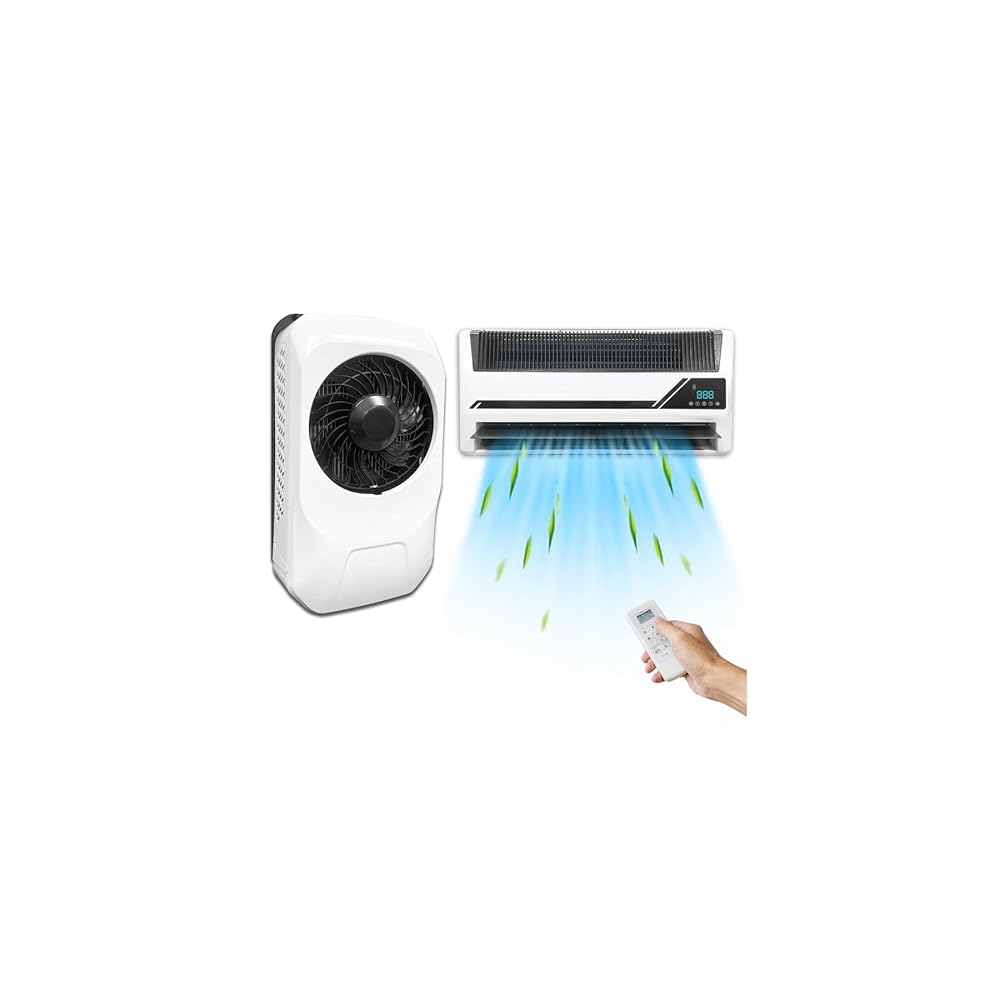
The cooling-only split that asks less of your battery than a heat-and-cool kit.
If you only need cold air and want to stretch battery time at anchor, this split unit is the leaner option. Its 10,000 BTU cooling capacity comes from a rotary scroll compressor, and the power draw lands in a 380-840W band pulling 32-70A at 12V DC. Compare that to the Universal kit’s 950W at 50-60A and the lower-rated draw is the whole pitch: less current spent per hour of cold air.
It’s built to keep cooling after you cut the main power, running straight off the battery, and the maker describes it as eliminating the fuel burn of traditional engine-driven air. A clear LED display and a remote let you set temperature without leaving the helm seat. The wiring uses a 12mm² pure copper core wrapped in thick PVC insulation to carry the higher current and cope with voltage swings.
The thing everyone raves about is build quality, and the unit earns a strong reputation for being well made. Worth knowing honestly: performance is the most-discussed topic and it splits both ways — plenty say it works very well, some report the compressor quitting. That’s the real-world caveat of a split setup. Measure before you buy, too; the internal unit is 668×331×191mm and the external box is 750×370×200mm.
The honest read: a capable cooling-only split with a lower power footprint and a solid build, best for buyers who have space for two halves and accept that mixed reliability reports are part of the category.
Best fit for: a boat with a dedicated spot for the external compressor and a battery bank that likes a gentler draw.
Look elsewhere if: you want heating too, or need a single self-contained unit instead of a two-part install.
3. Electric Air Conditioner 12v 10000btu

A heat-and-cool under-dash kit with app control and a gentler 550-600W pull.
Here’s a version of the under-dash idea tuned for lower electricity use. The 20CC scroll compressor delivers 10,000 BTU of cooling, but rated power sits at 550-600W and 40-60A — below the Universal kit’s 950W. If your battery bank is the weak link, that lower ceiling is meaningful on a long afternoon at anchor.
It heats as well as cools, and the integrated receiver dryer, condenser fan, and condenser are merged to cut leak points and steady the heat exchange. Low-voltage protection is the feature that matters on the water: it cuts power before your battery drains and lets the unit start without stressing the source. Control is via an app or the button panel rather than a remote.
Two practical notes before you order. The internal unit measures 15.89 × 13.58 × 6.12 inches, so confirm the spot under your dash first. And it ships in two separate packages — internal and external — which may arrive on different days. R134a refrigerant (500-550g) is not included.
Where it shines: a lower wattage and current rating than the Universal kit while still offering heat and cool, plus app control and low-voltage protection.
The catch: at 3.0+ stars this is the least-proven unit here, so weigh the lower power draw against a thinner track record and be ready for a two-part delivery.
Choose it for: an under-dash heat-and-cool setup where low power draw and app control matter more than a proven review base.
Skip the hassle if: you want a well-established pick — the Universal kit and the Aspligo split both carry stronger owner confidence.
4. Low Profile 12V Rooftop Air Conditioner
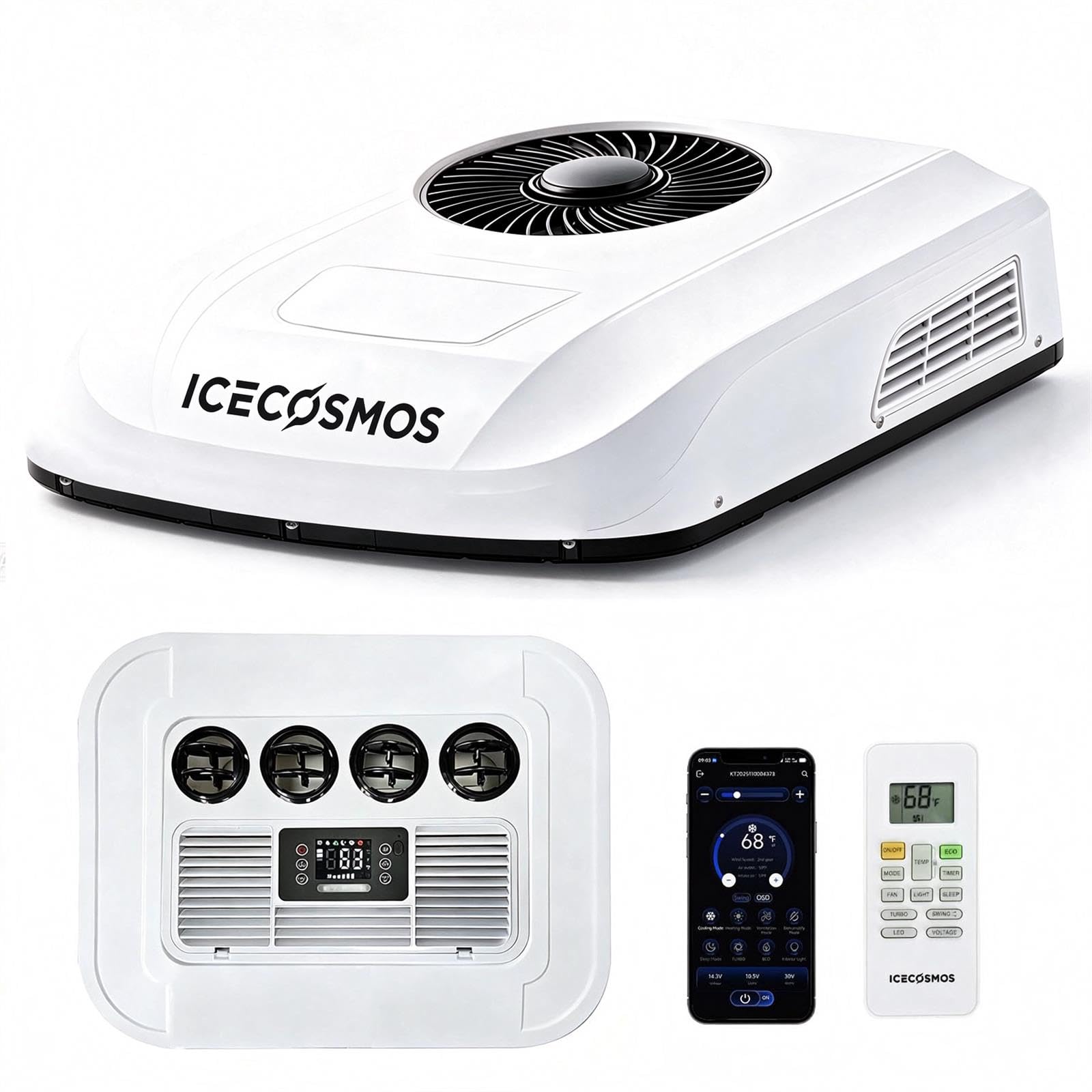
The rooftop unit for sleeping aboard, not just cooling a helm seat.
If you want cold air in a cabin you actually sleep in, a rooftop makes more sense than an under-dash blower. This one delivers 10,000 BTU of cooling and adds PTC heating at 4500 BTU, mounting on the roof so the cool air settles over the whole space. The reinforced ABS shell is built to take rough roads and harsh weather, and it matches a standard 14.1″ x 14.1″ roof opening.
Power management is where it earns its keep. It runs directly on 12V DC with no inverter in the middle, and the maker states that on a 12V 400AH LFP battery in ECO mode it can run over 12 hours. That’s the anchor-night math most boaters care about. The 5.5-inch slim body also sits low to cut wind resistance.
It’s quiet in a way under-dash units rarely are: just 39dB in Eco mode, close to a library whisper — so you can sleep through the night. The IPX6 waterproof fan handles spray, and you can run it from the remote, the touch panel, or your phone. Cooling performance is what owners talk about most, and it holds up even when the outside temp climbs past 113℉, where the maker says it keeps 80% of standard performance.
Weigh the install against the convenience. This replaces your roof hatch rather than tucking under a dash, so you need that opening and a clean seal. It’s also the most expensive route here, but it’s the only one built to cool a full cabin overnight off solar and battery.
Why It Stands Out
- 10,000 BTU cooling plus 4500 BTU PTC heating
- 39dB in Eco mode for overnight sleeping
- IPX6 waterproof fan for spray and weather
- Fits standard 14.1″ x 14.1″ roof openings
What To Weigh
- Requires a roof opening and a sealed install
- The highest-cost option in this lineup
- Battery runtime depends on a large LFP bank
Made for: boaters who sleep aboard and want quiet, full-cabin cooling backed by a big battery and solar setup.
Not the pick if: you only cool a helm seat and want a quick under-dash install.
Know the Specs
BTU (Cooling Capacity)
BTU is the standard measure of how much heat an air conditioner can remove. A 10,000 BTU unit is the common size for a small to mid boat cabin. Bigger cabins or open cockpits may want more, but on a boat the real limiting factor is usually power, not cooling power — so match BTU to your space, then check the amperage before you buy.
Amps and Watts
Amps measure how much current the unit pulls from your battery; watts measure the electric power it consumes. Higher amps drain your battery faster. An under-dash kit drawing 50-60A needs more reserve than a split unit pulling 32-70A depending on mode. Know your battery bank and alternator before you commit to any 12V marine AC.
Split vs Single Unit
A split system separates the inside evaporator from the outside compressor and condenser, so you can place each where it fits. A single rooftop unit is one self-contained box that replaces a roof hatch. Split units hide better in small cabins; rooftop units are simpler to seal and cool from above.
Water and Voltage Protection
IPX6 means the enclosure resists strong water jets — good for an exterior fan on the water. Low-voltage protection cuts power before the battery drains flat. Both matter on a boat, where spray and a drained battery are real risks, so check them on any unit you consider.
Common Questions
Will a 12V air conditioner drain my boat battery at anchor?
Is an under-dash kit or a rooftop unit better for a boat cabin?
Do these units heat as well as cool?
Can I install a 12V boat air conditioner myself?
Does R134a refrigerant come with the unit?
How loud is a boat air conditioner in the cabin?
What does IPX6 waterproofing mean for a marine unit?
Will these units fit a small boat or only big trucks and RVs?
What happens to cooling in extreme heat?
The Bottom Line
For most boat cabins, the Universal Under Dash Electric Air Conditioner is the strongest all-round pick. One 10,000 BTU under-dash kit both cools and heats, runs below 50dB (about the level of a quiet conversation), and bundles protection circuits that matter on the water — just plan a battery bank that can feed its 950W draw. If you only need cold air and want a leaner current pull, the Aspligo split is the efficient cooling-only route. For quiet overnight sleeping off solar and a large LFP bank (lithium iron phosphate, a common deep-cycle boat battery), the ICECOSMOS rooftop is the one built for it. If you want an under-dash heat-and-cool kit with app control and low-voltage protection, the Aspligo under-dash kit rounds out the choices — keep in mind it has the thinnest track record of the four, so lean on the other three if proven confidence matters most to you.
How we choose
We do not accept paid placement. Every pick is matched to a real buyer and a real use-case; we do not hands-on test units.
Sources
Specifications: manufacturer listings and product documentation. Review insights: verified customer reviews, as of November 2026. Pricing: not shown on this page (it changes often); check the current price via the retailer link.
As an Amazon Associate, Gamepad Test earns from qualifying purchases. This does not affect which products we feature.