
Specs are compiled from manufacturer listings and verified buyer reviews and can change over time — please confirm the key details on the product page before buying.
Your watch says 172 bpm. Your legs say you are about to blow up. Which one do you trust? That gap is why a chest strap wins: electrodes against your ribcage read the heart’s electrical signal directly, so the number holds steady mid-interval. Below you will find nine athletic heart rate monitors sorted by what they actually do well, from a rechargeable strap built for training apps to a bundle that records runs with no watch on your wrist at all.
This guide is built by comparing the manufacturers’ published specifications and the patterns across verified customer reviews, so you get each pick’s real strengths and trade-offs instead of marketing spin.
Start with two decisions: a strap length that matches your chest measurement, and a coin cell or a rechargeable pod. Comfort, connection, and battery life between swaps are what separate the athletic heart rate monitor options here.
Top Picks

How To Choose The Best Athletic Heart Rate Monitor
Most people buy their first chest strap expecting it to behave like a watch. It does not. A strap only reads your heart when the electrode pads are damp and pressed against bare skin, and it only sends that reading to a device that speaks its language. Those two facts decide almost every purchase decision below.
Get the strap fit right before anything else
Elastic straps are sized by chest circumference, and a strap that is too short will ride up or tug at your ribs mid-run. The Magene H613 solves this with three strap lengths, from a Short at 58–78cm up to a Long at 93–136cm. The Trio strap adjusts from 26”–39” (66–99 cm) with a maximum stretch of 61” (155 cm), which covers a wide range of adult chests in one size. Check your chest measurement against the listed range before you order.
Match the connection type to your gear
ANT+ and Bluetooth are two different radio languages. ANT+ is what most bike computers and gym cardio machines speak, while Bluetooth is what your phone and training apps use. A dual-band strap like the Wahoo TRACKR talks to both, and it can hold three Bluetooth connections at once so your phone and tablet can log the same session. If you ride with a Garmin or Wahoo computer, confirm ANT+ is listed.
Decide between a coin cell and a rechargeable pod
A replaceable button battery means no charging cable and no dead-strap morning, but you must source the right cell. The Polar H9 and H10 both specify a CR2025 button cell (a flat coin battery), and other sizes can damage the sensor. A rechargeable pod skips battery shopping entirely, and the Wahoo TRACKR runs over 100 hours per charge. Neither approach is wrong; it depends on whether you would rather charge a gadget or keep spares in a drawer.
Read the water rating honestly
IPX7 means the unit survives being submerged briefly, while IP67 adds dust sealing. That covers sweat, rain, and a rinse under the tap. The Trio block explicitly states its IP67 rating is not for swimming, so treat pool laps as a separate question from sweat resistance on any strap you consider.
Side-by-Side Comparison
| Model | Best For | Battery Life | Weight | Water Rating | Amazon |
|---|---|---|---|---|---|
| Wahoo TRACKR HEART RATE★ Best Overall | Charging-free training weeks | 100 hours | 30 g | IPX7 | Amazon |
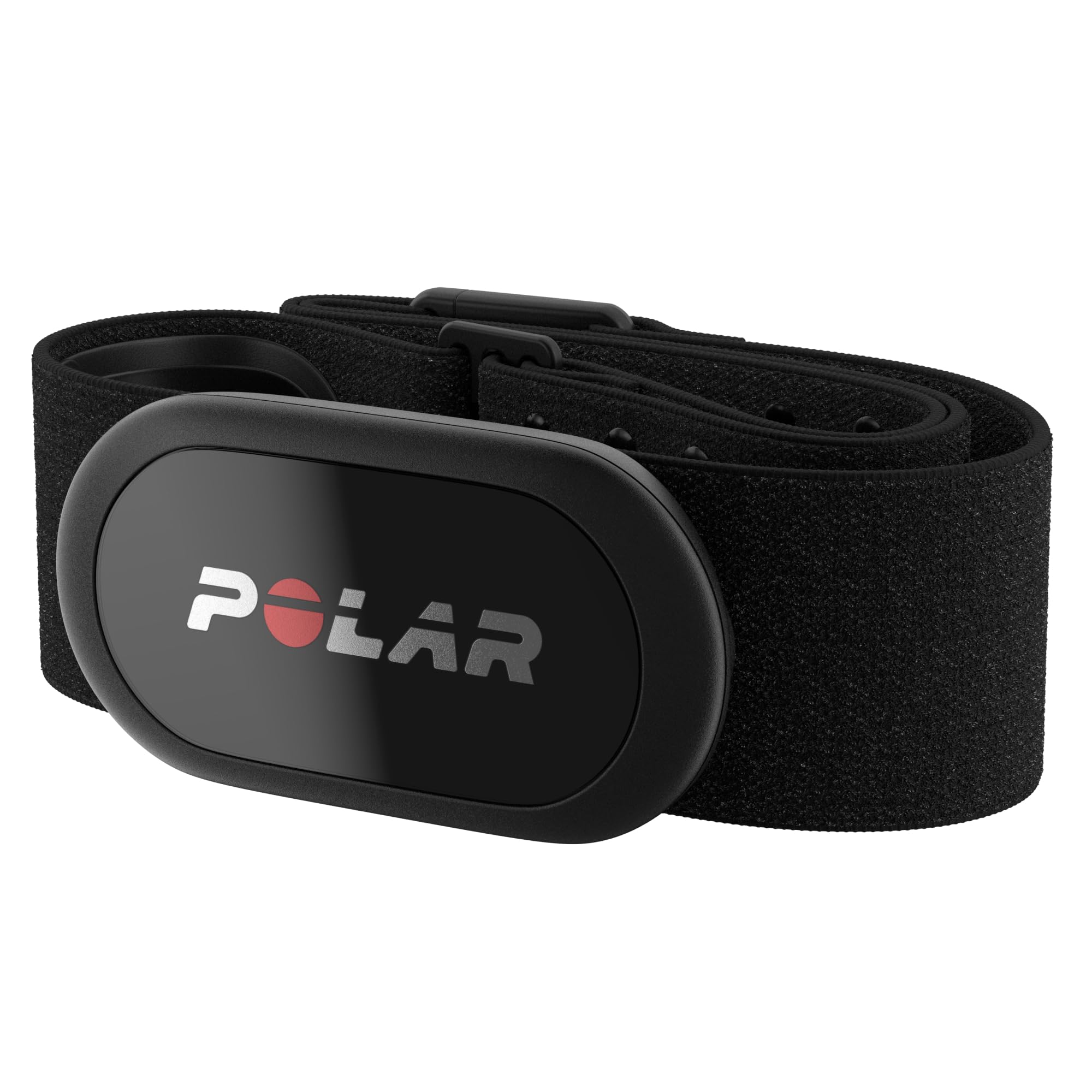
| Polar H10Most Trusted Name | Accuracy-first runners | 400 hours | 2.82 ounces | Fully waterproof | Amazon |
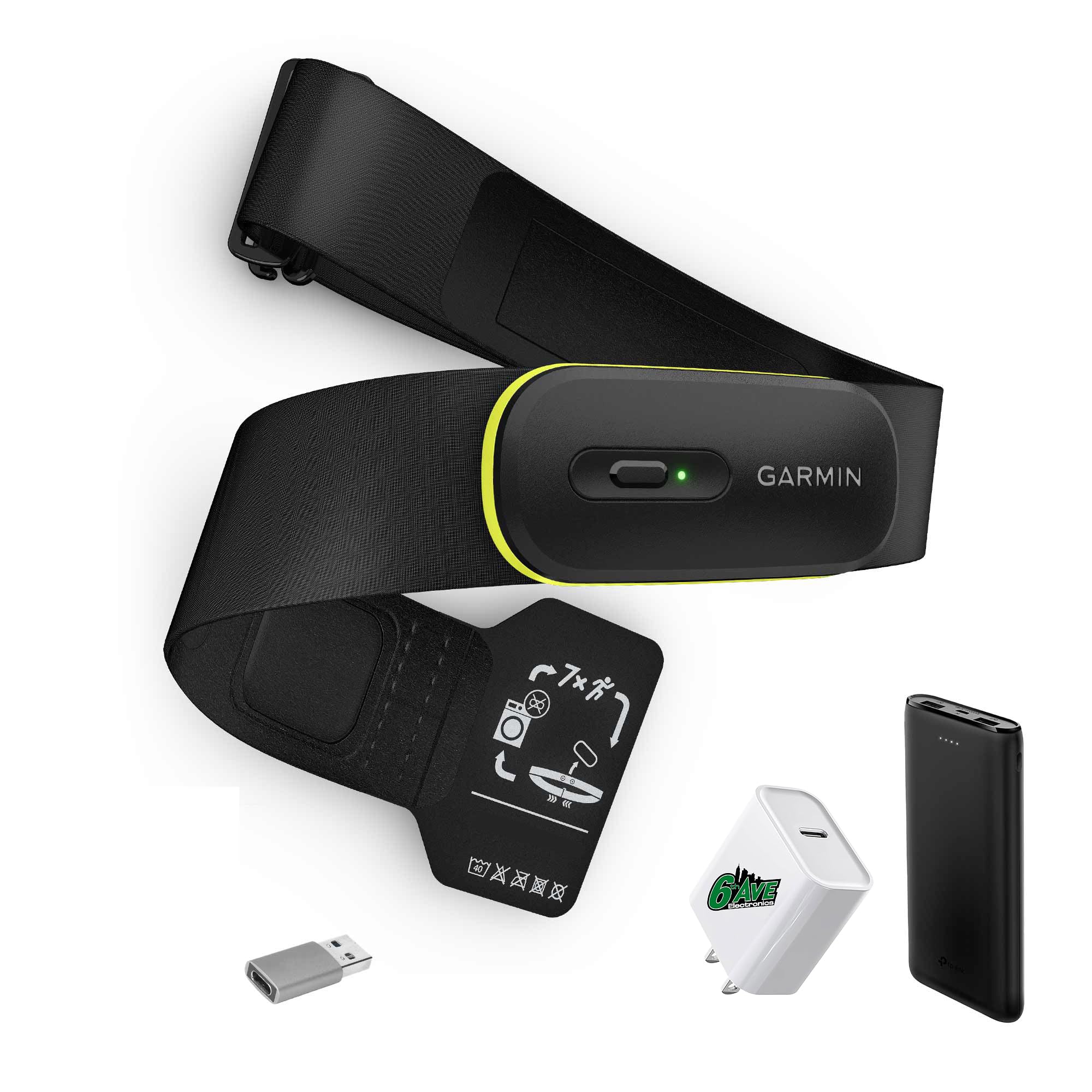
| Garmin HRM 600 BundleBest for Run Data | Watch-free run recording | Up to 2 months per charge | 11.68 ounces | — | Amazon |
| Polar H9 | Everyday gym tracking | 400 hours | 60 g | Waterproof | Amazon |
| Magene H613 | Phone-free workout logging | 100 hours | 12.4 g | IPX7 | Amazon |
| Trio Heart Rate Monitor | Legacy gym equipment pairing | Coin cell (CR2032 included) | 1.8 oz | IP67 | Amazon |
| Magene H603 | Long-haul battery life | 1000 hours | 0.09 kg | IP67 | Amazon |
| POWR LABS Chest Strap | Big-format Peloton sessions | 8760 hours | 1.92 ounces | IPX67 | Amazon |
| XOSS X2 Pro | Featherweight race day | 300 hours | 11 g | IPX7 | Amazon |
Detailed Reviews
1. Wahoo TRACKR HEART RATE Monitor Chest Strap
Our pick — 4.0+★ from 800+ verified ratings; the strongest balance of quality and price.
A rechargeable chest pod that keeps three Bluetooth devices fed at once.
Charging is the chore that kills most chest straps, so Wahoo removed the coin cell entirely. The TRACKR runs on a lithium-ion battery rated at over 100 hours of active training. Use it five hours a week and you are charging it roughly monthly, not hunting for a CR2032 at 6 a.m. before a long ride. That 100 hours is a fraction of the 8760 hours the POWR LABS claims, but it is the difference between a strap you plug in and a strap you keep buying batteries for.
On the radio side, ANT+ plus Bluetooth means it talks to your bike computer and your phone in the same session, and it holds three Bluetooth connections at once. Pair a trainer app, a tablet, and your watch and all three log the same workout. The pod weighs 30 g, and the slim strap is built to stay put during hard efforts. LED lights confirm detection, battery level, and connection, so you can glance down mid-warmup instead of digging through an app to check whether it paired.
The weak point is the band, not the pod. Wahoo’s own ecosystem is polished, but the durable-life conversation shows up repeatedly — some units give up within weeks rather than years, and a few owners find the strap only just long enough for a broader chest. The fit is the thing to check before ordering, since a too-short band will tug and slide. Treat the TRACKR as a high-quality sensor that rewards gentle handling and a correct chest measurement.
What wins people over
- Rechargeable lithium-ion battery rated at over 100 hours of training
- ANT+ and Bluetooth with three simultaneous Bluetooth connections
- LED status lights for heart rate detection, battery, and pairing
- Slim 30 g pod with a soft strap that holds position during intensity
Where it asks more of you
- Strap sizing runs tight for broad chests — measure before you buy
- Long-term durability is the recurring worry in owner feedback
- You have to remember to charge it, unlike a coin-cell strap
Reach for this if: you train with more than one device at once and want a rechargeable strap that keeps them all fed.
Look elsewhere if: you want a strap you can forget about for a year without a charging cable — a coin-cell model suits that better.
2. Polar H10 Heart Rate Monitor Chest Strap
The strap coaches and gyms have pointed at for years.
Polar’s H10 is the reference point other straps get measured against. Its standout is a three-way radio spread — Bluetooth, ANT+ and 5 kHz — and the 5 kHz channel is the analog signal older gym cardio machines and studio bikes still read. You can run Bluetooth and ANT+ together, plus two Bluetooth connections at once, so a treadmill display and your phone can share one session. The pro strap adds silicone dots and an easy buckle, which keeps the electrode pads from wandering when you sweat.
Battery is a CR2025 button cell rated at 400 hours. That is a familiar number in this category — the H9 carries the same 400-hour rating — and it means roughly a year of regular training before a swap, with no cable in your bag. The H10 is also fully waterproof and holds internal memory for multiple hours, so a workout recorded without your phone still gets saved. Weight is 2.82 ounces, stout enough to feel like a serious instrument rather than a toy.
The catch is that the band wears out first. The accuracy reputation is real, but the strap is the wear item, and buyers report fraying and early failures more often than the sensor itself dying. Connectivity also splits opinions: it pairs cleanly for many setups and drops midday for others. The honest play is to treat the strap as consumable and replace it when it loses grip, since the pod usually outlives it.
Why it leads on accuracy: three transmission methods, including the 5 kHz analog channel, keep readings steady from a studio bike to a phone app.
The catch worth knowing: the elastic band is the part that ages — plan to replace the strap before you replace the sensor.
Best fit for: runners and studio cyclists who want the most widely accepted accuracy standard and don’t mind a coin cell.
Worth a second thought if: your budget is tight and you expect years from one strap — the band is the weak link.
3. Garmin HRM 600 Chest Strap Heart Rate Monitor Bundle
Records the whole run when your watch stays in the locker.
This is the pick for athletes who care about running form, not just heart rate. Paired with a compatible smartwatch, the HRM 600 reports stride data like vertical oscillation, stride length, and ground contact time balance, plus step speed loss — a measure of how much you slow down with each foot strike. If you are chasing a marathon personal best, that is the detail a basic strap never gives you.
Its other trick is the built-in memory. There is no watch requirement at all: the sensor records heart rate, calories, pace, and distance, then syncs to the Garmin Connect app afterward. Team sports, pool sessions, and any activity where a wrist device is impractical all fall inside that use case. The strap comes in two sizes, and the sensor detaches so you can wash the band after a session.
Battery is stated as up to 2 months of use per charge, and the bundle throws in a USB wall plug, a USB-C adapter, and a power bank — so the charging kit is complete in one box. The trade-off is the weight and footprint: 11.68 ounces bundled, larger than a bare pod, and the extras only matter if you actually need them. Compatibility is the other thing to verify — some owners find syncing during workouts is the weak point, so pair it with a Garmin device rather than an arbitrary mix.
The form-coaching angle: running dynamics like ground contact time balance are the reason a serious runner picks this over a plain HR strap.
Check before buying: syncing reliability can wobble during sessions — stick to Garmin’s own devices for the smoothest experience.
Suits you if: you run without a watch or you want stride and ground contact data alongside heart rate.
Overkill if: you only need a live heart rate number on your phone app.
4. Polar H9 Heart Rate Sensor

The entry to the Polar ecosystem, with a soft strap and a known battery.
If you are new to chest straps, the H9 is the least fussy way into Polar’s accuracy-focused line. It runs the same 400-hour figure as the H10 on a CR2025 button cell, so battery maintenance looks familiar. The soft strap comes in two sizes — XS-S at 20″–26″ and M-XXL at 26” – 36” — so a smaller chest gets a genuine fit rather than a stretched band. It works with all HRM-compatible equipment and turns your phone into the tracker via popular apps.
Weight sits at 60 g, heavier than a bare pod but light enough that you stop noticing it once the strap is warm against your skin. The strap is the part that ages here too, and replacement is straightforward. For daily gym sessions and steady-state cardio, the H9 delivers the same clean signal as its bigger sibling without the 5 kHz analog channel the H10 adds.
The limits: some units fail early, and pairing can be picky with certain phones and iPads. Battery life also draws complaints — for a coin-cell strap, a fresh cell should last a long while, and some report far shorter runs. Treat the H9 as a strong everyday tracker with a soft strap, and keep a spare CR2025 on hand to sidestep the surprise.
What the strap gets right
- 400-hour CR2025 battery, no charging cable in your bag
- Two genuine size ranges, from 20″–26″ up to 26”–36”
- Works with all HRM-compatible gym and studio equipment
- Familiar accuracy reputation carried over from Polar’s line
What to plan around
- Connection quirks with some phones and iPads
- A few units fail earlier than expected
- Battery life doesn’t always match the rating
Hands-down the simpler route if: you want Polar accuracy on a coin cell without the higher-tier extras.
Look at the H10 instead if: you need the 5 kHz analog output for older gym machines.
5. Magene H613 Heart Rate Monitor Chest Strap

A strap that remembers the workout when your phone stays home.
Skipping the phone is the H613’s whole pitch. A built-in chip stores up to 17 hours of heart rate data with no device attached, then syncs to the OnelapFit app so you still get calories, heart rate zones, and reports afterward. That covers a full block of gym sessions or a long ride where you left the phone in the car. The multi-color LED shows your current zone — warm-up, fat-burning, aerobic, threshold, anaerobic — at a glance, which keeps you honest mid-interval without stopping to check an app.
Battery runs 100 hours on a magnetic charger, with a visible battery level display. Connectivity is Bluetooth up to 3 devices plus ANT+ for Magene, Garmin, Zwift, and Strava. Strap sizes come in three lengths — Short 58–78cm, Medium 75–100cm, Long 93–136cm — which the maker says covers chests from 140cm teens up to 210cm athletes. The pod weighs 12.4 g and carries IPX7 sealing for sweat and rain. Smart heart rate alerts trigger a buzzer when you cross a threshold you set, which works as an in-ear coach for overexertion.
The weak point is strap stability. Owner feedback on stability splits — some report it stays put during runs, and others find it lifts off or is awkward to remove. It is a lighter, feature-dense strap rather than a broad, flat one, so fit on a leaner chest deserves a check before you commit. For home trainers who want offline data, the trade-off is easily worth it.
The offline memory is the draw: 17 hours stored without a device makes this one of the few straps that can log a whole training week phone-free.
Where to be careful: strap stability is the split opinion — a leaner chest may see the band lift mid-run.
Choose it when: you train away from your phone and want zone lights plus a buzzer to keep intensity in check.
Think twice if: you run shirt-off in heat and need a strap that never budges.
6. Trio Heart Rate Monitor Chest Strap

Built to talk to the old cardio machine the rest of the gym ignores.
Many straps handle Bluetooth and ANT+ and stop there. The Trio adds a 5.3 kHz channel, which is the analog frequency older gym cardio machines and studio bikes read. That three-band spread is why its compatibility list names Garmin, Peloton, Polar, Coros, and Samsung alongside iPhone and Android. If your gym still runs those analog displays, this strap is the bridge.
Its build is described as ultrasonic-welded, impact-resistant housing with IP67 water resistance, though the maker is explicit that IP67 is not for swimming. Strap adjustment covers 26”–39” (66–99 cm) with a maximum stretch of 61” (155 cm), so a wide range of adults fit one size. Weight is light at 1.8 oz, and the band is finely woven elastic that is said not to chafe. The 24-month warranty plus phone support is the most generous in this group.
Accuracy is the split opinion here: some owners get readings that track, others do not. This is a small-sample strap, so treat it as a compatibility first-aider rather than a precision instrument. If your main need is a reliable gym hookup and you value the warranty, it earns its place. If you race on tenth-of-a-second intervals, look higher up this list.
Why it exists: the 5.3 kHz analog channel lets you connect to older cardio machines and studio bikes that Bluetooth-only straps cannot reach.
Keep expectations honest: accuracy is mixed — great for zone work, not ideal for precise interval splits.
Pick it for: older gym equipment and a long warranty that covers a replacement if the strap gives up.
Pass if: you need top-tier precision for sprint intervals.
7. Magene H603 Chest Strap Heart Rate Monitor

A 1000-hour battery turns the strap into a set-and-forget tool.
The number that sells this one is 1000 hours. Magene frames it as an hour a day, four times a week, for roughly 2.5 years of use — which puts it far ahead of the 100-hour rechargeables and even the 400-hour coin-cell Polars. It does sit below the 8760 hours the POWR LABS claims, but as a practical matter, most people will not touch the battery in a year of training. The note in the listing is clear that this is a lab-tested figure, so real-world mileage varies with sweat and temperature.
The H603 favors a split chest strap design over a traditional one-piece band, and the shell uses IML injection molding that the maker says resists wear and scratching in sweaty conditions. Four colorful shells swap to suit your kit. It talks ANT+ to Magene, Wahoo, IGPSPORT, Bryton, and Black Bird devices, and Bluetooth to Zwift, Strava, Kinomap, TrainerRoad, and TrainerRoad-style apps. A flashing LED confirms the heart rate and connection, and it auto-turns on once worn. IP67 sealing covers sweat and dust, with a one-year warranty that excludes man-made damage.
Reliability is the split point. The pairing is broad and the value is strong, but some straps stop working after a few months, and a few report readings drifting. It is a capable option when you want a cheap, long-battery strap for a mixed device setup. For an athlete chasing years from one purchase, a coin-cell Polar with a replaceable strap is the more predictable long-term route.
What makes it stick
- 1000-hour battery — roughly 2.5 years at an hour a day, four times a week
- Split strap design and four swappable shells
- Wide app and computer compatibility through ANT+ and Bluetooth
- IP67 dust and sweat sealing with a one-year warranty
What to weigh up
- Some straps fail after a few months
- A few report reading drift
- The 1000-hour claim is lab-tested, not measured in your gym
This is your strap if: you want to stop thinking about batteries and value wide app compatibility.
Buy with care if: you expect five years from one purchase — the strap, not the pod, is the usual failure point.
8. POWR LABS Bluetooth ANT+ Heart Rate Monitor Chest Strap

A big-tent strap for Peloton riders and casual gym-goers on a budget.
If you ride a Peloton or chase workout classes on your phone, the POWR LABS strap is the easiest adapter. Its dual ANT+ and Bluetooth sync reaches cycling computers, smartwatches, Garmin, Wahoo, Polar, Peloton, and 400+ fitness apps. The maker notes you have to wear the strap before pairing — a detail that trips up first-timers. Pair it on your chest, and it holds through a 45-minute ride.
Comfort matters: soft smooth fabric, a chafe-resistant band, and an adjustable range of 24–61″ fit a broad range of chests. At 1.92 ounces, the strap sits flat against your ribs under a jersey. The battery is listed at 8760 hours with a replaceable premium cell included — the maker’s equivalent of six months of daily training. That is the largest stated number in this round-up, far above the 100-hour Wahoo.
Where it asks patience is on function and pairing. Some straps work right from the start, and others won’t turn on or connect at all, so the first-day experience is a coin toss. Durability also draws the most negative feedback, with reports of straps giving up after a handful of uses. At this size of buyer base the failures are a slice, not the majority, but it is worth knowing the risk. Peloton riders on a tight budget get a lot for the spend, provided the first unit arrives healthy.
Why Peloton riders like it: dual ANT+ and Bluetooth reach Peloton, Garmin, Wahoo, and 400+ apps, with an adjustable 24–61″ band that fits broad chests.
The honest catch: first-day pairing is inconsistent, and strap durability is the weak link — a rare bad unit needs swapping, not fussing.
Fits best: Peloton riders and app-class users who want broad compatibility and a huge battery figure at an entry-level tier.
Don’t choose it if: you can’t tolerate a return — pairing issues on arrival are the one recurring frustration.
9. XOSS X2 Pro Chest Strap Heart Rate Monitor

An 11 g pod you forget is even clipped to your ribs.
Saving grams matters on race day, and the XOSS X2 Pro makes a strong case. The pod weighs 11 g — light enough that wind and jersey movement barely register it. The strap is stretchable silicone-type material, and its length runs 25.59–37.4 inches, so chest fit is covered across a wide range. For a featherweight build, that strap range is the reason it works on both lean and larger frames.
Battery is listed at around 300 hours, with IPX7 sealing for sweat and rain. It transmits Bluetooth and ANT+ so you can connect to multiple devices at once, and it syncs to Strava and TrainingPeaks — which is what most cyclists and triathletes actually want from a strap. The XOSS app handles real-time monitoring, and the maker backs the unit with a one-year warranty.
The caution: owner volume is still small. This is a newer strap with limited owner volume, so its long-term durability is not yet proven across thousands of hours. Fit aside, the pod is also very small, which makes it easier to lose in a gym bag. If an unburdened chest is your main goal and you accept a newer name, the X2 Pro delivers. If you need a decade-tested standard, a Polar or Wahoo is the safer pick.
The weight record: at 11 g, the X2 Pro is the lightest pod here — well under the 30 g Wahoo TRACKR — so race kit gets a near-invisible sensor.
What is not yet known: low owner volume means long-term durability is unproven — treat it as a newer name rather than a decade-verified one.
The featherweight choice: triathletes and cyclists who obsess over every gram and want Strava and TrainingPeaks sync.
Only if you accept the trade: a newer strap whose strap life hasn’t been battle-tested yet.
Know the Specs
Battery Life and the Cell Type
Battery figures in this category span an enormous range — from 100 hours on a rechargeable pod to a claimed 8760 hours on a coin-cell strap. Read the cell type first, then the hours. A rechargeable lithium-ion like the Wahoo TRACKR’s needs a cable and a habit; a CR2025 button cell like the Polar H9’s needs a spare in a drawer and a careful note that other sizes can damage the sensor. A long hour figure on a replaceable cell is only as good as the strap that carries it.
ANT+, Bluetooth, and the 5 kHz Channel
Bluetooth is what your phone and training apps speak. ANT+ is what bike computers and many gym cardio machines speak. A third option, 5 kHz or 5.3 kHz, is the analog signal older gym equipment reads, and the Trio and Polar H10 both carry it. If your equipment needs the analog channel and the strap only offers Bluetooth, the machine simply will not see you. Match the channel to your gear before ordering.
Water and Sweat Ratings
IPX7 and IP67 both survive sweat, rain, and a brief rinse. IP67 adds dust sealing, and that is enough for the gym floor and outdoor runs. They are not the same as swim-safe for pool laps, and the Trio listing is explicit that its IP67 is not for swimming. If you swim, check the maker’s language on the strap, not just the number.
Strap Fit and Sizing Ranges
Elastic bands are sized by chest circumference, and a strap that is too short will slide during a hard effort. Sizes run from XS-S at 20″–26″ on the Polar H9 up to a maximum stretch of 61″ (155 cm) on the Trio. A dual-size or three-length option like the Magene H613 covers the widest body range. Measure your chest with a tape before ordering, and treat the strap as a wear item that may come due for replacement first.
Common Questions
Will a chest strap heart rate monitor read more accurately than my wrist watch?
Do I need ANT+ or Bluetooth to pair with my Peloton bike?
Can I swim with a chest strap that is rated IP67 or IPX7?
How long does the battery actually last on these straps?
What is the difference between Bluetooth and the 5 kHz channel on a chest strap?
Does the chest strap work without my phone?
How do I choose the right chest strap size?
Can a chest strap stream to two devices at once?
Why does my chest strap show a flat or low heart rate at the start of a workout?
Is a chest strap better than a wrist monitor for lifting and HIIT?
The Bottom Line
For most athletes, the athletic heart rate monitor to buy is the Wahoo TRACKR HEART RATE, because its rechargeable battery, three simultaneous Bluetooth connections, and ANT+ support keep every training device fed without a coin-cell hunt. If precision on studio bikes is your priority, the Polar H10 adds the 5 kHz analog channel older gym machines read. And for watch-free run recording with stride data, the Garmin HRM 600 is the one to strap on.
Budget-conscious riders who mostly chase Peloton and app classes can confidently grab the POWR LABS strap, whose 8760-hour battery figure and 400+ app reach cover a lot of ground for a modest tier. The crowd’s longer track record sits with the Polar names, but the rechargeable Wahoo’s ease of use and multi-device pairing is what makes it the fastest to live with day to day.
How we choose
We do not accept paid placement. Every pick is matched to a real buyer and a real use-case; we do not hands-on test units.
Sources
Specifications: manufacturer listings and product documentation. Review insights: verified customer reviews, as of November 2026. Pricing: not shown on this page (it changes often); check the current price via the retailer link.
As an Amazon Associate, Gamepad Test earns from qualifying purchases. This does not affect which products we feature.