
Specs are compiled from manufacturer listings and verified buyer reviews and can change over time — please confirm the key details on the product page before buying.
You want a game that survives a full game night with people who will not read a rulebook. Here is the short answer: for a mixed group, pick Secret Hitler for large, loud gatherings. Choose Azul if you want a tile game that a six-year-old can follow. Grab Cascadia if your table prefers building something pretty together. Everything below explains why these nine earn a spot on your shelf, what each one is really like after the first play, and which one fits the table you actually have at home.
This guide is built by comparing the manufacturers’ published specifications and the patterns across verified customer reviews, so you get each pick’s real strengths and trade-offs instead of marketing spin.
Each pick here does a different job — Secret Hitler rewards scheming, Cascadia rewards quiet planning, and Ticket to Ride fills a table with laughter. The trick is matching player count and playtime to your group before you buy, which is what this guide covers.
Top Picks


How To Choose The Best Board Game Board Game Board Game
Most first-time buyers read the back of the box and miss the two numbers that decide everything: how many people can sit down at once, and how long the game actually runs. Get them wrong and a beautiful game collects dust. Get them right and the same box becomes the Friday-night default.
Start With Who Is Actually Sitting At Your Table
A two-player household and a group of eight need completely different games. Some boxes say 2-5 players but shine with exactly two, and others only wake up with a full table of five or more. Look past the player range and ask what your usual crowd looks like on a typical evening.
Decide How Long You Want To Think
Sessions run from a quick 30 minutes all the way to a 90-minute sit-down. Shorter games suit weeknights and younger players; longer ones reward a dedicated group who like planning several moves ahead. Match the box’s playtime to your group’s patience, not the other way around.
Competitive Or Cooperative Changes Everything
In a competitive game someone wins and everyone else loses, which can be brutal for kids or a couple. A cooperative game puts every player on the same team against the game itself, so a loss feels shared rather than personal. Neither is better — Pandemic suits a family that hates sore losers, Secret Hitler suits a group that loves a fight.
Side-by-Side Comparison
| Model | Best For | Players | Playtime | Core Mechanic | Amazon |
|---|---|---|---|---|---|
| Secret Hitler★ Best Overall | Big loud groups | 5-10 | — | Hidden identity | Amazon |
| AzulBest Family Pick | Families and duels | 2-4 | 30-45 min | Tile placement | Amazon |
| Asmodee HarmoniesCalmest Pick | Quiet solo or duo play | 1-4 | 30 min | Pattern building | Amazon |
| Ticket to Ride | Weeknight family nights | 2-5 | 30-60 min | Route building | Amazon |
| Talisman 5th Edition | Fantasy adventure fans | 2-6 | — | Roleplaying | Amazon |
| Cascadia | Cozy nature puzzlers | 1-4 | 15-30 min | Habitat building | Amazon |
| Carcassonne | Two-player strategy | 2-5 | 35 min | Tile-laying | Amazon |
| Pandemic | Team-builder groups | 2-4 | 45-60 min | Cooperative | Amazon |
| Wingspan | Bird lovers and couples | 1-5 | 60-90 min | Engine building | Amazon |
Detailed Reviews
1. Secret Hitler
Our pick — 4.5+★ from 15,000+ verified ratings; the strongest balance of quality and price.
The one that turns a quiet dinner into a room full of accusations and laughing.
This is the pick for a table of seven or eight adults who enjoy lying to each other’s faces. Secret Hitler seats five to ten players, which is a bigger range than most of the boxes on this shelf manage. The game is built on hidden roles (secret identities each player keeps to themselves) and secret envelopes, so nobody knows for sure who is on their side until the votes start going sideways. The packaging promise is simple: a fast-paced game of deception and betrayal, and that is exactly the evening you get.
What wins people over is the pure social buzz of the play. It is a hidden-identity, social-deduction game (a genre where the whole table talks, bluffs, and reads each other), and the interaction never stalls because every round forces a vote or a decision. New players get the hang of it after about two or three short practice runs, and there is helpful app guidance through the opening steps if your group prefers a screen to a rulebook. The physical package backs up the theme: wooden components, solid game boards with foil inlay, and orange accents that make the whole thing look like a collector’s box rather than a party game.
The catch is the tail end of that player range. This game is at its best around eight to ten people, so a table of four or five will find the tension thinner. It also runs on conversation, which means a shy group that will not talk will not get much out of it. Keep the box for gatherings where people actually want to argue — that is where this game earns its place on your shelf. It is the crowd favorite here at 4.5+ stars across 15,000+ ratings, and the numbers partly reflect how often it gets pulled back out.
What It Brings To The Table
- Seats five to ten players, so it handles a real party crowd
- Hidden roles and secret envelopes keep every round tense
- Most groups learn the flow in about two or three short runs
- Wooden components and foil-inlaid boards feel like a proper collector’s box
Where It Asks More Of You
- Four or five players is not where it shines — it wants a fuller table
- Quiet groups that avoid debate will get less out of the bluffing
Grab it for: a loud group night with seven or more adults who enjoy scheming and accusing.
Size check: a small four-player table is a tighter squeeze than this box is built for.
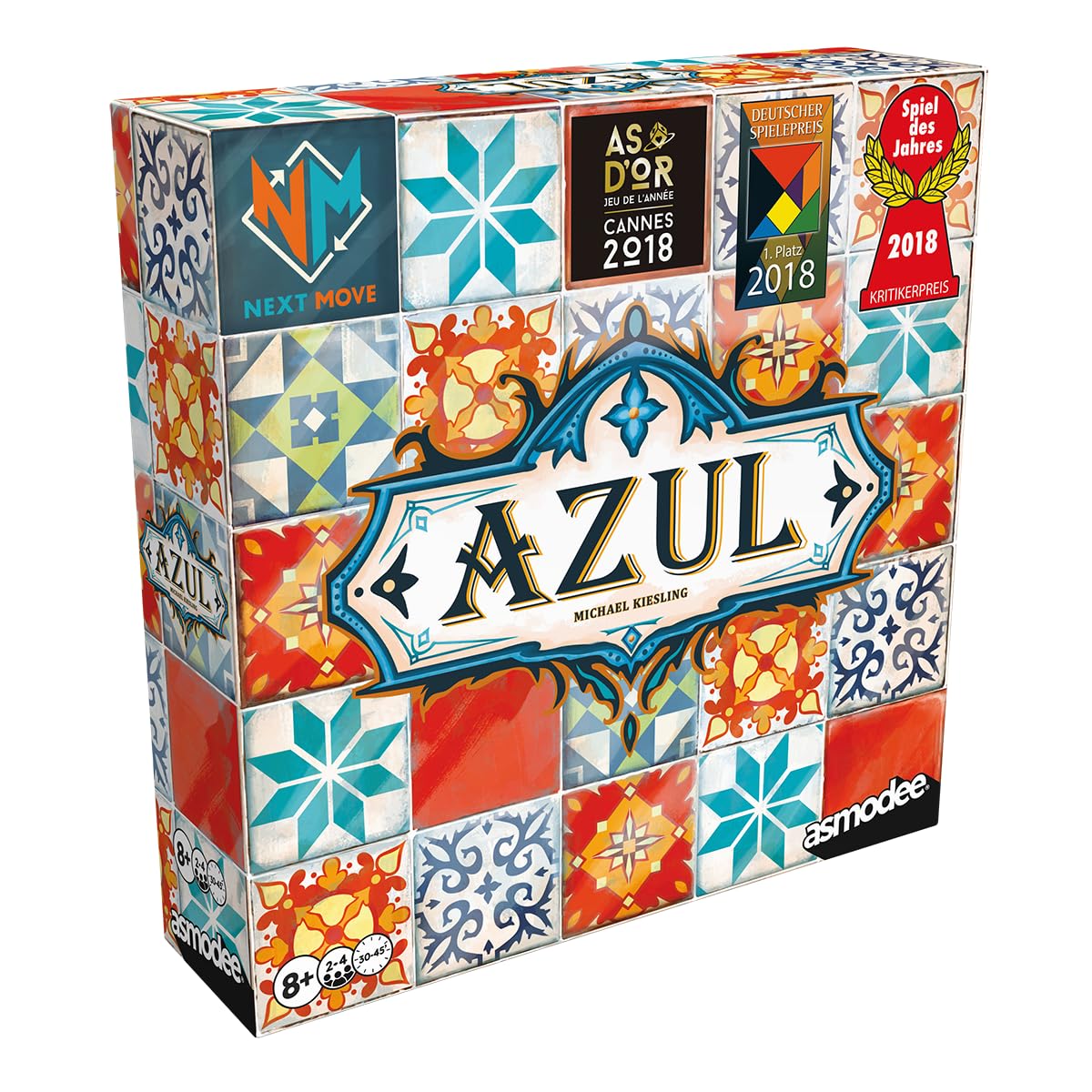
2. Azul Mosaic Tile-Placement Strategy Board Game
Beautiful enough to leave on the coffee table, tactical enough to keep adults coming back.
Azul is the safest gift on this list for a household that spans generations. You get 100 resin tiles, four player boards, and nine factory displays in the box, and the rules are short enough that a six-year-old can follow the draft-and-place loop. The game won the 2018 Spiel des Jahres (the board game world’s big annual prize), which is why it turns up in so many family collections. You draw tiles from shared factory displays, build your pattern rows, and race to complete a mosaic wall.
The depth sneaks up on you. Simple rules open into draft-and-deny decisions — the kind where grabbing a tile can quietly starve the player to your left. It plays in 30-45 minutes, and that length is a big part of why it lands on a weeknight without dragging. It also scales cleanly from a head-to-head two-player duel up to three or four, so a couple and a full family both get a real game. The pieces themselves get a lot of love, and the linen bag makes cleanup feel less like a chore.
Here is the honest limit: the tile-bag draw adds luck, so a ruthless planner can still lose to a lucky pull. That is the price of how accessible it stays. If your goal is a beautiful, quick game that welcomes younger players, this is the one. For a sharper competitive edge, look at Wingspan or Carcassonne further down. It sits at 4.5+ stars across 16,000+ ratings, and it is the family favorite by a clear margin.
The art does real work: the mosaic wall is genuinely lovely to look at, and kids get pulled in by the colors before they understand the scoring.
The luck factor: tiles come from a common pool and a bag, so no plan is fully safe.
This one is for: families with kids as young as six who want a game both generations can win.
Look past it if: you want a purely skill-based game where the better planner always takes it.
3. Asmodee Harmonies Board Game
Build a tiny dreamed-up landscape out of wood tokens and let the animals wander in.
Harmonies is the pick for anyone who wants a board game to feel closer to a jigsaw puzzle than a competition. You layer 120 wooden tokens onto personal boards to build a landscape, then place 79 animal cubes to attract wildlife, and each animal wants a different arrangement. It plays 1-4 players in about 30 minutes, and the solo version means a single person can enjoy it on a quiet evening. The box dimensions sit at just 2.52 x 8.43 x 0.1 inches, so it is the most compact pick here next to Ticket to Ride’s much larger 11.7 x 3 x 11.7-inch footprint.
Where it wins is the mood. The art direction comes from Libellud’s signature style, with 42 illustrated cards and a deliberate oneiric (dreamlike) look that owners describe as top-notch. Direct the 32 animal cards into patterns and the game rewards planning without punishing a bad early move too hard. Rules are straightforward enough for younger kids to follow, but there is a real tactical layer underneath for adults who lean in. It plays quick, and sessions rarely drag into the second hour.
The catch is depth over the long haul. It rewards careful play, but the variety of decisions is thinner than in Wingspan or Carcassonne, so a group of heavy planners may eventually want more. It is also the quietest pick on this list — if your table wants shouting and bluffing, look at Secret Hitler instead. For everything else, it holds a 4.5+ star average, and the solo option is a genuine reason to keep it within arm’s reach.
Built for calm evenings: layered tokens, gentle scoring, and a compact footprint that fits on a small table.
What it asks in return: less decision variety than the deepest strategy picks here, so heavy planners may want a second game for variety.
Reach for this if: you want a soothing puzzle that a solo player can enjoy and a family can share.
skip it if: your table lives for bluffing, chaos, and a loud argument — a different pick here fits that mood.
4. Asmodee Ticket to Ride Board Game
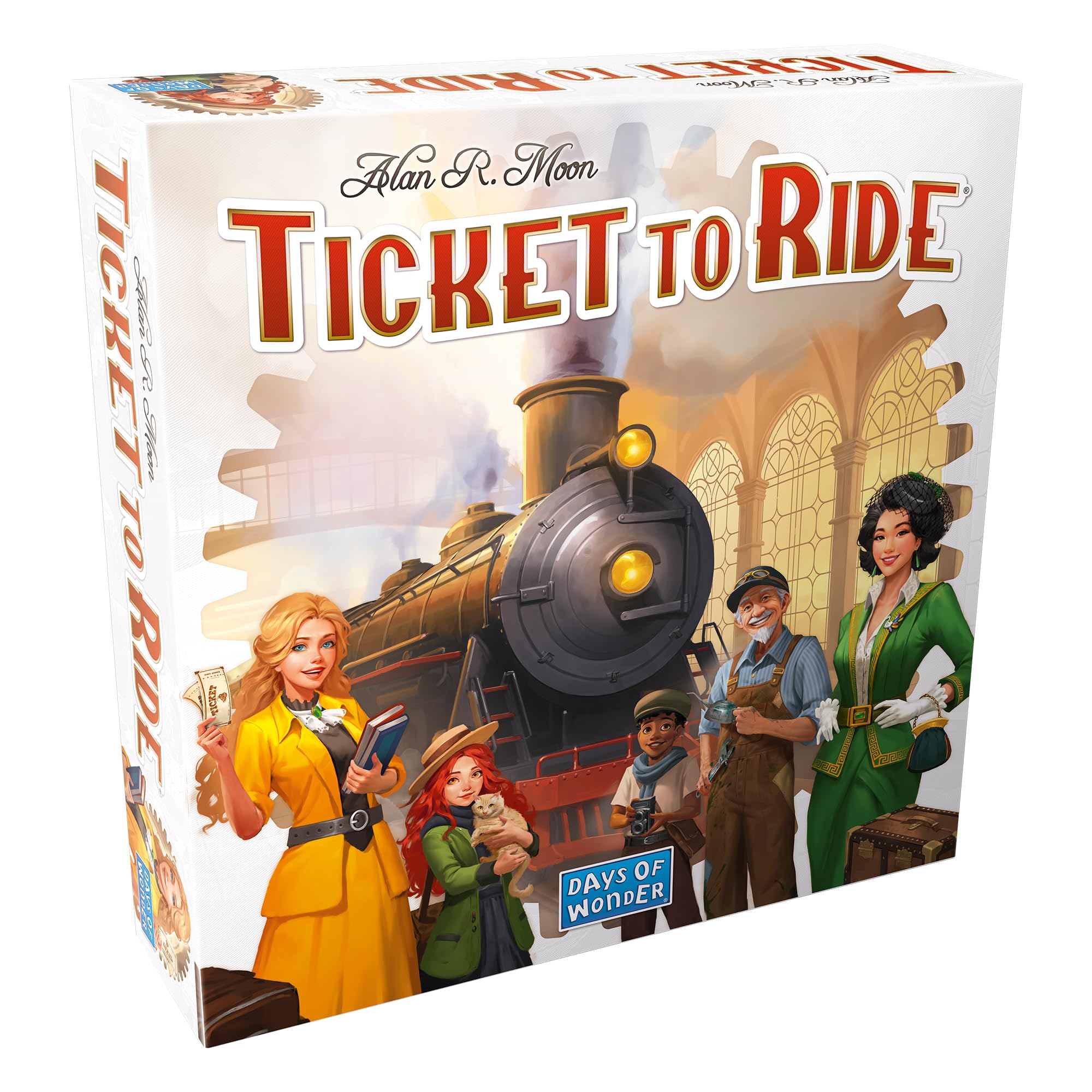
The giant train map that teaches a room to read a route without anyone calling it homework.
Ticket to Ride is the pick for a household that wants a proper game night without a rulebook argument. The 2025 refresh ships with a giant map of the North American train network, 225 plastic trains in five colors, 110 train cards, and 33 ticket cards. You collect colored sets, claim route lines, and connect cities to score. Simple rules mean almost any group can be playing in a few minutes, but every route choice carries a running cost in cards — and that is where the competition lives.
The refresh is also visibly bigger. The box measures 11.7 x 3 x 11.7 inches, which is a much larger footprint than the compact Harmonies package at 2.52 x 8.43 x 0.1 inches. The miniature trains are the point of the whole aesthetic — losing a route and watching another player snap a train onto it is a small daily drama. Multiple paths to victory (collecting sets, completing tickets, building the longest route) keep every turn tense without feeling punishing.
The honest gripes are usually about finish quality, not gameplay, so treat the plastic trains with care and they last fine. For a family that wants one big game at the table for the night, this is the pick. For a two-person household that wants a tighter duel, Azul and Carcassonne deliver more tension per seat — this one is built for a fuller table. It carries a 4.5+ star average across a few thousand owners, and the draw is that a wide range of ages can sit down together.
Why It Fits Almost Any Table
- 225 plastic trains make every route claim feel physical
- Five-color set collection keeps decisions simple to teach
- Multiple paths to victory mean losing a route is not a game-ender
- Plays 2-5 players, so a small or large group both get a real game
Before You Commit
- The 11.7 x 3 x 11.7-inch box needs real shelf or table room
- Plastic train miniatures reward a little care in storage
Best fit for: a family or friend group that wants one big, crowd-friendly game for the whole evening.
Where it falls short: a strict two-player household will find Azul or Carcassonne tighter per seat.
5. Avalon Hill Talisman 5th Edition

Twelve characters, one dragon-guarded crown, and an evening that feels like a fantasy novel.
The 5th edition seats 2-6 players and casts each one as a character — a Prophetess, a Wizard, a Thief, and nine more — racing to grab a Talisman, reach the Crown of Command, and survive its guardian dragon. You get 12 detailed character figures in the box with matching cards, so everyone has a piece to move. The 100 illustrated adventure cards keep the map filling with enemies, strangers, and magical objects as the game goes on.
The 5th edition trimmed the rule bloat. Newer players can sit down without a long explanation, and the changes that make it more accessible for newcomers and non-gamers are a genuine improvement over older editions. The board is generously sized with three regions of enchanted locations, and the layered Adventure cards genuinely change the map from game to game. The artwork and the figures lift the whole table into the story.
The trade-off is the risk profile. Rolling dice is baked into almost every move, so a lucky player can run ahead and an unlucky one can spin in place. Groups that want a tight, fair contest may find this frustrating, while groups that treat it like a story to be lived through will love every swing. The character pieces themselves split opinion too — some tables love the new sculpts and others prefer the older ones. As a piece of fantasy tabletop, it fully delivers the adventure, and the 4.5+ star average reflects that people are buying it for the atmosphere, not for cold fairness.
An adventure you fall into: 12 character figures and 100 illustrated cards make each session feel like a new chapter.
The honest gamble: dice drive the outcome, so a run of bad luck can slow a player right down.
Buy this for: a fantasy-loving group that treats the game as an unfolding story.
Think twice if: your table wants a game where planning alone decides the winner.
6. Cascadia
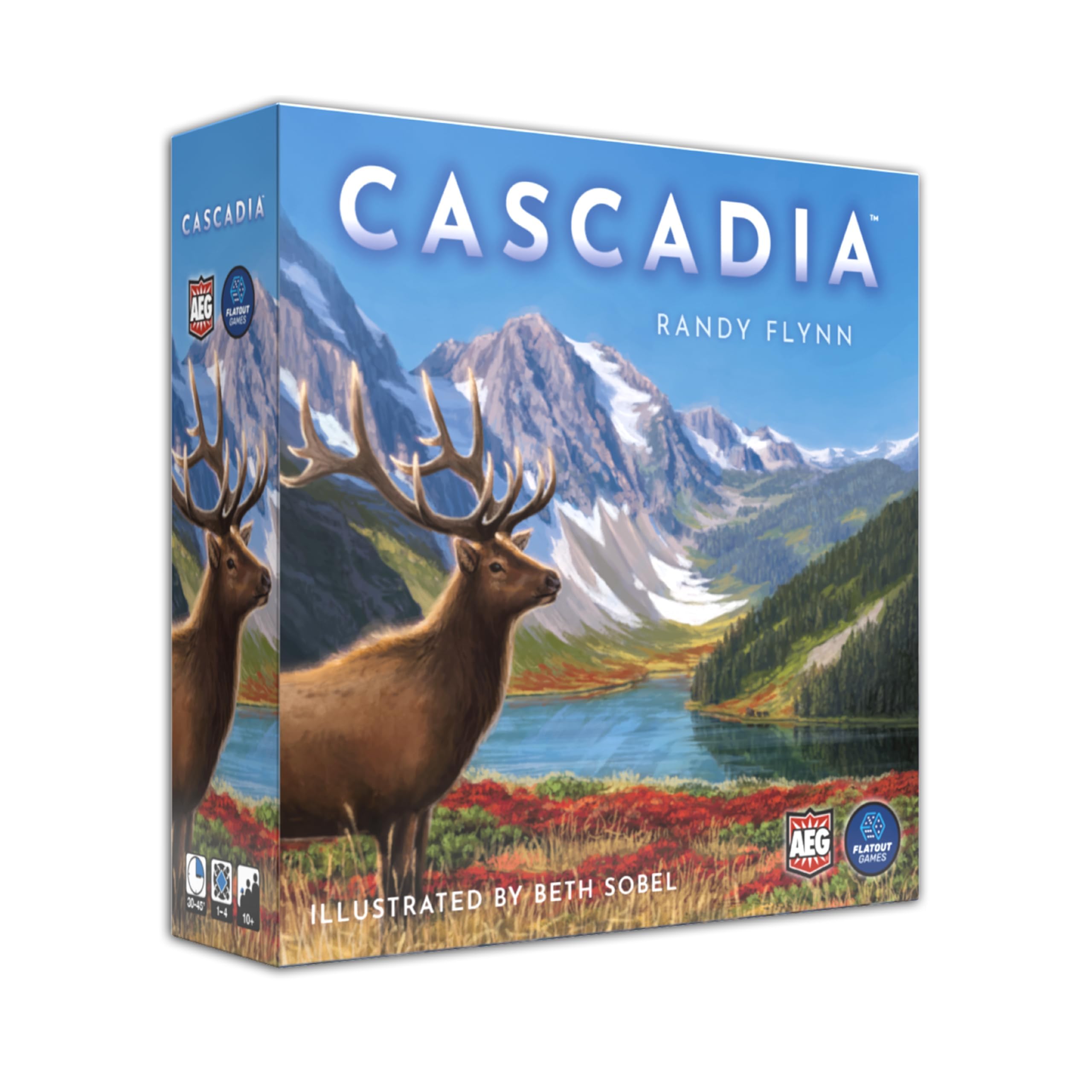
A nature puzzle that teaches in two minutes and quietly outsmarts the whole family.
Cascadia is the one to buy if you want a game that looks as lovely as it plays. You lay habitat tiles to build corridors across the Pacific Northwest, then place 100 deluxe wooden wildlife tokens to attract animals. It plays 1-4 players, teaches in about 2 minutes, and runs 15-30 minutes a round. It also has a family mode, so newer gamers can start there. It picked up the Spiel des Jahres Game of the Year honor in 2022, plus the American Tabletop Award for Best Strategy Game, which is why bird-and-nature families keep recommending it.
The big draw is the spatial puzzle. Each of the 20 wildlife scoring cards wants a different arrangement — a bear cluster, a salmon run, a filling habitat — and balancing your corridors against your animals is where the depth lives. The 85 habitat tiles plus 25 nature tokens keep setups varied. What wins people over is how different each game feels while the rules stay short, and the multi-level scoring means a first-time player and an experienced one can share the table without it feeling unfair.
Here is the limit that usually comes up: with four players the puzzle is tighter than in a solo or two-player round, and a table of five needs a different game entirely. Also, the set prefers to be played as nature-building than as a fast competitive clash. If that is fine, you have the strongest cozy pick on this shelf. It sits at 4.5+ stars, and the award list does a lot of the convincing for you.
The puzzle is the point: 20 wildlife scoring cards and 85 habitat tiles create a new arrangement every single game.
What you trade for it: the game seats up to four, so a five-person table needs another pick.
Reach for this if: you want a cozy, quick puzzle that a solo player and a family can share.
Room to note: it caps at four players, so a full five-person night needs a bigger box.
7. Carcassonne Tile Placement Strategy Board Game
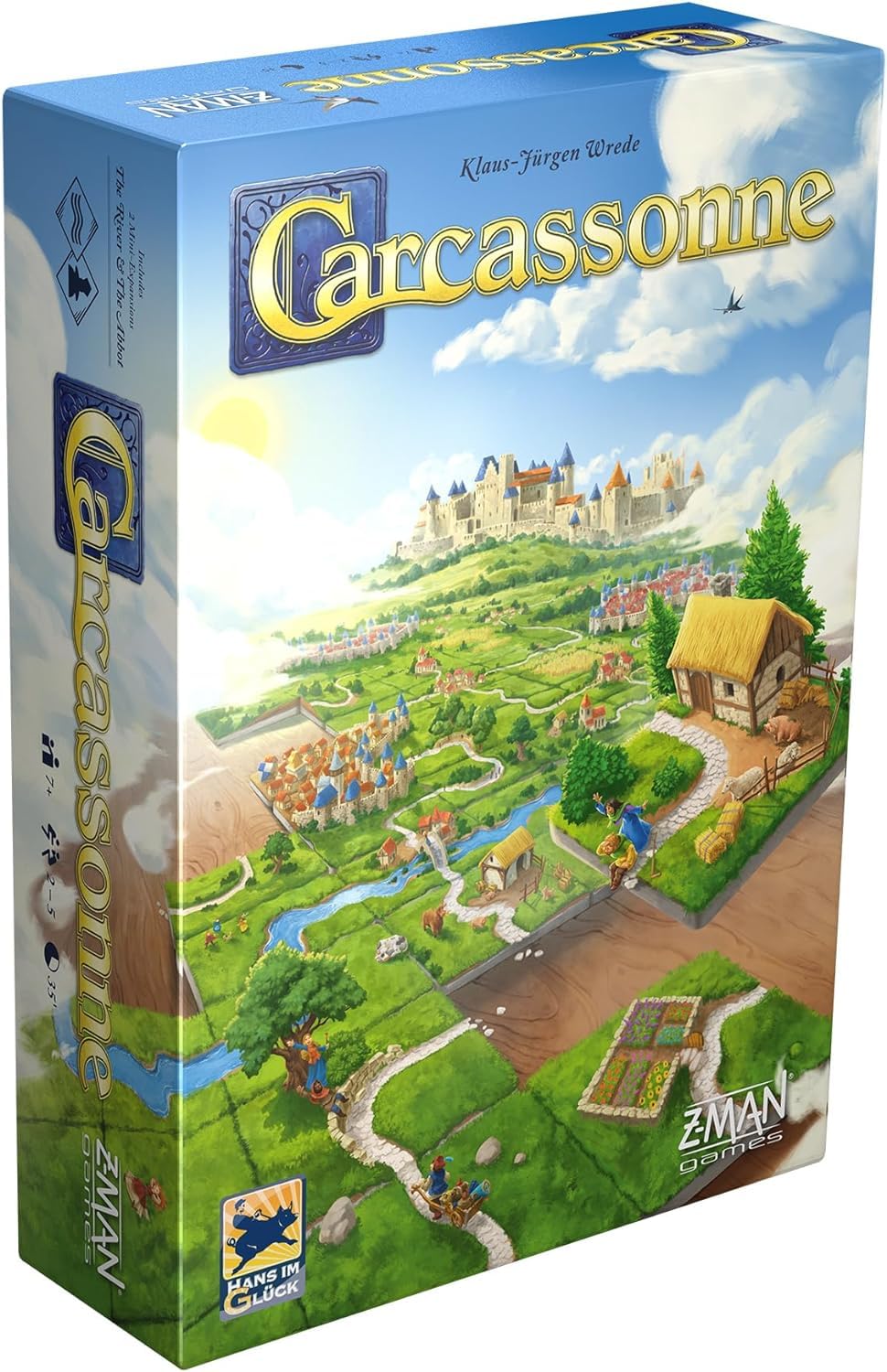
A medieval map you build one tile at a time, with meeples that do all the arguing.
Carcassonne is the pick for a couple or a tight two-player pair that wants a game with real teeth. You draw and place landscape tiles to build cities, roads, fields, and monasteries, then deploy meeples (the little wooden figures) as knights, farmers, and monks to claim features and score points. It plays 2-5 players in about 35 minutes, and it pairs intuitive rules with decisions that matter — a tile you lay now can feed or starve the city you built three turns ago.
The included mini-expansions are the quiet value story. The Abbot and The River ship in the box, so you get variety without buying a second set. That matters, because randomized tile draws create a different landscape every game — a fresh puzzle with no two sessions identical. It works well at two, and it scales up to five without losing its shape. The base box is also a classic-edition mainstay, which means the component quality has had years of refinement behind it.
One point to plan around: the draw pile adds luck, so a clever plan can be undone by a single tile, and heavier tacticians will want to weigh that before committing. For everyone else, this is the closest thing to a guaranteed weeknight game here. There is an experiential depth to it that keeps tables coming back after the tenth play, and it carries a 4.5+ star average from more than eleven thousand ratings.
Why Two-Player Tables Love It
- Tight, competitive gameplay at two players and still solid up to five
- The Abbot and The River mini-expansions included for free
- Randomized tile draws make every landscape a new puzzle
- About 35 minutes keeps weeknight sessions short
The Honest Trade-Offs
- Random draws add luck, so a strong plan can still be undone by one bad tile
- Meeples are small, so a tidy storage habit helps keep every piece together
Best fit for: a couple or two-person pair that wants a competitive, replayable strategy game.
Flip side: randomness in the draw pile will frustrate a player who wants a pure skill contest.
8. Pandemic Cooperative Strategy Board Game

You win together or lose together, and the losing is the part that keeps you coming back.
Pandemic is the cooperative pick — every player is on the same side, working against the game itself. Four global outbreaks are spreading, and the team has to combine roles and actions to contain them and race to complete all four cures before time runs out. Each player takes a specialist role (the Medic, the Scientist, the Researcher, the Operations Expert, and more), and every role has distinct abilities that change how the team plans. That is a very different feeling from the competitive picks here, and it is why plenty of families keep this one for the nights they do not want a winner.
This is a great team-building box. It rewards coordinated moves and card management, and the tension of balancing an immediate threat against long-term progress never quite lets up. It plays 2-4 players ages 8 and up, in about 45-60 minutes, and it is the base game that opens the door to the wider series, including Pandemic Legacy Season 1. It has plenty of replay, since the outbreak pattern reshuffles each time and the same team can lose two nights in a row and still want a third try.
What to know before you buy: the rulebook is denser than the lighter picks here, and a few tables find the learning curve steep on the very first play — it can take a full game to feel fluent. That said, the 4.5+ star average across a huge base reflects how firmly this game has earned its place. If you want a game that builds a team rather than sparking an argument, this is the one.
The team dynamic is the draw: specialist roles and card management make everyone’s moves matter from the first turn.
The early slog: the rulebook takes a real first game to click, and a couple of teaching rounds help before the serious nights.
Buy it for: a family or team group that wants to win or lose together rather than compete.
Consider the lighter picks if: your group wants to play within ten minutes of the box opening.
9. Stonemaier Games: Wingspan by Elizabeth Hargrave

A bird-collecting engine that looks like a field guide and plays like a small machine.
Wingspan is the pick for the table that wants real strategy under a beautiful surface. You play as bird enthusiasts building a wildlife preserve, drawing from over 170 unique bird cards and laying eggs, collecting food, and stacking combos in one of three habitats. The birdfeeder dice tower drives the food economy, and the custom wooden dice make the whole engine feel tactile. It plays 1-5 players and runs 60-90 minutes with a 6-minute setup — a longer sit-down than Azul or Cascadia, and that length is the point.
The design is where the game lives. Each bird’s real-world traits shape its in-game power — the parasitic cowbird places eggs in other birds’ nests, the northern mockingbird copies another bird in your habitat, and some cards let you tuck a smaller bird beneath, just like a raptor. The art by Natalia Rojas, Ana Maria Martinez Jaramillo, and Beth Sobel is what owners rave about most, and it is the reason the box looks as good on a shelf as it does on a table. Every element is tied to theme, not pasted on top.
Plan for the complexity. First-timers can find the engine a bit dense, and reading the cards carefully during the first play is worth the time. The included swift-start pack eases that. If a heavier game night is what you are after, Wingspan earns it, and a pair of players gets a very different, tighter game than a full five. It carries a 4.5+ star average across a large owner base, and its artwork is the single thing that gets mentioned most.
What Makes It Stand Out
- 170 unique bird cards keep combinations fresh game after game
- Card abilities mirror real bird behavior, tying theme to mechanisms
- The birdfeeder dice tower and custom wooden dice make setup tactile
- Solo Automa mode gives a single player a real opponent
What To Know First
- The engine takes a first play to click, so heavier than the lighter picks here
- The 60-90 minute run wants a committed evening, not a quick weeknight
Best for: a table that wants a longer strategy sit-down with real depth and beautiful art.
Room to note: a quick-ten-minute crowd should look at Cascadia or Azul instead.
Know the Specs
Player Count Range
This is the number of people who can play in one session, and the range tells you a lot about the game’s character. A wide range like 5-10 means the game can flex for a full party, while a tight 2-4 means it wants a smaller, closer table. Some boxes play well at two but stretch thin at five, so read the number together with the playstyle: a hidden-role game lives on a full table, while a tile puzzle can work just as well in a duel.
Playtime
The minutes listed on the box are a rough average of a full session. Shorter sessions suit weeknights when the kids are still awake, and a longer 60-90 minute slot fits a dedicated weekend game night. Match playtime to your group’s real attention span, not the one you wish they had. A 30-minute puzzle game with a reluctant teenager beats a 90-minute epic that stares at you from the shelf.
Common Questions
How many people do I need to actually enjoy Secret Hitler?
Is Azul okay for a six-year-old to play?
What is the difference between cooperative and competitive board games?
How long does a game of Ticket to Ride really take?
Does Carcassonne come with expansions in the box?
Is Wingspan too complicated for a family with kids?
Can I play Harmonies alone?
How many players does Talisman support and how long does it last?
What is a meeple and why does it matter in these games?
Do I need a big table for Tick to Ride or Carcassonne?
The Bottom Line
For most tables, the board game board game board game winner is Secret Hitler because it turns a full house of seven or more into an evening of scheming, and few boxes deliver that with wooden components and secret envelopes. If you want a family game that gets a six-year-old and an adult to the same table, grab Azul. And for a cooperative night where everyone wins or loses together, Pandemic is the one to reach for. Any of the nine above is a safe pick — you are choosing the shape of your evening, not the quality of the box.
How we choose
We do not accept paid placement. Every pick is matched to a real buyer and a real use-case; we do not hands-on test units.
Sources
Specifications: manufacturer listings and product documentation. Review insights: verified customer reviews, as of November 2026. Pricing: not shown on this page (it changes often); check the current price via the retailer link.
As an Amazon Associate, Gamepad Test earns from qualifying purchases. This does not affect which products we feature.