
Heads up: This post contains affiliate links. As an Amazon Associate I earn from qualifying purchases, at no extra cost to you. Learn more
Specs are compiled from manufacturer listings and verified buyer reviews and can change over time — please confirm the key details on the product page before buying.
If you want one controller that simply works on the console or PC you already own, the PlayStation DualSense in Galactic Purple is the safest buy here — the crowd favourite at 4.5+ stars across 52,000+ owners. But “best” depends entirely on what you plug it into. A wireless controller that feels brilliant on a PS5 can refuse to pair with a Switch, and a PC-only esports pad will not talk to an Xbox at all. This guide sorts nine cordless action controllers by the platform they actually support and the sticks and buttons that survive heavy play.
This guide is built by comparing the manufacturers’ published specifications and the patterns across verified customer reviews, so you get each pick’s real strengths and trade-offs instead of marketing spin.
Some pads in this list cost several times more than others, and the jump in quality is not always in step. Below, every pick is matched to a real gaming setup, so you can spot which cordless action controller fits yours without wasting a return.
Top Picks

How To Choose The Best Cordless Action Controller
Start with the device you play on most, because that one fact eliminates half the field before you look at a single spec. A PS5 pad will not run natively on an Xbox, and several PC-focused esports controllers here are Windows-only by design. Once the platform fits, the stick technology and the connection method decide how the pad holds up after months of use.
Match the controller to your console first
The DualSense and the SCUF Omega are built for the PlayStation 5. The Xbox Wireless Controller, Turtle Beach Victrix, and Nacon Revolution X are aimed at Xbox and PC. The EasySMX D10 covers PC, Switch, Switch 2, Android, and iOS but explicitly does not work with Xbox or PlayStation. Check that list before anything else — no stick upgrade rescues a pad that will not connect.
Understand drift-resistant sticks
Old analog sticks rub a physical contact pad, and that wear is what eventually causes drift — the cursor creeping when you are not touching anything. Hall Effect and TMR (tunnel magnetoresistance) sticks use magnetic sensing instead of physical contact, so there is nothing to wear down. The GameSir G7 Pro and its Gen-2 TMR sticks, plus the SCUF’s Endurance TMR thumbsticks, are the ones here built around that idea.
Decide how much latency and battery matter
Polling rate is how many times per second the pad reports your input to the game, measured in Hz. On PC, a higher rate can mean a tighter-feeling aim, which is why the GameSir and Razer pads push 8000Hz while the EasySMX sits at 1000Hz. For battery, look at the hours figure and charging method: a dock you drop the pad onto is easier to live with than swapping cells or hunting for a cable.
Side-by-Side Comparison
| Model | Best For | Platforms | Sticks | Battery Style | Amazon |
|---|---|---|---|---|---|
| PlayStation DualSense – Galactic Purple★ Best Overall | PS5 players who want native features | PS5, PC, Mac, Android, iOS | Standard analog | Rechargeable | Amazon |
| EasySMX D10Best Value | Multi-device value with a dock | PC, Switch 2, Switch, Android, iOS | TMR anti-drift | 1000mAh, ~10 hours, dock | Amazon |
| 8Bitdo Sn30 Pro G ClassicRetro Pick | Retro and handheld play | Switch, PC, Steam Deck, Android, Apple | Hall Effect | 480mAh, 18 play hours | Amazon |
| Xbox Wireless – Ice Breaker | Long Xbox sessions | Xbox, PC, mobile, cloud | Standard analog | Up to 40 hours | Amazon |
| GameSir G7 Pro 8K | Competitive PC play | PC (Windows) | Gen-2 TMR | Rechargeable | Amazon |
| Razer Wolverine V3 Pro 8K | PC esports, light weight | Windows 11 PC only | TMR with swappable caps | 36 hours | Amazon |
| Turtle Beach Victrix Pro BFG Reloaded | Modular, swappable layout | Xbox, PC | Hall Effect modules | Up to 20 hours | Amazon |
| Nacon Revolution X Unlimited | Deep physical tuning | Xbox, PC, Android via Bluetooth | Hall Effect | Up to 10 hours, dock | Amazon |
| SCUF Omega PS5 | PS5 esports customisation | PS5, PC | Endurance TMR | Rechargeable | Amazon |
Detailed Reviews
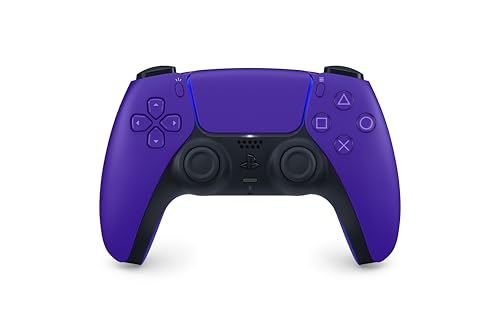
1. PlayStation DualSense™ Wireless Controller – Galactic Purple
Our pick — 4.5+★ from 52,000+ verified ratings; the strongest balance of quality and price.
The pad Sony built for the PS5 — and the one that feels unlike any other on this list.
If you own a PS5, this is the controller that uses every trick the console has. Haptic feedback turns in-game events into physical vibration, and the adaptive triggers change resistance under your fingertips — a bowstring tightening, a brake pedal stiffening. That is the experience no third-party pad here replicates, and it is why this is the overall pick for PlayStation owners.
A USB Type-C cable or Bluetooth link gets it running on Windows PC and Mac, Android and iOS phones, and the PS5 itself. There is a built-in microphone, a 3.5mm jack for a headset, and a dedicated mute button for switching voice capture on and off mid-match. It weighs 14 ounces, which is a substantial pad in the hand rather than a featherweight.
The thing buyers respond to most is the plain quality of the thing — it arrives exactly as described, and the finish draws notice, including the purple shell you see here. What is genuinely debated is value. Plenty of owners call it worth the money for the feature set, while others feel it runs expensive for a controller that will eventually see stick wear. If you want every PS5 feature natively, the premium is easy to justify. If you only need a basic pad, a cheaper multi-platform option further down this list covers you.
What earns its keep
- Haptic feedback and adaptive triggers deliver physical, in-game feel no third-party pad here matches
- Connects to PS5, Windows PC and Mac, Android and iOS through USB Type-C or Bluetooth
- Built-in microphone, 3.5mm headset jack, and a dedicated mute button
Where it gives you pause
- Standard analog sticks are not drift-resistant, so heavy play will wear them over time
- The cost draws divided opinion — it pays off only if you actually use the PS5 features
Settle on this: the natural choice for a PS5 owner who wants native haptics and adaptive triggers without an adapter.
Pass if: you game mostly on Xbox or want drift-proof sticks out of the gate.
2. EasySMX D10 Wireless Gaming Controller
Drift-resistant sticks and a charging dock, at a friendlier tier than the big-name pads.
The sticks are the headline here. These are TMR anti-drift joysticks (TMR is a magnetic sensing type built to resist drift) rated for 5+ million cycles. The maker frames that as 2.5X the 2-million-cycle benchmark of Hall sticks, so the TMR sticks should outlast standard contact sticks. Add full mechanical ABXY buttons and a D-pad on mechanical switches, and the click you feel stays crisp and consistent in FPS and fighting games.
Two programmable back buttons let you map jump, crouch, or reload without lifting your thumbs, and you set them on the controller itself with no app. The triggers switch between smooth Hall Effect for racing and fast micro-switch for shooters. You get 1000Hz polling in wired and 2.4G modes — an update every millisecond — which is where the responsiveness praise comes from. Battery is a 1000mAh cell good for up to 10 hours, recharging in about 3 hours on the included dock. For contrast, the 8Bitdo below runs a 480mAh battery, roughly half the capacity.
The honest catch is the awkward twin: connectivity and buttons split opinion. Some pads pair easily across devices and the clicky buttons are the draw; others find the button combinations fiddly or report the odd disconnect. Pairing it fresh, before you rely on it in a ranked match, smooths over most of that. Just confirm your console is on the list first — this pad explicitly does not work with Xbox, PlayStation, Luna, or GeForce Now.
Who it suits: a PC or Switch player who wants drift-resistant hardware and a dock without stepping into the premium tier.
The friction: treat the fancy button combinations as a learn-it curve, and keep it away from Xbox or PlayStation.
Right for you if: you want TMR sticks, back buttons, and a dock in one package on PC or Switch.
Look elsewhere if: you play on Xbox or PlayStation — it will not connect to either.
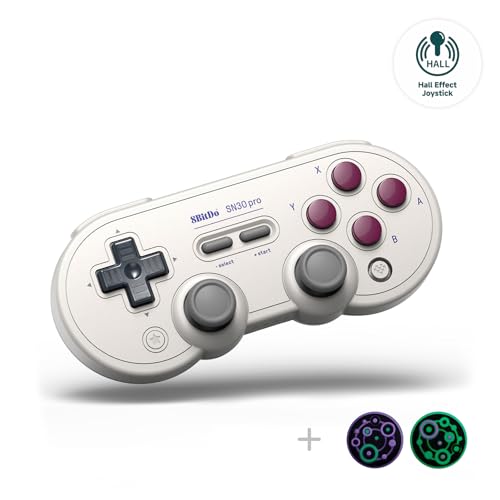
3. 8Bitdo Sn30 Pro Wireless Bluetooth Controller
A pocketable retro pad that finally gets modern Hall Effect sticks.
Not everyone wants a chunky console-style grip. The Sn30 Pro is the world’s first fully featured retro controller by 8Bitdo’s own description, and the G Classic shell is small enough to drop in a pocket. It still carries the full button set: clickable Hall Effect joysticks, rumble, a proper D-pad, home and screenshot buttons, and a USB-C connector. The upgraded sticks are the improvement that matters — magnetic, so there is no physical contact to wear into drift, with higher precision and sensitivity.
It is a genuinely versatile little pad. Bluetooth connects to Switch, Windows PC, Steam Deck, Android, and Raspberry Pi, with official support for iPhone, iPad, macOS, and Apple TV. The 6-axis gyro adds motion aiming, and dual micro-vibration motors change the rumble per scene. Battery is a 480mAh cell rated at 18 play hours with 1-2 hours of charging — a long session on a small cell, and a faster top-up than the EasySMX’s roughly 3 hours. What owners keep coming back to is that it connects without fuss across devices and plays with no lag.
Where it stumbles is grip for long sessions. The compact retro shell will not fill a large hand like a full-size pad, and hardcore shooter players have to hunt for the extra reach. If you mostly play retro and platform titles, that is a non-issue. If you want deep back-button customisation for competitive shooters, the pads higher up this list are built for that.
Built for: the retro and handheld player who wants a small pad with drift-resistant sticks.
Not for: competitive shooters where you need back paddles and a full grip.
4. XBOX Wireless Gaming Controller
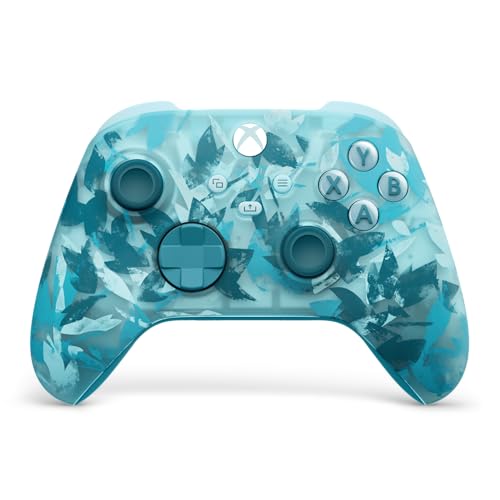
Forty hours between charges, wrapped in rubberized grips and iced-blue style.
Battery anxiety is the thing this pad erases. Xbox rates it for up to 40 hours of play on a charge, which is a long stretch set against the EasySMX’s 10 hours on that pad. That is a 4.0x gap, so you charge far less often than with the EasySMX. The back case carries rubberized grips for comfort and control over long stretches, and the textured triggers give your fingers something to find without looking.
It plays well beyond the console too. Xbox Wireless and Bluetooth cover console, PC, and cloud, with USB-C for plug-and-play, and a 3.5mm jack for a headset. A dedicated Share button grabs screenshots and clips, and the Xbox Accessories app lets you remap buttons and build profiles per game. The 19-button count is the fullest of the standard pads here. A word on the fit, though: this is a standard analog stick, not a Hall Effect or TMR design, so it will wear with heavy play over the long term.
Owners enjoy it — it is reliable and satisfying according to the consensus. Two things draw debate. Some feel the cost is high for what it is, and a share of long-term buyers report durability that did not hold up. Most buyers are very happy; those reports read as the exception rather than the rule, but if you hammer a pad daily and want drift-proof internals, a TMR-based option serves you longer.
Why it lands
- Up to 40 hours of battery beats almost everything else on this list
- Xbox Wireless plus Bluetooth plus USB-C covers console, PC, and cloud
- Rubberized grips and textured triggers for long sessions
What to weigh
- Standard analog sticks, not the drift-resistant kind
- The cost and long-term durability both split opinion
The match: an Xbox player who hates charging and wants a stylised pad with the most buttons of the standard options.
Skip the idea of: it surviving years of hard use like a magnetic-stick pad might.
5. GameSir G7 Pro 8K PC Wireless Controller, Nioh 3

An 8K polling rate for PC players who count every millisecond of input lag.
The number that sets this apart is 8000Hz. That is how often this pad reports your input over both wired USB and 2.4G wireless — a full 8000Hz against the EasySMX D10’s 1000Hz, an 8.0x gap in input reports per second. In practice, an FPS or racing game reads your stick and trigger movement with far finer granularity, which is where the near-zero-latency feel on PC comes from. If competitive PC play is your thing, this is the technical peak of the list.
The rest of the hardware is built around that speed. GameSir’s Mag-Res TMR sticks Gen-2 use magnetic tech with no physical contact, so drift has nothing to wear through. The ABXY buttons and D-pad use optical and mechanical micro switches (tiny switches that fire the moment you press) for instant actuation. You get 6-axis gyro for motion aim, dual-mode trigger stops that flick between linear Hall Effect for racing and clicky micro-switch for shooters, and four remappable macro buttons — two lockable back buttons plus two mini bumpers, each supporting 32-step macros (a macro is a recorded button sequence). The 3.5mm jack keeps your headset plugged in.
There are two honest caveats. This is a PC pad — Windows only, no Xbox or PlayStation — so it is the wrong buy for a console player. And while the quality and comfort draw praise, the button layout and connectivity split opinion, with some pointing to Xbox compatibility confusion. It weighs 272 g, a solid heft rather than a featherweight. Buy it for PC and you get a tool that matches the pro price tag.
The pull: 8000Hz polling and Gen-2 TMR sticks make this the fastest-response PC pad on the list.
Set your expectation: console players should skip entirely — this does not do Xbox or PlayStation.
Choose this: if your whole world is Windows PC and you want the highest polling rate here.
Firmly not for: anyone gaming on an Xbox or PS5 console.
6. Razer Wolverine V3 Pro Wireless Gaming Controller

Razer’s own lightest wireless esports pad, tuned with top players to fight hand fatigue.
Razer built this around weight and endurance. It is described as Razer’s lightest wireless esports controller, a form factor refined with top esports players to cut hand fatigue over long sessions. The sticks are anti-drift magnetic TMR thumbsticks with swappable caps, framed as an evolution beyond typical Hall Effect. Polling runs at a true 8000Hz in both wired and wireless mode, so the input reporting matches the GameSir’s ceiling rather than the 1000Hz of the budget multi-platform pads.
The inputs are where the money goes. Four mouse-click back buttons sit in the rubberized handles, topped by two claw-grip bumpers, and the main action buttons are doubleshot PBT with hybrid microswitches. Pro HyperTriggers let you pick a lightning mouse click or a full analog pull with a flick of a switch. You can save up to 4 onboard profiles and map keyboard keys to the 6 programmable buttons. The battery is listed at 36 hours, with a carrying case, 2 replaceable thumbstick caps, and a 2 m braided cable in the box.
Two things to know before you commit. This is PC-only — Windows 11 with USB-A, no Xbox, PlayStation, macOS, or mobile — so it is the wrong pick if you also game on a console. And at 4.0+ stars, the value question is real: plenty find the responsiveness and light build well worth it, but some feel the price is steep, and a few hit basic functionality failures. If you want a fast, featherweight Windows 11 pad and can accept the platform lock, it delivers on the esports promise.
Where it shines
- 8000Hz polling in wired and wireless, matching the fastest PC pads here
- Weight-tuned esports form with rubberized handles and a 36-hour battery
- 4 mouse-click back buttons, claw-grip bumpers, and swappable TMR caps
What you give up
- Windows 11 PC only — no console, macOS, or mobile support
- The premium price draws divided opinion on value
Your pick when: lightness and a 36-hour PC battery matter more than console compatibility.
Avoid if: you need it to work on Xbox, PlayStation, or anything beyond a Windows PC.
7. Turtle Beach Victrix Pro BFG Reloaded Wireless Controller
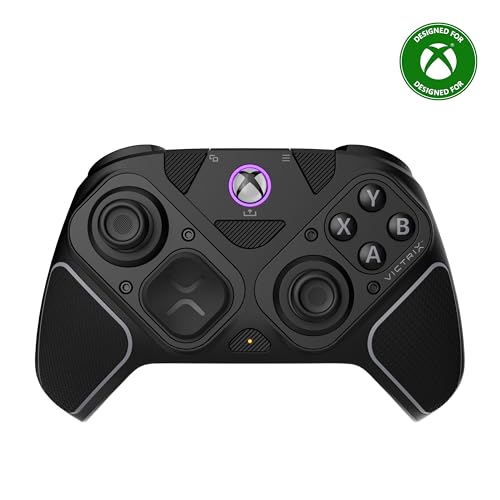
A controller you rebuild for the game in front of you, module by module.
The defining idea here is physical luck: this pad can change its own shape. It ships with 3 customizable modules built with Hall-Effect technology, including an ergonomically enhanced 6-button fightpad module with Kailh microswitches, plus 11 interchangeable components and a module tool to swap them. That is what wins the customization crowd — the ability to rearrange how the pad feels rather than just remap buttons in software.
The rest is built for the competitive Xbox player. Five-stop Hall-Effect clutch triggers (magnetic triggers with five pull settings) and a hair-trigger mode let you shorten your pull, and 4 mappable quick-action buttons sit within reach. There is a built-in 3.5mm audio jack with a lifetime subscription to Dolby Atmos (a surround-sound format), wired and wireless play on a rechargeable battery good for up to 20 hours, and a free Victrix Control Hub app on Xbox and PC. It is officially licensed by Xbox, with a carrying case included.
Its personality is the polar opposite of a set-and-forget pad. Where the Razer above is fixed and minimal, this one asks you to experiment and accept that modular parts can wobble in hand. Reliability and triggers both split opinion — some find the setup works beautifully, while others hit trouble with triggers or buttons landing under the fingers. If you enjoy tinkering and want a fightpad option without buying a second controller, this is a fascinating buy. If you want plug-in-and-go, a simpler pad suits you better.
Reach for it: if you love swapping modules and want a fightpad layout plus Hall-Effect sticks in one Xbox pad.
Think twice: if you want a fixed, no-fuss controller — the modular parts ask for care.
8. Nacon Revolution X Unlimited Wireless Controller

More than 60 tuning combinations, with a built-in LCD screen for changing them.
The depth of tuning is the selling point. You get a 4-way and a 6-way D-pad, 3 sets of weights, 3 sets of joystick heads in concave, convex, and high-dome shapes, 2 sets of joystick rings, a storage case, and more than 60 customization combinations in total. Hall Effect magnetic technology (magnetic sensing with no rubbing parts) covers both the joysticks and triggers, guarding against drift by removing contact wear. An LCD screen on the controller handles mapping, programming, and audio mixing without diving into an app.
For the spec-minded, PC mode is where it shines: latency is reduced to 1ms wired and 2ms wireless, there is a gyroscope to simulate a joystick or D-pad, and keyboard keys can be mapped to buttons. Six mappable shortcut buttons can be assigned on the PC and Xbox app. Four vibration motors — two in the handles and two in the triggers — add feedback depth. The battery is rated for up to 10 hours with a charging station in the box, and a month of Xbox Game Pass Ultimate is included for new members.
This is a heavy-customisation pad, and heavy customisation brings heavy opinions. Whatever is said about the premium feel, others report reliability problems, wireless disconnections, and drift that the Hall Effect marketing would not predict. That is a wide spread for a top-tier pad. If you love physical tuning and want Hall-Effect sticks on Xbox and PC, its ceiling is very high. If you want proven reliability above all, one of the lower-priced pads further up offers a safer bet.
The appeal: over 60 combinations of weights, sticks, rings, and D-pads make it the most physically tunable pad here.
The watch-out: the reliability and connectivity reports do not match the premium badge, so weigh that carefully.
Suits the tinkerer: an Xbox/PC player who wants to weigh, shape, and tune every part of the pad.
Not for you if: you want a proven, reliable daily driver with zero fiddling.
9. SCUF OMEGA PS5 Wireless Performance Controller – Light Gray
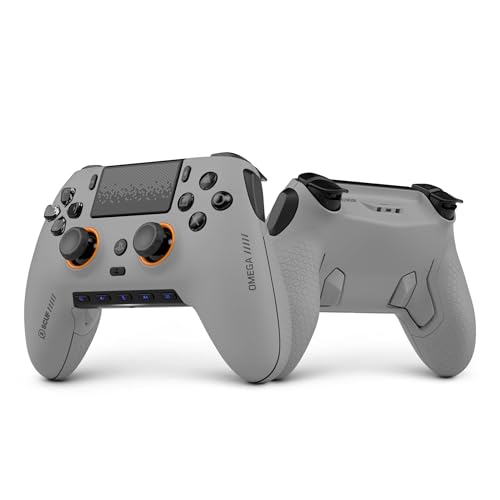
SCUF’s esports PS5 pad with 11 extra inputs and a phone app to tune the whole thing.
More inputs than any standard pad here sets the tone. There are 11 additional inputs — 4 rear paddles, 2 side action buttons, and G-Keys — all fully customizable. A new SCUF Mobile App lets you tune trigger and thumbstick response curves, the action buttons, and a true 0% thumbstick deadzone directly from your phone, iOS or Android, in real time. It is officially licensed for PS5, and the Omron mechanical switches across the Instant Triggers, Instant D-Pad, and Instant Action Buttons give faster activating, mouse-like clicks.
The durability angle is the Endurance TMR thumbsticks, which guard against the wear that causes drift and jitter while keeping precise, smooth control. On PC it runs 1K wireless or wired polling for low latency, and Bluetooth 5.0 reaches tablets and phones. Interchangeable thumbsticks let you swap between concave or domed shapes in short or tall lengths, and a magnetic faceplate makes swapping the D-pad, buttons, and rings tool-free. A Tournament Lock keeps the cable retained for competition.
The catch is size and cost. This is a tweaked, feature-packed controller, and where SCUF calls it the lightest, this Omega pack carries 29 buttons and a premium price that splits opinion — some buyers find it well worth the money, others overpriced. Connectivity and button feel also divide the room: some hit flawless stable performance, others report drops or buttons that are too clicky to love. If you compete on PS5 and want every input in reach, it is the deepest option here. If you play casually, a simpler PS5 pad like the DualSense up top serves you without the fiddliness.
Brings to the table
- 11 extra inputs including 4 rear paddles, side action buttons, and G-Keys
- Endurance TMR thumbsticks and tool-free magnetic faceplate swaps
- SCUF Mobile App for real-time tuning of curves and deadzone
Weigh before buying
- The premium price draws divided opinion on value
- Connectivity and the clicky button feel split owners’ views
The right call for: a competitive PS5 player who wants every paddle and a phone app for live tuning.
Reconsider if: you play casually and want an uncomplicated, cheaper-feeling PS5 pad.
Know the Specs
Polling rate (Hz)
Polling rate is how many times per second the controller reports your stick and button movement to the game. 1000Hz means an update every millisecond; 8000Hz means far more updates per second, which can translate to a tighter, more immediate feel on PC. It matters most in competitive shooters and racing games where fine adjustments win exchanges, and less in slower games.
Hall Effect and TMR sticks
Both are magnetic sensing designs that read stick position without physical contact pads, which is what keeps them from wearing into drift. TMR (tunnel magnetoresistance) is a refinement of the same idea with high sensitivity. In this list, the GameSir, SCUF, EasySMX, 8Bitdo, Nacon, and Turtle Beach pads use magnetic sticks, while the DualSense and Xbox pads use standard analog sticks.
Battery life and charging
Battery life is quoted in uptime hours, and it varies widely here — from up to 10 hours on the EasySMX and Nacon, up to 20 on the Turtle Beach, 36 on the Razer, to up to 40 on the Xbox pad. A charging dock lets you drop the pad in place, while a cable means hunting for a port. For long sessions, the hours rating and how you top it up both decide whether you ever get caught mid-match.
Back buttons and remapping
Back buttons and paddles let you trigger in-game actions like jump, crouch, or reload without lifting your thumbs off the sticks. Some pads map these on the controller, others through a phone or PC app. The count ranges widely — the GameSir has 4 remappable macro buttons, the Nacon has 6 mappable shortcuts, and the SCUF offers 4 rear paddles plus side buttons and G-Keys. More inputs help competitive players, but they add a learning curve.
Common Questions
Will a PS5 controller work on my PC?
What does 8000Hz polling rate actually do for me in a game?
Are Hall Effect and TMR sticks really better than standard analog sticks?
How many hours of battery should I expect from a wireless controller?
Can I use a PC-only esports controller on my Xbox or PS5?
Do back buttons and paddles make a real difference?
What is the difference between the SCUF Omega and the DualSense?
Is the Xbox Ice Breaker controller’s 40-hour battery really that much longer?
Can I customize the triggers on these controllers for shooters?
Which controller here is the lightest for long sessions?
The Bottom Line
For most players, the cordless action controller winner is the PlayStation DualSense in Galactic Purple, because it delivers native haptics and adaptive triggers on PS5 and still plugs into PC, Mac, and mobile. If you want drift-resistant sticks and a charging dock on PC or Switch, grab the EasySMX D10. And for competitive PC play where polling rate decides exchanges, the GameSir G7 Pro 8K is the one to reach for with its true 8000Hz reporting.
Whichever you choose, the one thing worth holding firm on is stick technology. A pad with magnetic TMR or Hall Effect sticks (magnetic sensors with no rubbing parts) saves you the slow creep of drift that ends most analog controllers early — and on this list, you can get that on PC, Switch, Xbox, or PS5 without paying the very top tier.
How we choose
We do not accept paid placement. Every pick is matched to a real buyer and a real use-case; we do not hands-on test units.
Sources
Specifications: manufacturer listings and product documentation. Review insights: verified customer reviews, as of November 2026. Pricing: not shown on this page (it changes often); check the current price via the retailer link.
As an Amazon Associate, Gamepad Test earns from qualifying purchases. This does not affect which products we feature.