
Heads up: This post contains affiliate links. As an Amazon Associate I earn from qualifying purchases, at no extra cost to you. Learn more
Specs are compiled from manufacturer listings and verified buyer reviews and can change over time — please confirm the key details on the product page before buying.
Two-player games live or die on one question: do both of you get a real decision every single turn? Each game below is built for exactly two people, so nobody sits out the round or plays a watered-down version of a bigger game. Start with the 7 Wonders Duel if you want to grab one box and stop worrying — it’s the crowd favorite at 4.5+ stars across 9,000+ ratings — then read down the list for the co-op picks, the frantic card games, and the one that isn’t a board game at all.
This guide is built by comparing the manufacturers’ published specifications and the patterns across verified customer reviews, so you get each pick’s real strengths and trade-offs instead of marketing spin.
Some couples want a head-to-head scrap over the table, others want to win or lose together against the board. That split is the whole map here, so pick your side first and the shortlist narrows fast.
Below you’ll find the nine-game shortlist of couple game night games worth owning.
Top Picks


How To Choose The Best Couple Game Night Games
The single mistake most couples make is buying the biggest box on the shelf. A box built for three or four people adds a “2-player variant” that plays like a stripped-down demo of the real game. Every pick below is designed for two from the ground up, which is the first thing to check before anything else.
Duel or co-op: decide before you shop
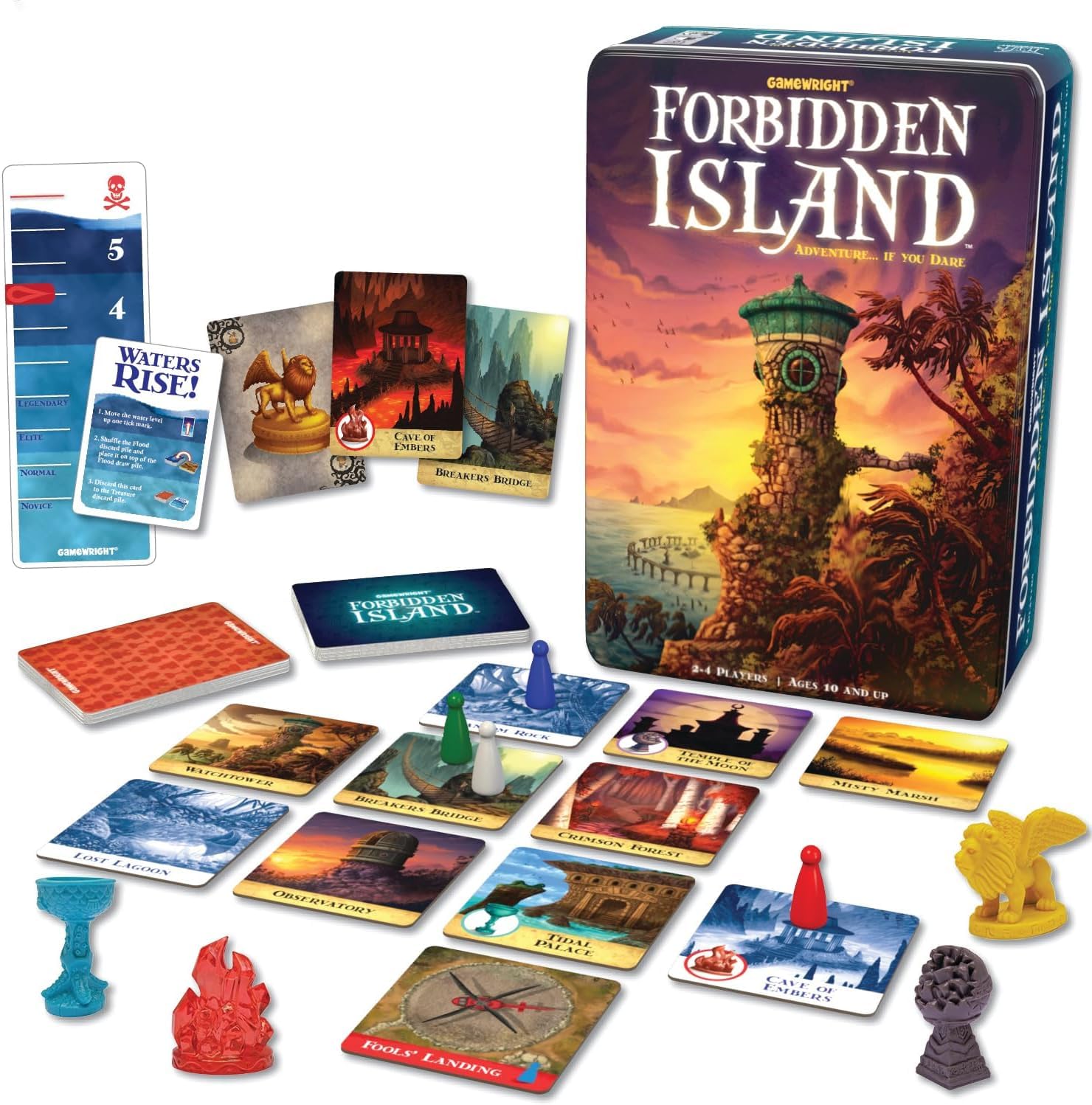
A duel game puts you and your partner on opposite sides of a card table, and the winner takes the night. Forbidden Island and Sail work the other way, flipping the table so you both play against the board itself — you win together or drown together. Some boxes, like Everdell Duo, offer both: a head-to-head city-building race or a full co-op campaign.
Match the game to your first night
A teaching-heavy strategy game and a tired Tuesday evening are a bad match. Look at the box’s playing time and its age rating together. A game rated ages 10+ with a 30-minute playtime usually means a short rulebook and quick turns. Look for easy to learn patterns in the customer reviews rather than trusting the marketing copy.
Watch the component quality
You will handle these pieces hundreds of times. Wooden tokens and thick cards survive a weekly game night. Thin cards show scuffs and bent corners within a few months, and that matters if the game stays on your shelf for years of playing. Check whether the box includes wooden components or quality plastic tokens before committing.
Side-by-Side Comparison
| Model | Best For | Players | Playtime | Game Style | Amazon |
|---|---|---|---|---|---|
| 7 Wonders Duel★ Best Overall | Head-to-head strategy duels | 2 | 30 min | Card drafting, area control | Amazon |
| Forbidden IslandTop Co-op Pick | Co-op teamwork nights | 2-4 | 30 min | Cooperative, card play | Amazon |
| SailCompact Pick | Compact travel companion | 2 | 20 min | Cooperative, trick-taking | Amazon |
| Everdell Duo | Both competitive and co-op | 1-2 | 30 min | Engine building | Amazon |
| The Couples Painting Game | Creative date nights | 2 | 2-minute rounds | Painting prompts | Amazon |
| Caper Europe | Fast heist card drafting | 2 | 30 min | Card drafting, area control | Amazon |
| BOOP | Family-friendly quick matches | 2 | 20 min | Abstract strategy | Amazon |
| LOTR: Duel for Middle-earth | Fantasy theme, 7 Wonders mechanics | 2 | 30 min | Card drafting, strategy | Amazon |
| Splendor Duel | Gem-collecting battles | 2 | 30 min | Engine building | Amazon |
Detailed Reviews
1. 7 Wonders Duel
Our pick — 4.5+★ from 9,500+ verified ratings; the strongest balance of quality and price.
A thirty-minute civilization race built for exactly two players and zero filler turns.
You are running an ancient city against your partner’s city, and every card you take away is a card they cannot build with. That is the hook: a shared pyramid of cards where your grab actively starves your opponent. Three separate ways to win keep the tension alive — military supremacy, scientific supremacy, or plain old victory points at the end. On top of that, only seven of the eight Wonders in play can ever be built, so the race for the good ones starts on turn one.
The game tops out at a 30-minute average, which is the reason it lands on the table on a weeknight instead of sitting in the closet. What wins people over is the pure gameplay — it’s the aspect owners rave about most, by a wide margin — and the strategy crowd gets its own payoff with tactical choices that reward planning over luck. The replayability holds up too, because each session reshuffles the card lattice and forces a fresh plan.
The catch sits right at the start line: the setup can look intimidating the first time you lay out the age cards. A vocal minority of buyers bounce off that initial wall, while the rest call it not too complicated once the first game settles in. Expect one slow teach-in night, then it clicks. The card stock is the other quiet gripe — a few find the cards a little flimsy compared with the original 7 Wonders, so sleeve them if you plan on playing weekly.
What It Does Better Than Most
- Thirty-minute playtime means you can fit two rounds into an evening without dragging.
- Three separate win paths keep every game from settling into the same pattern.
- Zero turn-waiting dead time — every card you skip is a card your partner can build with.
- The card drafting mechanic forces planning the whole pyramid, not just your own hand.
Where It Demands Patience
- The initial layout looks busier than it plays, and the teach-in takes one honest session.
- Card quality gets mixed marks from players expecting premium stock.
- Only seven of eight Wonders can be built — some players find that restriction frustrating.
Reach for it when: you both want a real fight with three win conditions and a comfortable 30-minute window.
Hold off if: you want a game you can teach in five minutes flat on the very first evening.
2. Forbidden Island
The co-op rescue mission where the board sinks faster than your plans.
Forbidden Island flips the whole idea of a game night — you and your partner are on the same team, racing to collect four sacred treasures before the island disappears under the sea. The tiles you stand on literally get removed as the game progresses, which means the map shrinks around you turn by turn. There is no hidden traitor and no surprise betrayal. You lose because the water rose too fast, not because someone cheated.
Ease of learning runs through the entire experience and shows up as one of the top positives in owner feedback. Kids pick the rules up quickly, so a younger family member can play the same game you do. Owners appreciate that it offers different levels of difficulty — you can start gentle and raise the water level for a harder night. The 30 to 45-minute length keeps a full game from swallowing the evening, and the cooperative element itself gets the strongest marks of any aspect because players genuinely enjoy the shared decision-making.
Here is the honest grip: those difficulty levels don’t automatically make the game easier as you get better. You dial them up on purpose, but a fixed starting setting can feel punishing once the tile layout turns on you. That is a design choice, not a fault — it just means you may want to begin with the lower difficulty settings on the first few runs. Budget-friendly, family-friendly, and the visual pop of the tiles makes it easy on the eyes as well as the wallet.
What it does well: The winning ingredient is the shared problem-solving. Every turn is a debate about where to move, and both voices genuinely count. That makes it the natural starting point for a couple that wants to win or lose together rather than compete.
A note on the box: It’s listed as 2 to 4 players. The two-player version works fine, but some purchases may come in a smaller box or have limited stock — grab it when you see it available. It’s a cheap ticket for the amount of table time you get back.
Best for: pairs who want the strategy discussion and team chemistry without a head-to-head competition.
Worth skipping if: you both want a clear winner at the end of the night — nobody “wins” here except the team.
3. Sail
A silent card game where you and your partner communicate entirely through trick decisions.
Sail strips away the one thing every co-op game relies on: talking. You and your partner cannot discuss your cards, so all the strategy is buried in the cards you choose to win and the tricks you deliberately throw away. That makes it a different night entirely from the louder strategy games above. The shared tension of working in the dark — both literally on the table and figuratively in conversation — is the whole point of the box.
The box is a small 5 by 5 inch square, and it weighs next to nothing. That makes it the natural pick for a road trip or a camping weekend. What owners praise most is the gameplay, which lands as clever and genuinely fun for two players. The cooperative angle takes second place, and players like the difficulty curve because it seems easy to learn but turns challenging fast. The artwork is another draw, with the pirate visuals getting consistent love from the crowd.
At a 20-minute estimated playtime, it is one of the fastest full games on this list. Sail lists a 20-minute playtime and Everdell Duo quotes 30 minutes, and that difference is the entire reason Sail earns a spot next to it rather than instead of it. The trade-off is depth — with a 4.5+ star score on a smaller pool of owners, this one still feels discoverable by comparison. You may finish the first run in a single sitting, and the challenge ramps as you learn the scenarios.
Play-it-anywhere build: Everything ships in a compact box with a game board, cards, tokens, a rulebook, and a scenario book. There is a pirate special ability for each player, and the scenario book clearly exists to be worked through over multiple nights.
The rulebook reality: Communication limits are the point of the game, so it isn’t a great match for a couple who wants to chat through every decision. Two veteran gamers may also find the learning curve gentle enough that the first few scenarios feel tutorial-ish.
Pick this if: you travel together and want a two-player game that fits in a backpack without a second thought.
Look elsewhere when: the main draw for you is open-table chat and shared debate.
4. Everdell Duo
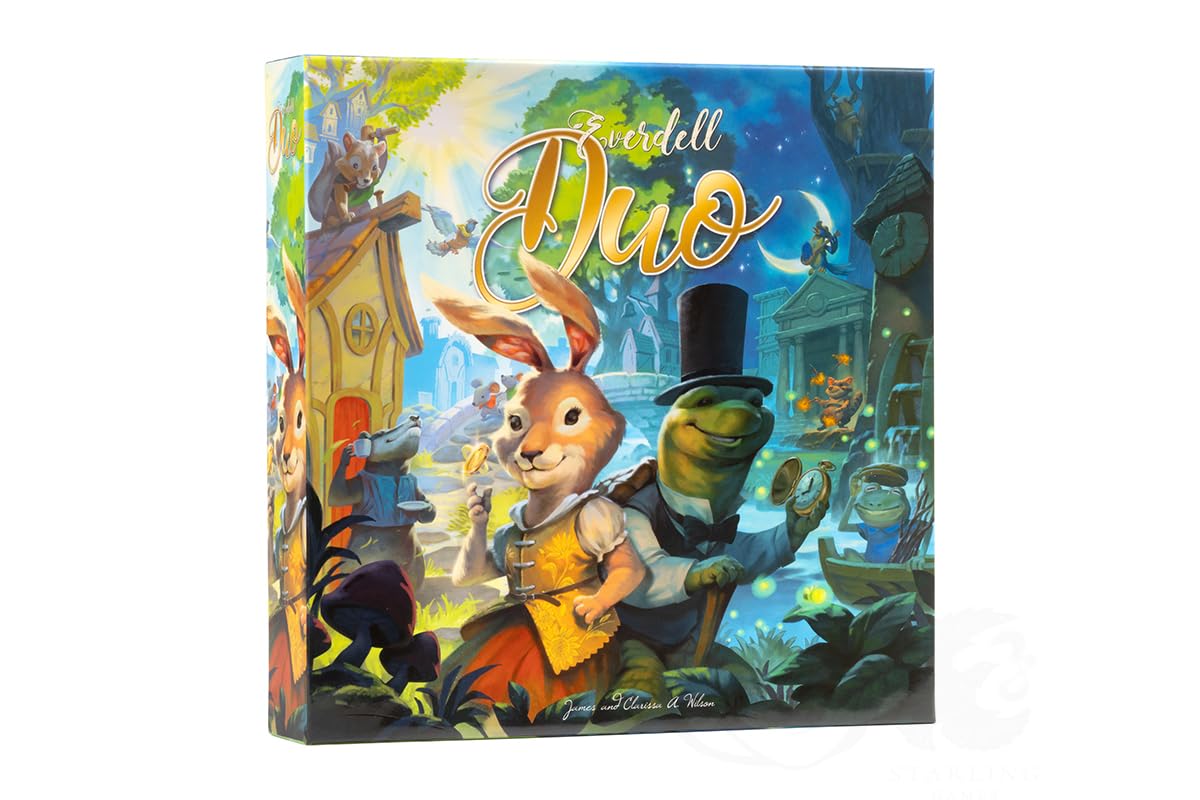
Build a woodland city together or against each other — your call every time you open the box.
Most games force a choice: competitive or cooperative. Everdell Duo lets you switch modes on the same shelf. Compete head-to-head to build the better critter city, or flip into a full co-op campaign that runs across 15 chapters. That single feature covers both moods of a long-term couple — the nights you feel like fighting and the nights you feel like teaming up.
The stated playtime is a clean 30 minutes, and unlike Sail’s 20-minute cap, that half hour can stretch across a full 15-chapter co-op campaign. That difference is why Everdell Duo suits a weekend night and Sail suits a lunch break. The gameplay stands as the strongest positive in owner feedback, with players noting it works well for couples and feels like a fresh twist on the woodland world.
Here is the honest limit: the difficulty rating splits buyers down the middle. Some find it approachable and not too hard to pick up; others find the rules genuinely challenging on the first run. The campaign mode adds 15 chapters, which is a lot of narrative-driven investment if you just want a quick 30-minute toss. And while the components get praised for that satisfying tactile feel, the game does ask you to track a fair number of pieces, so a dedicated table is worth it.
The mode-switch advantage: You only buy one box for the whole year. Competitive mode keeps the competitiveness alive on the nights when one of you wants to win, and the full co-op campaign means a long series of story nights if you prefer team play. That is real value from one purchase.
What buyers flag: The difficulty split is genuine. If neither of you has played a city-building game before, expect a learning curve on the first setup and plan a patient evening. The components themselves earn consistent praise, so the tactile experience is the reward for getting through the rules.
Built for: couples who want one game box that handles weekends and weeknights without repeating the same mode.
Not ideal for: a pair who only wants to play for twenty minutes and skip the story campaign entirely.
5. The Couples Painting Game

Not a board game at all — a paint-and-prompt kit built for a date night in.
This is the outlier on the list, and it earns its spot for a specific reason: some couple nights need something to do with your hands, not a rulebook. The box arrives with brushes, an easel, a timer, and a challenge card pack. Each round is two minutes long, so the rhythm is fast, and the prompts push the world’s worst artists into funny situations — “paint with your non-dominant hand” at the gentle end, deeper questions at the other. The kit ships with 250+ unique challenges and prompts inside one box.
No art skills needed, and that is a structural decision rather than a sales line. The two-minute format keeps anyone from overthinking the work, which is important if one of you would otherwise freeze up. The material is paper-based, and the box measures 8.7 by 7.09 inches — small enough to stash on a shelf and pull out without rearranging furniture. The whole thing is aimed at ages 16 and up, so it’s an adult-oriented evening kit rather than a family activity.
The honest caveat is simple: art isn’t for everyone, and a partner who genuinely hates drawing will not suddenly change their tune because a timer was added. The 4.0+ star score on a pool of 100+ ratings reflects strong satisfaction rather than unanimous love. This is also the only pick on the list without a strategy engine, which will read as a refreshing break for some couples and as a miss for others. If you want a game you can play a second and third time, the boxes above are the safer route.
The case for it: this is the box to grab when you want an anniversary or stay-in date night that isn’t another scoreboard competition.
Where it wears thin: if neither of you has any interest in putting paint on a page, the cards can only carry so many nights.
6. Caper Europe

A 1950s heist duel across four cities, drafted from a box that travels well.
Recruit thieves, equip gear, and claim the best locations before your partner gets there first. The 30-minute clock makes it a close cousin to the 7 Wonders Duel in playtime, and it sits in the same drafting family — you build a crew, your partner builds a rival crew, and the two collide over key spots. The 1950s heist aesthetic is the visual differentiator: think mid-century crime film rather than medieval fantasy or sci-fi.
What wins people over is the pure gameplay, and owners also single out how easy it is to learn and how quickly it plays. The artwork lands beautifully across the board, and production quality gets real love for the wooden components. With four European cities and separate decks for each, there’s also genuine replay value — different cities mean different strategic angles on a fresh play. The whole thing packs into a compact box with custom trays and travels easily.
The one recurring snag is the rulebook — the instructions land as unclear and hard to follow, which is the loudest complaint in the data. That doesn’t derail the game once you get through setup, but plan on the first teach being a group effort rather than a solo read. Once you understand how the thieves and gear combine, the drafting flow takes over and the confusion fades. The box is a reinforced one, so it survives the travel it advertises.
Why it earns a slot: The compact format plus the four-city variety is the combination that keeps Caper Europe on the shelf rather than gathering dust. That production quality — wooden components and crisp art — makes the whole thing feel good in hand, and the heist theme gives a couple something other than fantasy to fight over.
The honest snag: The rulebook clarity is the recurring weak point. It’s a first-night learning cost, not a permanent flaw — you learn it, you move past it. Just don’t expect to teach it cold in five minutes to a partner who has never played a drafting game.
Worth it for: couples who love a heist movie aesthetic and want a card game that doubles as a travel box.
Consider the rulebook: allow extra time to learn together the first night — it doesn’t just teach itself.
7. BOOP

Thirty-two wooden cats, a quilted bed board, and one very mean push mechanic.
BOOP looks like a kids’ game and plays like a trap. You place kittens on a soft quilted board, trying to line up three in a row — and every placement sends adjacent pieces flying one space away. That single push rule turns a simple pattern into a chain reaction problem. You think you’ve built a winning line, then a boop scatters it. It’s an abstract strategy game, not a story-driven one, and that’s exactly why it works on game night.
The most-praised aspect is the gameplay itself, followed closely by just how cute the components are — 32 wooden cats and kittens on that quilted board. Kids aged five and up pick it up and enjoy it, which is the reason it earns the Family label rather than the couple-only one. Rules can be explained in a few minutes, setup is instant, and the game runs in under 30 minutes. The 20-minute average playtime makes it one of the fastest full strategy matches on the list.
Here’s what’s easy to miss: the difficulty rating splits players. Adult pairs sometimes find the game surprisingly challenging once the chain reactions start compounding, and a few report that the escalating chaos makes the win condition hard to chase down. That chain-reaction chaos is the fun of it, but a very competitive pair may want to keep matches short rather than drawn out.
The Draw
- 32 wooden cat pieces make this the most tactile box on the list.
- Rules explain in minutes, so the first game starts almost instantly.
- 20-minute average playtime keeps the pace sharp.
- Children aged five and up can play alongside adults on the same board.
What You Should Know
- The push mechanic can turn against you and undo a winning line.
- The difficulty curve feels tougher than the cute art suggests.
- The quilted board is soft and tactile, so piece stability demands care.
Pick this if: you want a match that plays fast, teaches instantly, and looks cheerful on the table.
Skip if: the plan is a deep strategic duel — this is a lighter, chattier kind of fight.
8. The Lord of the Rings: Duel for Middle-earth

7 Wonders Duel’s engine, wrapped in the One Ring.
Play the Fellowship and work to destroy the Ring, or side with Sauron and take over the land. The mechanics will feel familiar to anyone who has played 7 Wonders Duel — and that is exactly why this box exists. It runs the same card-drafting architecture but layers three chapters and a Middle-earth map on top. You can win three separate ways: complete the Quest for the Ring, form alliances with six Peoples, or dominate the map as a whole.
Owners praise the gameplay above everything else, with the theme earning unanimous approval — a rare 100% mark in the data. It plays in the same 30-minute window as 7 Wonders Duel, so it slots into the same evening rhythm. The component count is heavy: 69 cards, 44 pawns, 18 tokens, 30 coins, 7 tiles, 2 boards, 2 transparent elements, a helpsheet, and a rulebook. That list alone signals a real production rather than a lightweight filler box, and players notice the build quality.
The catch is straightforward: if you already own 7 Wonders Duel, this is a second game built on the same skeleton. You will love the theme, but it isn’t a fresh mechanical invention — it’s a Middle-earth dressing on proven bones. If you have never played that family, this is the more atmospheric entry point. The simple-to-learn pattern runs through the whole box, and the 30-minute clock keeps the three chapters from running long.
Theme as the selling point: The Lord of the Rings skin is applied properly, not slapped on. The map, the pawns, and the three-chapter structure work because the source material actually supports a three-front campaign. Players who care about theme get a genuine experience, not art on top of a generic card game.
Where the repeat value runs short: Pair it only with 7 Wonders Duel if you truly love that drafting system, because the two boxes share the same engine. Owning both is not redundancy — but it is one mechanical family under two different skins.
Made for: the couple who already loved the 7 Wonders Duel mechanics and wants the Middle-earth version on the shelf.
Less compelling if: you want something mechanically distinct from what is already on the table.
9. Splendor Duel
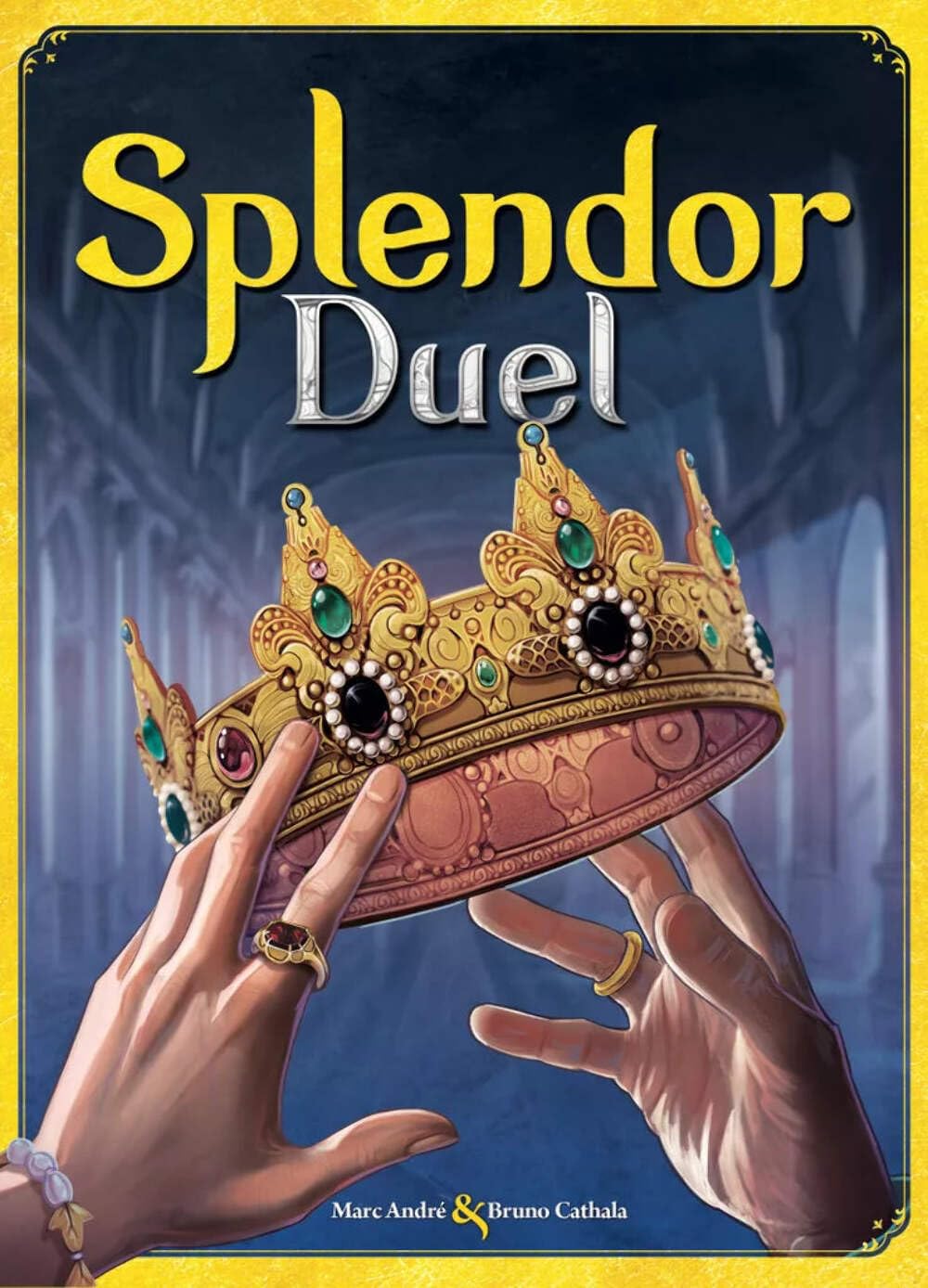
The classic gem-trading engine rebuilt as a two-player race that fits in a travel bag.
If you know Splendor, you know the joy of building a gem engine out of nothing. The Duel version keeps the core loop — collect tokens, buy development cards, earn prestige — and adds a dedicated two-player scoring race with multiple win conditions. It’s the most component-rich box in this review: 67 jewel cards, 25 plastic gem tokens, 4 Royal cards, 3 Privilege Scrolls, a victory tile, a common board, and a rules booklet.
Owners love the gameplay above all, and second place goes to the two-player focus — this is genuinely designed for a pair, not a three-player game with a variant. Setup is quick, the playtime settles at 30 to 40 minutes, and the portability gets praise because the box is compact. The pieces themselves get consistently high marks for building quality. It’s a heavier investment than most on this list, and what you get for it is the most production value in a small footprint.
The one knuckle-skim you’ll bump into is card size: the cards are quite small, and that gets mixed reactions. Bigger hands may find them fiddly to shuffle and hold. That’s the price of the compact box the game is built around, and it is a trade-off rather than a flaw. If your group is fine with a tight card format, Splendor Duel earns the premium spot cleanly.
What earns the premium badge: A real production build with wooden and plastic components, a compact box, and a 30 to 40-minute playtime that fits a normal evening. The two-player design shows in the scoring structure and in the win conditions.
One thing to know going in: The card size is small enough that shuffling and handling take some getting used to. It fits the portability pitch, but it will feel tighter than a standard-size deck.
Reach for this if: you want a premium-feeling contest with real visual presence and are comfortable with a smaller card format.
Think twice if: the card stock and size are dealbreakers for your hands and your shuffle.
Know the Specs
Playtime (minutes)
The printed playtime is a rough average for two experienced players, not a promise for your first game. A box that lists 20 minutes may take 35 when you are still reading the rulebook. Use it as a rhythm guide: a 20-minute number signals a quick filler round, while a 30-minute number signals a real session. A game listing “2 minutes” like The Couples Painting Game is measuring one round rather than one whole sitting, so treat that number differently from the strategy picks.
Players (2 players vs 2–4)
“Designed for 2 players” means every card, rule, and scoring path was built with two people in mind. “2–4 players” on the box, like Forbidden Island, means the game was designed for a larger table and can be played with two. Neither is a bad sign — it is a question of what you want. If you both play head-to-head often, a strict two-player box is usually a smoother experience.
Cooperative or competitive
Cooperative titles like Forbidden Island and Sail put both players on the same team, racing against the board rather than each other. Competitive titles like 7 Wonders Duel and Splendor Duel put you on opposite sides. Some boxes, like Everdell Duo, support both — you can build a city together or race to build it first.
Age rating
The minimum age on the box tells you roughly how complex the rules are. A game rated ages 10+ usually teaches quickly. A game rated ages 16+ will have more mature content and vocabulary. For couple-only game nights, this lower bound is mostly a complexity guide rather than a hard rule.
Common Questions
Is it better to pick a cooperative or a competitive game for a couple?
How long does a typical couple game night last?
Can Forbidden Island be played by just two people?
Do I need any art skills to play The Couples Painting Game?
What is the difference between 7 Wonders Duel and the Lord of the Rings version?
How many people can play BOOP?
Are these games good for couples who are new to board games?
Do any of these games work for solo play?
How does the number of players listed on the box affect the game?
The Bottom Line
For most couples, the best couple game night games pick is the 7 Wonders Duel because its three separate win paths and 30-minute playtime fit the way couples actually play — a real fight, then the table clears for the rest of the evening. If you want a shared win against the board, the Forbidden Island is the natural start point with its adjustable difficulty settings. And when you want a date night with a paint brush instead of a scoreboard, the The Couples Painting Game scratches a completely different itch. For the first box on your shelf, 7 Wonders Duel has earned the crowd favorite status — 4.5+ stars across 9,000+ ratings speaks for itself.
How we choose
We do not accept paid placement. Every pick is matched to a real buyer and a real use-case; we do not hands-on test units.
Sources
Specifications: manufacturer listings and product documentation. Review insights: verified customer reviews, as of November 2026. Pricing: not shown on this page (it changes often); check the current price via the retailer link.
As an Amazon Associate, Gamepad Test earns from qualifying purchases. This does not affect which products we feature.