
Heads up: This post contains affiliate links. As an Amazon Associate I earn from qualifying purchases, at no extra cost to you. Learn more
Specs are compiled from manufacturer listings and verified buyer reviews and can change over time — please confirm the key details on the product page before buying.
Most long games die on the shelf after one play, and it is almost never because the game was bad — it is because the rules took forty minutes to explain and your group never got past turn three. The nine games below are the ones that survived it. Each one has a teachable rulebook, a table presence that holds attention at hour two, and enough card and tile variety to earn a second play. If you want the short answer: the Slay the Spire co-op conversion is the crowd favourite at 4.5+ stars across 400+ owners, and it plays a full run in 45 minutes.
This guide is built by comparing the manufacturers’ published specifications and the patterns across verified customer reviews, so you get each pick’s real strengths and trade-offs instead of marketing spin.
What follows is a shortlist for groups who want a full evening-length session, not a filler. Every pick lists its published playing time and player count, so you can match the box to your table. This is the shortlist of the long board games to play when your group wants depth and a table nobody wants to leave.
Top Picks

How To Choose The Best Long Board Games to Play
The mistake nearly every group makes is buying for theme and teaching for rules. You see dragons, you buy dragons, and then you spend the first evening reading aloud. A long game is only worth owning if the rules click fast enough that everyone gets to actually play. Here are the four specs to weigh before you pick a box.
Match the stated playing time to your real evening
The number printed on the box is the estimate from the publisher, and it assumes players who know the rules. A game listed at 150 minutes will usually take a fresh group longer on the first night. Look for a game whose stated time sits comfortably inside the window your group actually has, not right up against it. War of the Ring and Great Western Trail both advertise the sort of evening-length sessions where you clear the whole evening, while Slay the Spire lists 45 minutes for a full run.
Check the player count against who actually shows up
A four-player game on a two-player night is a wasted box. Read the range and then ask which number inside that range the game is built around. Wyrmspan goes 1-5 players with a dedicated solo opponent, Arcs runs 2-4, and Bedlam in Neverwinter handles 2-6. If your group is often two, prioritise titles whose reviewers keep mentioning the two-player experience rather than ones that merely support it.
Decide if you want a campaign or a single sitting
These are different products wearing the same shelf label. A campaign game like Ticket to Ride Legacy asks you to commit to a dozen linked sessions and physically changes its own components as you go. A single-sitting strategy game like Everdell resets to a clean board every time. Neither is better — but a twelve-session campaign bought by a group that meets twice a year is a campaign that never finishes.
Weigh setup and table footprint, not just depth
Long games spread out. War of the Ring ships with a game board in two sections, and anything with a large map plus player boards will need a dining table rather than a coffee table. Setup time matters just as much: Wyrmspan quotes a 5-minute setup, which is the difference between a game that gets pulled out on a weeknight and one that only emerges on a Saturday.
Side-by-Side Comparison
| Model | Best For | Playing Time | Players | Ages | Amazon |
|---|---|---|---|---|---|
| Slay The Spire: The Board Game★ Best Overall | Co-op deckbuilding nights | 45 minutes | 1–4 | 12+ | Amazon |
| WyrmspanDepth Without Bulk | Dragon-engine building for couples | 90 minutes | 1–5 | 14+ | Amazon |
| Arcs Board GameSharpest System | Trick-taking space conflict | 60 minutes | 2–4 | 14+ | Amazon |
| Everdell Standard Edition | Family-friendly worker placement | 60 minutes | 1–4 | — | Amazon |
| War of The Ring 2nd Edition | Two-player epic wargaming | About 2 hours | 2–4 | Adult | Amazon |
| A Feast for Odin | Viking sandbox strategy | 2 hours, 90 minutes | 1–4 | 14+ | Amazon |
| Great Western Trail 2nd Edition | Cattle-driving strategy veterans | 150 minutes | 1–4 | 12+ | Amazon |
| Ticket to Ride Legacy | A twelve-session campaign group | 45 minutes | 2–5 | 10+ | Amazon |
| Bedlam in Neverwinter | Puzzle-night families | 270 minutes | 2–6 | 12+ | Amazon |
Detailed Reviews
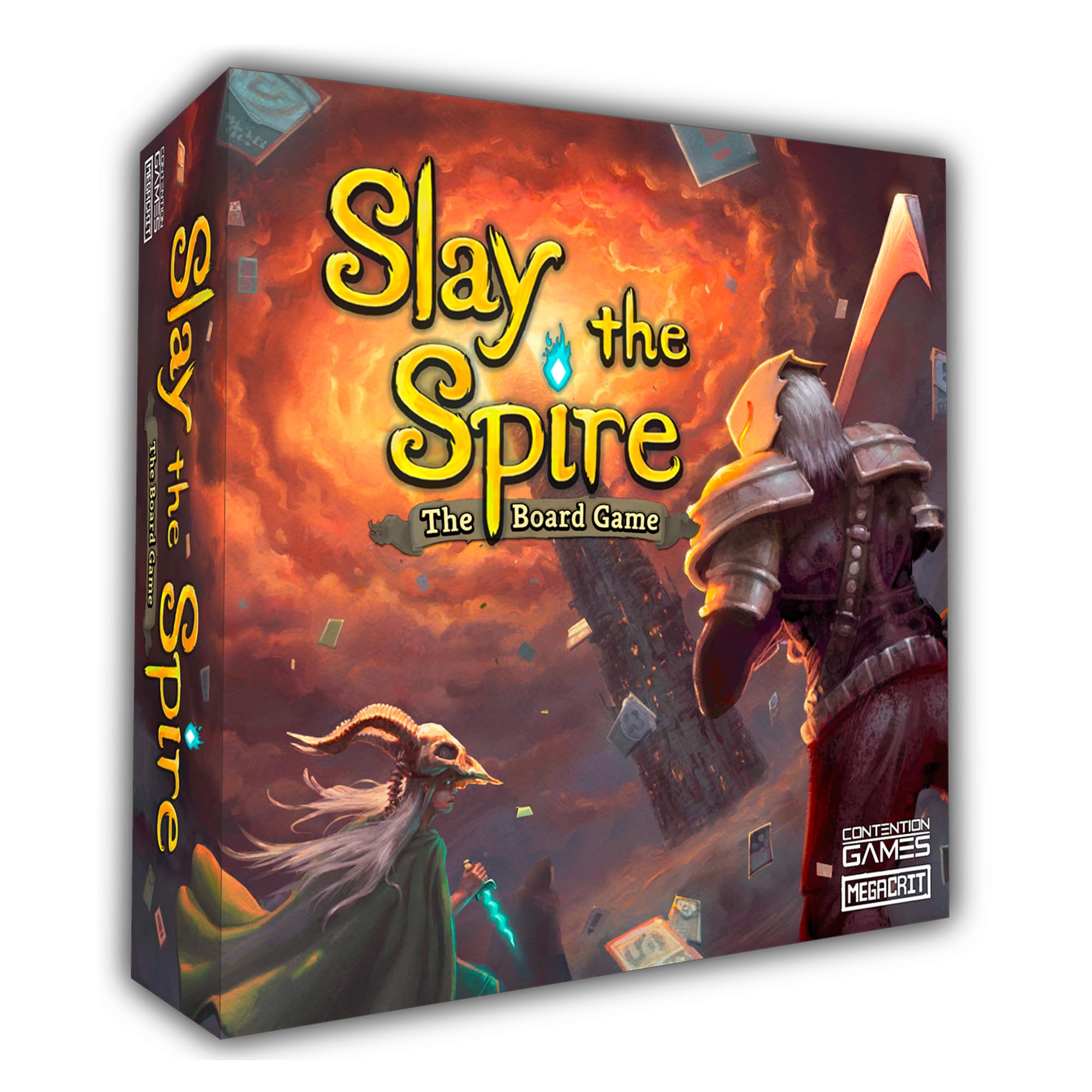
1. Slay The Spire: The Board Game
Our pick — 4.5+★ from 400+ verified ratings; the strongest balance of quality and price.
The co-op conversion that turns a 45-minute session into a full evening of arguing about card order.
Here is the number that wins the argument: a full run takes 45 minutes. That is a complete arc — monsters fought, decks built, a boss down — inside the same window most groups spend deciding what to play. Compare that to Bedlam in Neverwinter at 270 minutes and you are looking at two entirely different commitments. If your table has three hours and a Thursday night, this is the box you open.
What owners come back to is the sheer volume of it. The set carries over 650 cards, split into 112 small cards and 26 large cards, and that spread is why repeat runs feel different rather than scripted. You get 4 miniatures, 4 player boards and 2 main boards on the table, so four people each have their own space to build in without elbowing. The 45-minute learning time is the other quiet win — one person can read the rulebook and teach it the same evening.
The honest catch is duration, and it cuts both ways. A band of reviews finds the play runs long once players start second-guessing every card pick, which is the natural cost of a co-op where everyone has a say. It plays solo too, which means the box earns its shelf space even when nobody else is free.
Where it earns the top slot
- A complete run in 45 minutes, spelled out on the box
- Over 650 cards with 112 small and 26 large, so no two builds match
- Four miniatures and four player boards keep everyone engaged
- Co-op means nobody sits out a losing streak alone
Table realities to plan around
- Sessions can overrun when the table debates every card
- Runs on the long side for groups that linger
The verdict: if your group likes planning together rather than against each other, this is the strongest sit-down on the list.
One caveat: expect to police the clock — a co-op this open invites over-deliberation.
2. Wyrmspan
Ninety minutes of dragon hoarding that sets up in five — the weeknight strategy game that behaves like a weekend one.
Setup is the reason this one actually hits the table. Five minutes from box to first turn is the whole pitch, and it is the difference between a game your group plays on a Tuesday and a game that only comes out when someone has cleared the evening. The session runs 90 minutes at 1-5 players. Unlike the longer War of the Ring, which advertises roughly two hours, this fits an ordinary night without asking anyone to go home at midnight.
The engine underneath is what keeps it from the start. There are 183 dragon cards — 148 full-grown dragons and 35 hatchlings — plus 75 cave cards, and the chaining of dragon powers as your adventurer walks down the cave is the mechanic everyone raves about. Hatchlings need milk and eggs to come out of their shells and hand you a one-time bonus when they age up, which makes the theme do real work rather than sit on top of the rules. Complex enough to hold a veteran, learnable enough that a newcomer is playing by turn two.
Where it falls short of perfection is at the top of its player range. The game shines brightest at two, and the five-player experience can feel like the table is waiting on the same cards. Since a dedicated Automa is included for solo play, the honest read is that this is a superb one-and-two-player game that happens to stretch.
Best seat at the table: two players who like drafting and chaining bonuses will get the best version of this game.
Know before you host: at four or five the pace loosens noticeably, so save it for a smaller group night.
Reach for this if: you want a beautiful, fast-resetting strategy box that works as well for a solo evening as it does for a couple.
Look elsewhere if: your regular group is five strong and everyone wants to be central to every turn.
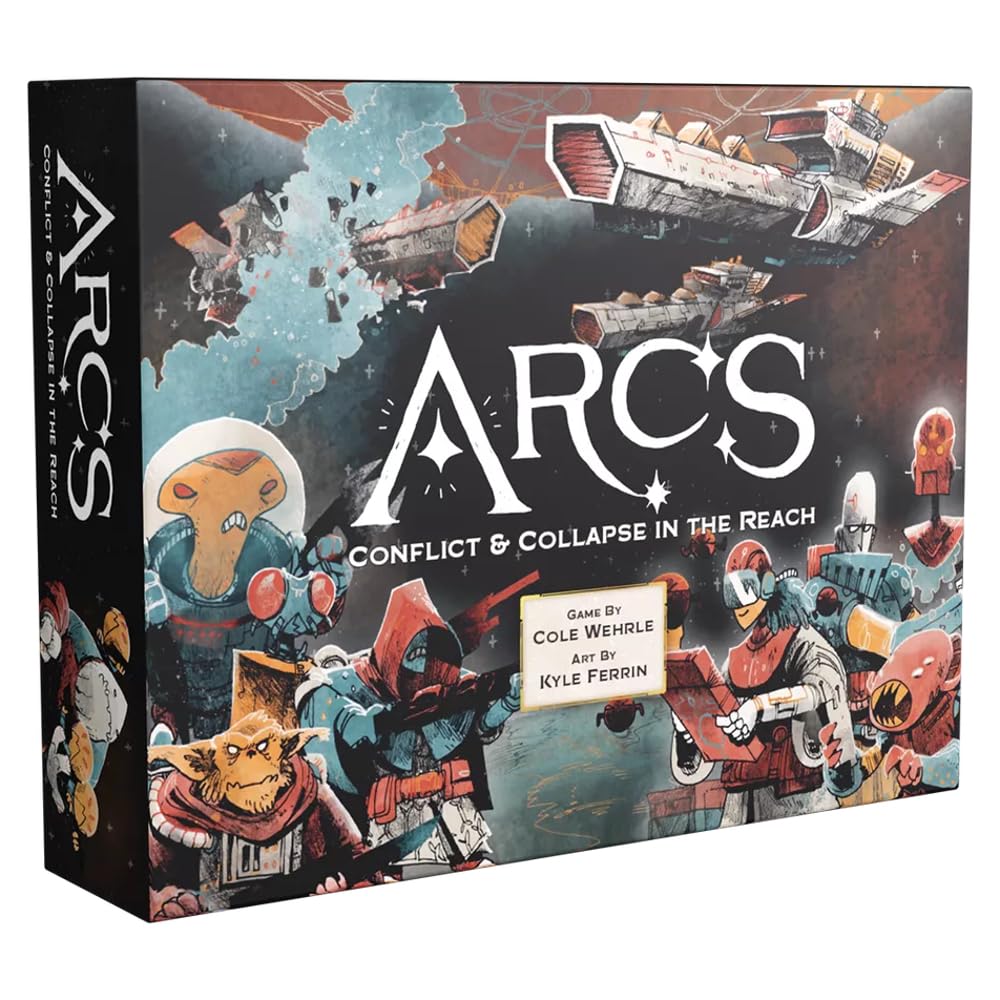
3. Arcs Board Game
A space opera where the cards you hold decide what you are even allowed to do.
Arcs borrows the trick-taking idea from card games and weaponises it. A four-suit deck determines which actions you can take each round, so timing and initiative matter as much as what you built on the board. Declare a shifting Ambition each deal and suddenly only the right objectives score — a twist that rewards players who can read the table rather than just count their ships. It runs 60 minutes for 2-4 players.
The confrontation is quick and sharp by design. Battles resolve through attacker-driven risk choices, which means the defender has to have prepared fleets and cards before the fight ever starts. That is a very different feeling from the cooperative planning of Slay the Spire — here you are actively reading opponents and gambling. Optional Leaders and Lore cards add an extra layer of asymmetric power if your group wants more.
You get a lot in the box for a 60-minute game: 1 board, 4 player boards, 5 starports, 5 cities, 15 ships, 10 agents, 28 action cards, 12 setup cards, 8 leader cards, 25 guild cards, 6 Vox cards, 14 lore cards and 18 battle dice. All that table furniture feeds the campaign expansion that serves as the game’s core arc. The trade-off is that the stated 60 minutes can feel tight once four players all declare ambitions and fight over them.
What sticks with you: the four-suit action system keeps every round from feeling like the last one, because your options change with the deal.
The honest limit: this is not a teaching-night game — the ambition and trick-taking layer needs a table willing to lose a round while learning.
Good fit: groups who enjoy bluffing and risk-taking as much as building an economy.
Think twice: if your table prefers co-op and hates having their plans taken apart, the attacker-driven battles will sting.
4. Everdell Standard Edition
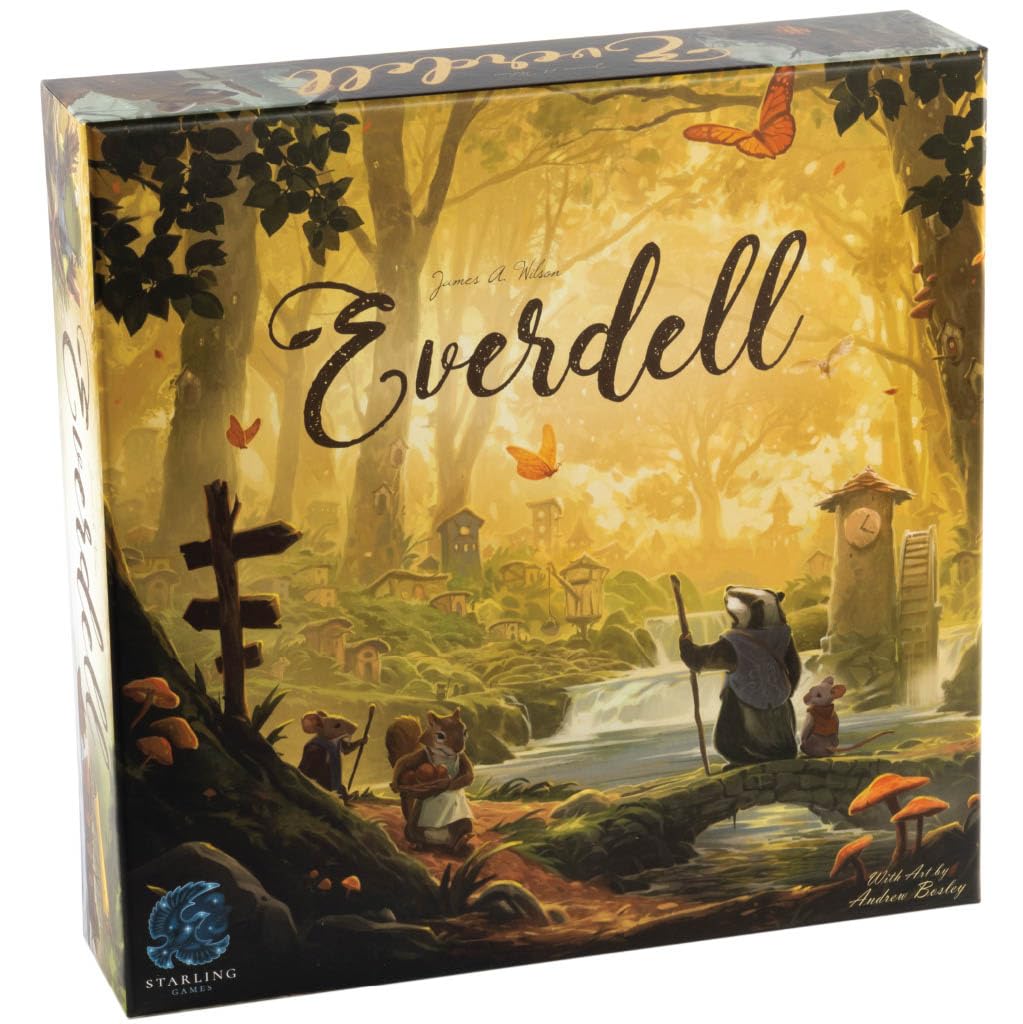
A woodland city-builder that gets non-gamers to the table and keeps them there for a full hour.
Everdell’s trick is charm doing the recruiting work. Squirrels, mice and hedgehogs under a giant tree, all in artwork that consistently draws the strongest reactions — it is the box people pick up before anyone explains a rule. The game underneath is honest worker placement and tableau building, 60 minutes for 1-4 players, and it holds up as a genuine strategy game once the novelty settles.
Where it earns its place in a long-game list is the replayability. Each player develops their own approach, and the card combos mean a second play does not feel like a rerun. It plays solo as well as with a group, so the box stays useful when the house is quiet. That flexibility is why it sits in so many collections for years rather than a season.
The one thing to be honest about is the learning curve. It is gentler than the heaviest titles here, but it is not a ten-minute teach — the tableau-building layer takes a round or two before it clicks. Budget that first game as a learning session and everything after it moves faster. Component quality holds up well, with tactile pieces that are genuinely pleasant to handle while you wait for a turn.
Why families keep it
- Approachable theme pulls in casual players
- Strategic depth underneath the cute art
- Works solo as well as multiplayer
- Build quality that survives repeat handling
Set expectations here
- First game is a teaching game, not a scored game
- Some players find the scoring layer slower than the building
Best for: households where one person is a hobby gamer and the rest are not — this bridges the gap.
Skip if: your table already lives in heavy Eurogames and wants more friction than a woodland tableau provides.
5. War of The Ring 2nd Edition

Two hundred and four plastic figures, a board in two sections, and an evening that will not feel long enough.
This is the biggest table presence on the list and it earns every inch. The board is a massive 70 x 100cm in two sections, and the box carries 204 plastic figures representing armies and characters across more than 30 different sculptures. Add 16 Action Dice, 5 Combat Dice, 76 cardboard counters, and 110 event and character cards, and you have a two-hour game for 2-4 players that looks like a war room by the second round.
The theme is what carries it past the visual spectacle. Owners describe it as among the most thematic games ever made, and the structure backs that up — the board, the cards and the dice all push you toward the story rather than away from it. Fans also call it one of the best two-player experiences around, which is unusual for a game that also lists a four-player option. If your regular partner is one person, this is the box you keep on the shelf for the long haul.
The catch is the door fee. This is a game with a substantial learning curve, and the first playthrough will take longer than the advertised two hours while you look things up. That is normal for this weight, but it means the first session should be scheduled when nobody has an early start. Strategy-minded players will find the return well worth that investment; casual tables may not make it past the setup.
The thing everyone raves about: the theme is not a coat of paint — it drives the mechanics, and that is why it keeps coming back to the table.
Plan for it: the learning curve is real, so treat the first game as a tutorial you both agree to lose gracefully.
Pick this if: you have one dedicated opponent and you both want a game that rewards years of rematches.
Not for you if: your group rotates players weekly and nobody wants to teach the same rules twice.
6. A Feast for Odin

Raiding, trading, hunting and building — a Viking sandbox where the hard part is picking a lane.
Few games give you this much rope. A Feast for Odin hands you a Viking tribe and then refuses to tell you what to do with it: trade, hunt, raid, build houses, feast every round, and score however you decide wealth and glory look. The playtime is listed at 2 hours, 90 minutes for 1-4 players, and that range is honest — an experienced table moves, a new one lingers over the action board.
The variety is the selling point, and it is also the replayability engine. The action spaces and occupation cards keep each session from resolving the same way, which is why this one holds up for the groups that love it while other boxes gather dust. The alternate two-player board is a welcome addition, because the full table experience at two can sprawl. Fans of worker placement mechanics in particular will find plenty to dig into across the occupation and action systems.
Where new players get stuck is the on-ramp. The rules density is high enough that the first game can feel like administering a spreadsheet before it feels like raiding. That is a function of the sandbox design — a wide-open game has more to teach — and it is the single reason to buy this only if your group tolerates a patient first night. The payoff is a game that keeps offering new routes long after the honeymoon.
The long-game payoff: the sheer spread of viable strategies means the box keeps paying out session after session.
Fair warning: the design looks intimidating on the table, and it is — plan a slow first play with the rulebook open.
Belongs on your shelf if: you love worker placement and want a sandbox you can explore for years rather than master in one sitting.
Pass it by if: your group wants a clear objective from turn one — this one asks you to choose your own.
7. Great Western Trail 2nd Edition

One hundred and fifty minutes of driving cattle, building stations and outmanoeuvring the rancher across the table.
If your group genuinely wants an evening-length game, this is the pick. Great Western Trail lists a playing time of 150 minutes for 1-4 players, and unlike a lot of optimistically labelled boxes, that figure describes a real full arc: buy cows, plan your drive, ship to Kansas City, then push on to New York for the bigger payout. The 19th-century America setting is not decorative — the whole route economy hangs on it.
The component count is enormous, which tells you what kind of game this is. You get 92 cattle cards, 24 Simmental cattle cards, 54 worker tiles, 55 building tiles, 18 hazard tiles, 22 outlaw tiles, 9 station master tiles, 56 coins, and 4 herders with their own hats and engines. That density is the game: every system talks to another one, and a strong plan at the start of the drive should still be holding at the end. The solo rulebook and Sam’s board mean a single player gets a real opponent rather than a filler loop.
The honest trade-off is that this is not a teach-it-in-ten game. The systems stack, and a table that has not played before will spend the first stretch asking whether they are allowed to do a thing. The second edition smooths the package but does not shrink the weight. Buy it because you want that weight, not in spite of it.
What the 150 minutes buys you
- A full evening-length strategy arc, not a filler
- Enormous card and tile variety across the cattle economy
- Dedicated solo rulebook and board included
- Four herders with hats and engines for the full player count
What it costs you in effort
- Substantial rules overhead on the first play
- Table space needed for the tile spread
The right buyer: a regular group that treats game night as a three-hour event and wants the systems to reward that.
The mismatch: if half your table are casual players, the rule load will thin the crowd.
8. Ticket to Ride Legacy: Legends of the West

Twelve linked games, a story that unfolds as you play, and a board that permanently changes along the way.
Ticket to Ride Legacy is a commitment, and it is worth naming that plainly. You are signing up for 12 games across a campaign, managing a North American railway company while a narrative unfolds around you. Each session is listed at 45 minutes for 2-5 players, but the real unit of measurement here is the campaign — this is the box that fills a season of game nights rather than one.
The game grows with your group, and that is what makes it work. It starts simple, then adds rules and content as you open up frontier boxes, so the complexity arrives only after everyone is comfortable. That pacing is the smartest thing about the design, and it is why newer players can be folded in without a lecture. The physical package backs it up: 280 plastic train cars, 84 train cards, 33 tickets, 77 postcards, 13 frontier boards and 5 company boxes, all designed to be opened over time rather than dumped on the table at once.
The catch is permanence. Legacy games physically alter their components, which means you are not reselling this and you are not resetting it. After the campaign finishes, the game remains playable with new board maps and gameplay, so it does not become a paperweight — but the twelve linked sessions are a one-time journey. Only buy this if your group can actually meet twelve times.
What wins people over: the way the rules layer in gradually instead of arriving all at once — a rare thing in a campaign box.
The real cost: twelve sessions is a genuine scheduling project, and the components change permanently along the way.
Buy it if: your group meets regularly and you want a story that unfolds across months of game nights.
Leave it if: your table is inconsistent or you like keeping a game pristine and resale-ready.
9. Bedlam in Neverwinter

Dungeons & Dragons rebuilt as a three-part escape room, and it will fill an entire afternoon.
The playing time is the headline and also the warning: 270 minutes. That is a full day, not an evening, and it is why this is the last box on the list for anyone with a tight schedule. The format explains it — three linked acts, each an escape-room-style mystery, with the table working together to track clues and solve the case at the end of every act. For 2-6 players and ages 12 and up, it is built to include the whole family rather than split it.
What keeps it engaging across that long stretch is the moving board. The board builds and changes as you solve puzzles, revealing new locations and clues, so the table never sits still for long. You also create characters — pick a race, class and starting weapon, then collect loot and fight monsters on the hunt for an evil mage and his cult. The spread of components is substantial: 6 plastic figures, 11 gameboards, 4 secret envelopes, 298 cards, 43 cardboard tokens, a d20 and a d6, and a mysterious object that ties it together.
The honest question is difficulty. The puzzles split people — wordplay and multi-card visual riddles click for some tables instantly and stall others completely. That is the nature of an escape room in a box and it is worth setting expectations before you start: agree that hints are allowed, or a single obtuse riddle can sour an otherwise great afternoon. The simplified mechanics mean no prior D&D knowledge is needed, which makes it far friendlier than its theme suggests.
The standout: a board that physically rebuilds itself as you solve puzzles keeps the whole 270 minutes feeling active.
Set the ground rules: the puzzle layer is mixed in difficulty, so decide up front how much hint-giving your table allows.
Best for: families and friend groups who want a shared puzzle afternoon with a story attached.
Hold off if: your sessions run two hours — this one needs a full day block to be worth opening.
Know the Specs
Estimated Playing Time
This is the publisher’s guess at how long one full game runs, and it assumes players already know the rules. Treat it as a floor rather than a ceiling on the first night. A listed 150 minutes means a learning game runs longer, so match the printed number to the time your group actually has with room to spare.
Player Count Range
The range tells you the extremes a game supports, not where it is best. A box that says 1-5 may still play optimally at two, so read the range and then think about your usual table size. Games with a dedicated solo opponent included are the ones that stay useful when nobody else is free.
Rulebook Weight
Weight is how much there is to learn before your first turn — the number of interlocking systems, not the thickness of the manual. Sandbox games with many action spaces carry more weight than a fixed-route game. If your group is mixed, pick the lighter weight and keep the heavy boxes for the dedicated nights.
Component Count and Table Space
Card and tile counts are a rough proxy for how much table you need. Hundreds of cards means a larger play area and a longer setup. Games that quote a short setup time are the ones that actually get played on weeknights, because setup friction is what kills repeat plays.
Common Questions
How long does a long board game usually take to play?
Is Wyrmspan too complex for players new to strategy games?
What is the difference between a legacy game and a normal strategy game?
Can I play War of the Ring with just two players?
Which of these games works best for a solo player?
How many players does Bedlam in Neverwinter need?
Do I need to know Dungeons & Dragons to play Bedlam in Neverwinter?
Is Great Western Trail worth playing at a lower player count?
How much table space do the biggest games on this list need?
The Bottom Line
The long board games to play winner is the Slay The Spire board game because it delivers a complete cooperative run in 45 minutes with over 650 cards to keep it fresh — depth that does not demand your whole evening. If you want a campaign your group commits to across months, the Ticket to Ride Legacy box is the one that earns its table time. And for a two-player epic with 204 miniatures and a board in two sections, the War of the Ring 2nd Edition is the one to reach for.
How we choose
We do not accept paid placement. Every pick is matched to a real buyer and a real use-case; we do not hands-on test units.
Sources
Specifications: manufacturer listings and product documentation. Review insights: verified customer reviews, as of November 2026. Pricing: not shown on this page (it changes often); check the current price via the retailer link.
As an Amazon Associate, Gamepad Test earns from qualifying purchases. This does not affect which products we feature.