
Heads up: This post contains affiliate links. As an Amazon Associate I earn from qualifying purchases, at no extra cost to you. Learn more
Specs are compiled from manufacturer listings and verified buyer reviews and can change over time — please confirm the key details on the product page before buying.
You want to hear the enemy before they see you — that is the whole point of a gaming headset. What separates the picks below is not the number of RGB lights. It is whether the mic lets your team hear you, whether the cushioning survives hour four, and whether the connection drops in the middle of a ranked match. Everything here is chosen because it does at least one of those jobs well, and the guide tells you plainly which one fits your setup.
This guide is built by comparing the manufacturers’ published specifications and the patterns across verified customer reviews, so you get each pick’s real strengths and trade-offs instead of marketing spin.
The list runs from budget wired sets to premium wireless rigs, so you can match a headset to how you actually play. Read on for the top rated gaming headset that suits your ears, your platform, and your patience for charging.
Top Picks

How To Choose The Best Top Rated Gaming Headset
Every headset here will play your game. The differences show up in the finer details, and the wrong pick for your setup is usually the wrong connection type, not the wrong sound quality. Sort these four questions first, then read the reviews.
Connection: match the port before anything else
Wired headsets plug into a 3.5 mm jack or straight into USB, and they never need a charge. Wireless ones use a 2.4 GHz dongle — a small USB stick that gives you a near-instant link — or Bluetooth, which is convenient but can lag behind the picture. Some sets offer both, and dual-mode models let you switch. One catch worth knowing: Bluetooth modes on several headsets in this list are explicitly not compatible with PS5, so check that line before you buy if the PlayStation is your main platform.
Latency: the number that decides competitive play
Latency is the gap between an event in the game and the sound reaching your ears, measured in milliseconds (ms). A headset rated at 20 milliseconds keeps gunfire and footsteps tied to the picture closely enough that you are reacting to what you actually see. That matters more in a shooter than in a story game, where a slightly slower Bluetooth link goes unnoticed.
Comfort: weight and cushions beat padding claims
You will wear this for hours, so look at the actual weight in grams and the cushion material. Memory foam ear pads and a padded headband spread pressure across the skull, and a lighter shell reduces neck strain during long sessions. Closed-back earcups — cups with solid outer shells — also block room noise passively, which helps when the household is loud but keeps you from hearing someone at the door.
Microphone: the part that lets your team down
A cardioid mic picks up sound mainly from the front, which is why boom mics point at your mouth and ignore the keyboard behind them. Detachable and retractable booms protect the mic when you travel and make the headset usable for music without a stalk in your face. Flip-to-mute designs are the fastest way to cut yourself off mid-call without hunting for a button.
Side-by-Side Comparison
| Model | Best For | Connection | Driver Size | Battery Life | Amazon |
|---|---|---|---|---|---|
| AOC Wireless Gaming Headset★ Best Overall | Do-everything wireless | 2.4 GHz / Bluetooth 5.4 / USB-C / 3.5 mm | 50 mm | 45 hours | Amazon |
| Turtle Beach Recon 70Best Value | Plug-and-play on any console | Wired 3.5 mm | 40 mm | — | Amazon |
| FIFINE H13BPStreamer’s Pick | Streamers who want RGB | Wired USB-A | 50 mm | — | Amazon |
| EKSA 2.4GHz Wireless | Marathon battery life | 2.4 GHz / Bluetooth 5.3 / 3.5 mm | 50 mm | 120 hours | Amazon |
| HyperX Cloud II | Long-session comfort | Wired USB / 3.5 mm | 53 mm | — | Amazon |
| Razer Kraken V4 X | Retractable mic on a budget | Wired USB-C & USB-A | 40 mm | — | Amazon |
| Logitech G321 LIGHTSPEED | Light wireless for PC | LIGHTSPEED / Bluetooth 5.2 | — | 20+ hours | Amazon |
| Razer BlackShark V3 X HyperSpeed | Competitive wireless | HyperSpeed 2.4 GHz / Bluetooth 5.3 / USB | 50 mm | 70 hours | Amazon |
| SteelSeries Arctis Nova 7X Gen 2 | Premium dual-audio mixing | 2.4 GHz + Bluetooth simultaneously | — | 50+ hours | Amazon |
Detailed Reviews
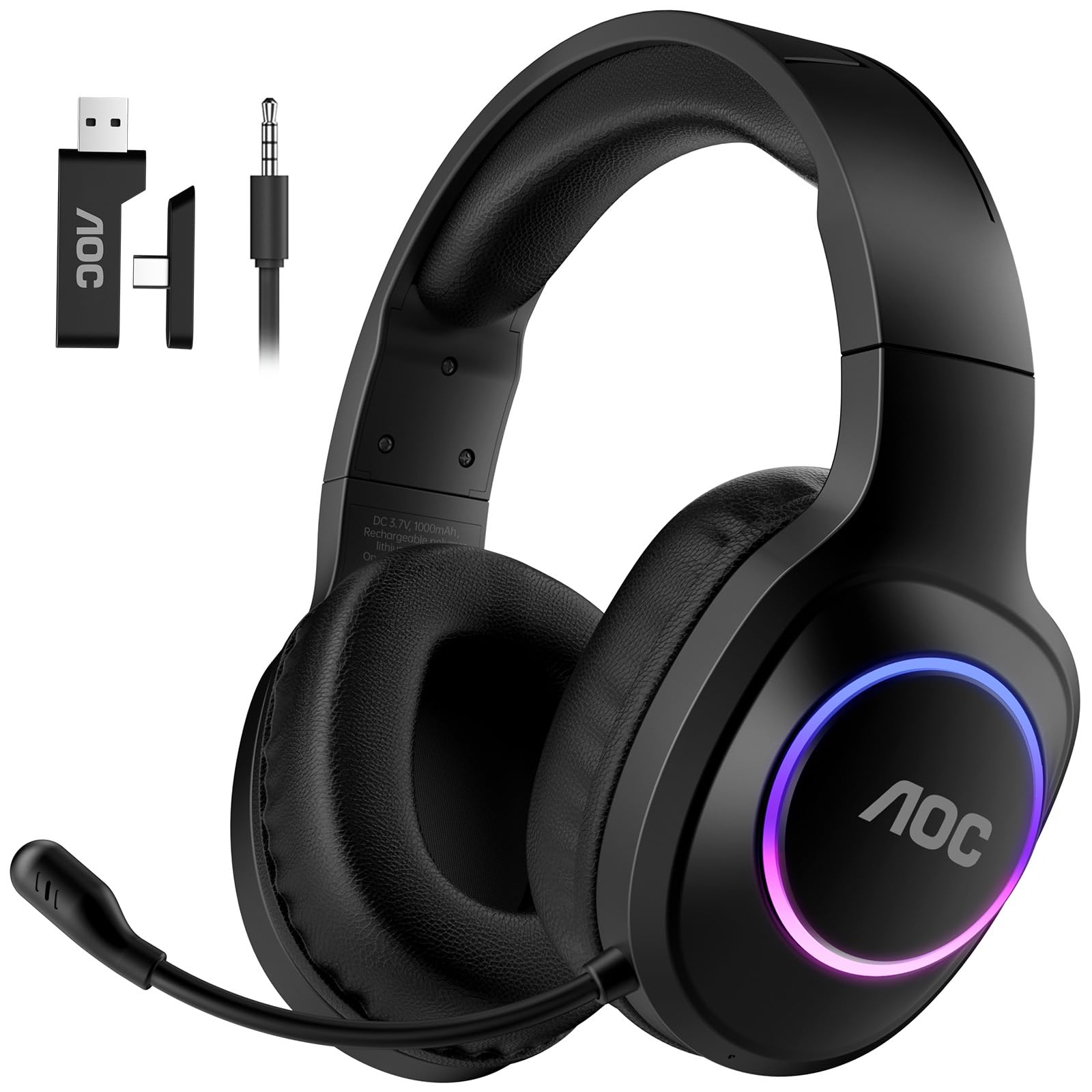
1. AOC Wireless Gaming Headset
Our pick — 4.5+★ from 700+ verified ratings; the strongest balance of quality and price.
One headset that covers dongle, Bluetooth, cable and console without a drawer of adapters.
Most wireless headsets make you pick a lane. This AOC runs four: a 2.4 GHz dongle link, Bluetooth 5.4, a USB-C wired mode, and a plain 3.5 mm cable. That means it follows you from a PS5 to a Switch to a phone call without a second purchase. The 2.4 GHz side caps latency at 20 milliseconds — the delay between the game and your ears — which is tight enough that muzzle flash and gunshot land together.
The drivers are 50 mm graphene diaphragms, paired with dual acoustic chambers and a built-in DAC running 96 kHz/24-bit output. In plain terms, a DAC is the chip that turns a digital file into sound, and 96 kHz/24-bit describes how much detail it can carry, so directional footsteps and reload clicks stay separated instead of smearing into one wall of noise. Weight lands at 239 g with protein-leather earcups and an adjustable headband that keeps clamp pressure even, which is the part that decides whether hour five feels fine or fiddly.
The battery is the honest caveat worth weighing: 45 hours per charge, which is solid but a long way from the 120 hours the EKSA set manages. A full refill takes 2 hours over USB-C, and you can keep playing while it charges. One more line to read carefully — the Bluetooth modes do not work with PS5, so PlayStation owners lean on the dongle or the cable. What wins people over is the sheer breadth of connections at this position in the list, and the triple-stage mic (foam isolation, DSP echo filtering, AI voice enhancement) keeps callouts legible in a noisy room.
What earns it the top spot
- Four connection modes in one headset: 2.4 GHz, Bluetooth 5.4, USB-C and 3.5 mm
- 20 ms latency keeps audio locked to the on-screen action
- 50 mm graphene drivers with dual chambers and a 96 kHz/24-bit DAC
- 239 g with protein-leather cups and even clamp pressure for long sessions
- 45-hour battery, 2-hour USB-C recharge, and play-while-charging
Where it asks you to compromise
- Bluetooth modes are not compatible with PS5 — dongle or cable only there
- 45 hours falls well short of the 120-hour EKSA pick if charging is your sore point
Reach for this if: you game across more than one platform and refuse to buy a separate headset for each.
Look elsewhere if: Bluetooth-only PS5 play is the plan — that mode is off the table here.
2. Turtle Beach Recon 70 Gaming Headset
The wired workhorse that gets a teenager onto any console with zero setup.
If you want the simplest possible upgrade, this is it. A single 3.5 mm cable plugs into PS5, PC, Xbox, phones, tablets and laptops, and the on-ear volume wheel sits right on the cup so you never touch a menu. The flip-to-mute boom mic swings up out of the way to cut yourself off instantly — faster than hunting for a button mid-firefight.
Sound comes from 40 mm speakers, and the noise-isolating ear cushions are the part that earns the real praise here. The comfort side is genuinely strong, with players reporting they can wear it all day with little discomfort. Where the set gets complicated is longevity: the build is the most-discussed topic on the review pages and the split is real, with a wall of happy owners alongside a chunk who found the mic failing or the jack coming loose. The mic in particular draws mixed reports — plenty of clean callouts and plenty of dead ones.
Treat this as a headset you buy for the next year or two rather than a decade. Against the AOC above it gives up wireless entirely and runs smaller 40 mm drivers versus that pick’s 50 mm. But it also costs the least by a clear margin, and for a spare bedroom setup or a first headset, that trade is fair.
The case that holds up: multiplatform 3.5 mm plug, flip-to-mute mic, a soft cushion set that holds up over full days, and spatial audio support on consoles that offer it.
The honest catch: build life is the recurring complaint, so if you game daily and haul your gear around, budget for a replacement sooner than you would like.
Buy it for: a first headset or a second one for a console in another room, where a cable is fine.
Think twice if: you need it to survive years of daily transport — the durability reports are the weak spot.
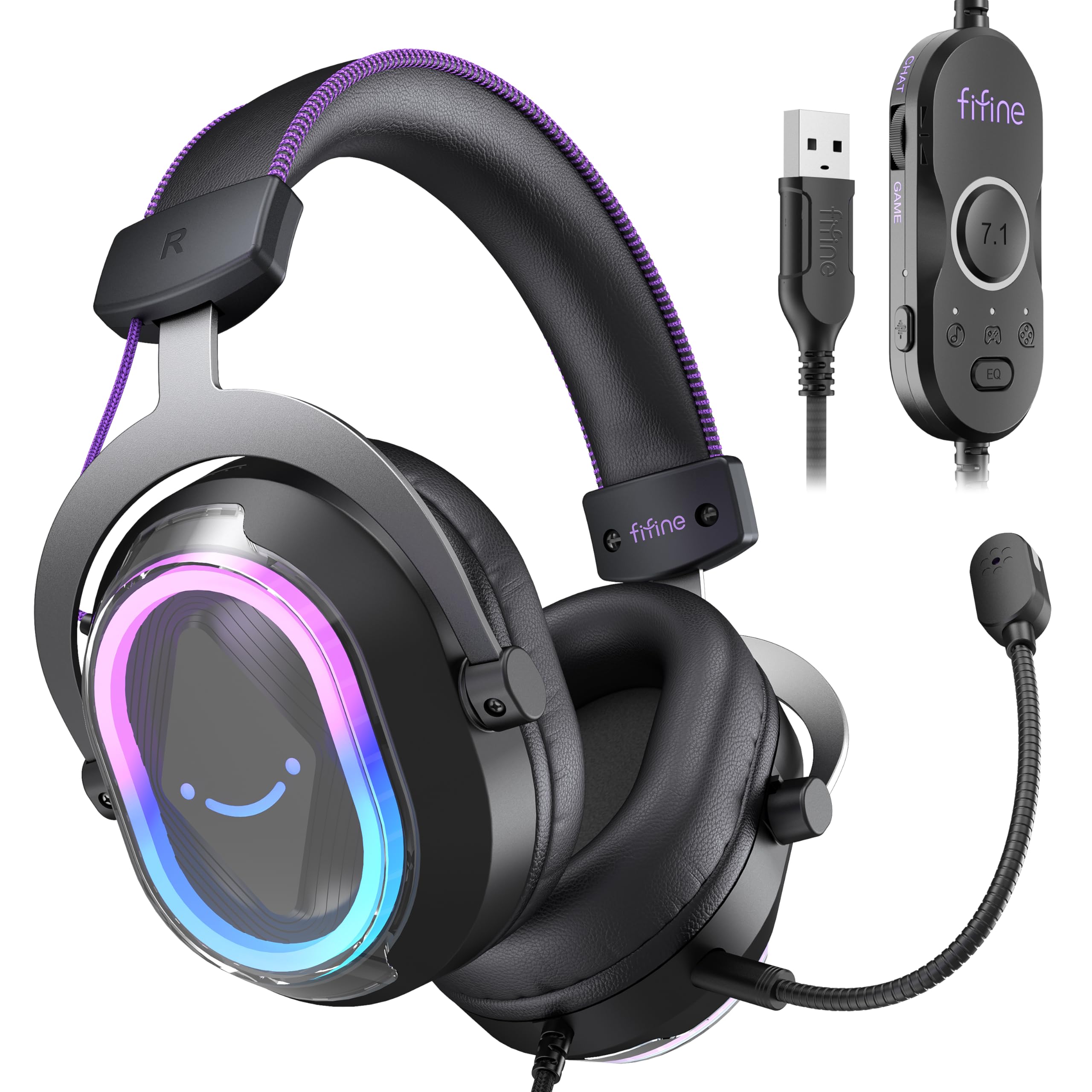
3. FIFINE H13BP Gaming Headset
A rhombus shell with transparent cups and RGB that reads well on camera before you even load in.
This one is built for the stream, not just the match. The rhombus frame and see-through earcups catch light, and you can cycle 11 lighting modes from a single press — useful ambiance for a Twitch or Discord crowd, and a long press kills the glow when you want to disappear. The detachable microphone is the practical win: pull it off for music, clip it back for comms.
Under the styling sits a 50 mm dynamic driver and 7.1 surround sound, with an in-line USB control box handling volume, EQ game modes and a game/chat balance dial. That last control is uncommon at this position and genuinely handy in team games, where you want louder comms and quieter explosions. The cable runs 7.55 ft of braided line, long enough to reach behind a tower. Comfort holds up too — protein skin ear pads over memory foam, plus an adjustable headband, and the closed-back cups block room noise passively.
Two limits to know before you commit. It is USB-A only and plugs into PC, Mac, PS5 and PS4, but it is explicitly not compatible with Xbox or with PlayStation controllers — so a console player needs the console itself, not the pad. And on noise cancellation the verdict is split, with some finding the isolation strong and others calling it weak. Sound quality is where it shines; that is the aspect buyers single out most, alongside comfort.
Why it earns a spot: 50 mm drivers, 7.1 surround, an in-line control box with game/chat balance, a detachable mic and RGB you can switch off.
What to plan around: USB-A only, and no Xbox or controller support at all.
Fits best: a PC or PS5 streamer who wants a camera-ready headset with real audio controls on the cable.
Not for: Xbox players or anyone hoping to plug straight into a PlayStation controller.
4. EKSA 2.4GHz Wireless Gaming Headset
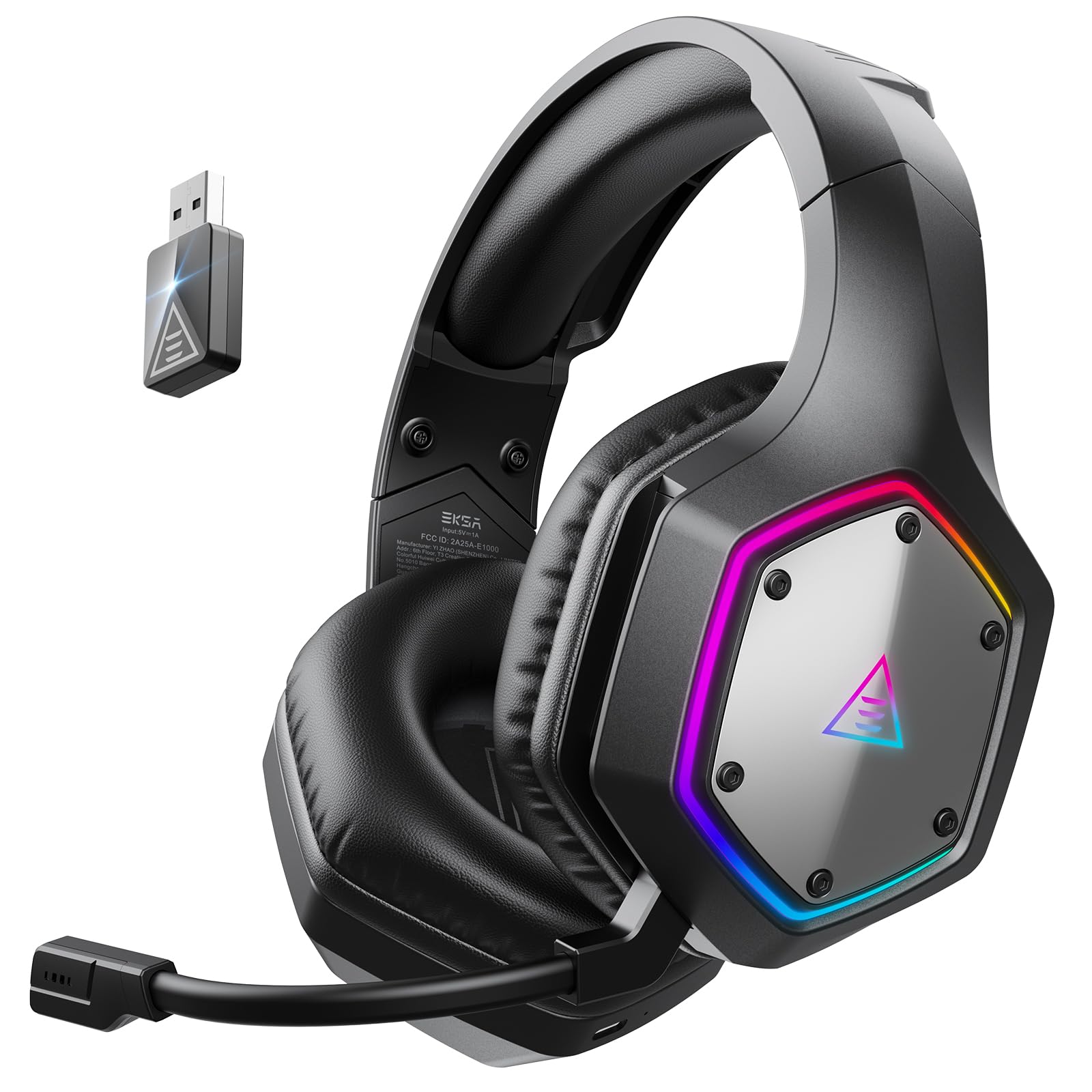
A 1200 mAh cell that keeps the headset alive for a week of evenings without a cable in sight.
Charging anxiety is the quiet killer of wireless gaming, and EKSA attacks it head-on. The 1200 mAh battery and low-power chipset combine for up to 120 hours of continuous use — about two and a half times the 45 hours the AOC pick manages. If you game a few hours a night, that is roughly a full week between charges. Drivers are 50 mm as well, 10 mm larger than the 40 mm speakers in the Turtle Beach Recon 70, which gives the low end more surface to push.
You get two wireless routes: a 2.4 GHz dongle for PC, PS5 and PS4, and Bluetooth 5.3 for phone or Switch. A double-press of the mute button hops between them so you can take a call without quitting the match. Only one mode runs at a time, and only one device connects at once — the dual PS5-plus-Bluetooth setup some buyers expect is simply not on the menu. The mic uses AI-powered ENC, short for Environmental Noise Cancellation, which the maker says filters up to 99.6% of background noise so callouts cut through a loud room.
Build quality is what wins people over here, and the 7.1 SoundBase software lets you tune EQ and surround levels per game. The trade-off is honest: sound quality draws a split verdict, and connectivity is the recurring gripe — particularly that the PS5 dongle and Bluetooth cannot run together. Xbox owners get 3.5 mm wired only.
Standout strengths
- 1200 mAh battery rated for up to 120 hours — the longest here
- 50 mm drivers with plug-and-play 7.1 surround and EQ profiles in SoundBase
- 2.4 GHz dongle plus Bluetooth 5.3, switchable with a double-press
- ENC mic the maker rates to filter up to 99.6% of background noise
Before you buy
- Dongle and Bluetooth cannot run at the same time, and one device connects at once
- Sound quality splits opinion; connectivity reports are mixed
- Xbox is wired 3.5 mm only
The right call when: long wireless sessions and infrequent charging matter more to you than a tuned sound signature.
Pass if: you want PS5 game audio and phone calls running side by side — that combo is not possible here.
5. HyperX Cloud II Gaming Headset – 7.1 Surround Sound – Red

Five-millimetre-bigger drivers than almost everything here, wrapped in memory foam and aluminum.
Start with the number that does the work: 53 mm drivers, which beat the 50 mm units on the AOC, EKSA and Razer sets, and comfortably top the 40 mm speakers on the Kraken V4 X and the Recon 70. Bigger diaphragms move more air, and here that shows up as a wide, weighty soundstage that players describe as detailed and worth the money. Hardware-driven 7.1 virtual surround handles the positional side on PC and Mac, while PS4, Xbox One, Switch and mobile get stereo.
Then there is the part you feel rather than hear. Memory foam ear cushions under a padded leatherette headband, a closed-back cup design that blocks room noise passively, and a solid aluminum frame. Sound quality is the headline — the thing everyone raves about — with comfort right behind it. The detachable noise-cancelling mic is Discord and TeamSpeak certified, so callouts carry without a stalk in your face when you switch to music.
The caveat is longevity. A minority report failures within eight months, and the mic draws a split verdict between clear and faulty. That is a minority against a very large pool of satisfied owners, but it is real, and this is a wired set — no dongle, no freedom from the desk. What you get in return is the most forgiving fit on this list, which matters if you wear glasses or game past midnight.
Where it delivers: 53 mm drivers, hardware 7.1 on PC and Mac, memory foam cushioning, an aluminum frame and a detachable certified mic.
The fair warning: wired only, and the mic and long-term durability split opinion — treat the detachable boom gently.
Worth it for: marathon PC sessions where comfort outranks cable-free convenience.
Keep looking if: wireless freedom is non-negotiable — there is no battery in this one.
6. Razer Kraken V4 X Wired USB-C & Type A Gaming Headset, Black

A mic that slides into the earcup and disappears — no stalk, no lost cap, no fuss.
The standout here is the microphone. A retractable Hyperclear cardioid boom slides flush into the headset when you are done talking, so there is nothing to detach and nothing to lose. A cardioid pickup pattern means it listens mainly to what is in front of it — your voice — and ignores noise from behind, which is why it draws such consistent praise. The drivers are 40 mm, built in Razer’s three-part TriForce design that separates high, mid and low handling so the mix does not turn to mush.
Comfort leans on hybrid fabric and leatherette memory foam cushions in close-fitting earcups, and build quality is the strongest theme across the reviews. It is wired, with a convertible Type C and Type A cable that runs PC, consoles, phones and more from one headset — no dongle pairing, no battery to watch. 7.1 surround sound rounds out the positional side for shooters.
Two honest notes. The 40 mm driver is the smallest here alongside the Recon 70, so it will not move air like the 53 mm HyperX. And connectivity has had its stumbles, with a handful of mics giving out after a few months. The majority of owners are thrilled with the quality and comfort, so this is a fair pick if you want a tidy retractable mic without paying premium-tier money.
The draw: retractable cardioid mic, TriForce 40 mm drivers, memory foam hybrid cushions, convertible USB-C and USB-A cable, 7.1 surround.
The catch to weigh: the smallest drivers in this lineup, and a small share of buyers report mic failures down the line.
Suits you if: you hate mic stalks and want one cable for PC and console alike.
Skip if: you chase big low-end punch — 40 mm is the floor, not the ceiling.
7. Logitech G321 LIGHTSPEED Wireless Gaming Headset – White
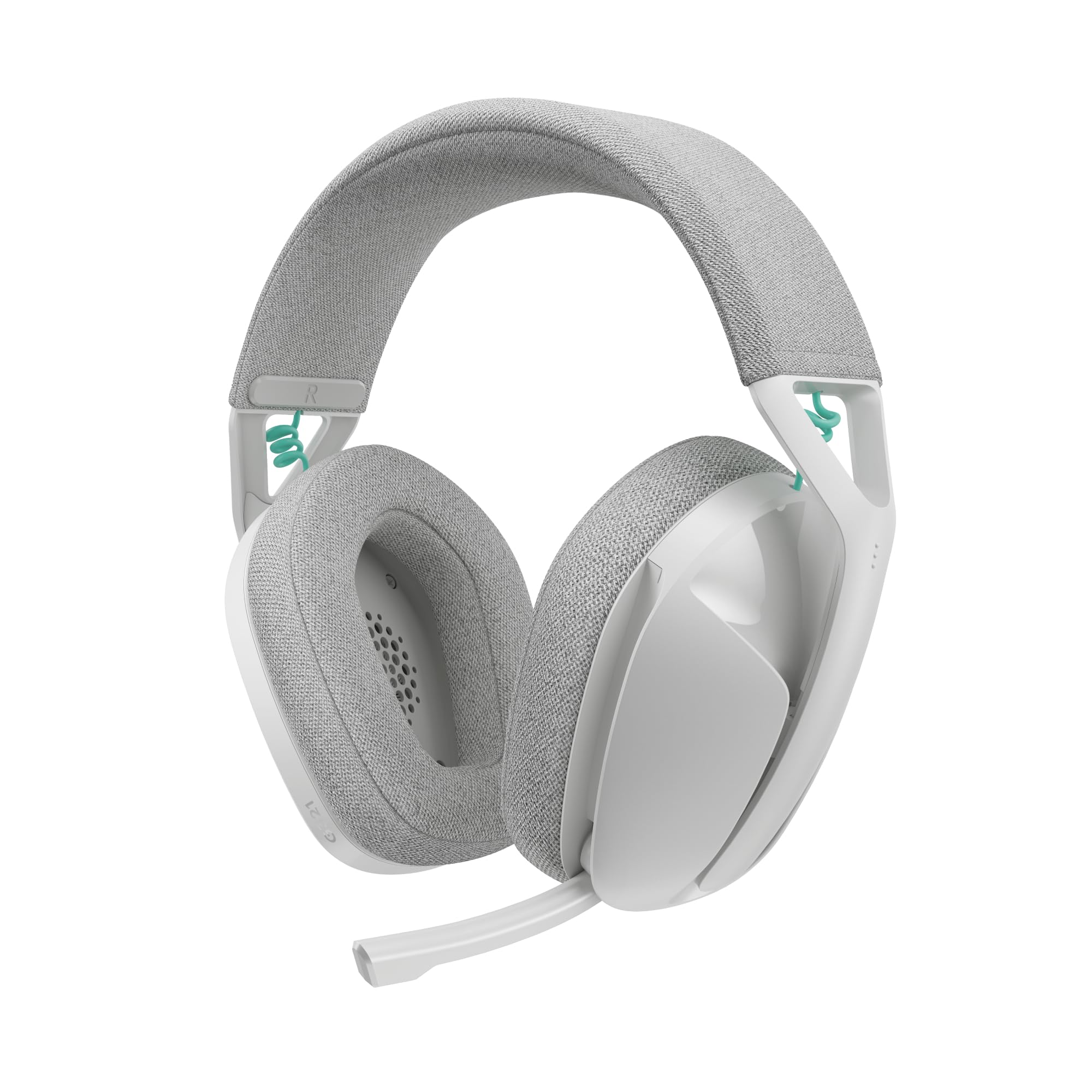
At 210 g it barely registers on your head, which is the whole argument for it.
Weight is the spec that decides hour four. At 210 g this is lighter than the 239 g AOC and the 270 g Razer BlackShark, and it shows in a headband you forget is there. Thick padding, a high-elasticity knit fabric cover and memory foam ear cups mean the light shell still feels cushioned. Comfort is the one thing reviewers agree on without a caveat.
Connection is Logitech G’s LIGHTSPEED wireless over a USB-A receiver, backed by Bluetooth 5.2 for grabbing Discord or mobile audio on the go. There is a 16 kHz flip-to-mute boom mic, and the battery figure the maker states is 20+ hours. The whole set is built for PC first, with PS4, PS5, Switch and mobile also on the compatibility list.
Now the part where you should read carefully: this is the most divided headset in the group. Sound quality, connectivity, mic quality and battery life all land in mixed territory across the reviews, so some owners hear an excellent headset and others hit quiet audio or pairing trouble. None of that is a dealbreaker for everyone, but it makes this the pick for someone who values a light wireless set above raw audio chops — and who is comfortable with Bluetooth pairing rather than a fixed dongle link.
Where it wins
- 210 g shell with thick knit headband and memory foam cups
- LIGHTSPEED wireless over USB-A plus Bluetooth 5.2
- 16 kHz flip-to-mute boom mic
- 20+ hours of battery per the maker
Where it wobbles
- Sound, mic and connectivity each draw split reports
- No 3.5 mm option — wireless or nothing
Reach for this if: neck fatigue is the problem you are solving and a light wireless PC headset with Bluetooth is what you want.
Leave it if: you need a sound signature you can count on — this one is a gamble for picky ears.
8. Razer BlackShark V3 X HyperSpeed Gaming Headset
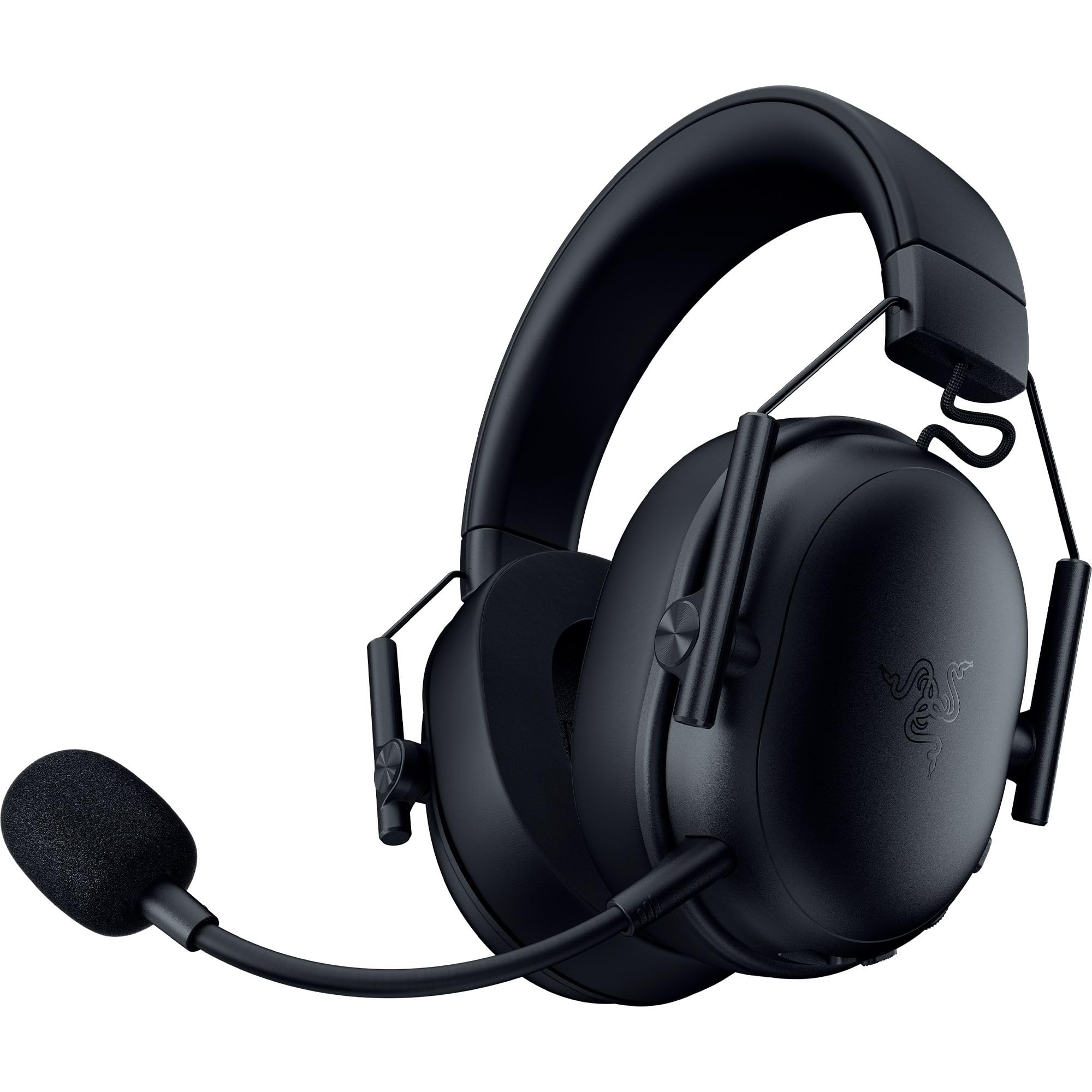
Seventy hours of wireless with drivers tuned to make a footstep sound like a dinner bell.
Competitive players care about one thing above all: hearing the enemy before they round the corner. The TriForce 50 mm Gen-2 drivers here are tuned for clarity and positional accuracy, so reloads and footsteps separate from the ambient noise instead of blending into it. Add 7.1 surround on Windows and the directional picture gets sharper still. The detachable 9.9 mm HyperClear cardioid mic pushes your callouts to the front while pushing background hum back.
Wireless is Razer’s HyperSpeed 2.4 GHz, with Bluetooth 5.3 as the alternate route, and it also takes a USB wired connection — a rare three-way setup. Battery runs up to 70 hours, well past the Logitech G321’s 20+ hours, so charging becomes a weekly chore rather than a nightly one. Weight is 270 g with hybrid fabric and leatherette memory foam cushions, a bit heavier than the 210 g Logitech but far more forgiving on the sound side.
Where it stumbles is fit for some: the earcups have left a share of owners with pressure headaches and neck ache after extended sessions. The mic also draws mixed volume reports, and wireless connectivity has had its spotty moments on PS5. But the sound gets called crisp and clear, and the build feels proper for the position it holds.
Why it’s here: TriForce 50 mm Gen-2 drivers, 7.1 surround on Windows, HyperSpeed 2.4 GHz plus Bluetooth 5.3 plus USB, 70-hour battery, detachable cardioid mic.
What to know: 270 g with cups that have caused discomfort for some, and the mic volume draws a split verdict.
The right buy if: you play ranked shooters and want a wireless set that keeps its edge between charges.
Look elsewhere if: you know your head dislikes snug ear cups — the pressure reports are worth heeding.
9. SteelSeries Arctis Nova 7X Gaming Headset
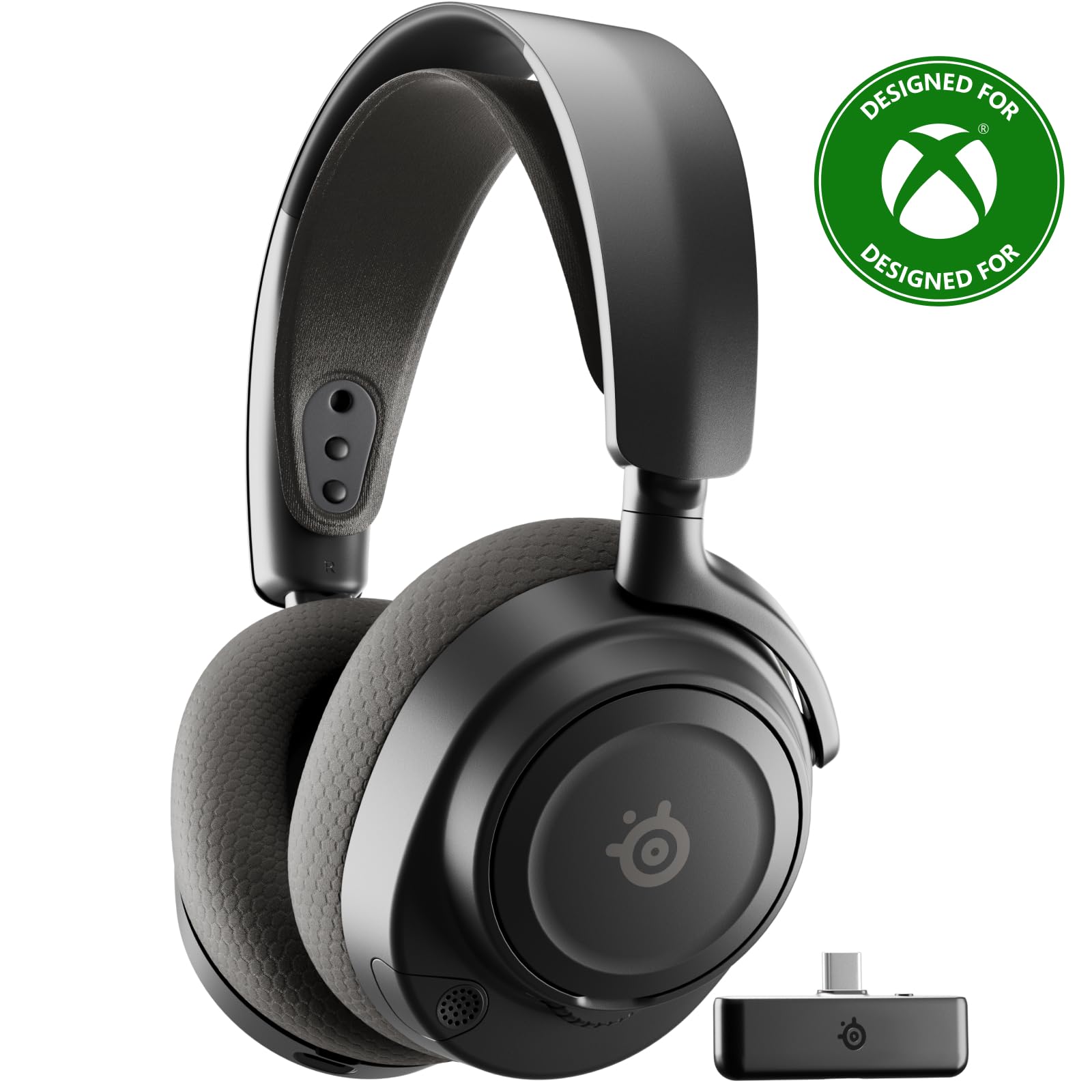
Game audio in one ear and your phone call in the other, at the same time.
This is the one feature nothing else here matches: simultaneous 2.4 GHz and Bluetooth. Mix your console or PC audio with a Discord call or phone stream so both play at once — no double-press to switch, no quitting the match to answer. Over 200 game-specific audio presets feed that, and the maker cites a GamingTrend line calling it the industry’s biggest cheat code. Drivers are custom neodymium magnetic units with 360° Spatial Audio support.
The ClearCast Gen 2 mic is rated to cut background noise by up to 25 dB, and Sonar AI sharpens it on PC — enough to push keyboard clatter and fans behind your voice. A rugged steel frame with an elastic headband and memory foam cushions rounds out the build, and it connects by plug-and-play USB-C dongle with a USB-A adapter in the box.
At the premium end, expectations run high, and two things test that. Connectivity has mixed reports, with Bluetooth in particular giving some owners grief. And the mic, while good for communications, is not going to satisfy a podcaster. What it does superbly is long, comfortable, mixed-audio sessions — sound and comfort are the two things it wins on hardest.
What makes it premium: simultaneous 2.4 GHz and Bluetooth, 200+ audio presets, 360° Spatial Audio, ClearCast Gen 2 mic rated to -25 dB, steel frame with memory foam, USB-C fast charge.
The honest trade: 50+ hours is good but less than the 70-hour BlackShark or the 120-hour EKSA, and Bluetooth stability has had some complaints.
Built for: the player who wants game sound and a live voice chat in their ears at once, without juggling devices.
Think again if: Bluetooth reliability is a must-have for you — that side has its share of bumps.
Know the Specs
Audio latency in milliseconds
Latency is the gap between an event in the game and the sound hitting your ears, measured in ms. Lower is better for shooters because your reaction depends on seeing and hearing the same instant. A 20 ms rating keeps audio locked to the picture; Bluetooth generally adds more delay than a 2.4 GHz dongle, so competitive players lean wired or dongle.
Driver size in millimetres
The driver is the speaker cone inside each cup. A larger driver, like the 53 mm unit in the HyperX Cloud II, moves more air and tends to deliver more low-end weight. Smaller drivers such as 40 mm can still sound clean, but they usually give up some bass impact. Size is a starting point, not a verdict — tuning and enclosure design matter just as much.
Battery life in hours
The hours figure tells you how long a wireless set runs on one charge. A 120-hour rating like the EKSA’s means roughly a week of evening sessions; a 20+ hour rating like the Logitech’s means charging far more often. For wired sets, there is no battery to worry about — the trade-off is a cable tethering you to your desk.
Microphone pickup pattern
Cardioid is the pattern most gaming mics use: it listens mainly to what sits in front of it, which is why a boom points at your mouth and ignores the keyboard behind. Detachable and retractable booms protect the mic in a bag. ENC — Environmental Noise Cancellation — is a processing layer that filters background noise so your voice comes through clearer.
Connectivity types explained
2.4 GHz uses a USB dongle for a low-latency link between headset and device. Bluetooth is convenient for phones and handhelds but more prone to delay and pairing hiccups. A 3.5 mm cable needs no power and fits almost anything. Many sets in this list combine several — but check platform notes, since some Bluetooth modes explicitly do not work with PS5.
Surround sound and spatial audio
7.1 surround simulates directional audio through stereo drivers, so a footstep from the left really seems to come from the left. Hardware-driven 7.1 runs through a control box or sound card; software versions run on your PC. Spatial Audio support, such as 360° on the SteelSeries set, is a related layer that places sound in a full circle around you.
Common Questions
Is a 2.4 GHz dongle better than Bluetooth for gaming?
Will these headsets work with Xbox?
Are bigger drivers always better?
How long does a wireless gaming headset last on a charge?
Can I use a USB gaming headset on a PS5 controller?
Does a detachable mic hurt voice quality?
Is 7.1 surround worth having for shooters?
Will a wireless headset work with both PC and console at once?
Do these headsets need software to sound good?
How do I keep the cushions from wearing out?
The Bottom Line
For most players, the top rated gaming headset is the AOC Wireless Gaming Headset, because it covers four connection modes, keeps latency at 20 ms, and stays comfortable at 239 g — rated 4.5+ stars by 700+ owners. If raw comfort on a long wired session is what you want, grab the HyperX Cloud II and its 53 mm drivers. For mixed game-and-call audio nothing else matches, the SteelSeries Arctis Nova 7X Gen 2 is the oneto reach for, and if charging anxiety is your problem, the EKSA with its 120-hour battery solves it.
How we choose
We do not accept paid placement. Every pick is matched to a real buyer and a real use-case; we do not hands-on test units.
Sources
Specifications: manufacturer listings and product documentation. Review insights: verified customer reviews, as of November 2026. Pricing: not shown on this page (it changes often); check the current price via the retailer link.
As an Amazon Associate, Gamepad Test earns from qualifying purchases. This does not affect which products we feature.