Hey gamer! Your Razer Kishi V2 isn’t connecting?
Don’t sweat it.
It’s a fantastic controller, but even the best tech needs a nudge.
This guide cuts through the frustration with clear, step-by-step fixes for common connection issues.
No complex jargon, just straightforward solutions to get you back in the game fast.
Ready to level up your controller knowledge and solve this? Let’s dive in and get you back to crushing the competition!
TL;DR
- Ensure a secure physical fit by removing your phone case, as it can obstruct the USB-C connection.
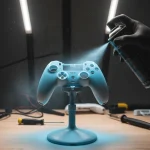
- Clean both your phone’s port and the Kishi’s connector with compressed air to remove debris.
- Verify software compatibility by checking Razer’s official list and updating your phone’s OS and the Nexus app.
- Isolate the problem by testing your phone’s port with a charger and using the Kishi’s passthrough charging feature.
Diagnosing Your Razer Kishi V2 Connection: A Systematic Guide
When your Razer Kishi V2 isn’t connecting, don’t panic.
A methodical approach can quickly pinpoint the problem.
Let’s work through the potential causes step-by-step to get you back in the game.
We’ll start with the physical connection first.
Initial Physical Inspection
Before diving into software settings, let’s ensure the hardware is properly set up. These simple physical checks solve the majority of connection issues with mobile controllers.
- Clean the USB-C Ports: Carefully inspect your phone’s USB-C port and the Kishi V2’s connector. Dust and lint are common culprits that can block a solid connection. Use a can of compressed air to gently clean them out.
- Check for a Secure Fit: Ensure your phone is seated correctly within the controller. If you have a phone case, it might be too thick. Try removing the case and connecting the Kishi V2 again to see if that resolves the issue.
- Inspect for Damage: Look closely at the controller’s flexible bridge and the USB-C plug itself. While durable, physical damage can happen. A problem with your phone’s hardware, like a loose charging port, can also prevent a connection.

Software and Compatibility Checks
If the physical connection looks good, the issue might be software-related. Your phone’s OS and specific apps play a huge role in how the Kishi V2 is recognized and utilized.
First, confirm your phone is on Razer’s official compatibility list. While many unlisted phones work, official support guarantees functionality. Next, make sure you have the Razer Nexus app installed and updated, as it manages firmware and features.
“The pass-through connection provided by the USB-C port offers a virtually latency-free link that’s far more stable than any Bluetooth connection I’ve tested.”– Mark Knapp, IGN
Finally, check for any pending OS updates for your phone. An outdated version of Android or iOS can sometimes lead to compatibility problems with newer accessories.
A bar chart showing that 39% of male mobile gamers and 28% of female mobile gamers in the U.S. use a controller, according to a May 2022 survey.
Confirming the Connection
After performing these checks, connect your Kishi V2. If your phone now recognizes it, the final step is to verify that all the buttons, triggers, and analog sticks are working as they should.
The best way to do this is with a dedicated testing tool.
Navigate to our Gamepad Controller Test on the homepage.
Our tool will immediately detect the connected Kishi V2 and visualize every input you make.
This gives you instant confirmation that your controller is fully operational.
Step 1: Essential Preliminary Checks & Physical Integrity
Let’s get you back in the game!
Before diving into complex software fixes, it’s crucial to cover the basics.
Often, a simple physical issue is the culprit behind your Razer Kishi V2 not connecting.
Let’s start there.
Check the Physical Connection and Fit
The most common reason for a connection failure is an improper physical fit.
Your phone’s case is the number one suspect.
Even thin cases can prevent the USB-C connector from seating fully and establishing a solid link.
Start by removing your phone’s case completely.
Then, slide your phone onto the Kishi V2’s USB-C connector, ensuring it is pushed down firmly and sits flush within the controller’s housing.
The Kishi V2 has a stable, extendable bridge that should hold your phone securely.
“For the best experience, remove any phone case or cover before attaching the Razer Kishi V2 to your phone.”– Razer Support
Inspect and Clean the USB-C Ports
Dust, lint, and other debris love to hide in charging ports.
Carefully inspect both your phone’s USB-C port and the male connector on the Kishi V2.
Even a tiny speck can block the data pins needed for the controller to function.
Use a can of compressed air or a soft, non-metallic tool like a plastic toothpick to gently clean out both ports.
While inspecting, look for any signs of damage like bent pins.
A damaged port could be the root of the problem and may require a more involved fix.
Isolate the Problem
To determine if the issue is with your phone or the controller, run a few simple tests.
This helps narrow down the cause of the connection failure.
Follow this quick checklist to rule out common hardware issues.
- Test Your Phone’s Port: Connect a charging cable or a USB-C accessory to your phone. If it charges or the accessory works, your phone’s port is likely fine.
- Check Passthrough Charging: With your phone docked in the Kishi V2, plug a charging cable into the controller’s external USB-C port. If your phone begins to charge, it confirms the physical connection is at least partially working.
- Confirm Controller Integrity: Look for any cracks or visible damage on the Kishi’s body or extendable bridge that could indicate an internal hardware failure.
If these initial physical checks don’t resolve the issue, it’s time to move on to software and compatibility troubleshooting.
But getting these basics right is the essential first step.
Step 2: Software, Firmware, and App-Specific Troubleshooting
If the physical connection is solid, the problem likely lies with the software. From the core Razer app to your phone’s OS, let’s make sure everything is up to date and correctly configured.
If the physical connection is solid, the next stop is the digital side. Software conflicts or outdated firmware are common culprits when your Razer Kishi V2 isn’t detected. Let’s ensure everything is up to date and configured correctly.
The Razer Nexus App is Key
The Razer Nexus app is the command center for your Kishi V2.
It not only launches games but also manages crucial firmware updates.
If you don’t have it, or if it is acting up, your controller may not be recognized properly by your phone.
- Install or Reinstall Razer Nexus: Head to the Google Play Store or Apple App Store. Search for “Razer Nexus” and either install it for the first time or uninstall and then reinstall it to clear any potential glitches.
- Update the Firmware: Once Nexus is installed, connect your Kishi V2. If the app detects the controller, it should automatically prompt you if a firmware update is available. Always install these updates for performance and compatibility fixes.
- Check Your Phone’s OS: Ensure your phone’s operating system (Android or iOS) is fully updated. Go to your phone’s settings, find “System Update” or “Software Update,” and install any pending updates from the manufacturer.
- Verify App Permissions: Dive into your phone’s settings, find the Razer Nexus app, and check its permissions. Ensure it has all the necessary permissions to operate correctly. Sometimes, restrictive settings can block device communication.
“The app can also be used to update the Kishi V2’s firmware, which is important for squashing bugs and improving compatibility with future phones and games.”– Scharon Harding, Ars Technica
Game-Specific Connection Problems
Sometimes the Kishi V2 connects to your phone and the Nexus app, but a specific game won’t respond.
This often points to a compatibility issue with the game itself.
Not all mobile games have native controller support.
- Check the game’s settings menu for controller or input options.
- Visit the game’s official website or community forums to see if controller support is a known issue.
- Ensure the game doesn’t require a specific type of controller input that the Kishi V2 may not emulate by default.
Once you get a connection, it’s a great idea to confirm all buttons and sticks are working.
Use our main Gamepad Controller Test to get a quick and accurate reading of every input on your Kishi V2.
It helps rule out hardware faults.
Step 3: Advanced Device Settings and Known Phone Quirks
If the basic checks didn’t work, it’s time to dive into your phone’s settings.
Sometimes, specific software configurations or power management features can prevent the Kishi V2 from being detected properly.
Let’s get these sorted out.
Enable USB On-The-Go (OTG)
USB OTG is a feature that allows your phone to act as a host for USB devices, like your Kishi V2.
On many phones, this is enabled by default.
However, some manufacturers require you to manually toggle it on.
Here’s how to check:
- Open your phone’s Settings app.
- Use the search bar and type “OTG” or “USB OTG”.
- If the setting appears, ensure it is enabled.
- On some devices, this setting may automatically turn off after a few minutes of inactivity, so re-check it right before connecting the Kishi V2.
Activate Developer Options for USB Debugging
In some cases, especially with passthrough charging or specific apps, enabling USB Debugging can resolve detection issues.
This setting is hidden in a menu called Developer Options.
Unlocking it is safe and easy.
- Step 1: Go to Settings > About Phone.
- Step 2: Find the “Build number” and tap it seven times. You’ll see a message saying, “You are now a developer!”
- Step 3: Go back to the main Settings menu, then find System > Developer options.
- Step 4: Scroll down and enable “USB debugging”. Accept any security prompts that appear.
This process grants slightly more control over the USB port’s behavior, often forcing the phone to recognize connected devices like the Kishi.
This is part of the deep integration needed for modern peripherals, exploring how to use any gamepad on a smartphone.
“The beauty of the Kishi V2 is that it connects directly to your phone, so there’s no latency, but that also means that physical connection is all-important.”– Chris Hall, Pocket-lint
Common Phone-Specific Quirks
Certain phone models and software skins have known issues that can interfere with USB-C accessories. Check this table for common conflicts and their solutions.
| Phone Brand / Feature | Potential Issue | Quick Fix |
|---|---|---|
| Samsung (DeX) | DeX mode can sometimes override controller inputs or prevent detection. | Ensure DeX mode is completely disabled before connecting the Kishi V2. |
| OnePlus / Oppo | Aggressive battery optimization may cut power to the USB-C port. | Disable battery optimization for the Razer Nexus app and the specific game you’re playing. |
| Google Pixel | Audio routing settings can occasionally conflict with USB-C device detection. | In Developer Options, check the “Default USB configuration” and set it to “File Transfer” instead of “No data transfer”. |
After trying these steps, connect your Kishi V2 again.
If it’s detected, head over to our Gamepad Drift Test to ensure the analog sticks are working perfectly before you jump back into your game.
Step 4: Resetting Your Kishi V2 and Seeking Official Support
If you’ve tried all the previous steps and your Razer Kishi V2 still won’t connect, don’t lose hope.
Sometimes, a full reset of the software connection or reaching out to the experts is the final key to getting back in the game.
Unlike wireless controllers, the Kishi V2 doesn’t have an internal battery or a physical reset button.
A “reset” here involves clearing its connection to your phone’s software.
Let’s walk through this process together.
- Safely disconnect the Kishi V2 from your smartphone.
- Completely uninstall the Razer Nexus application.
- Perform a full restart on your phone to clear any cached data.
- Reinstall the Razer Nexus app from the official app store.
- Once installed, firmly reconnect your Kishi V2.
This sequence ensures a fresh start for both the app and the controller’s handshake with your device.
If the problem persists after this, it might point to a deeper issue with the hardware itself.
“Before submitting a warranty claim, we suggest you visit our online technical support resources. These resources may be able to resolve your problem without the need to return the Product. If you are still unable to resolve the issue, please contact us…”– Razer, Razer Warranty Policy
Contacting Razer Support
When you’ve exhausted all troubleshooting options, it’s time to contact Razer’s official support team.
They are equipped to handle complex issues and can determine if your controller has a hardware fault that is covered by its warranty.
To speed up the process, make sure you have the following information ready before you contact them:
- Proof of purchase (your receipt or order number).
- The controller’s serial number, usually found on the device itself.
- Your phone’s exact model and current operating system version.
- A clear description of the connection problem you’re facing.
A persistent connection problem could stem from a damaged USB-C port.
For more info on similar issues, you can learn about how to fix a loose controller charging port in general.
Reaching out to Razer is your best bet for a definitive solution.
Fast Facts
- Always begin troubleshooting with physical checks: clean USB-C ports, ensure your phone is securely seated, and remove any phone cases to guarantee a proper connection.
- If physical checks don’t resolve the issue, move to software solutions by confirming phone compatibility with Razer’s list, updating the Razer Nexus app, and ensuring your phone’s operating system is current.
- After establishing a connection, use a dedicated gamepad testing tool to verify that all buttons, triggers, and analog sticks are fully functional.
Connection Unlocked: Game On!
You now have the complete troubleshooting checklist for your Kishi V2. Always start with the simple physical checks before diving into software.
A clean port and a caseless phone solve most connection woes. These steps are your fastest path to getting back in the game, so don’t skip them!
Once you’re connected, use a gamepad tester for final confirmation. Now go level up your mobile gaming experience!
Frequently Asked Questions
Does the Razer Kishi V2 work with a phone case?
Usually, no. Most phone cases are too thick and will prevent a secure USB-C connection. We recommend removing your case for the best fit.
Do I need the Razer Nexus app for the Kishi V2 to work?
While the controller may function for basic input, the Nexus app is essential. It delivers critical firmware updates and unlocks full customization.
Why isn’t pass-through charging working on my Kishi V2?
The pass-through port is for charging only, not data or audio. Also, some phones require specific fast-charging protocols not supported by the Kishi.
Is my phone compatible with the Kishi V2?
Check Razer’s official website for a full compatibility list. Generally, if your phone has a centered USB-C port, it will likely fit and work.
Technical Glossary
- USB-C Port
- A physical connector standard used for transmitting data and power. In the provided text, it is the primary interface for connecting the Razer Kishi V2 controller to a mobile phone.
- Razer Nexus app
- A dedicated mobile application for Razer controllers that is used to manage firmware, features, and controller-compatible games.
- Pass-through connection
- A feature of a peripheral device that allows it to connect to a host device (like a phone) while also providing a port for another device or cable (like a charger) to connect, passing power or data through to the host.
- Latency-free link
- A connection with virtually no delay between the user’s input on a device and the resulting action on the screen, noted as a key advantage of a direct physical connection over a wireless one like Bluetooth.
- Firmware
- A specific class of computer software that provides low-level control for a device’s specific hardware. In the context of the Kishi V2, it is managed by the Razer Nexus app.