
Heads up: This post contains affiliate links. As an Amazon Associate I earn from qualifying purchases, at no extra cost to you. Learn more
Specs are compiled from manufacturer listings and verified buyer reviews and can change over time — please confirm the key details on the product page before buying.
If you just want the short answer: for most gamers the Meta Quest 3 512GB with the Elite Strap is the headset to buy, because it pairs a big 512GB game library with the comfort strap included in the box. Below you’ll find nine real headsets compared on the things that actually change how a game feels — resolution per eye, refresh rate in hertz (how many times per second the screen redraws), field of view in degrees (how wide the picture wraps around you), and battery life in hours.
This guide is built by comparing the manufacturers’ published specifications and the patterns across verified customer reviews, so you get each pick’s real strengths and trade-offs instead of marketing spin.
Some headsets here run standalone with no PC at all, while others need a gaming computer and base stations before you see a single frame. That single split decides more about your first month than any spec sheet, so read on for the clearest path through the vr glasses for gamming market.
Top Picks


How To Choose VR Glasses for Gamming
Your first decision is not brand, it is if you want to plug into a PC or not. A standalone headset has the computer built in, so you charge it, put it on, and play. A PC-powered headset needs a gaming rig and usually base stations (sensors placed around the room that track your position) set up around the room, but it can push higher resolution and refresh rates.
Match the refresh rate to your games
Refresh rate is how many times per second the screens redraw, measured in hertz (Hz). A 120Hz headset redraws twice as often as a 60Hz one, which keeps fast pans and racing corners from smearing. For shooters, racers, and anything with quick camera turns, higher Hz is the number to chase.
Check the field of view for sims
Field of view (FOV), measured in degrees, is how much of the scene wraps around your peripheral vision. A 110-degree headset feels like looking through a wide window; a 140-degree one pulls more of the track or cockpit into view. Flight and racing players tend to feel this difference most.
Decide how much room setup you will tolerate
Inside-out tracking means the cameras are on the headset itself, so there are no sensors to mount on your walls. Headsets that rely on external base stations perform well but take longer to set up and need clear space. Be honest about how much setup patience you have on day one.
Side-by-Side Comparison
| Model | Best For | Resolution Per Eye | Refresh Rate | Field of View | Amazon |
|---|---|---|---|---|---|
| Quest 3 512GB + Elite Strap★ Best Overall | All-round standalone gaming | 1920×1080 | 90Hz | 110 degrees | Amazon |
| Meta Quest 3S 256GBGolf In The Box | Golf and casual VR | 1832 x 1920 | 60Hz | — | Amazon |
| PlayerO PlayStation VR Iron Man BundleConsole Ready | Console players | 1920 x 1080 | 60Hz | 110 degrees | Amazon |
| Meta Quest 3 512GB Renewed Premium | Big library on a budget | 4K+ | 120Hz | — | Amazon |
| Valve Index VR Headset | PC/SteamVR purists | 1440 x 1600 | 120Hz | 120 degrees | Amazon |
| Oculus Rift S PC-Powered | No-sensor PC setup | 2560 x 1440 | 80Hz | 120 degrees | Amazon |
| HTC VIVE Pro 2 | High-res PC gaming | 4896 x 2448 | 120Hz | 120 degrees | Amazon |
| HTC VIVE Cosmos | Easy plug-and-play PC | 2880 x 1700 | — | 360 degrees | Amazon |
| Pimax Crystal Super | Sim racing and flight | 3840×3840 | 90Hz | 140 degrees | Amazon |
Detailed Reviews
1. Quest 3 512GB + Elite Strap
Our pick — 4.5+★ from 100+ verified ratings; the strongest balance of quality and price.
The standalone headset with 512GB of storage and the Elite Strap in the box.
If you want one headset that does everything without a PC, the 512GB version of the Quest 3 is the one to start with, because that storage means you can keep a large games and apps library installed at once. A 512GB drive holds roughly twice the game library of the 256GB Quest 3S on this list. You plug in nothing but the USB Type-C cable to charge it, then play wirelessly.
The screens show 1920×1080 per eye at a 90Hz refresh rate (90 redraws every second), which keeps most shooters and rhythm games smooth. The 110-degree field of view wraps the scene wide enough that you are not staring through a tube.
The catch to know up front: 90Hz sits below the 120Hz of several PC headsets here, and that difference shows in the quickest camera turns. For standalone play the trade is worth it. The crowd on this one is strong too — 4.5+ stars, the highest score on this whole list.
What earns the top spot
- 512GB storage keeps a whole game library installed.
- Elite Strap included means no add-on for comfort.
- Standalone play — no PC or base stations required.
- 110-degree field of view feels open, not cramped.
Where it gives ground
- 90Hz refresh is below the 120Hz PC options.
- You pay for the premium storage tier up front.
Go standalone: Buy this if you want the strongest all-around gaming headset today and a library that grows without deleting games.
Look elsewhere for: Competitive PC sim players chasing 120Hz should step up to a dedicated PC headset.
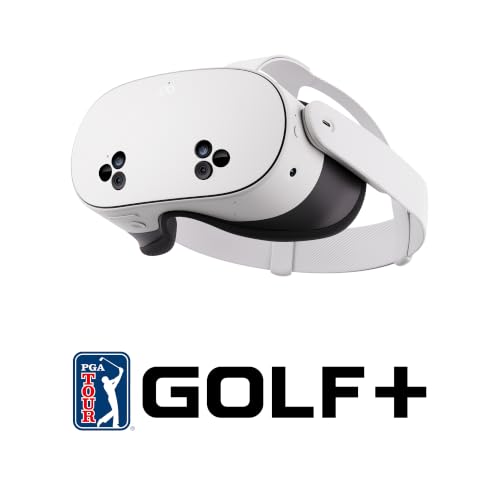
2. Meta Quest 3S 256GB | VR Headset — GOLF+ Included
The 256GB standalone bundle with GOLF+ and 1,800 credits included.
This one is about picking the right first headset without overspending, and it lands as a strong value pick for casual play. The bundle includes GOLF+ plus 1,800 in-game credits, so you can tee off at TPC Sawgrass on day one. It also throws in three months of Meta Horizon+ with instant access to 100+ games, which softens the jump for a new player.
The internals run on the Snapdragon XR2 Gen 2 processor — that is the chip that handles the graphics — and the maker claims 2X graphical processing power. The screens show 1832 x 1920 per eye, and dual RGB color cameras power full-color passthrough so you can see your real room while wearing it. Battery life runs 2 hours, which is fine for a golf round or a session of casual games.
Two honest notes. The listed refresh rate is 60Hz, half the 120Hz of the Valve Index, so fast action scenes can feel less fluid. Lenses also draw mixed feedback, with some fogging reported during play. Neither spoils the fun-first value, but they are worth knowing.
Built for golf: The GOLF+ bundle and 100+ game trial make this the easiest on-ramp for a casual player who wants something to jump into immediately.
The sizing catch: That 60Hz refresh rate is a real ceiling for twitch shooters — fine for golf and casual titles, less ideal for competitive fast-play.
Reach for this if: You want an affordable entry into VR with a golf game already included.
Pass if: You plan to play fast competitive shooters and want smooth high-refresh motion.
3. PlayerO PlayStation VR Marvel’s Iron Man VR Bundle
The PS4/PS5 bundle with headset, camera, two Move controllers, and the Iron Man VR disc.
If you already own a PlayStation 4 or 5, this bundle saves you hunting for cables and controllers separately, because the box includes the headset, the PlayStation Camera, and two Move motion controllers. The Move wands are what let you mimic Iron Man’s Repulsor Jets and take to the skies. The physical game disc is right there in the box too.
The listed display is 1920 x 1080 at a 60Hz refresh rate (60 screen redraws per second) with a 110-degree field of view. That puts it well below the sharpness of something like the Valve Index at 1440 x 1600 per eye. For a single-player adventure like Iron Man VR, though, that resolution does the job fine.
One real snag buyers should know: game code expiration is a recurring theme in feedback, so check the disc is the playable copy for your console. The set is genuinely enjoyed by families, with children especially drawn to the flying. It is a solid console-bundle pick rather than a top-tier visual performer.
Best for: PlayStation owners who want one box that includes everything for a superhero adventure session.
Not ideal for: PC gamers who need sharper resolution and a higher refresh rate than 60Hz.
4. Meta Quest 3 512GB | Renewed Premium
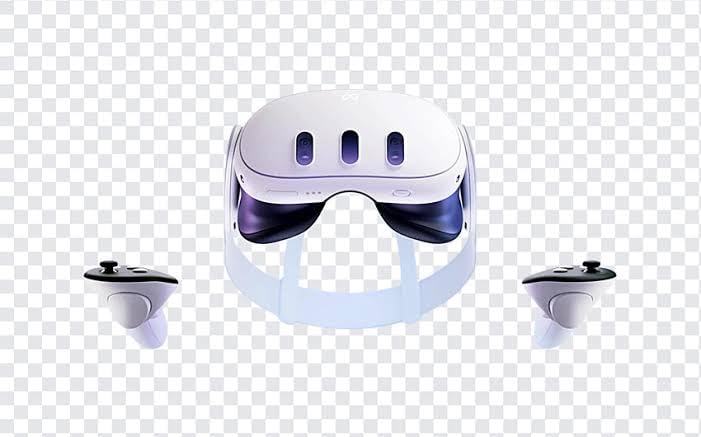
A renewed 512GB Quest 3 with a 120Hz refresh rate and 2.2-hour battery.
For a full-size Quest 3 with the biggest storage you can get at the renewed tier, this is a genuinely appealing option. It brings the 512GB, which holds roughly twice the library of the 256GB Quest 3S. The dual RGB cameras power full-color passthrough, so you can see your real room blended with the game world.
What players love here is performance and value — the device runs the apps and games without drama, and the Snapdragon XR2 Gen 2 chip keeps load times short. It carries a 120Hz refresh rate, which beats the 90Hz of the boxed Quest 3 above it, and the battery runs 2.2 hours. Entertainment options like Beat Saber and mini golf come up as favourites.
Because it is renewed, a small number of units reportedly have reliability hiccups or arrive with controllers that act up, so buy from a seller with a clear returns path. Comfort is also a split experience — some find it fine, others get headaches. Neither should scare you off a good renewed unit, but check it thoroughly on arrival.
Half the price of new, most of the power: A 512GB Quest 3 at the renewed tier is a smart way to get the big library without paying full new pricing.
Test it the day it lands: Renewed stock varies, so return-window coverage is the thing to protect yourself on.
Buy this if: You want a large 512GB standalone headset and are comfortable with a renewed unit.
Think twice if: You want the certainty of a brand-new box and none of the renewed-refurb risk.
5. Valve Index VR Headset, Black, for PC/SteamVR

The 120Hz SteamVR headset sold without controllers or base stations.
SteamVR players who want smooth fast motion will find a lot to like in the Valve Index. It runs a 120Hz refresh rate, double the 60Hz of the Quest 3S, and that visibly smooths out quick turns and rapid-fire aiming in PC shooters. The 120-degree field of view is also wider than the Quest 3’s 110 degrees, so you get a little more peripheral awareness in the corners of your vision.
The OLED panels show 1440 x 1600 per eye, which is the sharper of the PC headsets here compared with the Rift S, and the picture holds up well in dim scenes where OLED shines. It is a serious PC headset, and the build quality is a key part of its reputation.
One thing to be careful of: this listing is the headset only, and the controllers and base stations are sold separately, so budget and plan for those. Some units arrive without the head-strap adjustment pad, and reliability splits — some work perfectly, others fail quickly. Order from a seller with solid returns, and you have a strong PC performer.
Why PC players chase it
- 120Hz refresh rate for buttery-fast motion.
- 120-degree field of view beats 110-degree headsets.
- 1440 x 1600 per-eye OLED panels.
What the listing leaves out
- Controllers and base stations sold separately.
- Some units ship without the head-strap pad.
For the committed PC player: This is the smooth-refresh headset to pair with a good SteamVR rig.
One warning: It arrives as a headset only — plan the controllers and base stations before checkout.
6. Oculus Rift S PC-Powered VR Gaming Headset
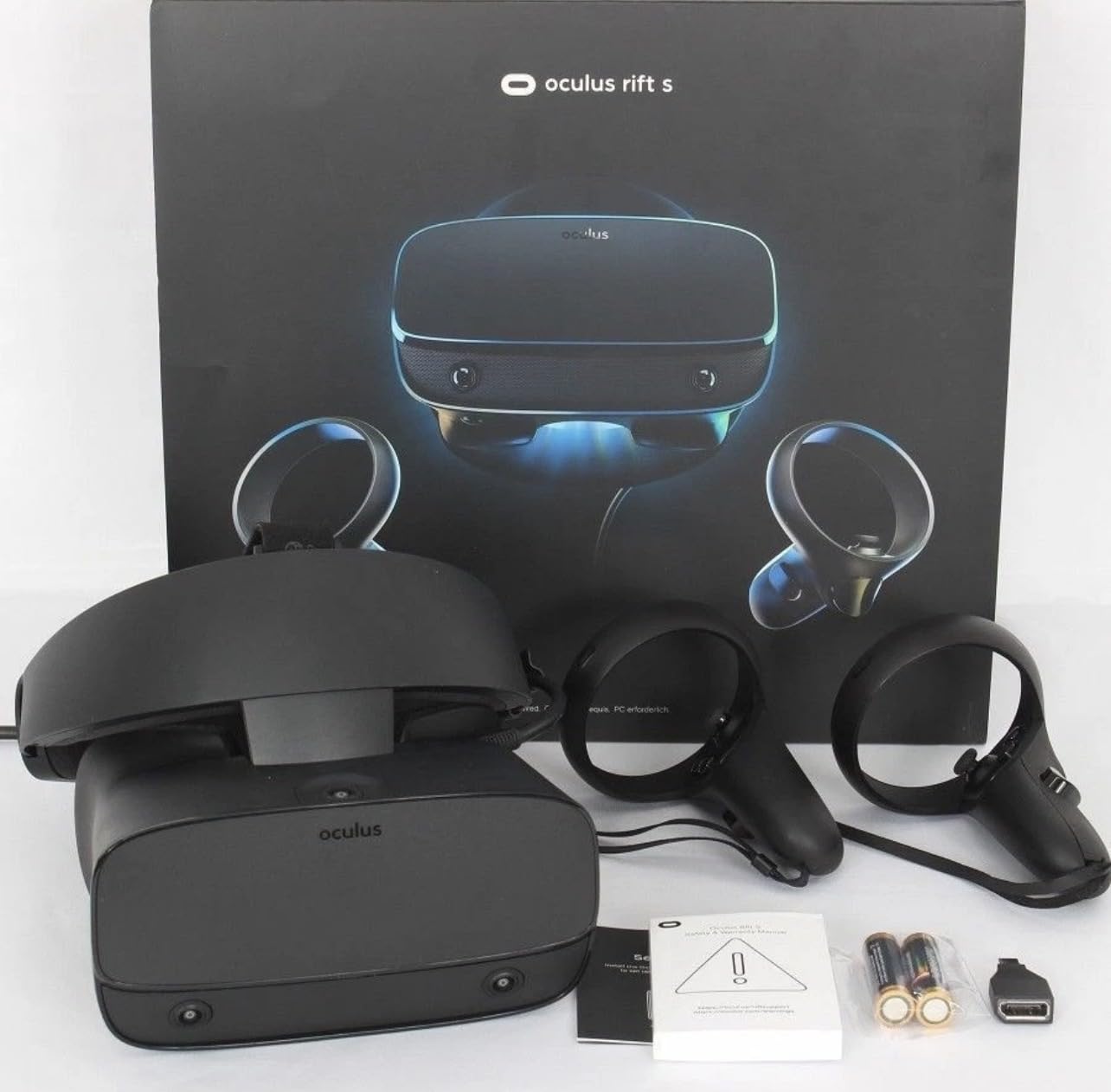
The PC headset with inside-out Insight tracking and no external sensors.
If the idea of mounting base stations around your room puts you off PC VR, the Rift S solves that problem. Its built-in Oculus Insight tracking uses cameras on the headset itself to turn your body movements into in-game motion, so no external sensors go on the walls. Setup is far quicker than a base-station rig.
The custom Fresnel lenses and LED display show 1280 x 1440 pixels per eye at an 80Hz refresh rate. Audio is built directly into the headset with 3D positional sound, so you can hear where teammates and threats are without grabbing headphones. The halo headband tightens with a twist of the fit wheel, keeping the set stable during long gaming sessions.
Where it gives ground is sharpness and speed compared to newer displays — 80Hz and 1280 x 1440 per eye are below the Valve Index and Pimax. Still, it is a capable, comfortable entry into sensor-free PC VR. The bundle also includes a 3ft BROAGE USB extension cable for reaching your PC.
Choose it for: A tidy PC setup with no external sensors to mount or trip over.
Skip it for: The highest-resolution racing or flight gameplay — newer headsets push sharper panels at higher refresh.
7. HTC VIVE Pro 2 Virtual Reality System

The 4896 x 2448 PC headset with a 120Hz refresh rate and 120-degree field of view.
Detail-hungry PC players should start with the number that defines this headset: the combined 4896 x 2448 resolution, which the maker calls 5K clarity. That is well beyond the 1440 x 1600 per eye of the Valve Index. It pairs that with a 120Hz refresh rate and a wide 120-degree field of view, so both sharpness and fluidity are strong on paper.
The build is balanced and adjustable, fitting a wide range of head sizes and vision types, and the integrated headphones and Hi-Res audio round out the setup. An IPD adjustment dial lets you match the lens spacing to your eyes, which helps keep long sessions comfortable. The system includes two Base Station 2.0 sensors and wireless controllers, giving you a full room-scale kit.
Now for the honest part. While the display impresses some players with clarity, quality feedback splits sharply — connectivity trouble and PC pairing issues come up repeatedly, and the price feels steep for that experience. Budget extra time for setup and troubleshooting, and buy with a return path. When it works, the detail is elite.
The draw: 4896 x 2448 combined resolution and a 120-degree field of view put this among the sharpest and widest images here.
The honest risk: Reliability and connectivity complaints are common, so treat this as a headset for someone willing to troubleshoot.
Best for: Detail-first PC players who want maximum resolution and a full room-scale system in the box.
Consider other options if: You want a plug-and-play experience with minimal setup headaches.
8. HTC VIVE Cosmos VR Headset

The PC headset with a flip-up visor and six-camera inside-out tracking.
This is the PC headset for people who hate fiddling with straps. HTC built a flip-up design so you can jump between reality and the game in seconds, and inside-out tracking via six camera sensors gives you six degree-of-freedom movement without a single base station. It is plug-and-play portability that pairs with a wide range of VR-ready PCs and laptops.
The all-new LCD panels show a 2880 x 1700 combined pixel resolution, which the maker notes is an 88% increase over the original VIVE. The panels reduce the gap between pixels, keeping the screen-door effect — that faint grid some players see — down to a minimum. An IPD adjustment and soft, easy-to-clean materials suit a range of face shapes and vision types, including glasses.
The trade-off to keep in mind is that its reputation is genuinely split, with comfort and quality landing mixed. It is a convenience-first headset: quick to set up and easy to slip on and off, but it does not out-resolve or out-perform the sharper PC headsets above. Buy it for the flip-up ease, not the last word in fidelity.
Where the convenience wins
- Flip-up visor for instant reality checks.
- Six-camera inside-out tracking, no base stations.
- 2880 x 1700 combined resolution.
What to weigh
- Mixed feedback on quality and comfort.
- Does not lead on sharpness among these PC headsets.
Pick it for: Quick PC VR sessions where you hop in and out often.
Skip it for: The sharpest or most reliable image — several PC headsets here top it.
9. Pimax Crystal Super VR Headset
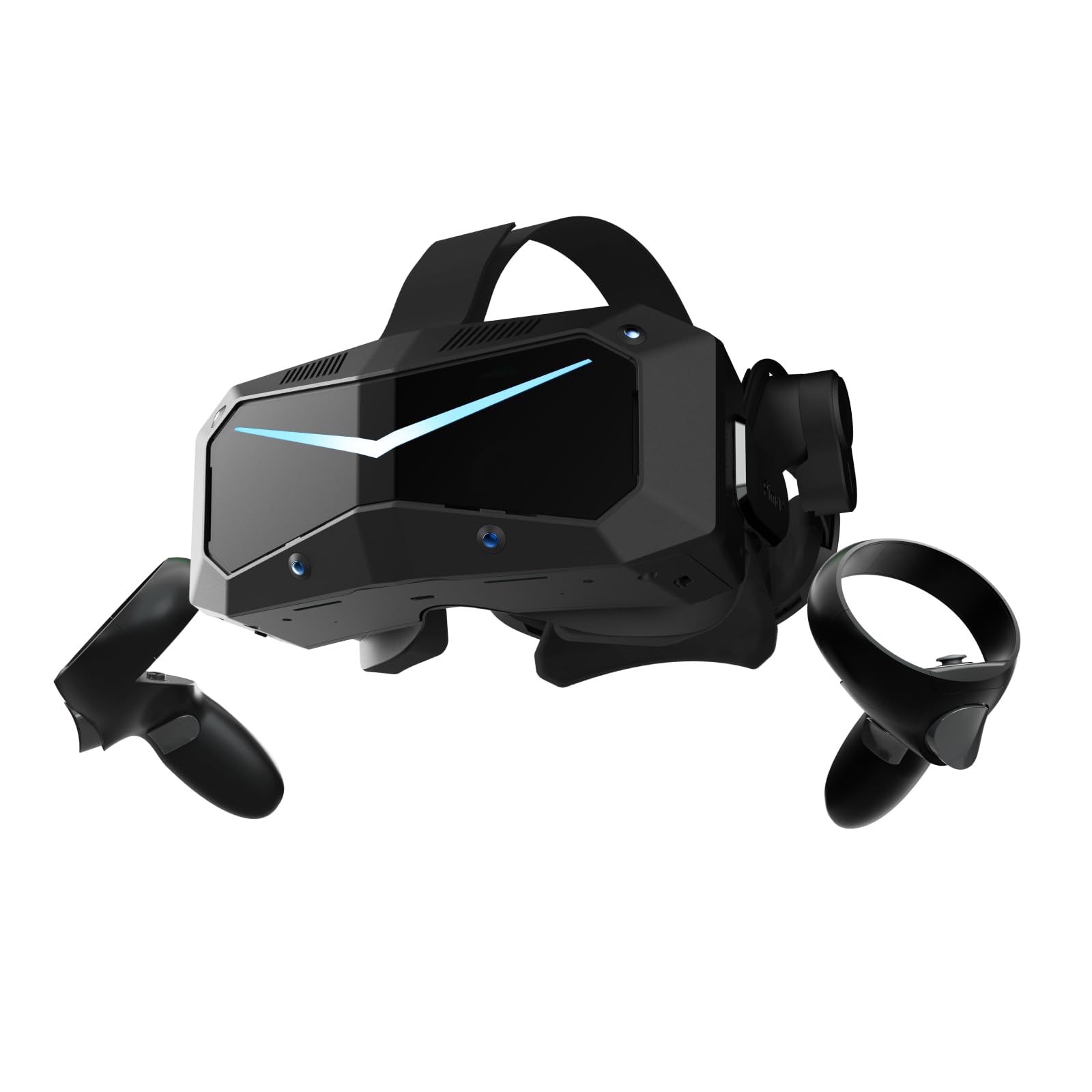
For sim racers who want the widest window and the finest pixels money can push.
Flight and racing sim players get the biggest field of view of the whole group here: a 140-degree window versus the 110 to 120 degrees of the rest. That wider view pulls more of the track and cockpit into your peripheral vision, which matters for spotting corners and gauges. The QLED and Mini-LED panels with local dimming show 3840×3840 per eye.
Aspherical lenses deliver 50 pixels per degree (PPD — how densely the picture is packed), which is the maker’s way of fighting the screen-door effect and delivering edge-to-edge sharpness. Eye tracking keeps motion capture low-latency, and dynamic FOV adjustment balances resolution against frame rates based on your graphics card. The refresh rate runs up to 90Hz. A high-fidelity noise-cancelling mic and integrated 3D spatial audio round out the setup.
The honest limit is the horsepower behind it: pushing 3840×3840 per eye is demanding on a GPU, and the maker notes resolution may depend on processing compatibility. It is a wired DisplayPort and USB connection to a PC, not a standalone. This is a specialist’s headset aimed squarely at serious simulator players.
The sim edge: 140-degree field of view and 3840×3840 per eye are the peak of this group for immersion and detail.
The hardware demand: This is a wired PC headset that needs serious graphics power — check your rig before buying.
Reach for it if: You run a powerful PC and want the widest, sharpest view for racing and flight.
Look elsewhere if: You game standalone or on a modest graphics card — this one wants top-tier hardware.
Know the Specs
Refresh Rate in Hertz
Refresh rate is how many times per second the screens redraw, written in hertz (Hz). A 120Hz headset redraws twice as often as a 60Hz one, which means fast pans and quick turns stay smooth instead of smearing. For shooters and racers, higher Hz is the spec worth chasing.
Field of View in Degrees
Field of view (FOV) is how wide the picture wraps around your eyes. A 110-degree headset feels like a wide window; a 140-degree one pulls more of the scene into your peripheral vision. Sim players feel this most, since a wider view shows more of the track and cockpit.
Resolution Per Eye and PPD
Resolution per eye tells you how many pixels each screen produces, and higher numbers mean finer detail. Pixels per degree (PPD) measures how densely those pixels pack across your view — higher PPD tends to reduce the screen-door effect, that faint grid some players notice.
Standalone vs PC-Powered
A standalone headset has the computer built in, so you just charge and play. A PC-powered headset needs a gaming computer and often base stations (room sensors that track your movement), but can push sharper panels and higher refresh. Choose based on if you want freedom from cables or maximum raw power.
Common Questions
Do I need a gaming PC for these VR headsets?
What refresh rate should I look for in VR for fast games?
Is the Valve Index a complete headset from the start?
Which of these has the widest field of view?
What is pixels per degree and why does it matter?
How long does the battery last on the standalone Quest headsets?
Can I use the PlayStation VR bundle with a PlayStation 5?
Do these headsets need base stations set up around the room?
What resolution do the highest-end headsets here reach?
Is a renewed Quest 3 a safe way to save on a headset?
The Bottom Line
For most people chasing the vr glasses for gamming, the pick is the Quest 3 512GB with the Elite Strap — it holds the highest rating here at 4.5+ stars and pairs a big game library with in-box comfort. If you want a sharp, wide PC image and already own a gaming rig, the HTC VIVE Pro 2 delivers the highest combined resolution. And for simulator players who want the widest window, the Pimax Crystal Super at 140 degrees is the one to reach for.
How we choose
We do not accept paid placement. Every pick is matched to a real buyer and a real use-case; we do not hands-on test units.
Sources
Specifications: manufacturer listings and product documentation. Review insights: verified customer reviews, as of November 2026. Pricing: not shown on this page (it changes often); check the current price via the retailer link.
As an Amazon Associate, Gamepad Test earns from qualifying purchases. This does not affect which products we feature.