
Heads up: This post contains affiliate links. As an Amazon Associate I earn from qualifying purchases, at no extra cost to you. Learn more
Specs are compiled from manufacturer listings and verified buyer reviews and can change over time — please confirm the key details on the product page before buying.
You want a game that gets everyone off their phones and back to the table, not one that dies under a rulebook nobody finishes. The nine games below earn a permanent spot in the closet: five-minute teaches, real decisions, and enough replay value that you are not buying a replacement next month. Each pick here is something you can teach before the snacks are gone.
This guide is built by comparing the manufacturers’ published specifications and the patterns across verified customer reviews, so you get each pick’s real strengths and trade-offs instead of marketing spin.
You want a game that teaches in five minutes but still forces real choices, not one that is shallow or a slog to explain. Below you get the full spread of board game ideas, from ten-minute party rounds to a ninety-minute strategy night, sorted by who actually enjoys them.
Top Picks

How To Choose The Best Board Game Ideas
The fastest way to ruin game night is buying a box that does not fit your table. Before you pick a title, work out three things: how many people usually sit down, how long they will actually stay seated, and whether they want to think hard or just laugh. Theme, art, and component count matter, but only after those three answers.
Match player count to your real group, not your ideal group
A game listed for 2-5 players is not equally good at both ends. Two-player duels reward tight, head-to-head rules, while five-player tables need something that keeps everyone busy between turns. If you usually play as a couple, look for titles that call out two-player play specifically. If you host a crowd, prioritize games with simultaneous turns or team structures so nobody waits ten minutes for their move.
Treat published playtime as a range, then add teaching time
A thirty-minute game is thirty minutes once everyone knows the rules. Your first session with any new box will run longer while you read the rulebook aloud. If your group meets for an hour, pick something in the 30-45 minute band so a single slow learning round does not eat the whole evening.
Decide how much luck your group can stomach
Drafting and tile-placement games hand you a mix of luck and planning — you react to what you draw. Heavy strategy games lean on pre-planning and give skilled players a bigger edge. Luck-heavy drafting suits casual tables; heavy strategy suits planners. Competitive thinkers gravitate to engine-building titles, while casual groups tend to prefer party mechanics like drawing and guessing where being bad at it is the joke.
Check the component list before you commit
The included-components line tells you a lot about build quality. Scores of resin tiles, custom dice, or linen bags signal a game built to survive years of play. A box with thin cards and no organizing tray will look worn after a dozen sessions. For families with young kids, sturdy pieces matter as much as the rules do.
Side-by-Side Comparison
| Model | Best For | Players | Playtime | Core Mechanic | Amazon |
|---|---|---|---|---|---|
| Azul★ Best Overall | Family night with real decisions | 2-4 | 30-45 min | Draft and place tiles | Amazon |
| Forest ShuffleBest Value | Quick card engine building | 2-5 | 60 min | Card drafting and set collection | Amazon |
| Codenames (2nd Edition)Fastest Round | Big-group parties | 4+ | 15 min | Word association teams | Amazon |
| Casting Shadows | Teens who like fantasy battles | 2-4 | 30-60 min | Turn-based spell combat | Amazon |
| Ticket to Ride (2025 Refresh) | New players and mixed ages | 2-5 | 30-60 min | Route building, set collection | Amazon |
| Harmonies | Solo play and calm strategy | 1-4 | 30 min | 3D landscape tile placement | Amazon |
| Telestrations 8-Player | Laughs at any gathering | 8 (box set) | 30 min | Draw and guess passing | Amazon |
| Earth | Strategy groups who hate downtime | 1-5 | 45-90 min | Simultaneous action selection | Amazon |
| Wingspan | Long-form engine builders | 1-5 | 60-90 min | Card-driven engine building | Amazon |
Detailed Reviews
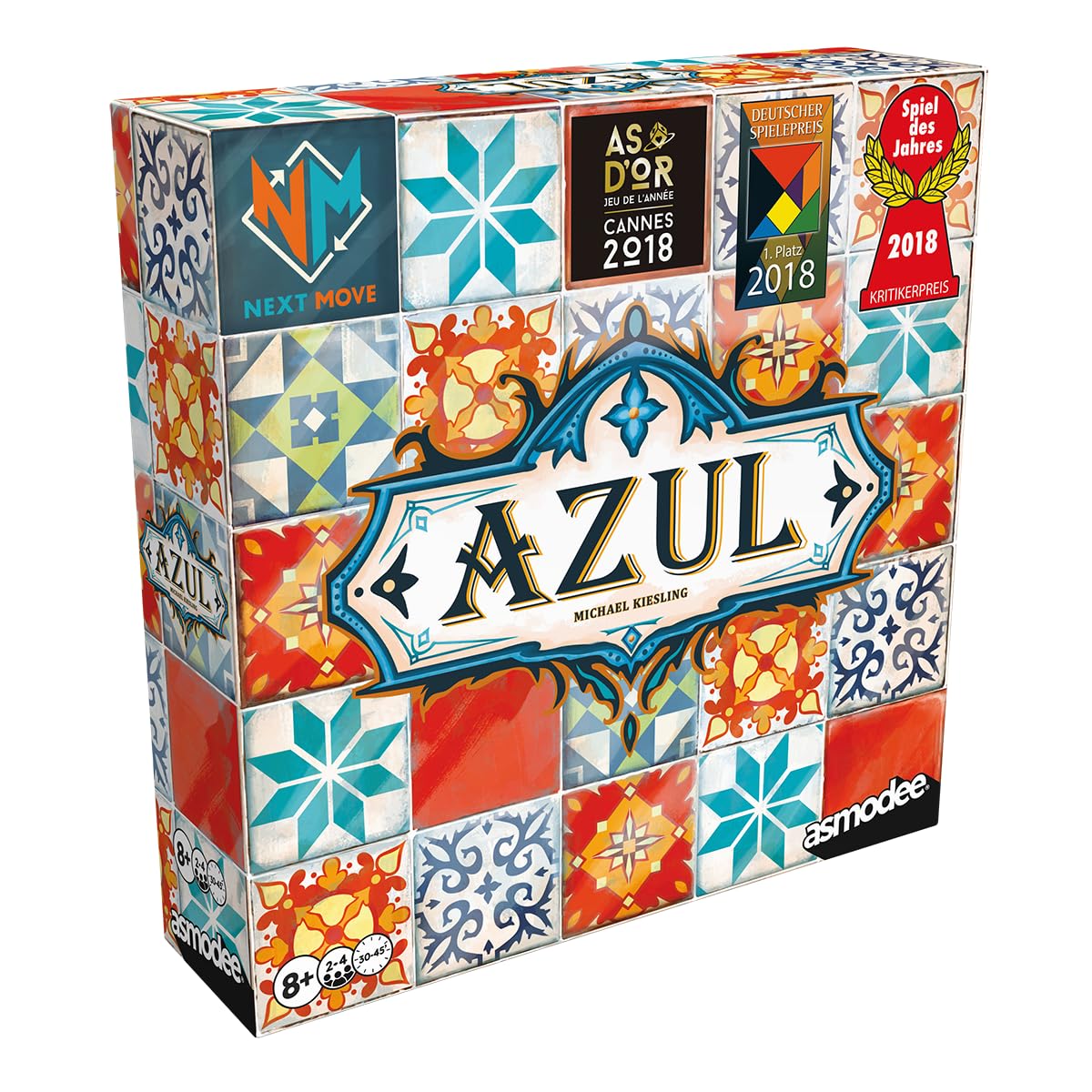
1. Azul Mosaic Tile-Placement Strategy Board Game
Our pick — 4.5+★ from 16,500+ verified ratings; the strongest balance of quality and price.
The tile drafter that teaches in five minutes and still bites after fifty plays.
Azul asks one simple question over and over: which tiles do you take, and which do you leave for the person next to you? You pull tiles from shared factory displays, fill pattern rows on your own board, and build a mosaic wall that scores at the end. That is the whole game — and it turns out that is plenty.
What makes this the pick for most tables is the drafting tension. Taking a batch of tiles you need also dumps the leftovers onto a rival, so every grab is half gift and half insult. Two players get a sharp duel; three or four get a looser scramble where the board can swing late. It scales cleanly either way, which is rarer than it sounds in this hobby.
The components are built to last. You get 100 resin tiles, 4 player boards, 9 factory displays, 4 scoring markers, a starting player marker, and a linen bag for drawing — all inside a 10.25 x 10.25 inch box that slides onto a normal shelf. New tile combinations land each round, so the puzzle stays fresh after a dozen sessions. The one rule to know going in is the tile-dump rule: if you take more tiles than you can place, the extras hit your own score. First-timers almost always learn that the hard way.
What wins people over
- Rules land in minutes even for younger players, so the first round starts fast
- Every turn forces a real choice — take what you need versus deny what they need
- 100 resin tiles and a linen draw bag feel built for years of handling
- Plays tight as a two-player duel and loose and chaotic at four
Where it asks more of you
- The scoring penalty for leftover tiles will cost new players a first game
- Not the pick if your group wants conversation and laughing over quiet calculation
Reach for this if: you host mixed ages and want one box that satisfies both the eight-year-old and the adult who plays to win.
Look elsewhere if: your table wants a loud party game — this one is played in near-silence while everyone counts tiles.
2. Lookout Games Forest Shuffle Card Game
A whole tabletop ecosystem that lives in a box smaller than a paperback.
Forest Shuffle is a card game about building a working woodland. You draw cards, lay trees into your own forest, and stack animals under them, because each creature only thrives beside the right tree. The card you play and the card you tuck beneath it are two separate decisions, and that pairing is where the brain work lives.
The box is 180 cards plus a rulebook, nothing more — and it weighs about a pound, so it drops into a bag without second thought. Rounds move fast because turns are short: draw, place, combine, pass. That pace is why it works as a warm-up game before something heavier, or as the whole evening when the group is tired.
The components are deliberately eco-conscious: the box is made without plastic and arrives taped shut so the lid cannot pop in transit. That tape is the one recurring annoyance — you will need a moment to open the first time. Artwork gets the biggest compliments from owners, with the card quality holding up to repeated shuffling. At 60 minutes for 2-5 players, it is a mid-length session rather than a filler.
Where it earns its spot: the hand-management layer is genuinely clever without being fussy — you are deciding which trees to commit and which animals to hold, and both choices shape your score. With 2-5 players it covers nearly any group size you bring to the table.
The honest caveat: the plastic-free box arrives taped, and the gameplay is quieter and more calculating than the bright artwork suggests, so a loud party crowd may bounce off it.
Best for: the couple or small group that wants a compact, thoughtful card game that fits in a backpack.
Think twice if: you need something that plays in fifteen minutes — this one needs the full hour to breathe.
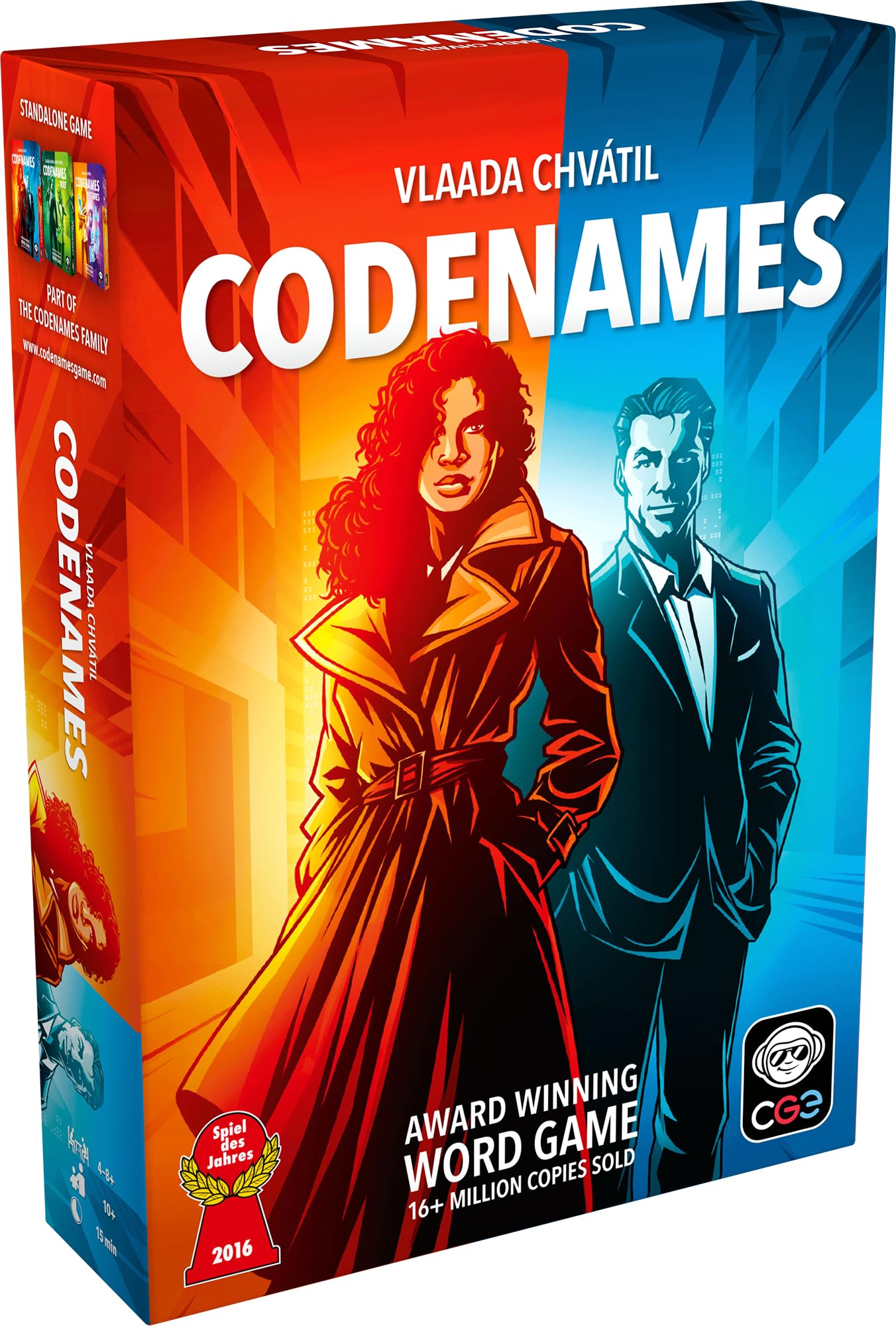
3. CGE Codenames Board Game (2nd Edition)
Fifteen minutes, two teams, and one word that ruins a friendship.
Two teams race to find their own agents on a 5×5 grid of word cards. One player on each side is the spymaster and knows which words are theirs; everyone else is guessing blind. The spymaster says a single word plus a number — “ocean, three” — and the team tries to connect that clue to three of their cards without touching the assassin.
That 15-minute playtime is the real headline here. Codenames runs about 15 minutes versus Casting Shadows at 30-60 minutes, which makes Codenames the box you bring out when people are arriving, eating, or half-distracted. There is no board to set up and no tokens to sort — deal the grid and go.
The second edition refreshes the word list, updates the art, and improves the insert so the cards stop sliding around. You get 200 cards carrying 400 codenames, 16 agent tiles in two colors, a double agent tile, 7 bystanders, 1 assassin, 40 key cards, a card stand, and a rulebook. Guessing your own agent wrongly can hand the other team a free pick, and hitting the assassin ends the game instantly — that single tile is what keeps people cautious instead of reckless.
The thing that sells it: the guessing rule lets a team take up to the clue number plus one, so you can gamble or circle back to an old clue. That one rule turns a vocabulary game into a risk calculation.
Who might pass: it needs at least four people to work as designed, and a shy table that hates being put on the spot will feel the pressure of the spymaster seat.
Pick this when: a crowd is gathering and you need everyone playing within two minutes of opening the box.
Leave it if: you usually play with two — the team structure needs a fuller table to click.
4. Unstable Games Casting Shadows Board Game

A hex-board spell battle where your character has a second, scarier form.
Casting Shadows puts you in control of a character who can flip into a shadow form mid-fight. You collect spells and companions, move across hex tiles, and roll custom resource dice to power your abilities. The transformation is the hook — it changes what your character can do, so the board state shifts as the game stretches on.
It runs 30-60 minutes for 2-4 players, best suited to teens and adults at 12 and up. Owners describe it as easy to pick up with a simple playstyle and straightforward rules, which matters if your group is fantasy-curious but not deep in hobby gaming. The illustrated tiles and custom dice do a lot of the world-building for you, so there is less need to explain the setting out loud.
The box holds 76 cards, 5 resource dice, 7 hex tiles, 13 resource tokens, 4 player boards, 4 meeples, a hex tile reference sheet, and a rulebook, all in a 10 x 8 inch box. Two expansions, Ice Storm and Molten Rock, add new abilities if the base game starts to feel solved. The thing to watch is that a 60-minute session with four players is a real time commitment for what is still a fairly light combat game — some tables will find the middle rounds drag.
Why groups keep it
- Shadow form transformations give each character a second strategic gear
- Cute illustrated art and custom dice make it approachable for younger teens
- Two named expansions extend the game once you know the base rules
What to weigh first
- Turn-based combat means downtime between your moves at four players
- Runs up to 60 minutes, longer than its light combat style suggests
The right table: teens and young adults who want a fantasy brawl with visible art and simple turns.
Not the right table: heavy strategy groups — the combat is lighter and more luck-driven than the hex board implies.
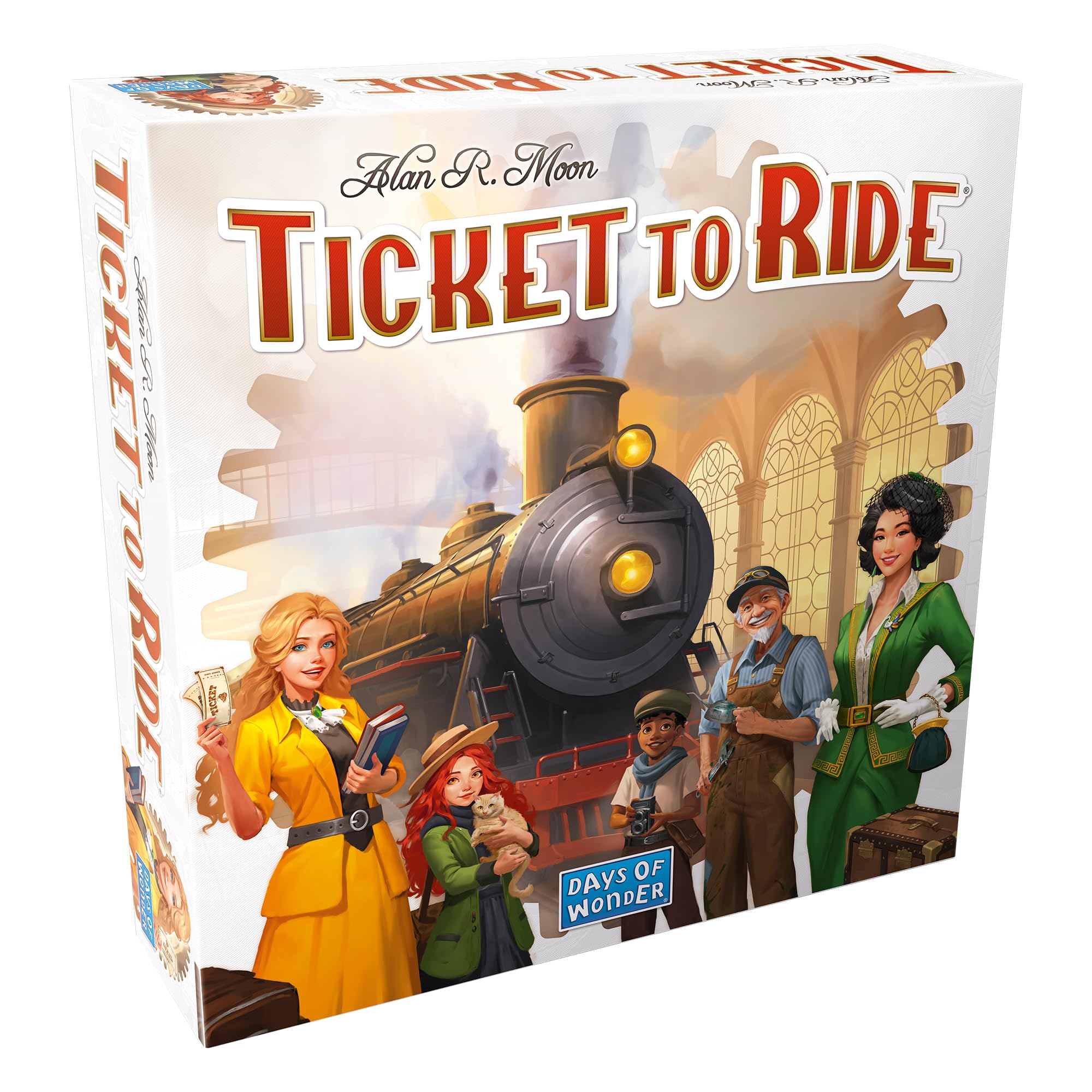
5. Asmodee Ticket to Ride Board Game (2025 Refresh)
The gateway game that has quietly converted more non-gamers than any other box.
Ticket to Ride hands you a map of North America and a handful of destination tickets. Collect colored train cards, spend them to claim routes between cities, and try to connect the far-flung corners of your ticket list before anyone else. Two mechanics carry the whole thing: set collection and network building. That is it, and that is why grandparents and eight-year-olds can both sit down at the same table.
The physical package is substantial. You get a game board, 225 plastic trains across 5 colors, 110 train cards, 33 tickets, a longest-path bonus card, 5 wooden scoring markers, and a rulebook. The box measures 11.7 x 3 x 11.7 inches; the Codenames box is 6.5 x 2.09 x 9.21 inches, so plan shelf space accordingly. Owners consistently point to the giant map and miniature trains as the thing that pulls people in before they even understand the rules.
The mixed notes center on the rulebook: some players find the instructions clear and straightforward, others find them complicated on first read. That is a learning-materials quibble, not a gameplay problem — once someone has played a round, the flow is obvious. Most tables find the balance of luck and strategy forgiving enough that a bad draw does not sink your game.
What sets it above the field: the strategy layer is real without being punishing. You can block a rival’s route, gamble on a long ticket, or quietly build the longest line for the bonus card. Three different paths to the win keeps repeat plays interesting.
Keep in mind: if your group already plays heavier games, this will feel like a warm-up rather than an evening’s main event.
Buy it for: the family that needs one box everyone agrees on, including the relatives who claim they do not like games.
skip it if: you want a genuinely complex puzzle — this one chooses accessibility, every time.
6. Asmodee Harmonies Board Game

Stack a small world out of tokens and watch animals move in.
Harmonies is a pattern-building game where you place animal cubes onto a shared board and stack landscape tiles into three-dimensional terrain. Landscapes and animals combine to earn victory points, so you are constantly asking whether this mountain helps the birds or blocks the river you needed. The tactical decisions are real, but they arrive through a calm, almost meditative pace.
The component list is generous: 120 tokens, 79 animal cubes, 32 animal cards, 10 Nature’s Spirit cards, a central board, 4 personal boards, 4 reminder cards, a pouch, a scoresheet pad, and a rulebook. That is a lot of physical pieces to sort, but the payoff is a game that feels handmade rather than printed.
Just as important — it plays solo. A 1-4 player count means the same box covers a quiet evening alone and a full table of four, which is unusual at this level of production. Owners single out the visuals as the thing they notice first, describing the artwork as beautiful and well-designed. Sessions run about 30 minutes with fast turns, so it never overstays its welcome.
The strongest argument: few mid-weight games handle one player as gracefully as four. If your group size fluctuates week to week, this one absorbs the swings without feeling like a compromise.
A note on fit: tournament-minded players who want direct conflict will find it passive — everyone builds their own landscape, so the interference is indirect rather than head-to-head.
Made for: solo players and calm two-player evenings where you want a thoughtful half hour, not a brawl.
Wrong fit for: groups that feed on competition and confrontation — this is cooperative-feeling even when it is not.
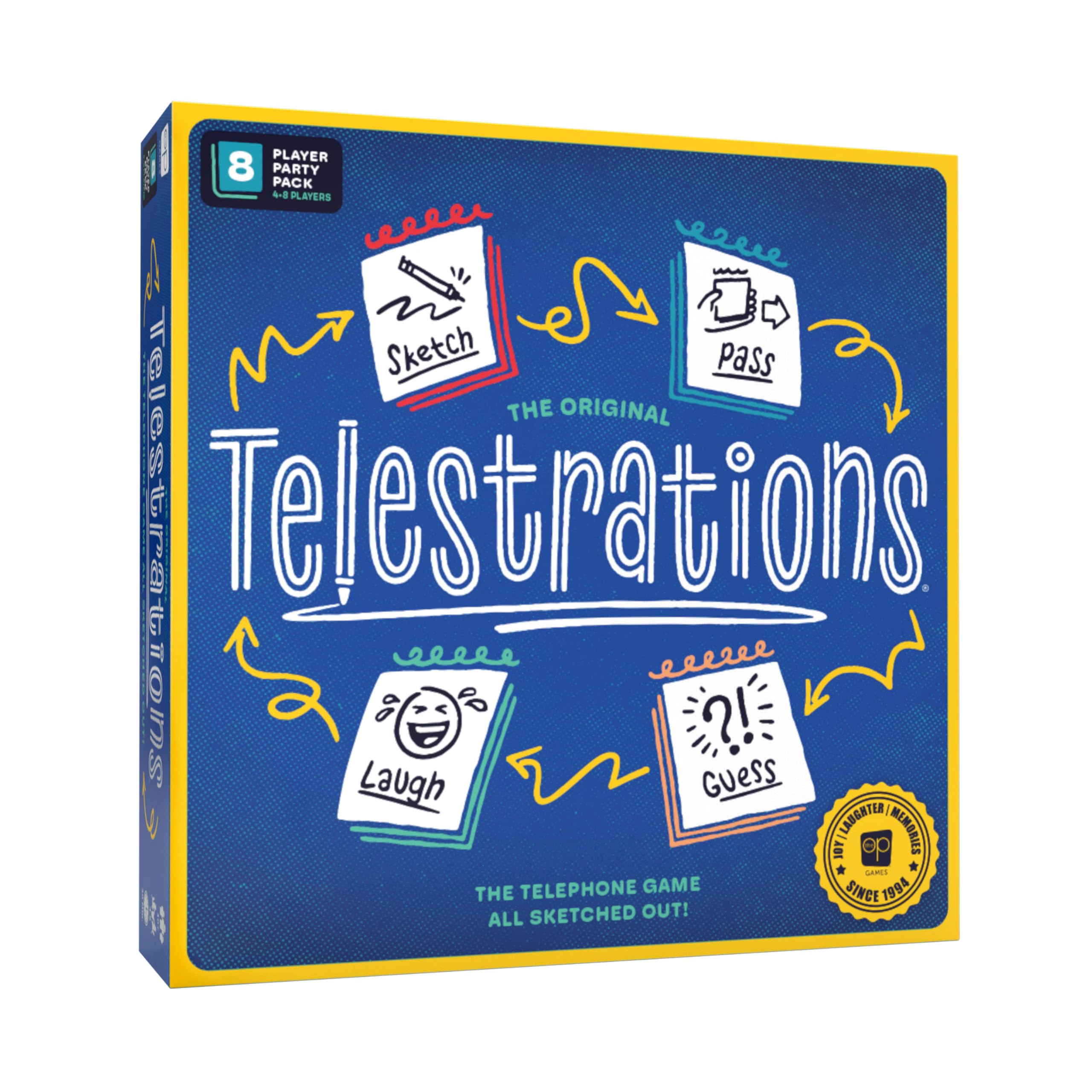
7. Telestrations 8-Player Board Game
Telephone, but with drawings — and the mangled results are the entire point.
Everyone writes what they read, then draws what they wrote, then passes the sketchbook. The next person guesses what the drawing was, and the chain unravels from there. By the time the books come back around, the original phrase has become something completely different, and that collapse is where the laughs live.
The box comes with 8 reusable sketchbooks, 8 dry-erase markers, 130 cards carrying more than 2,000 prompts, and rules. Because the sketchbooks wipe clean, the only real running cost is replacing a dried-out marker. This version is built for eight players, so it covers everything from a full family gathering down to a smaller gathering that just wants a party game.
What people respond to is the humor — the game is designed so that bad drawing makes it better, which means nobody needs artistic skill. It suits birthdays, holidays, and casual get-togethers where the goal is connection rather than competition. The reusable sketchbooks also mean this is a box you can pull out repeatedly without buying refills.
Where it shines
- Reusable dry-erase sketchbooks mean no paper waste and no refill purchases
- Over 2,000 prompts across 130 cards keeps repeat sessions fresh
- Seats eight, so it works for the widest gatherings in your circle
Honest limitations
- No real strategy — this is a laugh machine, not a decision puzzle
- Markers will eventually dry out and need replacing
Grab this for: holidays and parties where the goal is a room full of people laughing at each other.
Pass if: your group wants to think — there is no puzzle here, only chaos.
8. Inside Up Games Earth Board Game

The engine builder that keeps five players busy at the same time.
Most strategy games make you wait. Earth fixes that with a simultaneous turn structure: the active player picks a major benefit, and everyone else collects a minor one. Nobody sits idle, so a five-player game does not turn into a queue of people watching one person think.
The card pool is the other draw. You get more than 350 unique cards, some double-sided, which the maker says opens up over 25,000 starting setups. You build an island, lay down terrain and ecosystems, and support the wildlife that comes with them. Solo, team, and competitive variants mean the same box serves a quiet night alone or a full competitive table.
Setup is the honest friction point. Plenty of players find the learning curve manageable, but a first play can take 45 minutes of table preparation before the first move — the component pile includes 283 Earth cards, 145 sprout cubes, 105 soil tokens, 88 trunk pieces, 74 canopy pieces, 25 leaf tokens, and a stack of ecosystem, fauna, island, and climate cards. Once it is built, the island itself is the reward.
The standout mechanism: simultaneous play is rare at this complexity, and it is the reason Earth keeps a five-player table engaged for the full 45-90 minute window.
Prepare yourself for: the first session. The rules are not hard once running, but the 45-minute setup and the mixed reports on the learning curve mean you should schedule a teaching round before game night.
Reach for it if: your group is large and skilled, and downtime is the thing that usually kills the evening.
Leave it on the shelf if: nobody at your table wants to spend 45 minutes setting up a first game.
9. Stonemaier Games Wingspan

The bird-engine builder that rewards planning and rewards patience in equal measure.
Wingspan is about attracting birds to a wildlife preserve. Gain food tokens through custom dice in a birdfeeder dice tower, lay egg miniatures across your habitats, and play from over 170 unique bird cards. Each bird you play extends a chain of combinations in one of your habitats, so small early choices compound into point-generating engines later. That is the engine-building loop at its most readable.
The design detail that stands out is thematic honesty. Most bird cards carry abilities that match the real animal — parasitic cowbirds let you place eggs in other birds’ nests rather than your own, and the northern mockingbird imitates another bird in your habitat. Birds that tuck cards underneath them work like a raptor eating something smaller. No box art has to explain that; the rules do it for you.
The package includes 5 custom wooden dice, a birdfeeder dice tower, 170 unique bird cards, 10 more in the swift-start teaching guide, 26 Automa solo cards, 5 player mats, 40 action cubes, a goal mat, 8 goal tiles, 103 food tokens, 75 egg miniatures, bonus cards, three rulebooks, a scorepad, and a two-piece organizing tray. There is a solo Automa opponent built in, and the whole thing is designed by Elizabeth Hargrave with art from Beth Sobel and others. The one honest wrinkle: complexity split the reviews down the middle, and a few tables take hours of research before the rules click.
The case for it: the engine you build in hour one is humming by hour two, and there is no dice-luck lottery deciding the winner — the 149 strategy comments in owner feedback all point to the same thing: many ways to boost points.
The real cost: 60-90 minutes at the table and a genuinely mixed reception on the learning curve. The swift-start teaching guide helps, but this is not a ten-minute teach.
The best owner profile: someone who will play the same game a dozen times and wants each session to unfold differently.
The wrong owner: a casual group looking for a quick filler — this one wants an evening and a little patience.
Know the Specs
Player count: read the range, not the ceiling
A box that says 2-5 players is telling you the true range is somewhere inside that. Two-player duels need tight, head-to-head rules; five-player tables need simultaneous turns or nothing grinds. Check how the game behaves at your actual group size before you buy — a crowded table can turn a fast game sluggish, and a game designed for six feels thin with two.
Playtime: the number you will not hit on night one
The listed playtime usually assumes everyone already knows the rules. Your first session will run longer while you teach. A 30-45 minute game fits a weeknight; a 60-90 minute game needs a protected evening. If your group meets weekly for an hour, choose in the shorter band so one slow learning round does not swallow the whole night.
Mechanics: luck, drafting, and set collection explained plainly
Drafting means you choose from a shared pool, so every pick also denies your rival. Set collection means gathering matching cards or tokens for a payout. Engine building means early plays compound into bigger later turns. Party mechanics like drawing and guessing skip all that and reward being funny rather than being right. Pick the mechanic your group already enjoys, not the one that sounds most clever on the box.
Components: what the box actually tells you
The included-components line is a quality signal. Resin tiles, custom dice, linen draw bags, and organizing trays suggest a game built to survive years of play. Thin cards and cardboard counters with no tray will show wear within a dozen sessions. For families with younger kids, sturdy pieces are worth as much as a clean rulebook.
Common Questions
Which of these works best for just two players?
How long does a first game actually take compared to the listed playtime?
Is Codenames better than Telestrations for a party?
Can Harmonies really be played solo?
How hard is Wingspan to learn for a first-timer?
Which game suits a family with young children?
Do these games need sleeves or replacement parts?
What is the difference between drafting and engine building?
Which box gives the most replay value for a regular group?
How much shelf space do these boxes need?
The Bottom Line
For most tables, the board game ideas winner is the Azul because it does the hardest job in the hobby — teaching in minutes while still offering a decision worth thinking about. If you want pure laughter at a big gathering, the Telestrations 8-Player gets there in one round. And for a group that hates waiting between turns, the Earth keeps five players busy at once with more than 350 unique cards behind it.
One last nudge: the crowd favorite across the widest spread of players here is Azul, which sits at 4.5+ stars across 16,000+ ratings — a strong sign that the tile-drafting tension lands with casual and serious players alike.
How we choose
We do not accept paid placement. Every pick is matched to a real buyer and a real use-case; we do not hands-on test units.
Sources
Specifications: manufacturer listings and product documentation. Review insights: verified customer reviews, as of November 2026. Pricing: not shown on this page (it changes often); check the current price via the retailer link.
As an Amazon Associate, Gamepad Test earns from qualifying purchases. This does not affect which products we feature.